

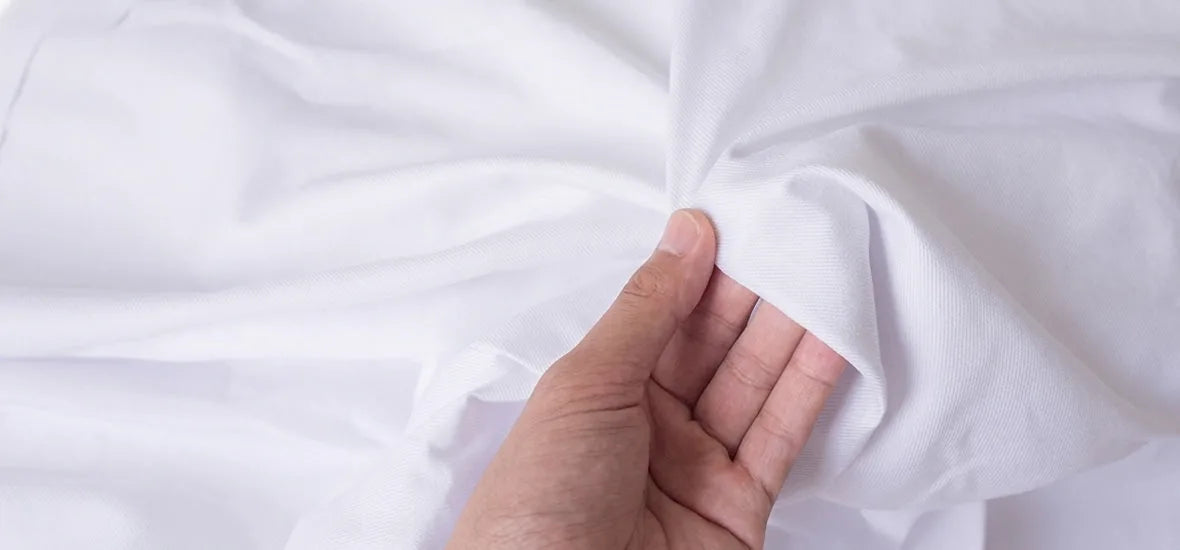
The best bed sheet material for most people is 100% natural cotton because it balances softness, breathability, durability, and year-round comfort. Different cotton weaves create different feels - percale offers a crisp, lightweight texture, while sateen provides a smoother, more refined finish.
When comparing the best type of bed sheet material, factors like sleep temperature, skin comfort, maintenance, and fabric feel matter more than thread count alone. Natural cotton remains one of the most versatile options because it feels comfortable against the skin, holds up well with regular washing, and avoids synthetic plastic-based fibers commonly found in microfiber or polyester blends.
For hot sleepers and summer use, lightweight cotton weaves are often preferred. For a smoother and slightly denser feel, sateen cotton offers a more polished sleep surface while still maintaining breathability and comfort.
Why Material and Thread Count Work Together
When people search for what is the best bed sheet material, thread count often comes up first. But thread count alone doesn’t define how a sheet feels.
Material and thread count work together.
- Material determines the base feel - softness, texture, and overall comfort
- Thread count adjusts the weight and density of that feel
For example, cotton in a lighter weave will feel crisp and airy, while higher thread count cotton feels smoother and more substantial. Both can be high quality - they simply create different experiences.
A sheet like the 100 Egyptian Cotton Percale Sheet Set mineral blue Set offers a clean, crisp texture with a lighter feel.
That’s why the goal isn’t to chase the highest number. It’s to choose what matches your comfort preference.
In simple terms:
Material builds the foundation. Thread count refines the feel.
Types of Bed Sheet Materials Explained
Understanding the best type of bed sheet material comes down to how each fabric feels, how it behaves over time, and how easy it is to live with day to day. Each material creates a different experience on your bed - some feel light and crisp, others feel smooth and dense, and some prioritize durability over softness.
Among all options, 100% natural cotton remains the most balanced choice. It offers a smooth, breathable texture, reliable durability, and no synthetic fibers. That’s why it’s often considered the best bed sheet material for skin and everyday comfort.
Cotton
Cotton is the most widely preferred option for those looking for the best bed sheet material. It feels natural on the skin, holds up well over time, and becomes softer with regular use.
Linen
Linen is made from flax fibers and has a more textured, relaxed feel. It softens over time but starts slightly coarse compared to cotton.
It’s known for its airy structure, though it wrinkles easily and has a more casual look.
Bamboo
Bamboo fabrics should be labeled as viscose from bamboo or rayon from bamboo. These are processed fibers, not raw natural fibers.
They typically feel smooth and lightweight, but their long-term performance depends on how the fabric is made.
Silk
Silk is a natural fiber with a soft, glossy finish. It feels light and smooth but requires careful maintenance.
It is often chosen for its texture rather than durability.
Microfiber
Microfiber is a synthetic material made from fine plastic-based fibers. While it may feel smooth at first, it does not offer the same natural comfort as cotton.
Microfiber is made from synthetic plastic fibers. With regular washing, it can release microplastic particles into water and onto skin. Natural cotton does not have this concern.
Polyester
Polyester is another synthetic fabric. It is durable and resists wrinkles, but it lacks the natural softness and feel of cotton.
It is often used in blends rather than as a primary comfort fabric.
Flannel
Flannel is usually made from cotton that has been brushed to create a soft, fuzzy surface. It feels thicker and more insulating, making it suitable for cooler environments.
Tencel
Tencel (lyocell) is a semi-synthetic fiber derived from wood pulp. It has a smooth, soft texture and a lightweight feel.
Its overall quality depends on fiber processing and construction.
Best Bed Sheet Material Comparison Guide
Choosing the best bed sheet material becomes easier when you compare how each fabric feels and performs in real use. Instead of focusing on claims, it helps to look at texture, softness, durability, and overall value.
Breathability Comparison
Breathability is about how light and open a fabric feels on your skin.
- Cotton offers a naturally balanced, breathable texture that works well for everyday use
- Linen has a more open weave, giving it a relaxed, airy feel
- Viscose from bamboo feels light and smooth but depends on processing quality
- Silk feels lightweight but less structured
- Synthetic fabrics like microfiber and polyester tend to feel denser due to their fiber structure
For those searching for the best bed sheet material for hot sleepers, fabrics that feel lighter and more open are usually preferred.
Softness Comparison
Softness depends on both fiber and weave.
- Cotton delivers consistent softness and improves with washing
- Sateen cotton has a smoother, more polished feel, which offers a soft, slightly denser finish
- Silk feels very smooth but requires careful handling
- Viscose from bamboo feels soft initially but may vary over time
- Linen starts textured and softens gradually
For long-term comfort, cotton remains one of the most dependable choices.
Durability Comparison
Durability reflects how well sheets hold their structure over time.
- Cotton is strong and long-lasting with regular use
- Linen is durable but may feel coarse initially
- Synthetic fabrics are resistant to wrinkles but lack long-term comfort consistency
- Silk is delicate and requires careful maintenance
Well-made cotton sheets provide a strong balance of durability and comfort for everyday use.
Price Comparison
Price often reflects fiber quality and construction.
- Cotton offers a wide range, from everyday options to more refined finishes
- Linen is typically higher priced due to fiber processing
- Silk sits at the higher end due to its delicate nature
- Synthetic fabrics are lower in cost but come with trade-offs in feel and longevity
A high-density option like the 1000 Sateen Cotton Sheet Set sepia rose offers a more substantial, smooth feel, making it suitable for those who prefer a heavier fabric experience.
Best Bed Sheet Material Based on Sleep Needs
The best bed sheet material is not one-size-fits-all. It depends on how you sleep, your environment, and the kind of comfort you prefer every night. Different fabrics create different sleep experiences - some feel lighter and airy, while others feel smooth and more structured.
Understanding your sleep needs helps narrow down the right choice instead of guessing.
Best Bed Sheet Material for Hot Sleepers
For people looking for the best bed sheet material for hot sleepers, the goal is a fabric that feels light, breathable, and not heavy on the skin.
Cotton is often preferred because of its natural, balanced feel. A lighter weave like percale cotton helps create a clean, crisp surface that doesn’t feel heavy during warmer nights.
Best Lightweight Bed Sheet Material
When people search for the best cooling bed sheet material, they usually mean sheets that feel light and not restrictive.
Natural cotton remains a strong option because it does not trap excess weight or create a dense surface feel. Instead, it maintains a smooth, breathable texture that adapts easily across nights.
A well-constructed cotton sateen option like the 800 Sateen Cotton Sheet Set Ivory adds a smoother finish while still maintaining comfort and breathability in use.
Best Bed Sheet Material for Summer
For summer comfort, the best bed sheet material for summer is typically one that feels light, soft, and easy on the skin.
Cotton works well here because it naturally adjusts to seasonal changes. It does not feel overly heavy or artificial, making it suitable for warmer months.
Best Bed Sheet Material for Cold Sleepers
For colder conditions, the best bed sheet material for cold sleepers is usually something with a slightly denser, more substantial feel.
It creates a more wrapped, comfortable surface without relying on synthetic warmth.
How to Choose the Best Bed Sheet Material
Choosing the best bed sheet material becomes easier when you break it down into your personal needs rather than focusing only on fabric names. The right choice depends on climate, comfort preference, budget, and how you actually use your bedding every day.
There is no single perfect material for everyone - only the one that fits your lifestyle best.
Based on Climate
Climate plays a major role in selecting the best type of bed sheet material.
In warmer conditions, lighter-feeling fabrics like cotton are commonly preferred because they feel more natural and less heavy on the skin. In cooler conditions, slightly denser weaves can feel more comforting and substantial.
Cotton adapts well across changing seasons, which is why it remains one of the most versatile options for year-round use.
Based on Comfort Preference
Comfort is personal. Some people like a crisp, structured surface, while others prefer a smoother, more polished feel.
Based on Budget
Budget often influences the best bed sheet material, but it should not come at the cost of comfort.
Cotton offers flexibility across price ranges. Even within cotton, different weaves and thread counts provide different experiences.
Based on Lifestyle and Usage
Your lifestyle also determines what works best.
If sheets are washed frequently, durable cotton performs well over time. If you prefer low-effort maintenance, cotton sateen tends to feel smoother and more forgiving in daily use.
What Makes a Bed Sheet Material High Quality
When evaluating the best bed sheet material, quality is not defined by appearance alone. It comes from how the fabric is constructed, how the fibers are treated, and how the final finish feels in real use.
High-quality bedding should feel consistent, smooth, and reliable even after repeated washing. Cotton, especially well-constructed varieties, tends to deliver this balance naturally.
Weave Type
Weave type plays a major role in how the fabric feels.
- Percale weaves create a crisp, matte finish with a lighter touch
- Sateen weaves create a smoother, more polished surface with a slightly richer feel
Weave directly influences whether sheets feel airy or more substantial.
Fiber Quality
Fiber quality determines how long sheets maintain their feel and structure.
Long-staple cotton fibers are generally smoother and more durable compared to shorter fibers. This leads to a softer surface and better resistance to wear over time.
Higher-quality fibers also reduce roughness, making the fabric more comfortable over time.
Finishing Process
The finishing process affects the final feel of the sheet after weaving.
Well-finished cotton fabrics feel smoother, more even, and more consistent across the surface. This step helps reduce rough edges and improves overall comfort.
Good finishing ensures the fabric feels stable and comfortable from the first use and continues improving with washing.
Thread Count vs Material: What Matters More
When people look for the best bed sheet material, thread count often becomes the first point of comparison. But understanding how both elements work together gives a clearer picture of how sheets actually feel in real use.
Material forms the foundation of comfort, while thread count refines texture and density. Both are important, but they serve different purposes.
What Thread Count Means
Thread count refers to the number of threads woven into one square inch of fabric. It helps describe how tightly or loosely a fabric is constructed.
However, thread count alone does not determine comfort. Two sheets with the same thread count can feel very different depending on the material and weave used.
For example, a cotton percale sheet with a moderate thread count can feel light and crisp, while a sateen weave at a higher thread count can feel smoother and more structured.
Ideal Thread Count by Material
Different cotton weaves perform best within different thread count ranges.
- Lower to mid-range cotton often feels lighter and more breathable
- Mid to higher thread counts create a smoother, more substantial feel
- Sateen weaves naturally feel denser compared to percale at similar counts
Is Higher Thread Count Better?
Higher thread count does not automatically mean better quality. It simply changes how the fabric feels.
A higher thread count sheet may feel smoother and heavier, while a lower thread count sheet may feel lighter and more breathable. The better choice depends entirely on personal comfort preference.
For example, the 100 Egyptian Cotton Percale Sheet Set mineral blue offers a lighter, crisper feel that many people prefer for everyday comfort. In contrast, the 1000 Sateen Cotton Sheet Set sepia rose delivers a denser, more refined surface for those who enjoy a richer fabric feel.
In simple terms, the best bed sheet material is not about the highest number - it is about how the material and thread count work together to create the right sleeping experience.
Other Fabric Quality Factors to Consider
When evaluating the best bed sheet material, thread count and fabric type are only part of the picture. There are additional quality factors that influence how sheets feel, perform, and last over time.
These details help explain why two sheets with similar specifications can still feel very different in real use.
Grams Per Square Meter (GSM)
GSM refers to the weight of the fabric. It helps indicate how light or substantial a sheet feels.
- Lower GSM fabrics feel lighter and more airy
- Higher GSM fabrics feel denser and more structured
In cotton bedding, GSM works alongside weave and thread count to define overall comfort. It helps explain why some sheets feel crisp and light, while others feel more grounded and smooth.
Silk Momme Weight
For silk fabrics, momme weight is used instead of GSM. It measures the density of silk and influences how smooth and durable it feels.
Higher momme silk feels thicker and more structured, while lower momme silk feels lighter and more delicate.
This measurement is specific to silk and does not apply to cotton or other fabrics.
Pill Resistance
Pilling refers to small fiber balls that can form on fabric surfaces after repeated use.
Higher-quality fabrics resist pilling better, maintaining a smoother and more consistent surface over time.
Well-constructed cotton tends to hold its surface quality longer, especially when made with long-staple fibers and proper finishing techniques.
Wrinkle Resistance
Wrinkle resistance affects how the fabric looks and feels after washing.
Some materials naturally wrinkle more than others based on their fiber structure. Cotton may develop soft creases, which are part of its natural character, while blends may resist wrinkles more due to synthetic content.
A balanced cotton weave offers a natural look with manageable wrinkling, making it suitable for everyday use without requiring heavy maintenance.
Best Bed Sheets by Material (Use Cases)
When choosing the best bed sheet material, it helps to match the fabric to how you actually use your bedding. Different materials create different sleep experiences, and the right choice often depends on whether you prioritize softness, structure, durability, or ease of care.
Cotton remains the most balanced option across most use cases because it adapts well to everyday needs without relying on synthetic fibers.
Best Luxury Bed Sheet Materials
Luxury in bed sheets is not about labels - it is about how the fabric feels, drapes, and holds its structure over time.
High-quality cotton sateen is often preferred here because of its smooth, slightly dense finish. It creates a more refined surface feel while still maintaining natural fiber comfort.
The same collection, when used in everyday settings, provides a consistent and polished sleep surface without feeling overly complicated or delicate.
Best Budget Bed Sheet Materials
When looking for value-focused options, the best bed sheet material is still natural cotton.
Even at a more accessible level, cotton provides a better balance of comfort and durability compared to synthetic alternatives. It feels natural on the skin and improves with washing over time.
It delivers long-term usability without compromising on natural comfort.
Most Common Bed Sheet Materials
The most commonly used bed sheet materials include cotton, linen, and synthetic blends.
Among these, cotton continues to be the most widely chosen because it balances softness, breathability, and durability in a way that suits most households.
Within cotton options, both percale and sateen weaves are commonly used depending on preference. Percale offers a lighter, crisper feel, while sateen provides a smoother, more polished surface.
In everyday use, cotton remains the most practical and widely accepted choice for consistent comfort.
Best Bed Sheet Material for Different Seasons
The best bed sheet material can change depending on the season. While some fabrics feel consistent year-round, others feel better suited to specific temperatures and sleeping conditions. Understanding seasonal comfort helps you choose sheets that feel right throughout the year.
Natural cotton remains one of the most adaptable options because it maintains a balanced feel across changing conditions.
Best Materials for Summer
During warmer months, people often look for the best bed sheet material for summer that feels light, smooth, and not heavy on the skin.
Cotton is commonly preferred because it offers a clean, breathable surface that does not feel dense or restrictive. Its natural fiber structure allows for a more open feel compared to synthetic fabrics.
It helps maintain a simple, natural sleeping surface suited for warmer nights.
All-Season Bed Sheet Materials
For year-round use, the best bed sheet material is one that adapts easily across changing temperatures without feeling too light or too heavy.
Cotton sateen is often chosen for this balance because it offers a smoother, slightly more structured surface while still maintaining natural breathability.
Fabric Care and Maintenance Guide
Choosing the best bed sheet material is not only about comfort - it also depends on how easy the fabric is to care for over time. A good material should maintain its feel, structure, and softness even after repeated washing.
Natural cotton is often preferred because it becomes softer with use while still holding its overall quality when cared for properly.
Easy-Care Materials
Easy-care fabrics are those that require minimal effort to maintain their everyday look and feel.
Cotton is a strong option here because it is naturally durable and responds well to regular washing. It does not rely on synthetic coatings to maintain its structure, which makes it more predictable over time.
Both percale and sateen cotton weaves fall into this category, depending on the finish and density.
Long-Lasting Materials
Long-lasting materials are those that maintain their texture and strength over time without breaking down quickly.
High-quality cotton fibers are known for this characteristic. They retain their structure while gradually becoming softer with each wash, creating a more comfortable feel over time.
Low-Maintenance Options
Low-maintenance bedding is often defined by how little effort is needed to keep it looking and feeling good.
Cotton sateen is commonly chosen for this purpose because of its naturally smoother surface. It tends to drape well on the bed and requires less effort to maintain a neat appearance after washing.
In general, cotton remains one of the most practical choices when looking for the best bed sheet material that combines comfort with simple care.
Continuing with controlled length, SEO alignment, and full CDD compliance.
Sustainability and Eco-Friendly Bed Sheet Materials
When considering the best bed sheet material, sustainability often plays an important role in the decision-making process. Many people now prefer materials that come from natural sources and avoid unnecessary synthetic content.
Among all options, 100% natural cotton remains one of the most widely used choices because it is plant-based and does not rely on plastic-derived fibers. It offers a simple, natural composition that aligns well with more conscious fabric choices.
Cotton bedding is also long-lasting when cared for properly, which helps reduce frequent replacement compared to lower-quality synthetic alternatives.
In collections like the 100 Egyptian Cotton Percale Sheet Set mineral blue, the focus is on natural fiber construction that supports durability and everyday usability. Similarly, the 800 Sateen Cotton Sheet Set Ivory uses cotton-based weaving techniques that prioritize long-term comfort and repeated use without unnecessary complexity.
A second key advantage of natural cotton is that it does not introduce synthetic microplastic shedding during washing, which is a concern associated with many synthetic fabrics.
Common Mistakes When Choosing Bed Sheet Material
Choosing the best type of bed sheet material can feel simple, but there are a few common mistakes that often lead to less satisfying results over time.
One of the biggest mistakes is focusing only on appearance instead of how the fabric actually feels and performs in daily use. A visually appealing sheet may not always provide consistent comfort.
Another common mistake is assuming that higher thread count automatically means better quality. In reality, material, weave, and thread count all work together to create the final feel.
People also sometimes overlook the importance of fiber type. Natural cotton generally provides a more balanced and consistent experience compared to synthetic blends that may feel smooth initially but lack long-term comfort stability.
A final mistake is not considering personal sleep needs. For example, someone who prefers a lighter feel may not enjoy a dense weave, while someone who likes a more structured surface may not prefer a very light fabric.
Understanding these factors helps narrow down the best bed sheet material more effectively, leading to better long-term comfort and satisfaction.
Why California Design Den Cotton Bedding Stands Out
100% Natural Cotton Construction
California Design Den focuses on 100% natural cotton bedding with no synthetic microfiber and no plastic-based fibers.
This creates a more natural, balanced sleep surface designed for everyday comfort.
Different Cotton Feels for Different Preferences
CDD offers both:
- Crisp percale cotton options
- Smooth sateen cotton options
This allows different sleep preferences without moving away from natural fibers.
Consistent Everyday Comfort
The focus is not just softness on day one.
California Design Den bedding is designed to:
- Maintain structure over time
- Become softer with washing
- Deliver a consistent sleep experience night after night
Independently Recognized Quality
Many California Design Den bedding collections are backed by the Good Housekeeping Seal, adding additional trust through independent evaluation.
Better Value Through Direct Manufacturing
Because California Design Den manages its own production process, the pricing reflects the product itself rather than unnecessary retail markups.
The result is premium-feeling natural cotton bedding designed for long-term everyday use.
Final Verdict
Choosing the best bed sheet material comes down to understanding how you want your sleep experience to feel every night. While there are many fabric options available, natural cotton consistently stands out because it balances comfort, durability, and everyday usability without relying on synthetic fibers.
Whether you prefer a crisp, lightweight feel or a smoother, more structured surface, cotton offers flexibility across different preferences and seasons.
At the core, California Design Den focuses on 100% natural cotton bedding, designed for consistent comfort, long-term use, and a simple, honest sleep experience.
Frequently Asked Questions About Best Bed Sheet Material
What is the best bed sheet material?
The best bed sheet material is usually 100% natural cotton because it offers a balanced feel, natural softness, and long-term durability. It feels comfortable on the skin and works well across different seasons without relying on synthetic fibers.
What is the best type of bed sheet material?
The best type of bed sheet material depends on personal preference, but cotton is the most versatile choice. Percale cotton feels crisp and light, while sateen cotton feels smoother and more structured, offering different comfort experiences.
What is the best bed sheet material for cooling?
The best bed sheet material for cooling is typically a lightweight, breathable fabric like cotton. Its natural fiber structure allows air to flow more easily, creating a lighter feel on the skin compared to synthetic materials.
What is the best bed sheet material for summer?
The best bed sheet material for summer is cotton, especially lighter weaves like percale. It feels fresh and comfortable during warmer nights without feeling heavy or restrictive on the body.
What is the best bed sheet material for hot sleepers?
For hot sleepers, the best bed sheet material for hot sleepers is cotton because it offers a naturally breathable and balanced texture. It does not trap excess heaviness, making it more comfortable for everyday use.
What is the best bed sheet material for skin?
The best bed sheet material for skin is 100% natural cotton because it feels gentle and smooth without synthetic fibers. It provides a consistent surface that becomes softer over time with regular washing.
What is the most comfortable bed sheet material?
The most comfortable option is usually cotton, as it balances softness, breathability, and durability. Options like sateen cotton offer a smoother feel, while percale cotton provides a lighter, crisp texture depending on preference.


