

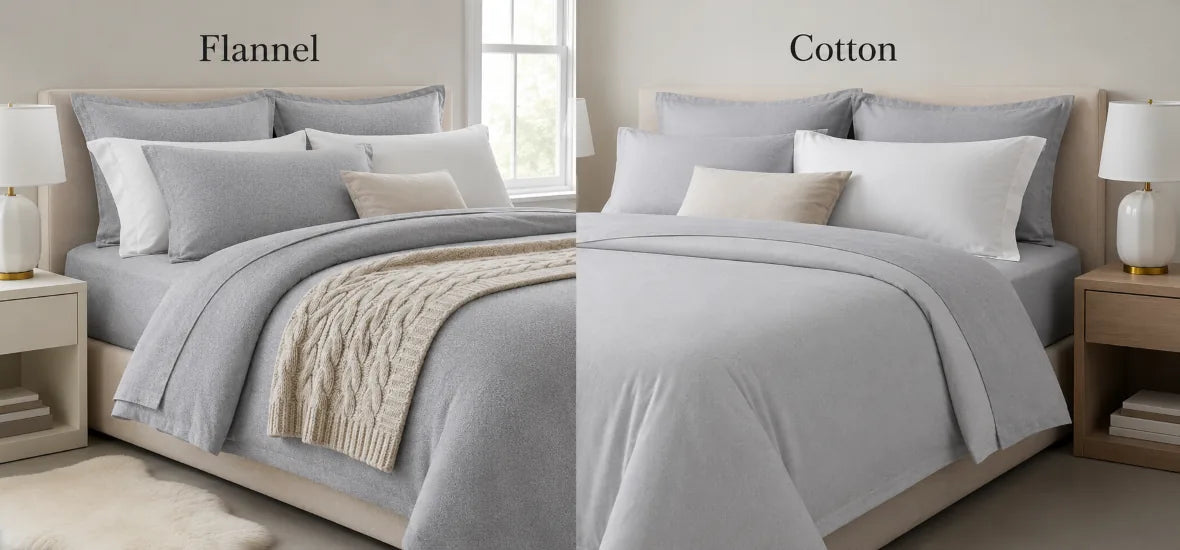
Flannel vs cotton sheets comes down to texture, fabric weight, and how the bedding feels during everyday use. While both are typically made from cotton fibers, they are finished differently, creating two completely different sleep experiences.
Flannel sheets are brushed to create a soft, slightly fuzzy surface that feels more substantial and cozy. Cotton sheets are woven with a smoother finish and are available in different weave styles like percale and sateen, offering a lighter and more versatile feel.
For most people, cotton sheets work better as an everyday option because they adapt easily across seasons and come in multiple fabric feels - crisp percale, smooth sateen, or lightweight cotton blends. Flannel sheets are better suited for those who prefer a softer, more textured, and fuller bedding feel.
Quick Comparison: Flannel vs Cotton Sheets
- Flannel sheets → soft, brushed, and more substantial feel
- Cotton sheets → smooth, breathable, and versatile feel
- Percale cotton → crisp and lightweight texture
- Sateen cotton → smoother and slightly denser feel
- Flannel works best for layered bedding and cooler conditions
- Cotton works best for year-round everyday comfort
Which Sheets Should You Choose?
Choose flannel sheets if you prefer:
- A soft, textured fabric feel
- More substantial bedding
- A cozy layered setup
Choose cotton sheets if you prefer:
- A cleaner, smoother surface
- Lightweight everyday bedding
- Multiple weave and texture options
For most sleepers, cotton sheets remain the more balanced choice because they offer flexibility across different seasons and sleeping preferences.
Flannel vs Cotton Sheets
- Flannel sheets → soft, slightly textured, and more substantial in feel
- Cotton sheets → smooth, breathable texture with a lighter feel
Both are made from cotton, but the difference comes from how the fabric is woven and finished.
Key Differences at a Glance
|
Feature |
Flannel Sheets |
Cotton Sheets |
|
Fabric Type |
Brushed cotton |
Woven cotton |
|
Feel |
Soft, slightly fuzzy |
Smooth or crisp |
|
Weight |
More substantial |
Light to medium |
|
Texture |
Textured surface |
Clean, even surface |
|
Use Case |
Cooler conditions, layered bedding |
Everyday use across seasons |
Flannel is created by brushing cotton fibers to raise a soft surface. Cotton sheets (like percale or sateen) are woven for a smoother finish.
Which Sheets Should You Choose?
The choice comes down to how you want your sheets to feel and how you plan to use them.
Choose Flannel Sheets If
- You prefer a soft, slightly textured surface
- You like a more substantial, cozy feel
- You use layered bedding more often
Flannel sheets create a fuller, softer surface that feels comfortable when you want more weight in your bedding.
A cotton flannel sheet set woodland motifs is a good example - it offers a brushed finish that feels soft right from the first use.
Choose Cotton Sheets If
- You prefer a smooth, clean texture
- You want something lighter and more versatile
- You use your sheets year-round
Cotton sheets come in different weaves, each offering a slightly different feel.
For example:
- A 300 thread count Egyptian cotton sheet set blue striped (percale) feels crisp and structured
- An Egyptian cotton percale sheet set bright white offers a clean, smooth surface that softens with use
California Design Den sheets are made from 100% natural cotton - no synthetic fibers, no plastic blends. This keeps the fabric consistent over time.
Best Choice for Most People
For everyday use, cotton sheets are the most versatile option.
They:
- Work across different seasons
- Maintain their structure over time
- Offer a range of feels depending on the weave
Flannel is better as a specific-use fabric, while cotton works as an everyday foundation.
What Are Flannel Sheets?
Flannel sheets are made from cotton that has been brushed to create a soft, slightly textured surface. This brushing process lifts the fibers, giving flannel its signature feel.
What Is Flannel Made Of?
Flannel is typically made from 100% cotton, though the difference lies in how the fabric is finished rather than the fiber itself.
- The cotton fabric is woven first
- Then it is brushed on one or both sides
- This creates a soft, raised surface
Because of this process, flannel feels different from standard woven cotton sheets.
Are Flannel Sheets Warm or Hot to Sleep In?
Flannel sheets feel more substantial and insulating compared to standard cotton sheets.
- The brushed surface traps more air within the fabric
- This creates a fuller, cozier feel
- It can feel heavier compared to smoother weaves
Whether they feel too warm depends on personal preference and environment.
Best Use Cases for Flannel Sheets
Flannel sheets are best suited for:
- Cooler conditions
- Layered bedding setups
- People who prefer a softer, more textured feel
They’re less commonly used year-round, but work well when you want a more substantial sheet.
A flannel sheet set made from cotton offers this soft, brushed texture while maintaining the natural fiber benefits.
What Are Cotton Sheets?
Cotton sheets are made from woven cotton fibers and are known for their smooth texture and versatility.
Unlike flannel, cotton sheets are not brushed, so they retain a cleaner and more even surface.
What Is Cotton Made Of?
Cotton comes from a natural plant fiber.
- It is spun into yarn
- Then woven into fabric
- Finished depending on the weave type
Because it’s a natural fiber, cotton sheets are widely used for everyday bedding.
Why Cotton Sheets Are Popular
Cotton sheets are widely preferred because they:
- Offer a range of textures (crisp to smooth)
- Hold up well with regular washing
- Work across different environments
They adapt easily to different bedding styles and preferences.
Benefits of Cotton Bedding
- Smooth and consistent surface
- Becomes softer over time with washing
- Made from natural fibers
California Design Den sheets are made from 100% natural cotton - no synthetic microfiber, no plastic fibers. This keeps the fabric consistent and easy to maintain over time.
Types of Cotton Sheets
Not all cotton sheets feel the same. The weave plays a major role in how they behave.
Percale
- One-over-one weave
- Feels crisp and structured
- Light, clean surface
A 300 thread count Egyptian cotton sheet set blue striped in percale offers this kind of feel.
Sateen
- Multi-thread weave
- Feels smoother and slightly denser
- Has a soft, subtle sheen
Sateen is often chosen for a more polished finish.
Flannel (as a Cotton Variation)
Flannel is technically a type of cotton fabric, but it’s defined by its brushed finish, not its weave.
This makes it feel softer and more textured compared to percale or sateen.
Flannel vs Cotton Sheets: Key Differences
Flannel and cotton sheets are made from the same base fiber, but they feel very different because of how they’re finished and woven.
Warmth and Insulation
- Flannel sheets feel more substantial because of their brushed surface
- The raised fibers create a fuller, thicker fabric feel
- Cotton sheets (percale/sateen) feel lighter
- They have a flatter surface with less density
If you prefer a heavier, more layered feel, flannel stands out. If you prefer something lighter, cotton is the better choice.
Breathability and Cooling
(Framed as feel, not performance)
- Cotton sheets feel lighter and more open on the skin
- The smooth weave allows for a more airy surface
- Flannel sheets feel more closed and dense
- The brushed texture creates a softer but fuller surface
This difference in texture is what makes cotton feel easier to use in warmer conditions.
Softness and Comfort
- Flannel → soft from the first use due to brushing
- Cotton → smoother at first and softens gradually with washing
Some people prefer instant softness (flannel), while others prefer a clean, smooth finish that improves over time (cotton).
Durability and Maintenance
Cotton sheets
- Hold structure well over time
- Become softer with regular washing
Flannel sheets
- May show wear faster due to the brushed surface
- Require gentle care to maintain texture
A well-made cotton option, like an Egyptian cotton percale sheet set bright white, offers a balance of durability and a smooth feel.
Are Flannel Sheets Good for Hot Sleepers?
When Flannel Feels Too Warm
Flannel can feel too heavy for some people, especially if:
- You prefer lightweight bedding
- Your environment is naturally warm
- You don’t use layered blankets
Its denser texture can feel overwhelming in those situations.
Best Climate for Flannel Sheets
Flannel sheets are better suited for:
- Cooler environments
- Seasonal use
- Layered bedding setups
They’re not typically chosen for year-round use unless you prefer a heavier feel.
Which Is Cooler: Cotton or Flannel Sheets?
Why Cotton Feels More Breathable
Cotton sheets - especially percale - have a lighter, more open texture.
This makes them feel:
- Less dense
- Easier to move under
- More comfortable in warmer conditions
Best Cotton Weave for Cooling
- Percale → light, crisp, and airy feel
- Lower to mid thread count (300–400TC) → balanced weight and texture
A 300 thread count Egyptian cotton sheet set blue striped is a good example of this lighter, everyday feel.
Flannel Sheets vs Cotton Sheets for Seasons
Best Sheets for Winter
- Flannel sheets
- Heavier sateen cotton
These offer a more substantial, layered feel.
Best Sheets for Summer
- Percale cotton sheets
- Lightweight cotton weaves
These feel lighter and less dense on the skin.
All-Season Bedding Choice
For year-round use, cotton sheets are the most flexible option.
They:
- Adapt to different conditions
- Offer multiple weave choices
- Maintain consistent performance with regular use
Pros and Cons of Flannel Sheets
Advantages of Flannel Sheets
- Soft, brushed surface from the first use
- More substantial and cozy feel
- Works well in layered bedding setups
- Made from cotton, so still a natural fiber option
A cotton flannel sheet set woodland motifs offers this soft, textured feel while maintaining the benefits of natural cotton.
Disadvantages of Flannel Sheets
- Feels heavier compared to standard cotton sheets
- Not ideal for warmer environments
- Brushed surface may wear faster with frequent washing
- Requires gentle care to maintain texture
Pros and Cons of Cotton Sheets
Advantages of Cotton Sheets
- Smooth and consistent surface
- Available in different weaves (percale, sateen, flannel)
- Becomes softer over time with washing
- Works well across different seasons
A well-made option like an Egyptian cotton percale sheet set bright white offers a clean, structured feel that improves with use.
California Design Den sheets are made from 100% natural cotton - no synthetic microfiber, no plastic fibers. This keeps the fabric consistent and durable over time.
Disadvantages of Cotton Sheets
- May feel less soft initially compared to flannel
- Wrinkles more easily (especially percale)
- Different weaves require different care approaches
What Fabric Is Best for Sleeping Comfort?
There isn’t one single “best” fabric - it depends on how you want your bedding to feel.
Best Cooling Fabric Options
- Percale cotton → light, airy texture
- Lightweight cotton weaves → less dense feel
These feel easier to use in warmer conditions.
Best Warm Fabric Options
- Flannel → soft, brushed, more substantial
- Sateen cotton → smoother, slightly denser feel
These create a fuller, more layered bedding experience.
How to Choose Between Flannel and Cotton Sheets
Based on Climate
- Cooler environments → flannel or heavier cotton
- Warmer environments → lighter cotton weaves
Based on Sleeping Style
- Prefer lightweight bedding → cotton
- Prefer a more substantial feel → flannel
Based on Fabric Preference
- Like smooth, clean textures → cotton
- Like soft, textured surfaces → flannel
Common Mistakes When Choosing Bedding Fabric
1. Choosing based only on softness
Different fabrics feel soft in different ways.
2. Ignoring fabric weight
Weight affects how the sheets feel during use.
3. Not considering season or environment
Some fabrics work better in specific conditions.
4. Overlooking weave type in cotton
Percale and sateen feel very different.
5. Choosing synthetic blends unknowingly
Natural cotton offers a more consistent experience over time.
Why California Design Den Sheets Work for Flannel and Cotton Bedding Styles
California Design Den offers both smooth everyday cotton sheets and soft cotton flannel bedding, making it easier to choose the right fabric feel based on your sleeping style and seasonal preference.
For sleepers who prefer lightweight and versatile bedding, CDD cotton sheets are made from 100% natural cotton and available in different weave styles:
- Percale cotton for a crisp, airy feel
- Sateen cotton for a smoother and softer finish
- Mid-range thread counts that balance comfort and durability
For those who prefer a softer and more substantial bedding feel, CDD cotton flannel sheets use brushed cotton construction to create a cozy surface texture without synthetic fibers or fleece-like materials.
Unlike synthetic bedding blends, California Design Den focuses on natural cotton fabrics with consistent weave quality and everyday usability across seasons.
Popular options include:
- Egyptian Cotton Percale Sheet Sets for a smooth and structured feel
- Cotton Sateen Sheet Sets for a softer everyday finish
- Cotton Flannel Sheet Sets for a warm, brushed texture
Many California Design Den cotton bedding products are also OEKO-TEX tested and backed by the Good Housekeeping Seal, reinforcing fabric quality, comfort, and long-term reliability.
Final Verdict: Flannel vs Cotton Sheets
Flannel and cotton sheets serve different purposes.
- Flannel → best when you want a soft, textured, and more substantial feel
- Cotton → best for everyday use with a smooth, versatile finish
For most people, cotton sheets are the more practical choice because they adapt easily to different conditions and preferences.
A well-made cotton sheet - especially in the right weave and thread count - offers a consistent feel that holds up well over time.
FAQs: Flannel vs Cotton Sheets
What are flannel sheets made of?
Flannel sheets are made from cotton that has been brushed to create a soft, textured surface.
Are flannel sheets hot to sleep in?
They feel more substantial and insulating, which may feel too heavy for some people depending on preference.
What is cotton percale sheets?
Percale sheets use a one-over-one weave, creating a crisp, smooth surface.
What are cotton sateen sheets?
Sateen sheets use a multi-thread weave, resulting in a smoother and slightly denser feel.
Are cotton sheets better than flannel?
It depends on preference. Cotton is more versatile, while flannel offers a softer, more substantial feel.
What is the coolest fabric for sheets?
Lightweight cotton - especially percale - feels the most airy and less dense on the skin.


