

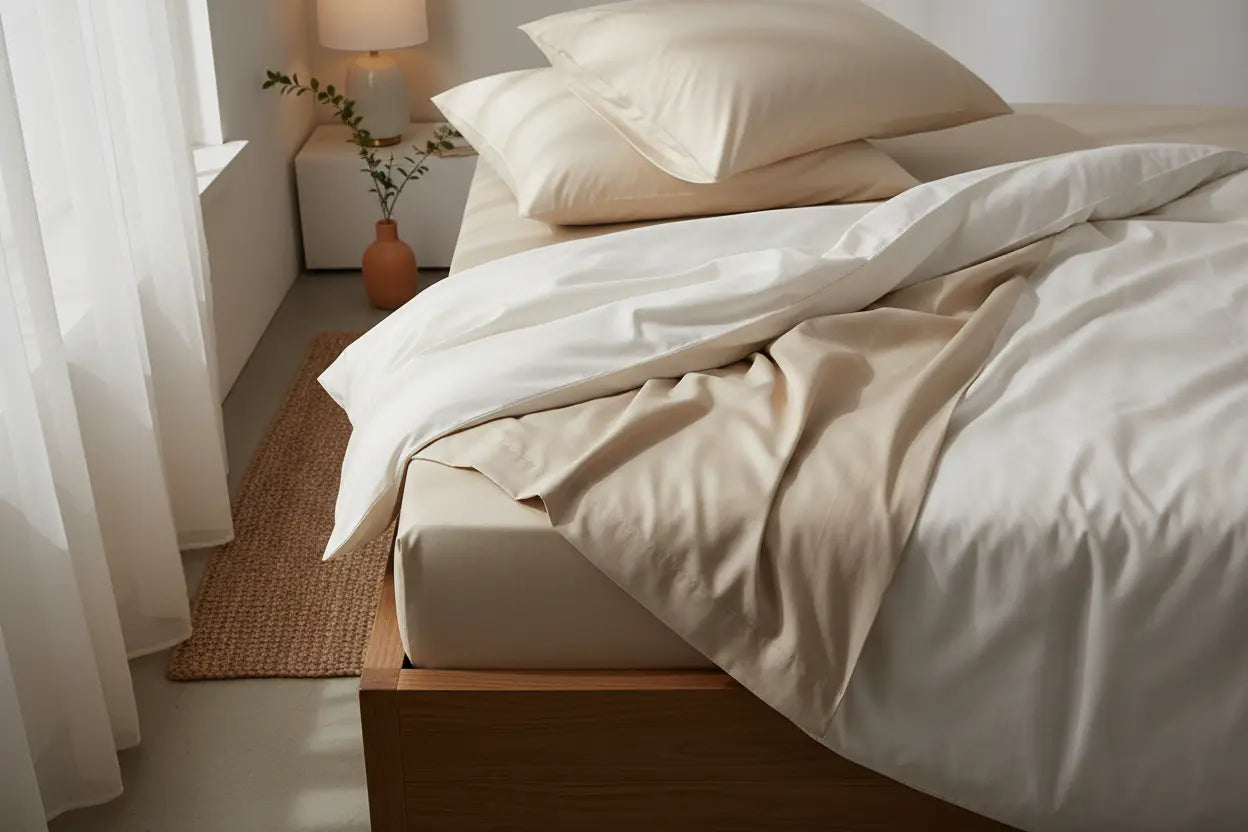
Best 1000 Thread Count Sheets: Are They Really Worth It?
If you want sheets with a heavy drape, a dense hand-feel, and a smooth surface that leans rich rather than crisp, the best 1000 thread count sheets are worth it. They sit at the top end of the weight range, so they suit sleepers who want thickness and substance over a light, airy layer. If you're comparing options across the board, the Best Thread Count for Sheets guide breaks down how every range performs before you commit to one.
That said, "worth it" depends on what you're after. A 1000 thread count sheet set isn't automatically better than a 400TC or 600TC set - it's just heavier and more substantial. Some sleepers love that weight against their skin every night. Others find it too dense for warmer months or a lighter budget. Figuring out the best thread count for bed sheets really comes down to matching the weight to how you actually sleep, not chasing the highest number on the label.
- What sheet thread count actually measures, and why the number alone doesn't tell the whole story
- How 1000 thread count sheets compare to 600TC, 800TC, and 400TC options
- What else affects how a sheet feels - material, fiber length, and weave
- How to pick the best thread count for bed sheets based on how you actually sleep
Quick Answer: Are 1000 Thread Count Sheets Good?
Yes - 1000 thread count sheets are good for sleepers who want a heavier, denser sheet with a rich drape, and they hold up well when the fiber underneath the number is real - long-staple cotton, single-ply yarn, and an honest sateen weave. They tend to feel thicker in hand and drape more like a substantial fabric than a light one. If you like the feel of a heavier comforter or duvet against your skin, a 1000TC set usually matches that preference in a flat or fitted sheet.
They're not the right pick for everyone, though. If you prefer a crisp, lightweight layer you barely notice, a lower thread count will likely suit you better.
Who 1000 Thread Count Sheets Are Best For
- Sleepers who already gravitate toward heavier blankets and comforters
- Anyone who wants a sheet set that feels substantial rather than delicate
- People furnishing a guest room or primary bedroom where drape and weight matter for the overall look of the bed
If you already know you like a heavier feel, a set like the Grand Indulgence 1000 Sateen Cotton Sheet Set in Blue is a reasonable place to start, since it's built specifically around that dense, rich hand-feel rather than a lighter everyday weight.
When a Different Thread Count Might Suit You Better
- If you like sheets that feel light and barely-there, 400TC is usually a better starting point
- If you want a middle-ground feel - some weight, still smooth - 600TC or 800TC often hits that balance
- If budget matters more than density right now, a lower sheet thread count gets you into 100% cotton without the higher price of a 1000TC set
What Does Thread Count Actually Mean?
Thread count is the number of threads woven into one square inch of fabric, counting both the horizontal (weft) and vertical (warp) threads. A sheet listed at 1000 thread count has roughly 1000 threads counted across that one-inch square. It's a manufacturing spec, not a marketing word - and it tells you something real about density and weight, even if it doesn't tell you everything.
How Sheet Thread Count Is Calculated
The math is simple on paper, but it gets murky depending on how a brand counts. Some manufacturers count multi-ply yarns as multiple threads, which inflates the number without actually adding density you can feel. A well-made 600TC single-ply sheet can feel more substantial than a poorly constructed 1000TC sheet built from thin, multi-ply yarn. That's why sheet thread count works best as one data point - not the only one.
- Yarn type: Single-ply yarns (one strand) generally produce a more durable, better-draping fabric than multi-ply yarns counted as separate threads
- Fiber length: Longer fibers (like Egyptian cotton) spin into finer, stronger yarn, which allows a higher thread count without a stiff or heavy result
- Weave: The same thread count feels different in a sateen weave versus a percale weave - more on that below
Why the Number Alone Doesn't Tell the Full Story
A 1000TC label sounds impressive, but the fiber underneath it does most of the actual work. Long-fiber cotton - like Egyptian cotton or Pima cotton - can reach a high sheet thread count with a smooth, even yarn. Short-fiber cotton pushed to the same number often needs multi-ply construction to get there, which can feel rougher and wear out faster.
This is why two sheet sets with an identical thread count on the label can feel completely different once you're actually sleeping on them.
What's the Best Thread Count for Bed Sheets?
There isn't one universal best thread count for bed sheets - it depends on the feel you want and how the sheet is made. That said, most sleepers find their sweet spot somewhere between 400 and 800TC for everyday use, while 1000TC and above appeals to people who specifically want a heavier, denser feel.
Ask five people what the best thread count for bed sheets is and you'll likely get five different answers, and that's normal. Someone who runs warm and likes a light layer will point to 300–400TC. Someone who loves the weight of a thick comforter will point straight to 1000TC. Neither answer is wrong - the best thread count for bed sheets is the one that matches your own sleep preference, not a number that works for everyone equally.
What Counts as a High Thread Count for Sheets
Generally, anything from 800TC upward is considered a high thread count. At this range, you start noticing a heavier drape and a denser hand-feel compared to sheets in the 200–400TC range. The jump from 800TC to 1000TC is smaller in practical feel than the jump from 300TC to 600TC - past a certain point, added threads change the feel incrementally rather than dramatically, which is part of why the question "is 1000 thread count good" doesn't have a single yes-or-no answer.
Is 1000 Thread Count Good for Everyday Use?
It can be, depending on your climate and personal preference. 1000 thread count sheets work well year-round for sleepers who like a heavier layer regardless of season. If you tend to run warm and prefer a lighter feel against your skin, a mid-range thread count with a smooth, breathable texture might serve you better for daily use, with the 1000TC set reserved for cooler months or a guest room where weight and drape matter more than day-to-day breathability.
- Higher thread count sheets often cost more, so weigh the price against how often you'll actually notice the difference
- Care instructions can get more specific at higher thread counts - check the label before you wash
- A 1000TC set makes a noticeable difference on a guest bed or primary bedroom where you want the bed itself to look and feel more substantial
Best 1000 Thread Count Sheets vs Other Thread Counts
Comparing the best 1000 thread count sheets against lower ranges makes the differences easier to see. This isn't about one number being "better" than another - it's about matching the feel to your preference.
|
Thread Count |
Feel |
Weight |
Best For |
|
400TC |
Soft, smooth, airy |
Balanced |
Everyday use, warmer sleepers |
|
600TC |
Soft, smooth, slightly dense |
Structurally balanced |
Most sleepers, year-round |
|
800TC |
Substantial, smooth, dense |
Sumptuous weight |
Sleepers who like a heavier feel |
|
1000TC |
Soft, smooth, rich |
Sumptuous, thick and heavy |
Maximum density and drape |
1000 Thread Count Sheets vs 600 Thread Count Sheets
This is one of the most common comparisons shoppers make, and the honest answer is that neither is objectively better. 600 thread count sheets strike a balance - enough density to feel substantial without tipping into heavy territory, which is why they work for most sleepers most of the year. 1000 thread count sheets go further in the same direction: more weight, more drape, more of that dense, rich hand-feel.
If you've slept on 600TC and wished it had more heft, 1000TC is the logical next step. If 600TC already feels right, going up to 1000TC mostly changes weight - not quality. Either way, both ranges answer "are 1000 thread count sheets good" and "is 600 thread count good" the same way: yes, as long as the fiber underneath the number is solid.
How Weave Type Changes the Feel of Your Sheets
Thread count and weave work together, not separately. The two most common weaves are:
- Sateen weave: Threads pass over multiple threads before going under one, creating a smoother surface with a subtle sheen and a softer drape. Most 1000TC sheets use a sateen weave because it suits the heavier feel.
- Percale weave: A simple over-one, under-one pattern that creates a crisp, matte finish. Percale in a high sheet thread count still feels crisp rather than silky, because the weave structure resists the drape sateen naturally has.
Knowing which weave you prefer matters as much as the thread count number itself - it's often the difference between two sheets with the same sheet thread count feeling completely different on the bed.
What to Look for Beyond Thread Count When Buying Sheets
Thread count is one input. Fiber, weave, and finishing all shape how a sheet actually performs on your bed and in the wash.
Material Quality and Fiber Length
Fiber length is the single biggest factor behind how a high thread count sheet actually feels. Extra-long staple cotton - the category that includes Egyptian cotton and Pima cotton - spins into finer yarn with fewer loose fiber ends. That means less pilling, a smoother surface, and a fabric that tends to get softer with every wash rather than breaking down.
Egyptian cotton specifically comes from fibers grown in the Nile Delta and is typically verified through DNA testing and the Cotton Egypt Association Gold Seal - credentials worth checking for if authenticity matters to you. Not every sheet labeled "Egyptian cotton" carries that verification, so the label alone isn't proof.
This is also where sheet thread count claims get inflated, and it's part of why finding the best thread count for bed sheets takes more than reading one number on a label. A brand chasing a big number on shorter-staple cotton has two options: use thinner yarn, which weakens the fabric, or count multi-ply yarn as separate threads, which pads the number without adding real density. Neither approach improves how the sheet actually feels - it just makes the sheet thread count on the label look more impressive than the fabric underneath it.
Cotton Sheets vs Linen Sheets: What's the Difference
- Cotton softens over time with washing and holds a smooth, even surface - this is where most high thread count sheets, including 1000TC sets, live
- Linen has a naturally textured, slightly looser weave and doesn't use thread count as its primary quality metric - grams per square meter (GSM) is more relevant for linen
- If you want the dense, rich drape associated with a high sheet thread count, cotton is the material built for that. Linen serves a different purpose - texture and a relaxed, lived-in look rather than density
Recommendations for Comfort and Durability
- Look for single-ply yarn construction when possible - check with the brand if it isn't listed
- Prioritize fiber quality over the highest number you can find; a well-made 600TC often outperforms a poorly constructed 1000TC
- Check the weave type against your climate and preference before buying based on thread count alone
- Wash in cold-to-warm water and skip fabric softener, which coats cotton fibers and reduces how soft they get over time
- If you're deciding between two sets with the same sheet thread count, compare the yarn type and origin of the cotton before comparing price - that's usually a better predictor of the best thread count for bed sheets than the number alone
Why California Design Den's Best 1000 Thread Count Sheets Stand Out
A heavier sheet only feels good if the material underneath the thread count number holds up. There's a settled, weighted feel to sleeping under a 1000TC set that lighter sheets can't give you - that dense, cocooned comfort at night is the whole reason this range exists. California Design Den's best 1000 thread count sheets are woven from 100% natural cotton in a sateen finish, which gives them that soft, rich drape without relying on synthetic fibers to get there.
100% Natural Cotton With a Rich, Sateen Drape
The Grand Indulgence 1000 Sateen Cotton Sheet Set in Blue is built around exactly this: a dense, substantial hand-feel with the smooth surface a sateen weave naturally produces. Every wash tends to bring out more of that softness rather than wearing it down, which is a real, factual benefit of natural cotton - not a marketing claim. It's one of the clearer examples of what happens when the best 1000 thread count sheets are built on real fiber quality instead of an inflated number. The same set is also woven in a Grand Indulgence 1000 Sateen Cotton Sheet Set in Navy Blue, if a deeper tone suits your room better than the lighter blue.
Backed by the Good Housekeeping Seal
California Design Den has earned the Good Housekeeping Seal across its cotton sheet and duvet cover collections, including its Cotton Sateen Sheet Sets. That's third-party evaluation from the GH Institute, not a self-issued badge, and it's a meaningful signal if you're comparing sheet sets from brands you haven't tried before.
The value case matters too. Most of our cotton sheets are made in our family-owned facility, and that ownership is part of why a 1000TC set from California Design Den doesn't carry the same markup you'll find on comparable sheets from bigger retail names. If you're outfitting a larger bed, the 1000 Thread Count Sheets King collection carries the full range of colors in that size.
- 100% natural cotton, no synthetic fibers
- Sateen weave for a rich, smooth drape
- Backed by the Good Housekeeping Seal
- Gets softer with every wash
Buying Guide: What to Look for Before You Buy 1000 Thread Count Sheets
Before adding a set to your cart, run through a short checklist. It takes the guesswork out of comparing sheets that all claim the same number, and it's a faster way to land on the best thread count for bed sheets than comparing labels alone.
Pre-Purchase Checklist for 1000 Thread Count Sheets
- Confirm the fiber: Look for 100% cotton, and check for Egyptian cotton verification if that's specifically what you want
- Check the weave: Sateen for a softer, richer drape; percale if you'd rather have a crisp finish at a high sheet thread count
- Read the yarn construction: Single-ply is generally the better indicator of quality than the thread count number alone - this is also how you can tell whether 1000 thread count sheets are good quality or just high on paper
- Match the size: Confirm the set covers your mattress depth, especially for pillow-top or deep mattresses - if you're furnishing a larger bed, the 1000 Thread Count Sheets King collection makes it easy to filter by size and color together
- Compare the price against the credentials: A 1000TC set backed by a real trust signal, like the Good Housekeeping Seal, is a stronger buy than one with no verification behind the number
If you're shopping specifically within this range, the Best 1000 Thread Count Sheets collection groups verified options together so you're not cross-referencing specs across a dozen different product pages. The Grand Indulgence 1000 Sateen Cotton Sheet Set in Navy Blue is also worth a look if you want a deeper, richer color to match the heavier feel of the fabric - a good example of how the best thread count for bed sheets can also come down to how the finished set looks on the bed, not just how it's woven. And if you haven't yet compared this range against lower thread counts side by side, the Best Thread Count for Sheets guide has a full breakdown worth reading before you buy.
Care Tips to Protect Your Investment
- Wash before first use to soften the fibers and remove any finishing residue
- Skip high heat when drying - moderate heat protects the fibers and keeps the drape intact longer
- Rotate between two sets so each gets time to rest between washes, which extends the life of any high thread count sheet
Final Verdict: Are Best 1000 Thread Count Sheets Worth It?
The best 1000 thread count sheets earn their price when the fiber and weave behind the number are actually good - long-staple cotton, single-ply yarn, and a sateen finish that lets the weight drape rather than sit stiff. If that dense, substantial feel is what you're after, a 1000TC set delivers it consistently, season after season.
So are 1000 thread count sheets good for you specifically? If you already know you like weight and drape, the answer is almost certainly yes. If you've never tried anything above 400TC, it's worth testing a 600TC or 800TC set first to see how much heft you actually want before committing to the top of the range.
If you're still weighing thread count against material and weave, the Best 1000 Thread Count Sheets collection gives you an easy way to compare a verified 1000 thread count sheet set against everything else on your shortlist - backed by 100% natural cotton and the Good Housekeeping Seal, without the markup that usually comes with sheets at this weight.
Whichever way you land, judge the sheet by what it's made of first, and let the thread count number confirm the feel - not define it.
Frequently Asked Questions About 1000 Thread Count Sheets
Are 1000 thread count sheets worth it?
Yes, if you want a heavier, richer drape and a dense feel on your skin. 1000 thread count sheets suit sleepers who prefer weight over a light, crisp layer.
Is Egyptian cotton always high thread count?
No. Egyptian cotton is defined by fiber length, not thread count - you'll find it woven into everything from 300TC percale to 1000TC sateen sheets.
Why are people no longer using top sheets?
Many sleepers now use duvet covers for fewer pieces to wash and faster bed-making, though a top sheet still adds a clean layer some people like.
What is better, 100% cotton or Egyptian cotton?
Egyptian cotton is a type of 100% cotton with longer fibers, which generally gives it a smoother surface and more durability over repeated washes.
Which is better, 600 or 1000 thread count?
Neither is objectively better. 600TC feels lighter and crisper; 1000 thread count sheets feel heavier and richer - pick based on preference, not quality.


