

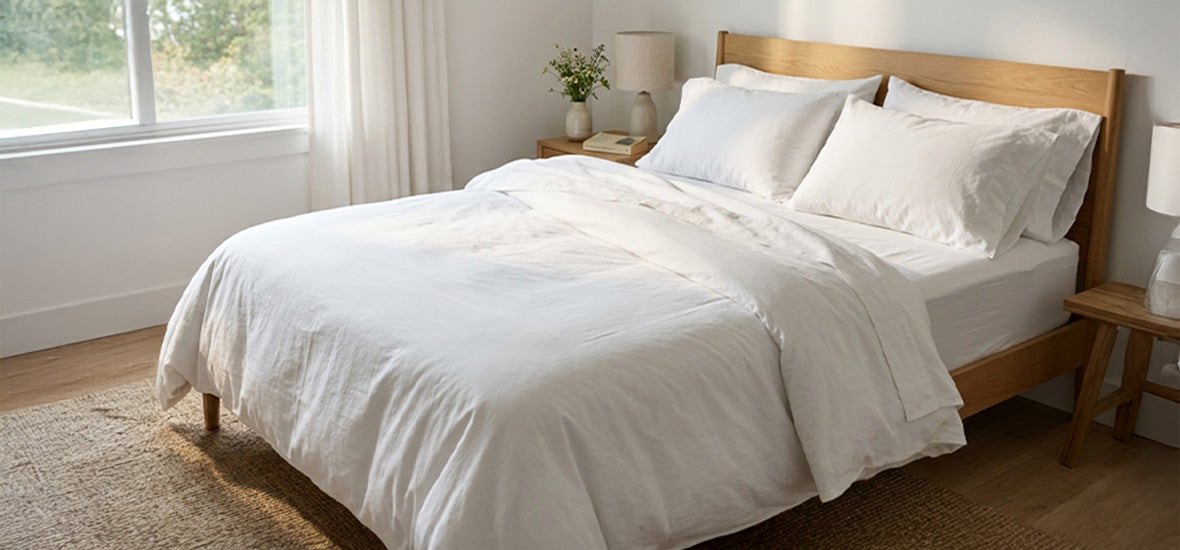
Choosing the best material for a duvet cover comes down to how you want your bedding to feel every day - light and breathable, smooth and soft, or textured and natural. The right fabric affects comfort, durability, and overall sleep experience more than any other factor.
Cotton remains the most widely used option because it balances softness, breathability, and easy care. Within cotton, different weaves like percale and sateen create distinct feels - crisp vs smooth - allowing you to fine-tune comfort based on preference.
Other materials like linen, bamboo, and silk offer unique textures and benefits, but each comes with trade-offs in maintenance, durability, or feel. Understanding these differences helps you choose a duvet cover that matches your climate, sleep style, and everyday use without overcomplicating the decision.
What Is the Best Material for a Duvet Cover?
If you want a simple answer, the best material for a duvet cover depends on everyday comfort, breathability, and ease of care - but one option consistently stands out.
Best Material for Duvet Cover Overall
100% natural cotton is the most reliable choice overall.
It offers:
- Balanced breathability for year-round use
- Soft, natural feel on skin
- Easy washing and maintenance
- Long-term durability with proper care
Cotton works well across climates and sleep styles, making it the most practical everyday option.
Best Material Based on Sleep Preference
Different materials suit different comfort needs:
- Hot sleepers → Percale cotton (light, airy feel)
- Soft, smooth feel → Sateen cotton (silky surface with gentle drape)
- Natural texture → Linen (relaxed, breathable structure)
- Light luxury feel → Silk or bamboo (smooth, fluid comfort)
Most people still prefer cotton because it balances comfort and practicality without being high maintenance.
Best Duvet Cover Materials
Choosing the right material is easier when you compare how each one feels and performs in everyday use. Below is a simple breakdown based on comfort, durability, and usability.
Breathability (Hot vs Cool Feel)
- Percale cotton → most breathable, airy feel
- Sateen cotton → balanced breathability with smoother surface
- Linen → highly breathable with a textured, relaxed feel
- Bamboo → light and fluid feel with good airflow
- Silk → smooth but less breathable than cotton or linen
- Microfiber → less breathable, more heat-retaining feel
Softness and Next-to-Skin Comfort
- Silk → ultra-smooth, premium soft feel
- Sateen cotton → soft and slightly silky surface
- Bamboo → smooth and fluid texture
- Percale cotton → crisp rather than soft
- Linen → textured, relaxed softness
- Microfiber → soft initially but can feel less natural over time
Durability and Long-Term Use
- Cotton (all types) → strong and reliable over time
- Linen → highly durable, improves with use
- Microfiber → resistant to wrinkles but less natural longevity feel
- Silk → delicate, requires careful handling
- Bamboo → moderate durability depending on weave
Maintenance and Ease of Care
- Cotton → easiest to wash and maintain
- Microfiber → low maintenance but synthetic feel
- Bamboo → moderate care required
- Linen → needs gentle handling but improves over time
- Silk → highest care requirement
Value for Money
- Cotton → best long-term value
- Microfiber → lowest cost option
- Bamboo → mid to premium range
- Linen → higher investment
- Silk → premium luxury pricing
Key Insight
Across all categories, cotton consistently delivers the best balance of comfort, breathability, and practicality, which is why it remains the most widely used bedding material.
How to Choose a Best Duvet Cover Materials
Here’s a simple way to choose based on how you want your bedding to feel in everyday use - light, smooth, textured, or easy to maintain.
Best for Everyday Comfort (Balanced Choice)
The 400 Thread Count Duvet Cover Dusty Blue in the 300–400 TC cotton range is one of the most balanced options for everyday use.
- Natural breathability
- Comfortable in most climates
- Easy to wash and maintain
- Works across seasons
This is the most practical “all-rounder” choice for most homes.
Best for Cool and Airy Feel
Cotton percale is ideal if you prefer a lighter, crisper bedding feel.
- More open weave for airflow
- Light, fresh texture
- Works well in warmer conditions
It feels less dense compared to smoother weaves.
Best for Soft and Smooth Feel
Cotton sateen offers a smoother surface with a subtle sheen.
- Soft, fluid drape
- Gentle feel on skin
- Slightly warmer than percale but still breathable
Good for those who prefer a more polished finish.
Best for Lightweight Natural Texture
Linen provides a relaxed, textured feel.
- Highly breathable structure
- Naturally airy and loose weave
- Softens over time with use
Best for a natural, relaxed bedding style.
Best Budget-Friendly Option
Microfiber alternatives are often positioned as low-cost bedding options. A better budget-friendly choice is the 400 Thread Count Duvet Cover grey
However, for CDD’s positioning, a better budget option is:
- Entry-level cotton duvet covers (300–400 TC)
- Still natural, breathable, and durable
- Better long-term feel than synthetic options
Best Premium Feel Option
High-quality sateen cotton or bamboo blends
- Smooth, refined surface
- More elevated feel on the bed
- Balanced comfort with a soft finish
These work well for a more premium bedding experience without sacrificing usability.
Choosing Best Duvet Cover Based on Material
Choosing the right duvet cover material depends on how it feels in daily use - breathability, softness, maintenance, and long-term comfort all matter more than labels.
Cotton Duvet Covers (Overall Best Choice)
Cotton is the most widely used duvet cover material because it balances comfort and practicality.
- Naturally breathable
- Comfortable for year-round use
- Easy to wash and maintain
- Works well for most sleep preferences
It remains the most reliable everyday bedding material.
Percale Cotton (Crisp and Airy Feel)
Percale is a cotton weave known for its lighter, crisper texture.
- More open weave for airflow
- Feels fresh and structured
- Ideal for warmer sleeping conditions
It’s preferred by those who like a clean, matte bedding feel.
Sateen Cotton (Smooth and Soft Feel)
Sateen has a smoother surface and slightly more fluid drape.
- Soft, silky-like finish
- Slightly heavier feel than percale
- Comfortable for year-round use
It’s a good choice for a more refined, polished bedding look.
Linen (Natural Textured Feel)
Linen offers a more relaxed, natural texture.
- Highly breathable structure
- Slightly textured, lived-in feel
- Softens over time with use
It works well for a casual, natural aesthetic.
Bamboo (Light and Fluid Feel)
Bamboo fabrics feel lightweight and smooth.
- Soft and fluid texture
- Good breathability
- Comfortable against skin
Often chosen for its light, modern feel.
Silk (Luxury-Grade Smoothness)
Silk provides a very smooth and premium surface feel.
- Extremely soft texture
- Lightweight and delicate
- Requires careful maintenance
Best suited for occasional luxury use.
Microfiber (Affordable Synthetic Option)
Microfiber is a synthetic option often used in budget bedding.
- Soft initial feel
- Easy care and wrinkle resistance
- Less breathable compared to natural fabrics
While affordable, it does not match the natural comfort of cotton-based options.
Why Cotton Is the Best Material for Duvet Covers
Cotton consistently stands out because it balances comfort, practicality, and long-term usability without needing special care or handling.
Breathable and Airy
Cotton has a naturally open fiber structure that allows air to move more freely through the fabric. This helps the duvet cover feel lighter and less dense during everyday use.
Soft and Comfortable for Daily Use
With regular use and washing, cotton develops a naturally softer hand feel. It stays comfortable without feeling artificial or overly processed.
Durable and Easy to Maintain
Cotton duvet covers are:
- Easy to wash in regular cycles
- Resistant to everyday wear
- Long-lasting when cared for properly
This makes them suitable for consistent, long-term use in most homes.
Best Duvet Cover Material for Hot Sleepers
For warm sleepers, the goal is to choose materials that feel light, open, and less dense in structure.
Best Cooling Material Choice
Cotton percale is often preferred because it has a lighter, more breathable weave that feels less heavy on the body.
Lightweight and Breathable Fabrics
Good options for warm conditions include:
- Percale cotton
- Lightweight linen
- Thin cotton weaves (300–400 TC range)
These materials feel less restrictive and more open in structure.
Percale vs Sateen for Warm Sleep
- Percale cotton → lighter, crisper, more airy feel
- Sateen cotton → smoother, slightly denser feel
For hotter conditions, percale is generally the more breathable-feeling option.
Best Material for a Duvet Cover to Stay Cool
Choosing a cooling duvet cover material is less about “cooling technology” and more about how open, light, and breathable the fabric feels in everyday use.
Fabric Structure and Airflow
Materials with a more open weave allow better airflow between the fabric and your body.
- Percale cotton → more open weave, airy feel
- Linen → naturally loose structure, relaxed airflow
- Sateen cotton → smoother surface, slightly more closed weave
The more open the structure, the lighter the bedding tends to feel.
Moisture Management Feel
Some fabrics feel more comfortable because they don’t cling or feel heavy over time.
- Cotton → absorbs and releases moisture naturally
- Linen → feels dry and airy due to texture
- Bamboo → smooth and fluid in feel
This helps the bedding stay comfortable across changing room conditions.
Summer-Friendly Material Choices
For warmer seasons, lighter constructions work best:
- Cotton percale (best all-round summer choice)
- Lightweight linen (very airy, relaxed feel)
- Thin cotton sateen (smooth but still usable in mild heat)
These options prioritize a less dense, more breathable sleep environment.
Best Duvet Cover Material for Winter
In colder months, the goal is to choose materials that feel slightly more substantial while still staying comfortable and breathable enough for layered bedding.
Warmer, Heavier Fabric Feel
Some fabrics naturally feel more insulating because of their tighter or smoother weave.
- Cotton sateen → smoother, slightly warmer feel
- Flannel cotton → soft, brushed texture with more warmth
- Linen (layered) → can feel warmer when paired with heavier inserts
These materials help create a cozier bedding environment without feeling overly restrictive.
Layering with Inserts for Comfort
Winter comfort often depends more on the insert than just the cover.
- Pair duvet covers with medium to heavier inserts
- Use layering (sheets + duvet) for added warmth
- Choose fabrics that hold structure well with thicker fills
This helps maintain a consistent, comfortable sleep setup.
Balancing Warmth and Breathability
Even in winter, bedding shouldn’t feel overly heavy.
- Cotton sateen offers warmth with softness
- Avoid overly dense synthetic fabrics that trap excess heat
- Natural cotton helps maintain a balanced feel across the night
The best winter setup still allows some airflow while keeping warmth inside.
Best Duvet Cover Materials for Different Use Cases
Different lifestyles and budgets call for different fabric choices. Here’s how to match material to everyday needs.
Best for Everyday Use
100% cotton duvet covers are the most practical option for daily use.
- Comfortable across seasons
- Easy to wash and maintain
- Reliable long-term durability
- Works for most sleep preferences
This is the most balanced, all-purpose choice.
Best for Luxury Feel
For a more elevated feel, smoother and finer weaves are preferred.
- High-quality sateen cotton → soft, polished surface
- Bamboo blends → fluid, silky drape
- Fine cotton finishes → refined texture without being heavy
These options focus more on feel and finish.
Best for Budget Buyers
A budget-friendly duvet cover should still prioritize natural comfort, and the 400 thread count duvet set bright white is a good example of this balance.
- Entry-level cotton (300–400 TC)
- Simple weaves with fewer finishes
- Durable, easy-care construction
Even at lower price points, cotton performs better over time than synthetic alternatives.
Sateen vs Percale: Which Is Better for Duvet Covers?
Both sateen and percale are cotton weaves, but they feel very different in daily use. The choice comes down to texture preference and how you like your bedding to feel.
Key Differences in Feel and Texture
- Percale cotton → crisp, matte finish with a lighter, airy feel
- Sateen cotton → smoother, softer surface with a slightly more fluid drape
Percale feels more structured, while sateen feels more polished and soft.
Which One Should You Choose
- Choose percale if you prefer a fresh, light, and breathable feel
- Choose sateen if you prefer a smoother, softer, more refined surface
Both work well, but percale is often preferred for a more airy everyday feel, while sateen is chosen for a softer touch experience.
What to Look for When Choosing a Duvet Cover
A good duvet cover is not just about fabric type - it’s about how well the material is constructed and how it performs in daily use.
Fabric Quality and Fiber Type
Always check what the fabric is actually made of.
- 100% natural cotton is the most reliable choice
- Long-staple cotton generally feels smoother and lasts longer
- Avoid unclear blends that don’t specify fiber content
Thread Count (What Actually Matters)
Thread count affects feel, but it’s not the only factor.
- 300–400 TC → lighter, more breathable feel
- 400–600 TC → smoother, more refined surface
- Very high TC → not always better for everyday comfort
Balanced cotton tends to perform best long term.
Weave and Surface Finish
The weave determines how the fabric feels:
- Percale → crisp, airy texture
- Sateen → smooth, soft finish
- Linen → relaxed, textured surface
Choose based on whether you prefer crispness or softness.
Ease of Maintenance
A practical duvet cover should be easy to care for:
- Machine washable
- Resistant to everyday wear
- Maintains shape after multiple washes
Cotton performs well here because it is simple to maintain.
What Material Should You Avoid for Duvet Covers
Not all fabrics are equally suitable for everyday bedding use. Some materials may look fine initially but don’t perform as well over time in comfort or breathability.
Low-Quality Synthetic Fabrics
Synthetic materials like low-grade polyester blends can feel less natural on the skin.
- Often feel less breathable
- Can retain a more “plastic-like” texture over time
- May not offer the same long-term comfort as natural fibers
Non-Breathable Materials
Fabrics with tight construction and limited airflow can feel heavier in everyday use.
- Reduce overall airflow in bedding
- May feel less comfortable for extended sleep
- Not ideal for year-round use
Natural cotton-based fabrics generally provide a more balanced and comfortable experience.
Common Mistakes When Choosing Duvet Cover Material
Many people focus only on appearance or thread count and overlook practical comfort factors.
- Choosing fabric based only on price or look
- Ignoring weave type (percale vs sateen)
- Overlooking breathability for everyday use
- Assuming higher thread count always means better comfort
- Not considering seasonal use (summer vs winter needs)
A balanced approach - focusing on feel, breathability, and usability - usually leads to better long-term satisfaction.
Why California Design Den Cotton Duvet Covers Stand Out
California Design Den focuses on 100% natural cotton duvet covers designed around fabric quality, weave construction, and long-term comfort instead of synthetic finishes or heavily processed blends.
CDD offers different cotton duvet cover styles depending on how you want your bedding to feel:
- Percale cotton duvet covers for a crisp, lightweight, airy finish
- Sateen cotton duvet covers for a smoother and softer everyday feel
- Balanced 300–400 thread count options that work comfortably across seasons
Options like the 400 Thread Count Duvet Cover Dusty Blue create a breathable everyday setup, while sateen cotton duvet covers offer a softer and slightly more refined surface feel for year-round comfort.
Unlike microfiber-based bedding, California Design Den duvet covers are made without synthetic plastic fibers, helping maintain a more natural fabric feel over time.
Many California Design Den cotton bedding products are also OEKO-TEX tested and backed by the Good Housekeeping Seal, reinforcing fabric quality, consistency, and everyday usability.
Final Verdict: Best Material for Duvet Cover
The best material for a duvet cover depends on comfort preference, but cotton consistently stands out as the most practical and balanced option.
It offers:
- Reliable breathability for year-round use
- Soft, natural feel on the skin
- Easy maintenance and long-term durability
Within cotton, percale provides a crisp, airy feel, while sateen offers a smoother, softer finish - making both strong choices depending on your preference.
For most people, a well-made cotton duvet cover delivers the best combination of comfort, usability, and everyday performance.
Frequently Asked Questions About Duvet Cover Materials
What is the best material for a duvet cover?
100% natural cotton is widely considered the best overall choice because it balances breathability, softness, durability, and easy care for everyday use.
What is the best duvet cover material for hot sleepers?
For warmer conditions, cotton percale is often preferred because it feels lighter, crisper, and more breathable compared to denser weaves.
What material keeps a duvet cover cool?
Lightweight, open-weave fabrics like cotton percale and linen tend to feel more airy and less dense, making them suitable for warm sleeping environments.
Is cotton or linen better for duvet covers?
Both work well. Cotton is more versatile and easier to maintain, while linen has a more textured, relaxed feel and becomes softer over time.
What is the most breathable duvet cover material?
Cotton percale and linen are generally considered the most breathable due to their lighter, more open weave structure.


