

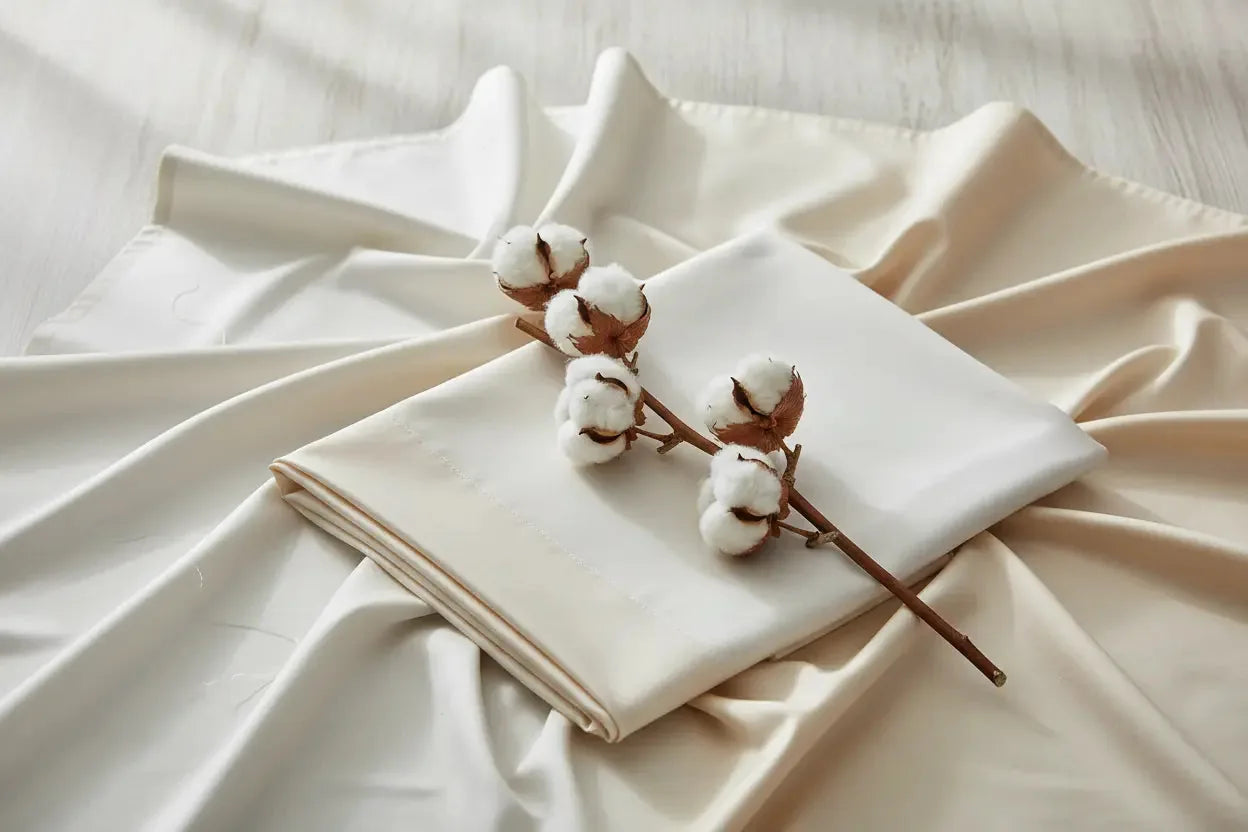
Is Egyptian cotton good ? - Yes, and for most people, it's the best natural cotton available for everyday bedding. It's grown in the Nile Delta region of Egypt, where the climate and soil produce extra-long staple fibers that spin into a finer, smoother, stronger yarn than standard cotton. The result is a sheet that feels refined from the first night and gets noticeably softer the more you wash it.
What makes Egyptian cotton worth understanding is what separates authentic fiber from mislabeled products. A lot of sheets carry the Egyptian cotton label without the quality to back it up. To understand how genuine Egyptian cotton compares to other cotton types at a fiber level, the Cotton vs Egyptian Cotton Sheets guide is a useful reference before making any purchase decision.
This blog covers everything you need to know: what Egyptian cotton actually is, why it's better, the proven benefits, how it compares to other cottons, what percale vs Egyptian cotton really means, and how to identify the real thing when you're shopping for the best Egyptian cotton sheets.

Is Egyptian Cotton Good : Quick Answer
- Is Egyptian cotton good? Yes - when it's authentic. Genuine Egyptian cotton is one of the best natural fibers available for everyday bedding.
- What is Egyptian cotton? It's a specific cotton variety (Gossypium barbadense) grown in the Nile Delta, producing extra-long staple fibers of 38mm or more.
- Why is Egyptian cotton better? Longer fibers create a finer, stronger yarn - resulting in sheets that are smoother, more durable, and get softer with every wash.
- The best Egyptian cotton sheets carry the Cotton Egypt Association Gold Seal - independent DNA verification that the fiber is authentic Nile Delta origin.
- Percale vs Egyptian cotton: percale is a weave pattern, Egyptian cotton is a fiber type. The two are not competing - Egyptian cotton can be woven in percale or sateen.
- Not every "Egyptian cotton" label is real. Look for CEA Gold Seal certification and a clear "100% Egyptian cotton" statement before buying.
What Is Egyptian Cotton and Why Does It Matter?
When people ask what is Egyptian cotton, the answer starts with geography. Egyptian cotton refers to a specific variety of cotton plant - Gossypium barbadense - grown in the Nile Delta region of Egypt. This is not a marketing category or a quality tier that any brand can claim. It's a specific fiber, from a specific place, with measurable physical characteristics that set it apart from every other cotton variety grown globally.
The Nile Delta has been cultivating this variety for over two centuries. The mineral-rich alluvial soil, the long growing season, and the warm, dry climate combine to produce something other cotton-growing regions cannot replicate: an extra-long staple fiber that results in bedding with a distinctly different feel.
Where Egyptian Cotton Actually Comes From
The Cotton Egypt Association (CEA) was established specifically to protect Egyptian cotton's authenticity. It oversees supply chain certification and DNA testing of raw fiber to verify that products claiming to be Egyptian cotton actually contain Gossypium barbadense fiber grown in the Nile Delta. When you see the Cotton Egypt Association Gold Seal on a product, it means the fiber has been independently verified - not self-reported by the brand.
This matters because the global bedding industry has a serious mislabeling problem. Studies have found that a significant percentage of products sold as Egyptian cotton in the US and Europe contain little to no authentic Egyptian fiber. So knowing what is Egyptian cotton at a certification level is the first step toward buying the real thing.
What Makes Egyptian Cotton Fiber Different from Regular Cotton
The difference between Egyptian cotton and regular upland cotton comes down to fiber length, also called staple length. Extra-long staple (ELS) fibers - typically over 38mm - allow for a finer, tighter yarn with fewer exposed fiber ends. Fewer exposed ends mean a smoother fabric surface, greater tensile strength, and a sheet that resists pilling, softens with every wash, and maintains its weave integrity for years.
Standard upland cotton - which makes up the majority of cotton sheets sold globally - produces fibers in the 25–28mm range. Those shorter fibers result in a coarser yarn, a less refined surface, and a fabric that tends to degrade faster with washing.
|
Cotton Type |
Staple Length |
Quality Profile |
|
Egyptian Cotton |
38mm+ (extra-long staple) |
Finest yarn, smoothest surface, most durable |
|
Pima |
34–38mm (long staple) |
High quality, slightly shorter fiber |
|
Upland Cotton |
25–28mm (short/medium staple) |
Most common, serviceable but less refined |
Is Egyptian Cotton Good Enough to Justify the Price?
This is the question most people are really asking. Egyptian cotton sheets cost more than standard cotton - sometimes significantly more. Is Egyptian cotton good value? The answer depends entirely on whether what you're buying is authentic. Genuine Egyptian cotton delivers a measurably better product. A mislabeled sheet at the same price point delivers none of those benefits.
The premium you pay for authentic Egyptian cotton reflects the fiber cost, the growing conditions, and the independent certification required to verify it. Once you've experienced sheets made from real ELS fiber, the difference is noticeable - not just at first use, but across years of washing and sleeping on them.
Why Is Egyptian Cotton Better Than Standard Cotton?
Why is Egyptian cotton better? Three reasons matter most: fiber length, tensile strength, and what happens over time. Egyptian cotton's extra-long staple fibers produce a yarn with fewer structural weak points. That translates directly into a fabric that is smoother, stronger, and more consistent in quality than what you get from short or medium staple cottons.
Standard upland cotton sheets tend to pill more quickly, stiffen after a few washes, and thin out at seams and corners within a year or two of regular use. Egyptian cotton does the opposite. The fabric relaxes with washing rather than breaking down. After a dozen wash cycles, a well-made set of Egyptian cotton sheets will feel measurably softer than it did when new. That's not marketing - it's a function of how long ELS fibers are structured.
- Upland cotton: 25–28mm staple fibers, more pilling, faster degradation
- Egyptian cotton: 38mm+ fibers, stronger yarn, smoother surface, gets softer with washing
- The gap widens over time - Egyptian cotton's advantage compounds across wash cycles
Debunking the Myth: "All Egyptian Cotton Labels Are Equal"
The bedding industry has traded on the Egyptian cotton name for decades. The problem is that labeling has historically been loose. Products claiming Egyptian cotton often contained mixed fiber, low-grade Gossypium barbadense, or no authentic Egyptian fiber at all. One widely cited study found that the majority of products tested failed DNA verification for authentic Egyptian cotton.
This is precisely why the Cotton Egypt Association Gold Seal exists. It closes the gap between what's printed on a label and what's actually in the fabric. When shopping for the best Egyptian cotton sheets, look for the CEA Gold Seal plus a clear statement of 100% Egyptian cotton - not "Egyptian cotton blend" or "Egyptian-style." Those qualifiers are red flags.

3 Proven Benefits of Egyptian Cotton Bedding
When you're working with genuine Egyptian cotton, the benefits follow directly from the fiber's physical properties. They're not aspirational - they're measurable. Here are the three that matter most for everyday use.
Superior Comfort - Egyptian Cotton Softness That Gets Better Over Time
Egyptian cotton sheets feel smooth and refined from the first use. The extra-long staple fibers produce a tightly woven fabric with fewer surface irregularities, which is why the feel against skin is noticeably different from standard cotton from the moment you put them on the bed.
But the real differentiator is what happens after repeated washing. Most fabrics - including cheaper cottons - stiffen or roughen over time. Egyptian cotton does the opposite. The fibers gradually relax and the weave settles, producing a progressively softer surface with every wash cycle. After a year of regular use, Egyptian cotton bedding that has been properly cared for will feel softer than it did when new. No other mainstream cotton type does this consistently.
If you want to experience that difference firsthand, the 100 Egyptian Cotton Sateen Sheet Set in White is made from DNA-verified Egyptian cotton in a sateen weave - smooth, refined, and built to improve with every wash.
High Durability - Why Egyptian Cotton Sheets Last Longer
Egyptian cotton's long staple fibers create a yarn that is structurally stronger than short-staple alternatives. In practical terms, this means the fabric holds its weave integrity, resists pilling, and doesn't develop thin spots or seam failures the way cheaper cotton does after a year or two of regular use.
A well-made set of Egyptian cotton sheets, properly cared for, will typically last several years without meaningful degradation in quality. When you calculate cost-per-use across that lifespan, Egyptian cotton bedding often ends up being the more economical choice - not the more expensive one. Buying a cheaper sheet set twice or three times costs more than buying a durable set of Egyptian cotton sheets once.
- Resistant to pilling, surface wear, and fiber breakage
- Maintains weave integrity through repeated washing
- Holds color and surface finish longer than standard cotton
- Lower cost-per-use over a 3–5 year lifespan
Smooth, Breathable Texture - An Everyday Natural Feel
Egyptian cotton has a smooth, breathable texture that makes it comfortable to use year-round. The fine yarn and open weave allow air to move through the fabric, giving it an airy, light feel against the skin - without the heaviness you get from denser synthetic blends or lower-quality cottons.
It doesn't feel heavy or clammy against the skin. The polished surface and fine yarn create a fabric that feels balanced whether your room runs warm or cool. Most people find Egyptian cotton bedding comfortable to sleep year-round - it doesn't feel heavy or clammy, and the smooth surface feels balanced in any season.
Egyptian Cotton vs. Other Cottons - What Makes It Better?
Understanding how Egyptian cotton compares to other popular cotton varieties puts the price premium in context and clarifies why Egyptian cotton is better for specific use cases. Not every cotton type is equal - and the differences matter if you're buying sheets you plan to use for years.
Fiber Length and Why It Defines Egyptian Cotton Quality
The entire quality argument for Egyptian cotton starts with fiber length. Extra-long staple fiber allows for a finer yarn spun with fewer fiber joins. Fewer joins mean fewer structural weak points. Finer yarn means more threads can be woven into each square inch, supporting higher thread counts without needing to twist or ply yarns artificially to inflate the number.
This is also why thread count works differently with Egyptian cotton than with standard cotton. Authentic fiber and thread count work together - neither replaces the other. A genuine 400TC Egyptian cotton sheet will feel better than a fake 800TC 'Egyptian cotton' sheet - not because the thread count is lower, but because authentic fiber and thread count work together. Manipulated yarn inflates the number without improving the fabric. Neither replaces the other.
Durability and Softness - How Egyptian Cotton Compares
Pima cotton - cotton grown in the US Southwest - is the closest genuine competitor to Egyptian cotton. Both are long-staple cottons, both produce smooth and durable fabric, and the difference between a high-quality Pima sheet and a high-quality Egyptian cotton sheet is smaller than the marketing suggests.
The larger gap is between either of these and standard upland cotton. Upland cotton makes up the vast majority of cotton sheets sold globally, and it is a serviceable fabric - but one that pills faster, softens less, and doesn't hold its weave integrity as long. For everyday bedding that you expect to use for years, the case for Egyptian cotton over standard upland cotton is clear.
- Egyptian cotton: smoothest surface, longest durability, best long-term performance
- Pima : genuine long-staple quality, close competitor
- Upland cotton: widely available, lower price point, shorter service life
Natural Resistance to Fading and Wear
Because Egyptian cotton's long fibers produce a tightly woven yarn with fewer exposed fiber ends, the fabric naturally resists surface abrasion better than short-staple alternatives. Fewer exposed ends means less fiber breakage with each wash cycle - which directly affects how well the fabric holds its color, surface texture, and overall finish over time.
Egyptian cotton sheets tend to maintain their appearance - color depth, surface smoothness, weave clarity - through significantly more wash cycles than standard cotton. This is part of the durability advantage that makes Egyptian cotton bedding a practical long-term choice, not just a luxury purchase.
Percale vs Egyptian Cotton - Which Should You Choose?
The percale vs Egyptian cotton question is one of the most common in bedding - and it's based on a misunderstanding. Percale and Egyptian cotton are not competing options. They don't describe the same thing. Percale is a weave pattern. Egyptian cotton is a fiber type. The two can - and often do - exist in the same product.
What Percale Weave Actually Means
Percale refers to a one-over, one-under plain weave structure that produces a crisp, matte surface with a clean, firm texture. Percale sheets feel sharp and fresh - lighter in hand than sateen, with a more structured drape. The weave makes them feel cool and smooth, with no sheen.
In the percale vs Egyptian cotton comparison, the key thing to understand is that Egyptian cotton describes what the fiber is - where it was grown, how long the staple is, and how the yarn is spun. Percale describes how that fiber is woven. A percale sheet can be made from upland cotton, Pima cotton, or Egyptian cotton. The fiber quality is determined by what cotton type goes in. The feel is shaped by the weave.
For a sense of what a well-made percale weave feels like in everyday use, the Signature Egyptian Cotton Percale Sheet Set White - made from 100% natural cotton in a classic percale weave - gives a clean, crisp reference point for the texture and drape that percale is known for.
Can Egyptian Cotton Come in Percale? Yes - Here's What Changes
Yes. Egyptian cotton can absolutely be woven in percale. When it is, you get the extra-long staple fiber's smoothness and durability combined with the crisp, matte texture that percale is known for. The result is a sheet that is both refined and firm - with a clean surface that sharpens further with washing as the percale structure sets.
If you prefer the silkier, slightly drapey feel of sateen, that's a different weave applied to the same Egyptian cotton fiber. The fiber stays the same. The weave changes the surface character. In the percale vs Egyptian cotton decision, the right question is: what texture do you prefer against your skin? Crisp and matte, or smooth and lustrous? Both can be made from Egyptian cotton. Both are good choices for people who know what they like.
How to Identify Genuine Egyptian Cotton Before You Buy
Given the mislabeling history in the bedding industry, knowing how to verify authenticity is a practical buying skill. Is Egyptian cotton good? Yes - when it's real. The problem is that many products with "Egyptian cotton" on the label are not. These are the indicators that separate authentic Egyptian cotton from a marketing claim.
Certifications and Labels That Matter
The Cotton Egypt Association Gold Seal is the most reliable indicator of genuine Egyptian cotton. CEA certification involves DNA testing of raw fiber to verify geographic and varietal authenticity. Products that carry the Gold Seal have been independently tested - not self-reported.
Additional markers of quality to look for:
- Cotton Egypt Association Gold Seal on product documentation or packaging
- A clear "100% Egyptian cotton" statement - no blend language, no qualifiers
- OEKO-TEX Standard 100 certification - confirms the fabric has been tested for harmful substances, a signal of quality manufacturing overall
- Brand transparency about sourcing and certification - a credible brand can explain where their fiber comes from
The 100 Egyptian Cotton Sateen Sheet Set in Beige carries DNA-verified Egyptian cotton fiber - the certification is part of the product, not just the label. That's the standard worth holding any Egyptian cotton sheet purchase to.
Red Flags That Signal a Fake Egyptian Cotton Claim
Some common indicators that an Egyptian cotton claim may not hold up:
- No mention of Cotton Egypt Association certification or third-party fiber verification
- Unusually low price for claimed Egyptian cotton - authentic ELS fiber has a real cost
- Vague labeling: "Egyptian cotton blend," "Egyptian-style," or "Egyptian touch"
- Extremely high thread count claims (1,500TC, 2,000TC) - these are typically achieved through multi-ply yarn manipulation, not genuine high-quality fiber
- No brand history or manufacturing transparency
Thread count is a meaningful selection tool when used correctly. It describes the weight and feel of a finished fabric - a 400TC Egyptian cotton sheet and a 600TC Egyptian cotton sheet from the same brand will feel different, with the 600TC offering more density and drape. But thread count alone cannot validate fiber quality. Authentic fiber and thread count work together. Neither replaces the other.
Care and Maintenance of Egyptian Cotton Bedding
Egyptian cotton is not high-maintenance. A few consistent habits extend its life significantly and protect the qualities that make it worth buying. The care routine is simple - but getting it right matters, especially in the first few washes.
Washing Egyptian Cotton Sheets the Right Way
- Wash in warm water - not hot. High heat weakens long staple fibers over time
- Use a gentle, liquid detergent - powder detergents can leave residue that roughens the surface
- Avoid bleach, even on white sheets - it breaks down the ELS fibers that give Egyptian cotton its strength and smoothness
- Wash before first use to activate the natural softening process in the fibers
- Use a normal cycle - Egyptian cotton doesn't need delicate settings, but avoid heavy-duty cycles
For drying: tumble dry on low or medium heat. Remove promptly from the dryer to reduce wrinkling. Line drying in warmer months is a good option - gentle UV exposure and natural air drying preserve fiber integrity well.
Simple Habits That Protect Your Egyptian Cotton Sheets
- Rotate between two or three sets rather than using one set continuously
- Store in a cool, dry place - avoid plastic bags that trap moisture
- Fold loosely for storage rather than compressing tightly
- Spot-treat stains promptly rather than soaking the full sheet
- Egyptian cotton that is cared for well will outlast most other bedding. The investment in a consistent care routine is modest. The return in longevity is real.
Why California Design Den Makes the Best Egyptian Cotton Sheets
Choosing Egyptian cotton bedding comes down to two things: fiber quality and brand honesty. California Design Den's Egyptian cotton sheets are built around one outcome: comfortable, well-made bedding that holds up across years of everyday use.
Those sheets are made from 100% natural cotton - no synthetic fibers, no plastic blends, nothing that sheds microplastics into your wash water or onto your skin. California Design Den has never made a synthetic sheet. That's a deliberate choice, and it's core to what the brand stands for.
100% Natural Cotton - No Synthetics, No Plastic
California Design Den Egyptian cotton sheets are made from DNA-verified Nile Delta fiber - the same standard described throughout this guide. The Cotton Egypt Association Gold Seal on CDD products is not a marketing label. It is the result of independent fiber testing that confirms geographic and varietal authenticity.
The 100 Egyptian Cotton Sateen Sheet Set in White and the 100 Egyptian Cotton Sateen Sheet Set in Beige are both made from authenticated Egyptian cotton in a sateen weave - smooth, refined, and designed to get softer with every wash. If you're looking for the best Egyptian cotton sheets that deliver on the label, these are a solid place to start.
For those who prefer the crisp, matte finish of percale, the Signature Egyptian Cotton Percale Sheet Set White offers a clean, everyday percale feel in 100% natural cotton - ideal for understanding how weave and fiber interact before committing to a higher thread count Egyptian cotton percale option.
Trusted by 8 Million+ Sleepers
California Design Den's Egyptian cotton sheet sets and duvet covers have earned the Good Housekeeping Seal - recognition that reflects independent product evaluation, not a self-reported claim. More than 8 million sleepers have used CDD sheets, with an average rating of 4.5 to 4.6 stars across a large and varied customer base.
Because CDD manufactures most of its cotton sheets in its own family-owned facility, the price reflects actual production cost - not a retail markup on top of a wholesale markup on top of a licensing fee. That's what "Luxury Without the Luxury Markup" means in practice: Egyptian cotton quality at a price that makes sense.
Final Verdict - Is Egyptian Cotton Good for Everyday Use?
Yes. Egyptian cotton is good - arguably the best natural cotton fiber available for everyday bedding. The extra-long staple fiber, Nile Delta origin, and DNA-verified authenticity combine to produce sheets that are smoother, stronger, and longer-lasting than most alternatives on the market.
The one thing worth staying focused on: make sure what you're buying is actually Egyptian cotton. Look for the Cotton Egypt Association Gold Seal, a clear 100% Egyptian cotton statement, and a brand that can explain its sourcing. When you have that, you have bedding that earns its price across years of use.
Is Egyptian cotton good for everyday use? Yes - and it gets better with every wash. That's a rare quality in any fabric. For anyone who has been skeptical of Egyptian cotton claims before, the key is simply knowing what to look for. The best Egyptian cotton sheets are worth the research.

Frequently Asked Questions About Egyptian Cotton
Is 100% cotton or Egyptian cotton better?
Both are natural cotton options, but Egyptian cotton uses longer fibers that create a smoother and more refined feel. When asking if Egyptian cotton is good, many prefer it for softness and durability.
Is Egyptian Cotton grey or beige?
Egyptian cotton is not a color itself - it is a type of cotton fiber. It can be woven into shades like white or beige depending on the final fabric dye.
Can you put Egyptian cotton in the washing machine?
Yes, Egyptian cotton can be machine washed. Use a gentle cycle with mild detergent and wash with similar fabrics to help maintain the soft feel and appearance of the cotton.
Is Egyptian cotton good for clothes?
Yes, Egyptian cotton is also used in clothing because of its soft texture and smooth feel. The long fibers help create comfortable fabric that feels refined during everyday wear.
Is Egyptian cotton expensive?
Egyptian cotton can cost more than regular cotton because of its long-staple fibers and refined fabric quality. Many people feel the softness and durability make it worth considering.


