

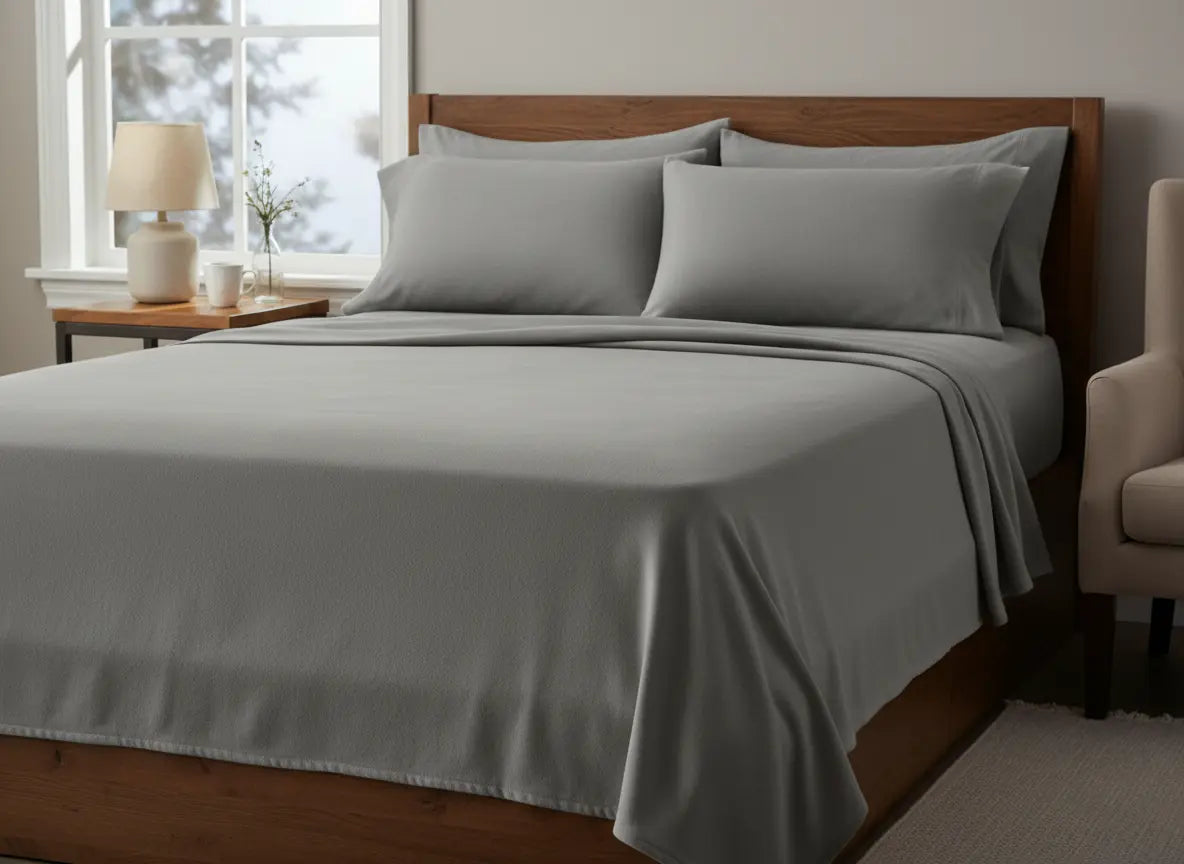
What Are Flannel Sheets? A Complete Cozy Bedding Guide
Flannel sheets are woven cotton sheets that have been brushed on one or both sides to raise thousands of tiny fibers off the surface, giving the fabric a soft, napped texture and a warmer feel than plain cotton. That brushing process is what separates flannel from regular percale or sateen sets, and it's why flannel shows up on beds the moment the temperature drops. If you're comparing weaves before you buy, the Flannel vs Cotton Sheets: What's Better for Your Sleep? - the guide breaks down how each one performs night to night.
Not all flannel is built the same way. Weight, finish, and fiber change how a set feels once it's on your mattress, and skipping those details is how people end up with sheets that pill fast or feel thinner than expected. This guide walks through what flannel sheets are made of, how they're constructed, when to put them on your bed, and what to check before you buy.

Quick Answer: What Are Flannel Sheets?
Here's the short version before we go deeper. Understanding what flannel sheets are made of and how they're rated makes it much easier to spot the best flannel sheets for your bedroom instead of guessing based on price alone.
- Flannel is cotton (or occasionally wool or synthetic-blend) fabric that's been brushed to lift the fibers and create a soft, fuzzy surface.
- The brushing traps small pockets of air close to the skin, which is why this fabric feels warmer than smooth cotton weaves like percale or sateen.
- Quality is measured in ounces per square yard or GSM (grams per square meter) - the higher the number, the heavier and denser the flannel.
- Flannel works best in fall and winter, or in bedrooms that run cold year-round.
- Cotton flannel is the most common and most breathable option, and it's what most sleepers should look for first.
- Weight, weave, and finish matter more than brand name for how a flannel sheet set actually performs over time.
- If you sleep hot or live somewhere warm, a lighter flannel weight or a seasonal swap to cotton percale usually feels better.
What Are Flannel Sheets Made Of?
Flannel isn't a fiber - it's a finishing process applied to a woven fabric. So the honest answer to what flannel bedding is made of depends on which base material was used before the brushing step.
Cotton Flannel - What Flannel Sheets Are Made Of Most Often
Cotton is the standard for flannel sold in the United States, and for good reason. It takes the brushing process well, holds its shape wash after wash, and breathes better than synthetic alternatives. Our Flannel Sheet Set collection is built entirely from cotton flannel for exactly this reason - the fiber gets softer with repeated washing instead of thinning out or pilling.
Cotton flannel is typically woven in a plain or twill pattern first, then brushed on one or both sides. A set brushed on both sides is sometimes labeled "double-napped," and it tends to feel noticeably plusher than single-napped flannel.
A few quick signs point to well-made cotton flannel before you even touch the fabric:
- The label states "100% cotton" rather than just "flannel."
- The weight is listed in ounces or GSM, not just as "heavyweight" or "lightweight."
- The finish (single- or double-napped) is specified.
Other Materials Used in Flannel Bedding
A few other fibers show up in flannel, though less often:
- Flannelette - a lighter-weight cotton blend, brushed less aggressively, common in budget bedding.
- Wool flannel - heavier and warmer, but rare in bed sheets because of cost and care requirements.
- Cotton-poly blends - brushed synthetic-cotton mixes that resist wrinkling but don't breathe as well as 100% cotton.
Fiber length also plays a role in how this fabric feels once it's brushed. Longer cotton fibers hold up better through repeated napping, which is why some flannel pills quickly after a few washes while other sets stay smooth for years.
If you're shopping and the material isn't listed clearly, that's usually a sign to keep looking. A brand confident in its fabric will always state the fiber content up front.
Before any of these materials become flannel, they start as an ordinary woven fabric - usually a plain weave or a twill weave. Twill-woven cotton has a slightly diagonal rib pattern, giving the finished flannel more structure and drape. Plain-woven cotton flannel feels a touch lighter and more relaxed by comparison.
What Makes Flannel Sheets So Cozy? The Weaving and Brushing Process
The cozy reputation flannel has earned comes down to one mechanical step: napping. Here's how it works from start to finish.
How Are Flannel Sheets Made?
Flannel bedding starts as plain woven cotton fabric - the same base cloth used for many everyday textiles. From there, manufacturers run the fabric through a napping machine, which uses fine wire brushes to gently pull tiny fibers up from the weave without breaking the threads. This raises a soft layer of fuzz across the surface, which is what gives flannel its characteristic texture.
- The cotton is woven into a base fabric, usually in a plain or twill weave.
- The fabric passes through rollers fitted with fine metal teeth.
- The teeth catch and lift surface fibers without cutting through the weave underneath.
- The fabric may pass through a second time for a double-napped finish.
- The finished cloth is cut and sewn into flannel sheet sets.
Manufacturers control how many times the fabric passes under the wire teeth. More passes lift more fiber for a plusher nap, but too many can weaken the base weave. That balance is part of what separates a well-made flannel sheet from a cheap one that pills within a few washes.
Flannel Weight: Ounces and GSM Explained
Flannel is labeled by weight, not thread count, because the napped surface makes thread count an unreliable measurement. Weight is expressed in ounces per square yard or GSM.
|
Weight Range |
Feel |
Best For |
|
4–5 oz (135–170 GSM) |
Light, soft |
Mild climates, layering |
|
5–6 oz (170–200 GSM) |
Medium, balanced |
Most bedrooms, year-round cold months |
|
6+ oz (200+ GSM) |
Heavy, dense |
Cold climates, winter-only use |
A heavier flannel sheet isn't automatically better - it comes down to how warm your room runs and how much weight you like on the bed. Someone in a drafty upstairs bedroom wants a different weight than someone in a well-insulated apartment.

Are Flannel Sheets Hot? Warmth and Seasonal Feel
This is the question most people ask before buying flannel bedding, and it deserves a direct answer: flannel feels warmer than smooth cotton weaves, but it isn't the right pick for every season or every sleeper. For more on how the two compare fabric to fabric, the Flannel vs Cotton Sheets: What's Better for Your Sleep? guide covers weight, weave, and washing side by side.
Are Flannel Sheets Warmer Than Cotton?
Yes - and the reason is texture, not fiber content. Both flannel and a plain cotton percale sheet can be made from the same cotton, but flannel's brushed surface raises fibers that trap a thin layer of air close to your skin. That trapped air is what makes this fabric feel warmer than a smooth percale or sateen weave of the same material.
The warmth difference comes down to a few structural factors:
- Napped fibers create tiny air pockets that a smooth weave doesn't have.
- Heavier flannel (5 oz and up) traps more air than lighter weights.
- Double-napped flannel feels warmer than single-napped flannel of the same weight.
People who run cold at night, live in colder climates, or simply prefer a heavier feel on the bed tend to reach for flannel first. If you tend to run warm, a lighter-weight flannel or a switch to percale for part of the year usually feels more comfortable.
When Should I Put Flannel Sheets on My Bed?
Most households swap to flannel bedding somewhere between early fall and late spring, depending on climate:
- Cold climates: Flannel can stay on the bed nearly year-round.
- Moderate climates: Fall through early spring is typical, roughly October through March.
- Warm climates: Flannel bedding may only make sense for a short winter stretch, if at all.
There's no fixed calendar date - the better rule is to swap when your bedroom starts feeling cold enough that a lighter cotton sheet no longer feels comfortable.
A few quick guidelines make the decision easier:
- If you sleep cold, keep a heavier flannel set on the bed through most of the year.
- If you sleep hot, a lightweight flannel or a seasonal swap to percale usually feels better than pushing through with a heavy set.
- Shared beds with two different temperature preferences often do well with one lighter flannel layer plus a swappable blanket, rather than one heavy set for both people.
Layering helps too. A lighter-weight flannel paired with a warm blanket gives you more control than jumping straight to a heavy 6 oz set - add or remove a layer depending on the night instead of committing to one fixed feel all season.
Caring for Flannel Sheets: Washing and Drying Tips
Flannel needs slightly different care than a standard cotton set, mostly because of that brushed surface. Get the care routine wrong and you'll deal with pilling, static, or a rougher feel over time.
How Often Should You Wash Flannel Sheets?
Wash this fabric every one to two weeks under normal use, and sooner if you sweat heavily or share the bed with pets. A few care habits keep flannel performing well over time:
- Wash in warm (not hot) water to prevent excess shrinkage.
- Use a mild detergent - heavy fragrance and fabric softener build-up can flatten the napped texture.
- Wash flannel bedding separately from towels or anything with velcro, which snags the brushed fibers.
- Skip the fabric softener after the first few washes; flannel softens naturally with wear.
Can Flannel Sheets Go in the Dryer?
Yes, flannel sheets can go in the dryer on a low or medium heat setting. High heat is the main thing to avoid, since it can cause shrinkage and make the brushed surface feel rougher over time. Adding a wool dryer ball helps fluff the nap back up and cuts down on static. Pulling flannel sheets out slightly damp and letting them air-dry the rest of the way also helps preserve the texture over dozens of washes.
Ironing isn't necessary for flannel and can actually flatten the nap if the setting runs too hot - a quick tumble in the dryer with a damp towel handles wrinkles just fine. For stains, treat them as soon as possible with a mild stain remover and cool water; hot water can set certain stains permanently into the brushed fibers.
Pilling is the most common complaint with lower-quality flannel, and most of it comes down to washing habits rather than the fabric itself. Turning this fabric inside out before washing, using a gentle cycle, and avoiding overloading the washer all reduce the friction that causes pilling in the first place.
Best Flannel Sheets: What to Look for When Buying
Once you know what goes into a well-made set and how it's built, shopping gets a lot easier. Our Best Flannel Sheets collection is organized around the same factors worth checking on any flannel set, wherever you end up buying - because the best flannel sheets are the ones that match your climate, weight preference, and care routine, not just the ones with the highest price tag.
Material
Cotton should be the first thing you confirm - it's the single biggest factor separating the best flannel sheets from sets that pill or thin out fast. Look for "100% cotton flannel" on the label rather than a vague "flannel" listing, which can sometimes mean a cotton-poly blend. Knowing what a set is made of before you buy prevents surprises after the first wash. The Portuguese Cotton Flannel Sheet Set in Woodland Motifs is a good example of a fully cotton flannel set with the fiber content stated plainly on the product page. If a listing only says "flannel" without naming the fiber, assume it's a blend until proven otherwise, and check the product details before adding it to your cart.
Flannel Weight (GSM) and Finish
Check the ounce or GSM rating before adding a set to your cart - it tells you more about how the sheets will feel than almost any other spec. Beyond weight, the finish matters too:
- Single-napped: Brushed on one side only, lighter overall feel.
- Double-napped: Brushed on both sides, plusher and generally warmer.
- Combed cotton: Fibers combed before weaving to remove short strands, resulting in a smoother, more durable flannel.
A double-napped, combed cotton flannel in the 5–6 oz range covers most bedrooms comfortably without feeling too heavy for three-season use - this combination is what shows up again and again on lists of the best flannel sheets for everyday use.
Weave Pattern: Twill vs Plain
The base weave underneath the brushed surface affects how flannel holds up over time. Twill-woven flannel tends to resist pilling a bit longer because of its tighter structure, while plain-woven flannel feels lighter and drapes more loosely. Checking the weave alongside the weight gives you a fuller picture of how a set will perform after a season of regular washing, not just how it feels on the first night.
Sleep Temperature and Care Preferences
A couple of smaller factors are worth weighing before you check out:
- Sleep temperature: If you already run warm at night, choose a lighter-weight flannel or plan to swap to cotton percale for part of the year.
- Care preferences: Flannel needs a bit more attention than wrinkle-resistant blends - if low-maintenance laundry matters most to you, factor that into the weight and finish you choose.
- Pattern and color: Flannel holds prints well because of its texture, so seasonal patterns and heathered colors are common - the Portuguese Cotton Flannel Sheet Set in Heather Green is one example of how color reads differently on a napped surface than on smooth cotton.
Why California Design Den Flannel Sheets Stand Out
There's nothing like climbing into a bed that already feels warm on a cold night - that comfort is the reason flannel exists, and it's the standard behind every set we make.
100% Natural Cotton Flannel, No Synthetic Fibers
Every set in our flannel sheet lineup is 100% natural cotton - no synthetic microfiber, no plastic fibers woven into the base cloth. Cotton flannel breathes better than synthetic blends, and it gets softer with every wash instead of pilling or flattening out.
- No synthetic microfiber or plastic-based fibers in any flannel set.
- Double-napped cotton flannel for a plusher, warmer feel.
Backed by the Good Housekeeping Seal
Our Cotton Flannel Sheet Sets have earned the Good Housekeeping Seal, a credential that isn't handed out lightly. If you want a heavier, cozier option, the Flannel Sheet Set collection covers a full range of weights, and the Best Flannel Sheets collection is where we've grouped the sets our customers reorder most - a solid starting point if you're comparing the best flannel sheets across different weights and finishes. Patterns like the Portuguese Cotton Flannel Sheet Set in Woodland Motifs and the Portuguese Cotton Flannel Sheet Set in Heather Green show how far flannel has come from the plain, checkered sets most people picture.
Most of our cotton sheets are made in our family-owned facility, which is also why we're able to keep flannel sheet pricing honest instead of marking it up the way bigger retail brands do. Pricing based on what it actually costs to make the sheets well, not inflated retail markup.
We've built our flannel sheets around the same standard as the rest of our cotton line: honest fiber content, a fair price, and a feel that holds up over years of washing - not just the first few months.
Flannel bedding is also one of the easiest ways to see the difference between a brand that owns its production and one that doesn't. Because we run our own facility, we can hold every flannel sheet set to the same cotton, double-napped standard without passing extra markup on to you.
Conclusion: The Bottom Line on Flannel Sheets
Flannel sheets are simply cotton fabric brushed to raise a soft, napped surface - and that one manufacturing step is responsible for everything people love about them, from the cozy feel to the extra warmth on cold nights. Weight, finish, and fiber content are what separate a flannel set that lasts for years from one that pills after a season.
If you're shopping for your first set or replacing an old one, start with 100% cotton flannel in a weight that matches your climate, and check whether it's single- or double-napped before you buy. Cotton flannel sheets remain the most breathable, longest-lasting option on the market, and a well-made set is worth the slightly higher upfront cost. Finding the best flannel sheets comes down to fiber, weight, and finish, not the price tag - and skipping them makes sense if you sleep hot or live somewhere warm year-round. Once you know what to look for, choosing the right flannel sheets for your bed gets a lot simpler.

Frequently Asked Questions About Flannel Sheets
What Is the Purpose of Flannel Sheets?
Flannel sheets give your bed a warmer, softer feel in cold months. The brushed surface traps air near the skin, making them a fall and winter staple.
What Is the Difference Between Cotton Sheets and Flannel Sheets?
Both can be 100% cotton, but flannel is brushed for a warmer, napped texture, while cotton keeps a smooth, crisp surface year-round.
Are Flannel Sheets Too Hot for Summer?
For most sleepers, yes. The brushed weight that feels cozy in winter often feels too warm in summer. Lighter cotton percale suits hot months better.
Can You Put Flannel Sheets in the Dryer?
Yes. Use low or medium heat to protect the napped surface. High heat shrinks flannel and flattens the soft texture faster than gentle drying.
Can Flannel Sheets Be 100% Cotton?
Yes, and it's the best version to buy. 100% cotton flannel breathes better, softens with washing, and outlasts blended or synthetic alternatives.


