

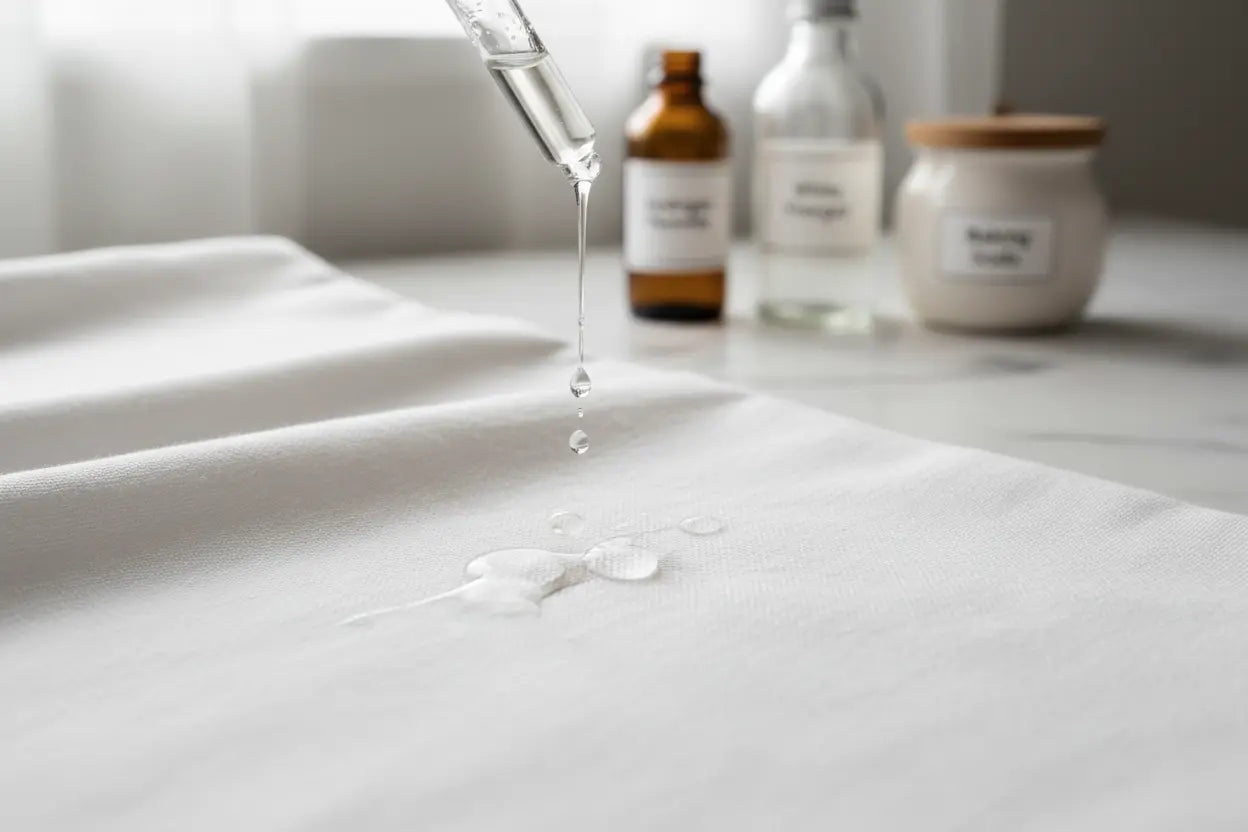
Mold on sheets happens when moisture gets trapped in fabric for too long. To get mold out of sheets, you can use white vinegar, baking soda, hydrogen peroxide, or rubbing alcohol - all effective at breaking down mold spores before they spread further. Act quickly, and most cotton sheets can be fully restored. Check out Your Definitive Guide to Washing Cotton Sheets for washing best practices that protect your sheets through every cycle.
Whether you've spotted a small patch or a more serious problem, the steps below apply to most cotton sheet sets.

Quick Answer: How to Get Mold Out of Bed Sheets
- Pre-treat the affected area with undiluted white vinegar or a baking soda paste.
- Let it sit for 30 minutes before washing.
- Wash on the hottest cycle safe for your fabric, using your regular detergent plus one cup of white vinegar or half a cup of baking soda added to the drum.
- Dry completely - either in a dryer or in direct sunlight.
- Never store sheets that are even slightly damp.
Those five steps handle the majority of cases when you need to get mold out of bed sheets.
Inspecting Mold on Sheets: What You're Actually Looking At
Before you treat anything, it's worth confirming what you're dealing with. Not everything that looks like a stain on your bed sheets is mold - and the treatment approach differs depending on what it actually is.
Mold on sheets typically appears as dark spots - often black, green, or grey - with a slightly fuzzy or powdery surface texture. There's usually a musty smell alongside it. If you've left sheets damp in a laundry pile or stored bedding in a poorly ventilated space, those are the most common triggers. The patches tend to cluster rather than spread evenly across the fabric.
Look at the affected area closely. Press gently with a clean, dry cloth - mold will often leave a faint residue. If the discoloration is accompanied by any kind of musty odor, treat it as mold. The sooner you treat it, the more of the fabric you can recover.
The Difference Between Mold and Mildew on Sheets
Mold and mildew are related but not identical. Knowing which one you're dealing with changes how you get mold out of bed sheets - and whether a single wash will do it.
Mold is a fungus that grows in multicellular filaments. On sheets, it usually appears as raised, fuzzy patches that are black, green, or dark grey. Mold penetrates deeper into fabric fibers, which is why getting it out requires more than a simple surface wipe. It often causes a stronger, more pungent musty smell and can spread across a larger surface area if left untreated.
Mildew is also a fungus, but it tends to stay on the surface. On sheets, mildew usually appears as flat, powdery patches - often white, grey, or light yellow. The smell is similar to mold but typically less intense. Mildew is generally easier to treat because it hasn't worked its way into the fabric as deeply.
The practical difference: if you can wipe the discoloration away with a damp cloth and it doesn't come back, it's likely mildew. If the stain remains after surface cleaning and there's still a smell, you're dealing with mold embedded in the sheet fibers - and you'll need one of the full treatment methods below.
When Mold on Sheets Cannot Be Removed
Some cases go too far to treat at home. If mold has spread across a large portion of the sheet, if the fabric is visibly breaking down, or if the odor persists after two full wash cycles, replacement is the safer choice. Heavily mold-damaged sheets are unlikely to be fully restored, and continuing to sleep on fabric with embedded mold spores isn't worth the effort of repeated treatments. In these cases, knowing how to get mold out of sheets matters less than recognizing when it's time to start fresh.
How Does Mold Form on Bed Sheets?
Understanding what causes mold to grow on sheets makes it much easier to prevent it. Mold needs three things: moisture, warmth, and organic material. Your sheets provide all three.
The Most Common Causes of Mold Growing on Sheets
The most common causes include:
- Putting damp sheets away. This is the number one cause. Even slightly damp sheets folded into a linen closet or left in a pile create the perfect environment for mold to develop.
- Folding sheets too soon after drying. If sheets are folded when still faintly warm and damp from the dryer, moisture becomes trapped in the folds.
- Humid rooms with poor ventilation. Bedrooms that don't get much airflow - particularly in basements or rooms without windows that open - tend to trap moisture in fabrics over time.
- Persistent body moisture. Night sweating can accumulate in sheet fibers, especially if sheets aren't washed frequently enough.
- Leaving wet towels on the bed. A common habit that introduces moisture directly into sheet fabric.
Why Acting Quickly on How to Get Mold Out of Sheets Matters
Most of these causes come down to one thing: trapped moisture. The longer mold sits in sheet fabric, the deeper the spores penetrate into the fibers - and the harder the removal becomes. Knowing how to get mold out of sheets is useful, but catching it before it sets is what determines whether you need a single treatment wash or repeated cycles. Addressing your storage and washing habits is the most effective long-term prevention. The Your Definitive Guide to Washing Cotton Sheets goes deeper into the washing habits that protect natural cotton over time.
How to Get Mold Out of Sheets: 4 Methods That Work
These four methods are the most effective ways to get mold out of bed sheets using household products. Each one works differently, so the right choice depends on what you have available and how severe the mold growth is.
Before treating, take the sheets outside or to a well-ventilated area and brush off any loose spore material with a stiff brush. Do this before washing - it reduces how much mold enters your washing machine.
Get Rid of Mold on Bed Sheets With Baking Soda
Baking soda is a gentle, effective option for how to get mold out of sheets. It works by neutralizing the acidic environment mold needs to survive while lifting stain residue from cotton fibers.
To use baking soda:
- Mix baking soda and water into a thick paste.
- Apply the paste directly to the affected area.
- Let it sit for at least 30 minutes - longer for deeper stains.
- Scrub gently with a soft brush, working in circular motions.
- Rinse the area with cold water before placing the sheet in the machine.
- Add half a cup of baking soda directly into the drum along with your regular detergent.
- Wash on the hottest cycle the fabric can handle.
Baking soda is the right starting point when you want a milder approach to how to get mold out of bed sheets without reaching for stronger chemicals. It won't irritate the fabric, leaves no chemical residue after rinsing, and also works as an odor neutraliser - which helps with the musty smell that comes alongside mold.
Get Rid of Mold on Bed Sheets With Vinegar
White vinegar is one of the most effective household solutions for how to get mold out of sheets. Its acidity disrupts mold at the cellular level, making it harder for spores to survive in cotton fabric.
To use white vinegar:
- Pour undiluted white vinegar directly onto the mold-affected area.
- Do not dilute it - full-strength vinegar is significantly more effective against mold.
- Let it soak for at least one hour.
- Blot the area with a clean cloth. Don't rub, as rubbing spreads spores further into the weave.
- Place the sheet into the washing machine.
- Add one cup of white vinegar to the drum. Avoid mixing with detergent in the same cycle - they can counteract each other's effectiveness.
- Run the hottest appropriate wash cycle.
- If the stain persists, repeat before drying - heat from the dryer sets remaining stains permanently.
White vinegar is safe for most cotton sheets, including natural cotton percale and sateen weaves. The smell dissipates completely once the sheet is fully dry. This is a reliable, practical approach for moderate mold and a sensible first step before reaching for stronger solutions.
Get Rid of Mold on Bed Sheets With Rubbing Alcohol
Rubbing alcohol (isopropyl alcohol, 70% or higher) works well as a spot treatment on smaller patches when you need to get mold out of sheets quickly before a machine wash.
To use rubbing alcohol:
- Test a small inconspicuous area first - alcohol can affect some fabric dyes.
- Apply rubbing alcohol directly to the mold spot using a clean cloth or cotton ball.
- Let it sit for 10–15 minutes.
- Blot and lift - the mold spores will begin to break down on contact.
- Follow with a full machine wash using your regular detergent.
Rubbing alcohol is best for small, isolated patches rather than widespread mold growth. It works well as a complement to vinegar or baking soda rather than a standalone treatment for larger affected areas. When mold is caught early, this is one of the fastest ways to get mold out of sheets before a full machine wash.
Get Rid of Mold on Bed Sheets With Hydrogen Peroxide
Hydrogen peroxide (3% solution, widely available in pharmacies) is one of the stronger household options for how to get mold out of bed sheets. It works as both a disinfectant and a mild bleaching agent, which means it can also help lift the staining that mold leaves behind.
To use hydrogen peroxide:
- Pour 3% hydrogen peroxide directly onto the mold stain.
- Let it sit for 10 minutes - no longer, as extended contact can lighten some fabrics.
- Blot with a clean cloth to lift the loosened mold.
- Rinse with cold water before washing.
- Wash in the machine using hot water and regular detergent.
Hydrogen peroxide is particularly effective for getting mold out of white or light-colored bed sheets. For darker or patterned sheets, do a small patch test first, as it can affect color. For tougher cases, combine hydrogen peroxide with baking soda - apply the paste first, pour hydrogen peroxide over it, allow it to fizz, then scrub and rinse. This combination works well when you need to get mold out of sheets where the stain has already set into the fabric.

How to Prevent Mold From Growing on Your Sheets
Knowing how to get mold out of bed sheets is only half the job. Understanding what keeps it from returning is what makes the difference long-term.
Washing and Drying Habits That Stop Mold Forming
These habits significantly reduce the risk of mold forming:
- Wash sheets every one to two weeks. Regular washing removes the moisture, skin cells, and organic residue that mold feeds on. Sheets that go three or four weeks between washes are significantly more prone to developing mold.
- Always dry sheets completely before storing. Run the dryer cycle in full - don't pull sheets out while still warm and faintly damp. If line drying, leave them out until there is no residual coolness in the fabric.
- Store sheets in a well-ventilated space. Linen closets without airflow trap humidity. Leave the door ajar occasionally, or use moisture-absorbing sachets in enclosed storage.
- Air out your bed daily. Pulling back the duvet for 20–30 minutes each morning allows body heat and moisture to dissipate from both the mattress and the sheets before you make the bed.
Environment and Bedroom Conditions That Affect Mold Risk
- Use a dehumidifier in high-humidity rooms. Bedrooms that consistently register above 60% relative humidity are much more likely to see mold develop on sheets and surrounding surfaces.
- Don't place damp towels or wet clothing on the bed. This one habit introduces concentrated moisture directly into sheet fabric.
Cotton sheets respond well to these habits. Natural cotton fibers breathe more effectively than synthetic alternatives, giving moisture a better path out of the fabric - as long as you're providing adequate airflow. Keeping up these habits means you'll rarely need to think about how to get mold out of sheets or bed sheets at all.
Why California Design Den Cotton Sheets Hold Up Through Mold Treatments
When you're learning how to get mold out of sheets, the sheets themselves need to be able to withstand the treatment. Vinegar, baking soda, hydrogen peroxide - these are all effective, but they put fabric through its paces. Natural cotton sheets come through those treatment cycles in significantly better condition than sheets made from synthetic fibers.
California Design Den sheets are made from 100% natural cotton - no synthetic microfiber, no plastic fibers. That matters when you're working on how to get mold out of bed sheets, because natural cotton fibers are more resilient through repeated hot washes, which are a core part of any effective mold removal process. Synthetic fibers can degrade faster under repeated high-heat washing and exposure to acidic treatments like vinegar. Most of our cotton sheets are made in a family-owned facility - and that manufacturing consistency is part of why they hold up wash after wash.
100% Cotton That Handles the Washing Demands of Mold Removal
The Everyday Ease 400TC Cotton Sateen Sheets Set is woven from smooth, breathable 100% cotton sateen - a fabric that handles regular washing well and maintains its texture across many cycles. The sateen weave gives it a smooth, polished feel that remains consistent even after treatment washes. If you've been dealing with mold on bed sheets and are considering whether your current sheets are worth saving, the Everyday Ease 400TC is a durable everyday option built for the washing routine that mold prevention requires.
For those who prefer a crisper, more textured feel, the Classic Percale Organic Cotton Sheet Set is made from GOTS certified organic cotton in a traditional percale weave. Percale gets softer with every wash while maintaining its structure - which makes it a strong choice if you're washing frequently as part of a mold prevention routine. The organic cotton credential means no synthetic chemicals were used in production, which matters if you're already thinking carefully about what comes into contact with your skin each night.
Trusted by 8 Million+ Sleepers and Backed by the Good Housekeeping Seal
Both sheet sets have earned the Good Housekeeping Seal - evaluated by the GH Institute for product quality and backed by a 2-year limited warranty. More than 8 million sleepers have chosen California Design Den, and the 4.5–4.6 star average across reviews reflects the durability that makes these sheets a practical choice when you need cotton that can handle a real washing routine.
Final Thoughts: Getting Mold Out of Bed Sheets the Right Way
Mold on sheets is a fixable problem when caught early. The methods above - baking soda, vinegar, rubbing alcohol, hydrogen peroxide - give you practical options for how to get mold out of sheets without needing specialist products. The key is acting before the mold has a chance to embed itself deeply in the fabric, washing on the hottest cycle your sheets can handle, and making sure they are fully dry before they go back into storage or onto the bed.
Knowing how to get mold out of bed sheets matters, but so does having sheets built to handle the process. Natural cotton holds up to repeated treatment washes better than synthetic alternatives, and choosing well-made cotton from the start puts you ahead. If your current sheets have reached the point of no return, the Everyday Ease 400TC Cotton Sateen Sheets Set and the Classic Percale Organic Cotton Sheet Set are both built to last through a demanding washing routine.

Frequently Asked Questions About How to Get Mold Out of Sheets
Can you wash mold out of bed sheets?
Yes. Pre-treat with vinegar or baking soda, wash on the hottest safe cycle, and dry fully. Repeat before drying if needed - heat sets mold stains permanently.
What kills black mold immediately?
Hydrogen peroxide (3%) and undiluted white vinegar work fastest. Apply directly, let sit 10–60 minutes, then wash on a hot cycle to get mold out of sheets.
Can you wash mold out of fabric?
Yes. Pre-treating with vinegar, baking soda, or hydrogen peroxide before washing removes mold from most fabric types, including cotton bed sheets.
How toxic is black mold to humans?
Black mold causes respiratory irritation and allergic reactions. Mold on sheets should be removed promptly. Consult a doctor if symptoms continue.
Is bleach or vinegar better at killing black mold?
Vinegar penetrates cotton better than bleach, making it the right choice for getting mold out of sheets. Bleach only kills surface mold.


