

Knowing how to unshrink cotton sheets can rescue a set you thought was ruined. The method works: soak the sheets in lukewarm water with hair conditioner for at least 30 minutes, press out the excess water, gently stretch the fabric back to its original dimensions while it's still damp, and then air-dry flat away from any heat source. This process relaxes the cotton fibers and allows you to coax them back toward their original shape. For everything you need to know about preventing shrinkage from happening again, the Your Definitive Guide to Washing Cotton Sheets is the complete reference.
Learning how to unshrink cotton sheets is worth the effort because most shrinkage is not permanent. Cotton is a natural fiber, and when it shrinks, the fibers have contracted - they haven't been destroyed. With the right technique applied while the fabric is wet, you can reverse most of that contraction and get a good portion of the original dimensions back. The earlier you attempt this after the shrinkage, the better the results.

Quick answer: how to unshrink cotton sheets
- Soak the sheets in lukewarm water mixed with two to three tablespoons of hair conditioner or baby shampoo for 30–60 minutes.
- Do not wring. Press out the excess water gently.
- While the fabric is still damp, stretch each section of the sheet back toward its original dimensions - working from corner to corner and along the edges.
- Lay flat or hang on a line to air-dry completely. Do not return the sheets to the dryer.
That's the core process for how to unshrink bed sheets. The conditioner temporarily coats the cotton fibers and reduces surface friction, which allows them to slide and stretch without tearing. The lukewarm water relaxes the fibers. The stretching reshapes them. The flat air-dry locks in the new shape.
Most people who learn how to unshrink cotton sheets are surprised by how well it works - particularly when the shrinkage is recent and the fabric hasn't been exposed to repeated high-heat cycles.
What causes bed sheets to shrink?
Before going through how to unshrink cotton sheets step by step, it helps to understand what you're reversing. How to unshrink cotton sheets successfully depends on understanding that shrinkage is a fiber reaction to heat - not a permanent change to the weave. Cotton fibers are spun and woven under tension during manufacturing. That tension is what holds the weave tight and gives the sheet its dimensions. When the fabric is exposed to heat and mechanical agitation - as happens in a washing machine or tumble dryer - those fibers relax out of that set tension and contract toward their natural, shorter resting state.
The result is a sheet that comes out of the dryer noticeably smaller than it went in. Understanding what caused this is also how to prevent needing to repeat the process of how to unshrink bed sheets.
The main causes of cotton sheet shrinkage
Several consistent triggers cause cotton sheets to shrink more than they should:
- High wash temperature. Water above 40°C (104°F) causes cotton fibers to swell rapidly and then contract as they cool. This is the most common cause of shrinkage and the easiest to avoid.
- High-heat tumble drying. Even when the wash cycle is set correctly, high dryer heat can cause significant shrinkage. Concentrated dryer heat is often harsher on cotton fibers than the wash cycle itself.
- Agitation on an intense cycle. A standard or heavy-duty wash cycle applies mechanical stress to the fabric while it's wet and swollen - which accelerates fiber contraction.
- Overloading the dryer. When sheets can't tumble freely, they bunch under pressure and dry unevenly. This causes irregular shrinkage across the fabric.
- First wash on hot. New cotton sheets that have never been washed are most susceptible to shrinkage. Their fibers haven't yet gone through initial relaxation. A hot first wash causes the most dramatic size reduction.
- Repeated heat exposure over time. Even if individual cycles don't cause obvious shrinkage, repeated high-heat washing accumulates gradually. Sheets that fit perfectly at purchase may become noticeably tight over 10–20 wash cycles.
How shrinkage affects different sheet types
Not all bed sheets shrink equally. Thread count and weave type both affect how much a sheet shrinks - and this matters when you're deciding how to unshrink cotton sheets most effectively.
Percale sheets - crisp, matte, with a one-over-one-under weave - tend to shrink more noticeably than sateen sheets. The tight percale weave gives the heat less dimensional flexibility to work with. Sateen sheets have a four-over-one-under weave with a looser float structure, which provides slightly more give before the fabric pulls inward.
Higher thread count sheets - 600TC, 800TC, and 1000TC - have denser weaves. The density adds structural integrity but also increases the surface area of cotton fiber exposed to heat. The practical result is that all cotton sheets can shrink under the wrong conditions, and all of them respond to the soak-and-stretch method when you need to know how to unshrink cotton sheets. The technique for how to unshrink bed sheets is the same regardless of weave or thread count - only the soak time varies.
How to unshrink cotton sheets: the full step-by-step method
Follow each step in order. Rushing any one stage compromises the final result, so give each part its full time.
Step 1: Soak in lukewarm water
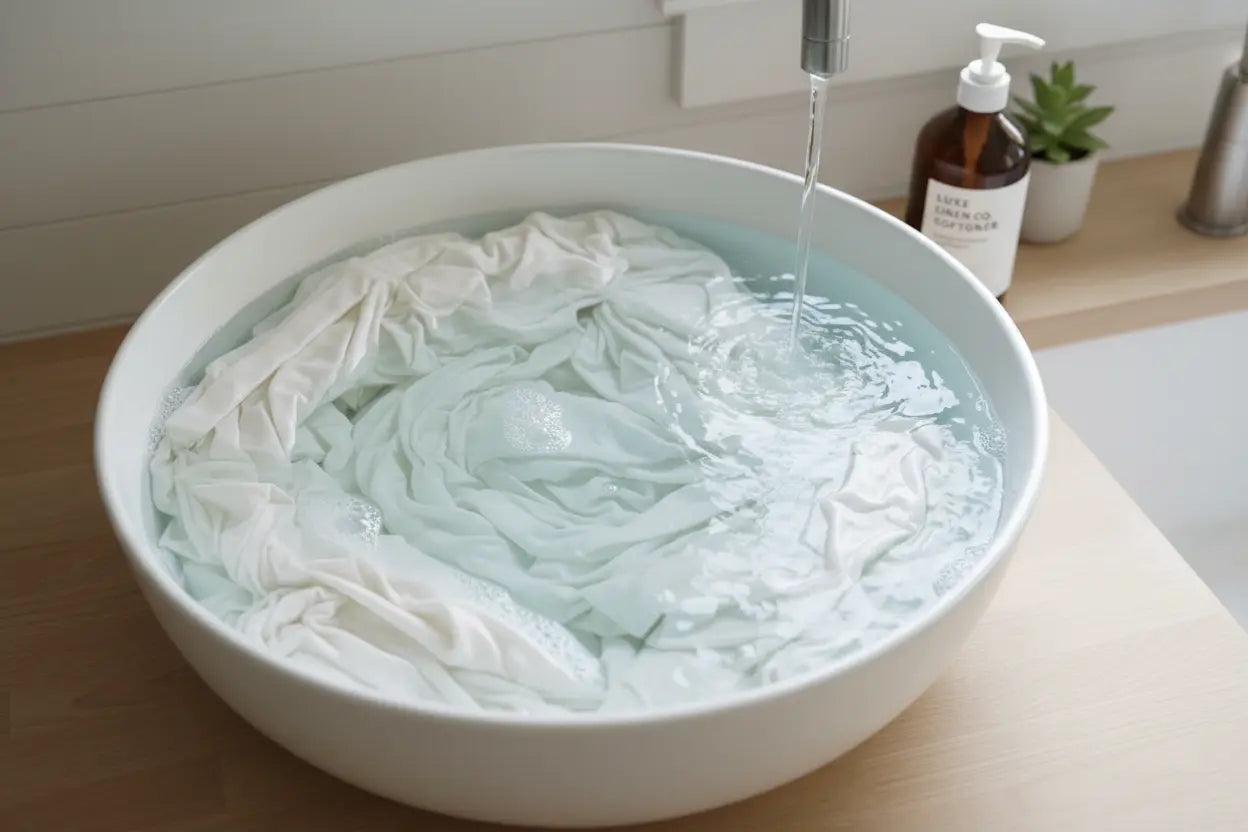
Fill a bathtub, large basin, or utility sink with lukewarm water. The temperature should feel barely warm - not cold, not hot. Cold water won't relax the cotton fibers enough to allow effective stretching. Hot water will cause further shrinkage and make the problem worse.
Add two to three tablespoons of hair conditioner or baby shampoo per full bathtub of water. These products contain conditioning agents that coat the cotton fibers and temporarily reduce their surface friction - which is what allows them to stretch without tearing. Plain fabric conditioner works, though it can leave a slightly heavier residue.
Fully submerge the sheets. Work the conditioner water through the fabric by pressing and squeezing gently so the entire sheet is saturated. Then leave it to soak for a minimum of 30 minutes. This soak stage is the foundation of how to unshrink cotton sheets - skipping it or cutting it short is the most common reason the method doesn't deliver full results. For sheets that have gone through several high-heat cycles, extend the soak to 45–60 minutes. The longer soak time gives the conditioning agents more opportunity to penetrate the fibers before you begin stretching.
Do not wring or twist the sheet during this stage. Mechanical stress applied to wet, swollen cotton fibers can distort the weave unevenly and complicate how to unshrink cotton sheets effectively.
Step 2: Drain and press out the water
After soaking, drain the tub or basin. Lift the sheet carefully - wet cotton is heavy - and press it gently against the side of the tub to remove excess water. The goal is to get the fabric damp, not dripping. A dripping sheet is too wet for effective stretching.
If you're working in a small space, lay the sheet flat on a large clean towel, roll the towel and sheet together, and press gently along the length to absorb more water. This is a practical alternative if you don't have access to a large tub.
For fitted sheets, be especially careful during this stage. The corner pockets have shaped seams that can distort if you press unevenly. Keep the corners flat and supported while pressing. The how to unshrink bed sheets process for fitted sheets requires this extra care at every stage.
Step 3: Stretch and roll to restore shape
This is the most important step in the process of how to unshrink cotton sheets. While the sheet is still damp, begin gently stretching it back toward its original dimensions. Work methodically:
- Start at one corner and pull the fabric outward in both directions - lengthwise and widthwise simultaneously.
- Move to the opposite corner and repeat the same gentle outward pull.
- Work your way along each edge, stretching the fabric consistently from end to end.
- For the central body of the sheet, use both hands to pull sections gently apart.
Do not pull sharply or jerk the fabric. The aim is slow, consistent tension applied across the full surface area. Sharp pulling can break fibers or distort the weave permanently - the opposite of what you're trying to achieve when learning how to unshrink cotton sheets.
If the sheet begins to dry too quickly while you're working, lightly mist it with room-temperature water from a spray bottle to keep the fabric workable.
How do you unshrink fitted sheets?
Fitted sheets require more attention because they have elastic corners and shaped seams that define their fit. When working on how to unshrink bed sheets that are fitted, pay specific attention to:
- The corner pockets - pull the corner fabric outward while holding the elastic band in place so you're stretching the cotton, not the elastic.
- The hem seam along the sides - stretch this lengthwise to restore the full drop of the sheet.
- The overall width of the sheet - pull the sides apart across the full length to restore the width dimension.
Once stretched, lay the fitted sheet flat on a clean surface and use clips or weights to hold the corners at the correct dimensions while drying. This significantly improves results compared to allowing the sheet to dry unsupported.

The steamy stretch: using steam to help unshrink cotton
Steam is a useful complement to the soak-and-stretch method. If you have a garment steamer or a steam iron with a steam burst function, you can use steam to relax cotton fibers in targeted areas - particularly useful when specific sections of the sheet have shrunk more than others, or when the main soak-and-stretch has left a few areas still slightly tight.
Hold the steamer two to three centimeters above the surface of the fabric. Do not press it directly onto the sheet. Work in slow passes over the affected area, letting the steam penetrate the fibers. As the area becomes warm and slightly damp, use your other hand to gently stretch the fabric in that spot.
This steamy stretch approach works especially well for parts of the how to unshrink cotton sheets process that the main soak didn't fully complete:
- Fitted sheet corners that haven't fully recovered after the main soak process.
- Flat sheets where the shrinkage is uneven across the width.
- Pillowcases that have tightened along the opening hem.
The steam method works best as a follow-up to soaking - not as a standalone method for how to unshrink bed sheets that have shrunk significantly. It refines results but doesn't replace the full soak-and-stretch process when learning how to unshrink cotton sheets. For heavy shrinkage, the full soak is essential first. Steam is most effective for the final 5–10% of recovery that soaking alone doesn't quite reach.
Step 4: Air-dry the sheets correctly
How you dry the sheets after stretching determines whether your work holds. This step is just as important as the soak and stretch in successfully learning how to unshrink cotton sheets.
Air-dry flat or on a line - never in the dryer
After stretching, lay the sheets flat on a clean, dry surface - a large table, clean floor with a towel underneath, or a wide drying rack. Smooth out any remaining wrinkles with your hands while you position the sheet. If you need to hang them, use a clothesline and hang lengthwise so gravity pulls the fabric down evenly without creating fold lines.
Do not put the sheets back into the dryer after going through how to unshrink cotton sheets. The dryer heat is what caused the contraction in the first place. Even a low-heat tumble-dry at this stage can re-tighten the fibers before they've set in their newly stretched position.
Leave the sheets to air-dry completely before putting them on the bed or folding them. Depending on fabric thickness and room airflow, this typically takes several hours. In humid conditions or during winter months with lower airflow, allow more time.
Checking fit as the sheets dry
Check the sheets periodically as they dry. If you notice the fabric beginning to pull back in - which can happen if it dries too quickly - lightly mist the affected area with water and re-stretch before it sets. Cotton can contract again during drying if it loses moisture too fast.
Once fully dry, your sheets should be measurably closer to their original dimensions. For most cotton sheets that haven't been through repeated high-heat cycles, the results of how to unshrink cotton sheets using this method are significant - often recovering 70–90% of the original shrinkage. When you need to know how to unshrink bed sheets that have only shrunk once or twice, full recovery is very often achievable.
How to prevent bed sheets from shrinking again
Successfully learning how to unshrink cotton sheets once is motivating - but preventing a repeat is the real goal. The how to unshrink cotton sheets process takes time and effort; a few consistent laundry habits eliminate the need to repeat it.
Wash on a cool or warm cycle
Use a wash temperature of 30°C (86°F) for routine washes. For a deeper clean, 40°C (104°F) is acceptable for most cotton sheets. Avoid anything hotter. Modern detergents work effectively at lower temperatures, so there's no meaningful cleaning trade-off.
Use a gentle or delicate cycle
Agitation affects shrinkage as much as temperature. A gentle cycle reduces mechanical stress on the cotton fibers while they're wet and swollen. If your machine has a "bedding" or "bulky items" setting, use it - these settings reduce spin speed and agitation intensity throughout the cycle.
Skip high-heat drying
If you use a tumble dryer, select a low-heat or air-dry (no heat) setting. Remove the sheets while they are still slightly damp and lay them flat or hang to finish drying. Avoiding the full high-heat tumble-dry cycle is the single most effective way to prevent needing to repeat how to unshrink cotton sheets.
Don't overload the machine or dryer
Give the sheets room to move freely in both the wash and the dryer. Overloading causes sheets to bunch, tangle, and apply pressure to specific areas during the spin - another cause of shrinkage and uneven wear across the fabric.
Pre-wash new sheets on a cool cycle
If you're bringing home a new set of cotton sheets, wash them once on a cool, gentle cycle before first use. This allows the fibers to go through their initial natural relaxation in controlled conditions. New sheets are most susceptible to shrinkage on the first wash - doing that first wash on a cool cycle significantly reduces the impact.
Why California Design Den cotton sheets hold up to washing
If you've just gone through how to unshrink cotton sheets and want to make sure you never need to repeat the process, the answer starts with how the sheets feel after every wash. California Design Den sheets are made from 100% natural cotton - no synthetic microfiber, no plastic fibers - which means the fabric stays smooth, holds its shape, and gets noticeably softer with each wash when cared for correctly.
The Grand Indulgence 1000 Sateen Cotton Sheet Set is a strong example of a high-thread-count sateen that combines density with a smooth, polished feel. The 1000TC sateen weave has a structured float pattern that gives the fabric natural dimensional stability across wash cycles - meaning it holds its shape when laundered at the right temperature and dried without high heat. These sheets feel substantial and smooth, and they get noticeably softer with every wash when cared for correctly.
For a lighter, more breathable feel, the 800 Sateen Cotton Sheet Set delivers the same 100% natural cotton construction at 800TC. It has the same clean, smooth finish of the sateen weave and responds well to cool washing and air-drying. A good option if you prefer slightly less weight while still enjoying the feel of a high-quality woven cotton sheet.
California Design Den's cotton sheets have earned the Good Housekeeping Seal across its sheet and duvet cover collections - a credential that reflects independent evaluation of quality consistency across the product range. With over 8 million sleepers choosing CDD cotton, and a 4.5 to 4.6 star average across the range, these sheets are built to maintain their fit and feel through years of regular washing when cared for correctly.
The care approach for CDD cotton sheets follows the same prevention principles outlined in this guide: cool water, gentle cycle, low or no heat in drying. Follow those consistently and you won't need to think about how to unshrink cotton sheets again. For a full breakdown of how to wash cotton sheets correctly - including specific cycle settings, detergent amounts, and drying guidance - the Your Definitive Guide to Washing Cotton Sheets covers every variable in detail.
What to look for in cotton sheets that resist shrinkage
Not all cotton sheets respond to heat the same way. Weave type, thread count, and construction quality all affect how much a sheet shrinks - and how well it recovers when you need to know how to unshrink cotton sheets. Knowing what to look for before you buy means less chance of needing to unshrink bed sheets in the first place.
Weave type
Sateen sheets have a four-over-one-under float weave that gives the fabric natural dimensional give. This structure allows slight flex before the fibers fully contract under heat, which means sateen sheets tend to shrink less dramatically than percale and recover more evenly when stretched. If you've dealt with repeated shrinkage in percale sheets, sateen is worth considering.
Percale sheets use a one-over-one-under weave that is tighter and crisper. They are more susceptible to noticeable shrinkage under high heat - but they also have a clean, fresh feel that many people prefer. If you choose percale, the care routine matters more: cool wash, gentle cycle, air-dry.
Thread count as a feel and weight guide
Thread count tells you how a sheet will feel and behave - not which sheet is objectively better. Choose based on what feels right for you:
- 400TC - smooth, airy, and lighter in weight. Good for everyday use.
- 600TC - slightly denser, still breathable, works across seasons.
- 800TC - substantial and smooth, with a heavier drape.
- 1000TC - the richest, densest feel with maximum weight and softness.
Higher thread count sheets have more fibers per square inch, which means more surface area exposed to heat. Following correct care instructions matters more at higher thread counts - but the recovery method for how to unshrink cotton sheets is the same at every thread count level.
What the care label tells you
Before buying, check the care label. A sheet that recommends cool wash and air-dry is built with shrinkage sensitivity in mind - that's a good sign. Any sheet that lists "machine wash warm, tumble dry low" as the maximum recommended care is one that will shrink on a hot cycle and may not fully recover.
The final word on how to unshrink cotton sheets
Shrinkage happens - it's one of the most common complaints about cotton bedding, and it almost always comes down to heat. But knowing how to unshrink cotton sheets means a shrunken set isn't automatically a lost one.
The process is simple and it works:
- Soak in lukewarm water with a conditioner for at least 30 minutes.
- Press out excess water - no wringing, no twisting.
- Stretch gently and thoroughly while the fabric is damp.
- Air-dry flat, completely away from the dryer.
Understanding how to unshrink bed sheets comes down to patience at each stage. The soak needs time. The stretching needs care and consistency across the whole surface. The drying needs to happen slowly and without shortcuts. Done right, most cotton sheets can be recovered to a fit that's close enough to the original that the effort is more than worth it.
And going forward - cool wash, gentle cycle, low or no heat drying. That's the habit that keeps cotton sheets fitting well after washing, and means you won't need to think about how to unshrink cotton sheets again. Done correctly, one treatment is usually enough.

Frequently Asked Questions About How to unshrink cotton sheets
Can you unshrink bed sheets?
Yes. Soak in lukewarm water with a conditioner, stretch while damp, and air-dry flat. How to unshrink cotton sheets works best when done soon after shrinkage occurs.
What causes bed sheets to shrink?
High heat in the wash or dryer causes cotton fibers to contract. How to unshrink cotton sheets reverses this by relaxing fibers in lukewarm water and stretching them back.
How to fix shrunk cotton sheets?
Soak in lukewarm water with a conditioner for 30–60 mins, press out water, stretch gently while damp, then air-dry flat. Do not return to the dryer.
Can you reverse cotton shrinkage?
Yes - most cotton shrinkage reverses with the soak-and-stretch method. How to unshrink bed sheets works best when shrinkage is recent and heat exposure has been limited.
Does cotton naturally unshrink?
No. Cotton stays contracted without the soak-and-stretch process. Conditioner and lukewarm water relax the fibers enough to manually stretch them back to size.


