

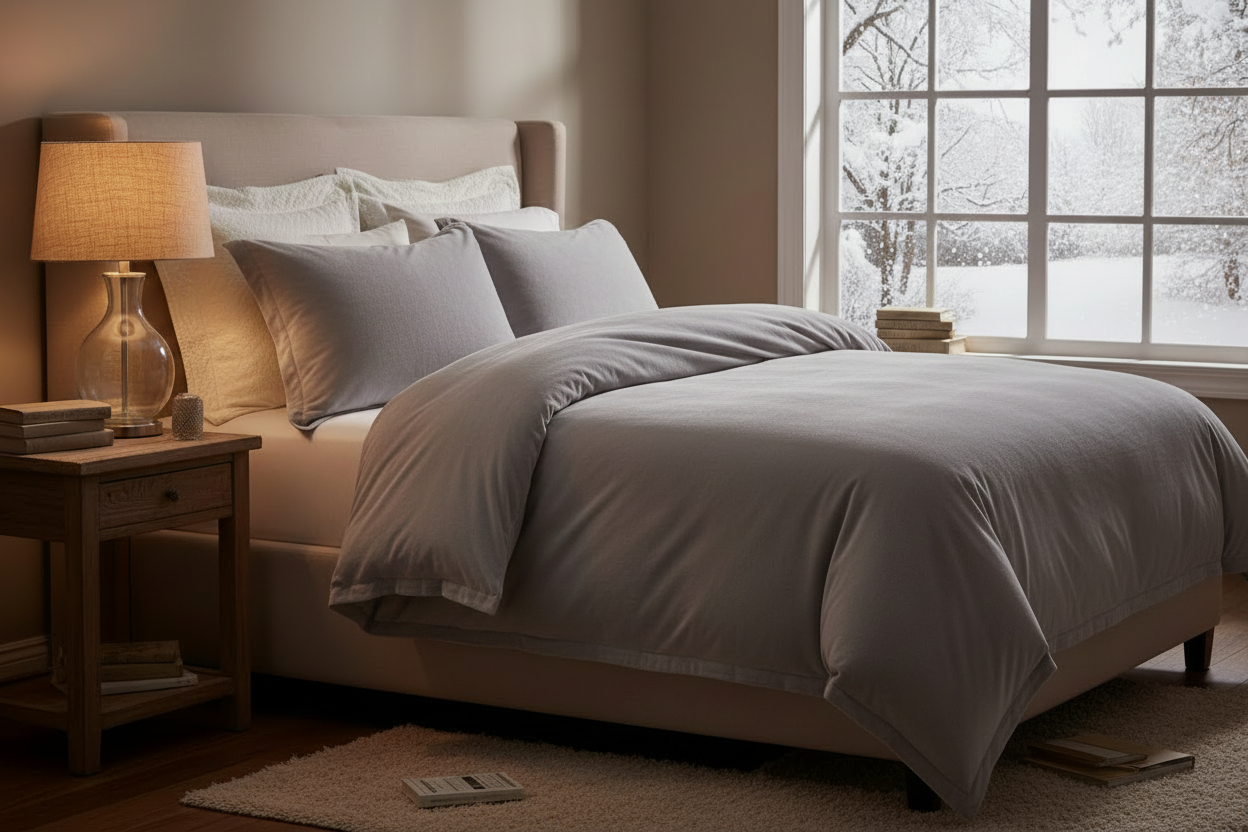
Best Winter Duvet Covers (Quick Answer)
When you’re looking for winter duvet covers, the goal is simple: something that feels warm, soft, and steady through colder nights without feeling heavy or stiff. The best choices are usually cotton-based fabrics with a slightly denser weave that feels cozy against the skin while still staying breathable.
In most cases, the best duvet covers for winter are not about extreme thickness. They’re about balanced fabric feel - something that holds warmth around the body while still allowing natural airflow so the bed doesn’t feel closed in.
Best Duvet Covers for Winter Comfort
For everyday winter comfort, the strongest options usually come down to cotton sateen and soft brushed cotton styles.
- Cotton sateen duvet covers feel smooth and slightly warm to the touch, making them a popular choice for colder months
- Brushed cotton finishes add a gentle softness that feels more insulated without becoming bulky
- A slightly higher weave density helps the fabric feel more “wrapped,” which many people prefer during winter nights
If your winters are mild, a medium-weight cotton duvet cover is usually enough on its own. For colder regions, layering becomes more important - especially combining the duvet cover with a warmer insert rather than relying only on the fabric.
California Design Den duvet covers are made from 100% natural cotton - no synthetic microfiber, no plastic fibers. Many of their cotton bedding products are also backed by the Good Housekeeping Seal, adding an extra layer of trust
What Makes a Duvet Cover Warm in Winter
A warm duvet cover is not defined by thickness alone. It comes from how the fabric is constructed and how it interacts with the duvet inside.
Here are the key factors that matter:
- Fabric density: A tighter weave holds warmth closer to the body without letting it escape too quickly
- Surface feel: Smoother fabrics like sateen tend to feel warmer earlier because they reduce the “cold touch” effect
- Layer interaction: The duvet cover works with the insert to create a soft, layered surface around you, rather than acting as the only source of warmth
- Natural cotton structure: 100% natural cotton helps maintain a balanced feel, avoiding stiffness that can make bedding feel less comfortable in colder nights
In simple terms, the duvet covers for winter that work best are the ones that feel soft when you first get into bed and stay consistent through the night without feeling heavy or restrictive.
The focus should always be on comfort you can feel immediately - warmth that builds naturally as you settle in, not something forced or overly thick.
What Are Winter Duvet Covers?
Winter duvet covers are bedding layers designed to work with your duvet insert to create a more comfortable, wrapped feel during colder months. They don’t “generate” warmth on their own. Instead, they help hold the duvet in place and influence how the bedding feels against your skin - especially when temperatures drop at night.
In winter, the focus shifts from lightness to a more grounded, cozy feel. That’s why duvet covers for winter are usually chosen for their fabric texture, weave density, and how they interact with layered bedding rather than just appearance.
A good winter duvet cover feels soft from the first touch and settles into a comfortable weight once you lie down.
How Winter Duvet Covers Work
Winter duvet covers work by acting as a protective outer layer around your duvet insert. This creates a combined effect:
- The insert provides insulation and loft
- The cover adds surface comfort and structure
- Together, they form a consistent, enclosed sleep layer
In colder months, this combination helps the bed feel more stable and comforting. A well-made cover also prevents the duvet from shifting, so warmth stays evenly distributed across the bed.
The feel is more important than thickness here. A smooth, well-finished cotton surface can make the bed feel more settled and comfortable even without extra bulk.
Duvet Cover vs Insert (Important Difference)
Understanding the difference between a duvet cover and a duvet insert is key when choosing the best duvet covers for winter.
- Duvet insert: This is the inner filling that provides warmth and loft. It determines how insulated your bed feels.
- Duvet cover: This is the removable outer layer that wraps around the insert. It affects texture, softness, and how the bed feels against your skin.
Many people assume warmth comes from the cover, but in reality, the insert carries most of the insulation. The cover’s job is to enhance comfort, keep the insert clean, and create a smooth, even sleeping surface.
In winter setups, both work together. A soft cotton duvet cover paired with a well-chosen insert creates a balanced feel - comfortable for cold nights but still breathable enough for comfort across changing temperatures.
What Makes the Best Duvet Covers for Winter
The best duvet covers for winter are not defined by thickness or heavy fabric alone. What really matters is how the material feels, how it holds the duvet insert, and how it behaves once you’re actually in bed.
A good winter duvet cover creates a steady, comforting layer that feels soft at the surface while working smoothly with your duvet inside. It should feel balanced - neither too light nor too dense.
Fabric Types: Cotton vs Flannel vs Linen
Fabric choice is the first and most important factor when selecting duvet covers for winter.
- Cotton: The most versatile option. Natural cotton feels soft, stable, and works well across different winter conditions.
- Flannel: Brushed for extra softness, it feels more wrapped and cozy, ideal for colder nights.
- Linen: Surprisingly useful in winter layering. It feels airy but becomes more comfortable when layered with a warm duvet insert.
Among these, cotton remains the most balanced choice for everyday winter use because it adapts well without feeling too heavy or too light.
Weave Type: Sateen vs Percale
The weave of the fabric changes how the duvet cover feels in winter.
- Sateen weave: Smooth and slightly dense, giving a softer and more comforting surface feel. It tends to feel warmer earlier when you get into bed.
- Percale weave: Crisp and light, with a more breathable structure. It works well if you prefer a fresher feel even in winter.
For colder nights, sateen is often preferred because it feels more settled and less crisp against the skin.
Thread Count and Warmth
Thread count influences how the fabric behaves, but it should be seen as a comfort indicator rather than a strict rule.
- Lower-medium range (around 300–400TC) feels lighter and more breathable
- Mid-range (around 400–600TC) feels more balanced and slightly more structured
- Higher ranges feel denser and more wrapped, depending on weave
For winter duvet covers, a balanced thread count helps the fabric feel steady without becoming stiff. The goal is comfort consistency - not maximum density.
Fit and Closure: Corner Ties and Button Closures
A good fit is often overlooked but makes a big difference in winter comfort.
- Corner ties: Help keep the duvet insert in place, preventing shifting during the night
- Button closures: Offer a secure and clean finish, keeping the insert enclosed
- Zipper closures: Provide a smooth and tight seal, useful for maintaining even layering
When the duvet insert stays aligned inside the cover, the bed feels more uniform and comfortable throughout the night.
Best Materials for Winter Duvet Covers
When choosing winter duvet covers, material plays the biggest role in how your bed actually feels at night. It affects softness, surface comfort, and how the duvet layer behaves once you settle in.
The right material doesn’t need to feel heavy - it just needs to feel steady, soft, and consistent through colder nights.
Cotton Sateen Duvet Covers (Soft and Warm)
Cotton sateen is one of the most preferred choices for winter bedding because of its smooth, slightly dense surface.
- Feels soft and gently polished against the skin
- Creates a calm, wrapped-in feel without heaviness
- Works well for everyday winter use in most climates
A good example of this category is the Everyday Ease 400 Sateen Duvet Cover grey, which is designed for balanced comfort and consistent softness through seasonal changes.
Cotton sateen works especially well when you want something that feels comfortable from the first touch and stays steady throughout the night.
Percale Duvet Covers (Light but Layerable)
Percale cotton has a crisp, matte finish that feels lighter compared to sateen.
- Feels airy and fresh on the surface
- Works well for layered winter bedding setups
- Ideal if you don’t prefer overly warm or dense textures
In winter, percale is best used with a warm duvet insert rather than on its own. It creates a cleaner, more breathable sleeping surface while still supporting insulation from the inner layer.
Flannel Duvet Covers (Extra Cozy and Warm)
Flannel is brushed to create a soft, slightly fuzzy texture that feels more enclosed.
- Provides a more cozy surface feel during colder nights
- Holds warmth around the body more effectively
- Best suited for colder winter conditions
It’s often chosen when the priority is a more wrapped, insulated bed feel rather than a light or airy setup.
Linen Duvet Covers (Breathable Winter Comfort)
Linen behaves differently from other winter fabrics. It doesn’t feel heavy, but it adapts well when layered.
- Naturally textured surface that softens over time
- Feels breathable while still comfortable in winter setups
- Works best when paired with a warmer duvet insert
Linen is a good option if you prefer bedding that doesn’t feel overly smooth or dense but still performs well in seasonal layering.
Across all materials, cotton-based options remain the most consistent choice for best duvet covers for winter, especially when you want a balance of softness, comfort, and everyday usability.
Warm Duvet Covers for Winter: What to Choose
Choosing the right warm duvet covers for winter depends less on “maximum warmth” and more on how you want your bed to feel. Some people prefer a soft, wrapped-in feeling, while others want something lighter that still feels comfortable in colder nights.
The right choice usually comes from matching fabric feel with your local winter intensity and your personal sleeping comfort.
Best for Mild Winters
For mild winters, you don’t need overly dense or heavy fabrics. The focus should be on comfort and consistency.
- Cotton sateen works well because it feels soft and stable
- Medium thread count fabrics create a balanced feel without heaviness
- Lightweight cotton blends (100% natural cotton preferred) maintain comfort without trapping too much warmth
In these conditions, the duvet cover should feel smooth and gentle, not thick or restrictive.
Best for Cold Winters
In colder winters, the priority shifts toward a more enclosed, comforting feel.
- Flannel cotton works well due to its brushed softness
- Cotton sateen with a slightly higher weave density adds structure and warmth
- Layering becomes more important than relying on one thick fabric
A good setup here focuses on holding warmth evenly across the bed so the surface feels steady and consistent through the night.
Best for Hot Sleepers in Winter
Some people naturally feel warm even in colder months. For them, winter duvet covers should still feel breathable.
- Percale cotton offers a lighter, fresher surface feel
- Mid-weight cotton sateen provides balance without feeling heavy
- Linen works well when layered with a controlled duvet insert
This approach avoids the bed feeling too enclosed while still maintaining comfort during colder nights.
Across all types, the goal is not to overload the bed with heavy materials, but to create a stable sleeping environment that feels comfortable from the moment you lie down until morning.
Best Duvet Covers for Winter by Use Case
The best duvet covers for winter depend on how often you use them, how soft you want the surface to feel, and how much structure you prefer in your bedding. Instead of one fixed choice, it helps to match the duvet cover to your daily routine and comfort preference.
California Design Den duvet covers are made from 100% natural cotton - no synthetic microfiber, no plastic fibers. Many of their cotton bedding products are also backed by the Good Housekeeping Seal, adding an extra layer of trust
Best Everyday Winter Duvet Covers
For daily use, you need something stable, soft, and easy to live with through the entire season.
- 100% natural cotton works best for consistency
- Cotton sateen feels smooth and balanced on the skin
- Medium-weight weaves help maintain a steady feel night after night
A strong everyday option is the Everyday Ease 400 Sateen Duvet Cover Set – Case Pack, designed for repeated winter use with a soft, consistent cotton finish.
It works well when you want one dependable setup that stays comfortable without needing seasonal changes.
Best Luxury Winter Duvet Covers
Luxury in winter bedding comes from finish and feel, not excess weight.
- Smoother sateen weave for a refined surface feel
- Clean cotton texture that feels more structured on contact
- Balanced density for a calm, settled bed appearance
The Everyday Ease Sateen 400 Duvet Covers – Case Pack fits well here, offering a more elevated cotton finish with a smoother surface feel that works well in winter layering setups.
This category is ideal when you want bedding that feels more composed and visually consistent while still staying practical for daily use.
Best Breathable Winter Duvet Covers
If you prefer airflow even during colder months, breathable cotton works best.
- Percale or lighter cotton weaves for a fresher feel
- Works well with layered duvet inserts
- Avoids overly dense surface texture
These options are best when you don’t want the bed to feel overly enclosed but still need winter-level comfort.
Best Budget Winter Duvet Covers
Budget options still perform well when material quality is prioritized.
- Entry-level 100% cotton remains the safest choice
- 300–400TC range works for everyday softness
- Simple weaves keep maintenance easy
Even at lower cost, natural cotton performs reliably when used in proper layering setups.
Why Cotton Duvet Covers Are Ideal for Winter
When it comes to winter duvet covers, cotton stands out because it balances comfort, softness, and everyday usability without feeling overly heavy or restrictive. It adapts naturally to the body and works well in layered bedding setups, which is exactly what winter sleep needs.
Unlike synthetic fabrics, 100% natural cotton feels steady and familiar, making it easier to sleep comfortably through colder nights.
Breathable Yet Warm
Cotton doesn’t trap air in a rigid way. Instead, it allows gentle airflow while still holding enough structure to feel warm when layered with a duvet insert.
- Works well across changing winter temperatures
- Doesn’t feel overly enclosed or stuffy
- Maintains a balanced sleeping surface
This makes cotton especially useful if your nights vary between mild and cold within the same season.
Softness and Comfort
One of cotton’s strongest advantages is how it feels directly against the skin.
- Becomes softer with each wash
- Feels smooth and natural rather than artificial
- Creates a calm, settled sleeping surface
Cotton sateen versions, in particular, offer a slightly polished feel that many people prefer for winter bedding because it feels more comfortable right away.
A good example of this comfort-driven design is the Everyday Ease 400 Thread Count Duvet Cover Set Ivory, which uses natural cotton to create a consistent, soft surface feel for everyday winter use.
Easy Maintenance
Cotton duvet covers are also practical, which matters during winter when bedding is used more frequently.
- Easy to wash and maintain at home
- Holds shape well with regular use
- Softens naturally over time instead of wearing out quickly
This makes cotton a long-term, dependable choice for duvet covers for winter, especially if you prefer low-maintenance bedding that still feels comfortable every night.
Overall, cotton works well because it doesn’t try to overdo anything. It simply creates a stable, soft, and natural base that fits easily into winter sleeping habits.
Buying Guide: How to Choose the Right Winter Duvet Cover
Choosing the right winter duvet covers is mostly about matching fabric feel, bed setup, and personal sleep habits. Instead of focusing on one “best” option, it helps to narrow down what actually feels right for your nights.
A good choice should feel comfortable immediately and stay consistent through the night without needing adjustment.
Select California Design Den cotton duvet covers are backed by the Good Housekeeping Seal and evaluated by the GH Institute.
Choose the Right Fabric
Fabric is the first decision point and has the biggest impact on comfort.
- Cotton sateen: Smooth and steady feel, ideal for most winter setups
- Percale cotton: Lighter surface feel for those who prefer freshness
- Flannel cotton: More enclosed and cozy feel for colder nights
- Linen: Natural texture that works well in layered bedding
For most people, 100% natural cotton remains the most balanced option because it adapts easily without feeling too heavy or too light.
Match with the Right Duvet Insert
A duvet cover only performs well when paired with the right insert.
- Lightweight inserts for mild winter conditions
- Medium-fill inserts for balanced comfort
- Heavier inserts for colder nights
The cover’s role is to hold the insert properly and create a smooth sleeping surface, so both layers need to work together for consistent comfort.
Pick the Right Duvet Cover Size
Size affects how the bed feels more than most people expect.
- Proper sizing prevents shifting inside the cover
- Slightly oversized fits can create a more relaxed feel
- Exact sizing gives a more structured and tidy surface
A well-fitted duvet cover helps the bedding stay evenly spread, which improves overall comfort during sleep.
Consider Your Sleeping Style
Your sleep habits play a big role in what will feel best.
- If you move a lot: choose secure closures and corner ties
- If you sleep still: focus on fabric softness and surface feel
- If you feel warm easily: go for lighter cotton weaves
- If you prefer coziness: choose smoother, slightly denser finishes
The best duvet covers for winter are the ones that match how you naturally sleep, not just seasonal expectations.
When these factors come together - fabric, insert, size, and sleep style - you get a setup that feels natural, steady, and comfortable throughout winter nights.
Winter Duvet Covers vs Summer Duvet Covers
The difference between winter duvet covers and summer duvet covers isn’t just about thickness. It’s about how the fabric feels on the skin, how it handles layering, and how it behaves with changing room temperatures.
Understanding this difference helps you rotate bedding properly through the year instead of forcing one setup to work in all seasons.
Warmth Differences
Winter and summer duvet covers feel different because they support different sleep needs.
- Winter duvet covers: Designed to feel more settled and comforting when the bed is layered with a warmer insert
- Summer duvet covers: Focus on a lighter surface feel that works with minimal layering
In winter, the goal is a more wrapped-in experience. In summer, the goal is openness and ease.
Fabric Differences
Fabric choice is what separates seasonal comfort most clearly.
- Winter fabrics: Cotton sateen, flannel, and slightly denser weaves that feel smooth and steady
- Summer fabrics: Percale cotton and lighter weaves that feel crisp and airy
Both can be made from 100% natural cotton, but the weave and finish determine how they feel in different temperatures.
Cotton sateen is often preferred in winter because it creates a more comfortable surface feel when the air is colder and the bed needs a slightly more structured touch.
Layering Strategy
Layering is where winter and summer bedding really diverge.
- Winter setup: Duvet cover + warmer insert + optional additional blanket for colder nights
- Summer setup: Lightweight insert or sometimes just a thin cover for minimal layering
In winter, layering creates insulation and comfort. In summer, reducing layers helps the bed feel lighter and more open.
A good winter setup focuses on keeping the bedding stable and evenly spread, while a summer setup prioritizes ease and airflow.
In simple terms, winter duvet covers for winter are about building comfort through layering and fabric feel, while summer versions are about reducing weight and keeping things light.
How to Make Your Bed Warmer in Winter
Making your bed feel warmer in winter isn’t only about choosing thicker bedding. It’s about how each layer works together - your duvet cover, insert, and sheets all contribute to the final feel.
A well-set winter bed feels consistent, layered, and comfortable without needing excess weight.
Layering with Duvet Covers
Layering is the simplest way to improve winter comfort.
- Use a well-fitted duvet cover to keep the insert evenly in place
- Add a light blanket between the sheet and duvet for extra depth
- Choose smoother cotton finishes that feel more settled on contact
The idea is to build soft layers that work together, rather than relying on a single heavy fabric.
Choosing the Right Duvet Insert
The insert plays a bigger role in warmth than the cover itself.
- Medium-fill inserts work well for most winter conditions
- Heavier inserts are better for colder regions
- Lightweight inserts can still work if layered properly
When paired correctly, the duvet cover helps distribute the insert evenly, so the bed feels balanced instead of uneven or bulky.
Using the Right Bed Sheets
Bed sheets form the base layer and influence overall comfort more than expected.
- 100% natural cotton sheets work well for winter layering
- Slightly denser weaves create a more grounded feel
- Soft finishes help the bed feel comfortable from the moment you lie down
If the base layer feels right, the rest of the bedding naturally becomes more comfortable.
A well-balanced winter setup often includes natural cotton bedding like Everyday Ease 400 Sateen Cotton Duvet Cover Set ivory, which supports a steady and comfortable layering experience without feeling overly heavy.
When all layers work together - sheet, insert, and duvet cover - the bed feels naturally warmer and more consistent through the night, without needing extra bulk or complicated adjustments.
How to Care for Winter Duvet Covers
Taking care of winter duvet covers is mostly about maintaining softness, keeping the fabric stable, and making sure the cover continues to feel comfortable over time. Good care also helps the bedding stay consistent through repeated winter use.
The goal is simple: keep the fabric clean, soft, and evenly structured without over-processing it.
Washing Tips
Washing plays the biggest role in how long your duvet cover stays comfortable.
- Use a gentle wash cycle to protect the cotton fibers
- Wash with mild detergent to maintain natural softness
- Avoid very high heat, which can make fabric feel stiff over time
- Wash separately from heavy items like denim or towels to reduce friction
For duvet covers for winter, regular but gentle washing helps preserve the natural feel of cotton and keeps the surface smooth.
Maintaining Softness
Softness improves naturally with cotton, but how you handle it matters.
- Shake the duvet cover after washing to restore shape
- Air-dry when possible to maintain fabric integrity
- Avoid over-drying, which can make the fabric feel flat
- Fold neatly instead of compressing tightly in storage
100% natural cotton tends to soften over time, especially when treated gently. This is what makes it comfortable for long-term winter use.
Storage Tips
Proper storage keeps winter bedding ready for the next season.
- Store in a dry, cool space to avoid moisture buildup
- Use breathable storage bags instead of plastic when possible
- Keep bedding loosely folded to avoid deep creases
- Make sure the fabric is completely dry before storing
Good storage helps maintain the texture and ensures your winter duvet covers feel fresh when you bring them back into use.
With simple care habits, cotton duvet covers stay consistent, soft, and comfortable through multiple winter seasons without losing their natural feel.
Common Mistakes When Choosing Winter Duvet Covers
Choosing winter duvet covers seems simple, but a few small mistakes can make the bed feel less comfortable than expected. Most issues come from focusing on the wrong factors - like appearance or thickness - rather than how the fabric actually feels and works in layering.
Here are the most common things to avoid.
Choosing Based Only on Thickness
A common mistake is assuming thicker always means better for winter.
- Overly dense covers can feel heavy without adding real comfort
- Comfort depends more on fabric quality and weave than bulk
- A well-balanced cotton cover often performs better than a heavy fabric
The right approach is to focus on how the material feels on the skin and how it works with the duvet insert.
Ignoring Fabric Feel
Fabric feel is often overlooked but makes the biggest difference in real use.
- Some fabrics feel too stiff or structured for daily comfort
- Others may feel too light without proper layering
- Cotton sateen often works well because it feels smooth and consistent
If the surface doesn’t feel comfortable at first touch, it won’t improve much with use.
Wrong Size Selection
Size issues can affect how the bed feels more than expected.
- Too small: duvet bunches up and feels uneven
- Too large: insert shifts and creates uneven warmth
- Correct fit ensures smooth, even layering
A properly fitted cover keeps everything aligned, which improves overall comfort.
Overlooking Layering Needs
Winter bedding works best when layers are considered together.
- Relying only on the duvet cover for warmth creates imbalance
- Ignoring the duvet insert reduces overall comfort
- Sheets, insert, and cover should work as a system
A well-planned setup always feels more stable and consistent.
Avoiding these simple mistakes helps you choose duvet covers for winter that feel balanced, comfortable, and easy to use every night - without unnecessary complexity.
Why California Design Den Duvet Covers Work Well for Winter
At California Design Den, winter bedding focuses on balanced comfort rather than excessive thickness. Their duvet covers are made from 100% natural cotton without synthetic microfiber or plastic-based fibers, helping create a softer and more breathable sleep surface during colder months.
100% Natural Cotton Comfort
California Design Den duvet covers are designed to feel soft, smooth, and comfortable for everyday winter use while still remaining breathable enough for layered bedding setups.
Sateen Weaves for Winter Softness
Their cotton sateen duvet covers create a slightly warmer, smoother surface feel that works especially well during colder nights.
Good Housekeeping Recognition
Many California Design Den bedding collections are backed by the Good Housekeeping Seal, adding an additional level of trust and product evaluation.
Designed for Everyday Use
The focus stays on easy-to-maintain cotton bedding that becomes softer over time while maintaining consistent comfort throughout the winter season.
Final Verdict: Best Duvet Covers for Winter
Choosing the right winter duvet covers is really about balance, not excess. The best options are not the thickest or the most heavily marketed - they are the ones that feel comfortable the moment you lie down and stay consistent through cold nights.
Across fabrics, cotton remains the most dependable foundation. It adapts well, feels natural against the skin, and works smoothly in layered bedding setups. Within cotton, sateen finishes often stand out for winter because they feel softer and more settled, while flannel brings a more enclosed, cozy feel for colder regions.
The key takeaway is simple: a good winter setup is built in layers. The duvet cover works with the insert and sheets to create a steady sleeping environment - not just warmth, but comfort you can feel every night.
If you prefer a reliable everyday option, cotton sateen is usually the safest starting point. A structured example is the Everyday Ease 400 Sateen Cotton Duvet Cover grey which fits well into balanced winter bedding setups where comfort and consistency matter more than anything else.
In the end, the best winter duvet cover is the one that feels natural, steady, and easy to live with - night after night - without needing adjustment or overthinking.
FAQs: Winter Duvet Covers
Here are some common questions people ask when choosing winter duvet covers and setting up a comfortable winter bed.
What are the best duvet covers for winter?
The best duvet covers for winter are usually made from 100% natural cotton, especially cotton sateen or brushed cotton. They feel soft, stable, and work well with layered bedding setups. The best choice depends on how you like your bed to feel - smooth and balanced or more cozy and enclosed.
Are cotton duvet covers warm enough for winter?
Yes, cotton duvet covers work well in winter when paired with the right duvet insert. Cotton itself doesn’t create heat, but it helps maintain a comfortable and steady layer around the body, especially when used in a proper layered bedding setup.
What is the warmest duvet cover material?
Flannel cotton is generally considered one of the warmest-feeling materials because of its brushed surface. However, cotton sateen also performs well for winter because it feels smooth, slightly dense, and comfortable for everyday use.
Should duvet covers be thicker for winter?
Not necessarily. Thickness alone doesn’t determine comfort. A well-made cotton duvet cover with the right weave and fit often feels more comfortable than a very thick fabric. The key is balance between softness, structure, and layering.
Do duvet covers affect warmth?
Yes, but indirectly. Duvet covers don’t generate warmth - they influence how the duvet insert feels and how evenly it is distributed. A good cover helps the bedding feel more consistent, stable, and comfortable through the night.


