

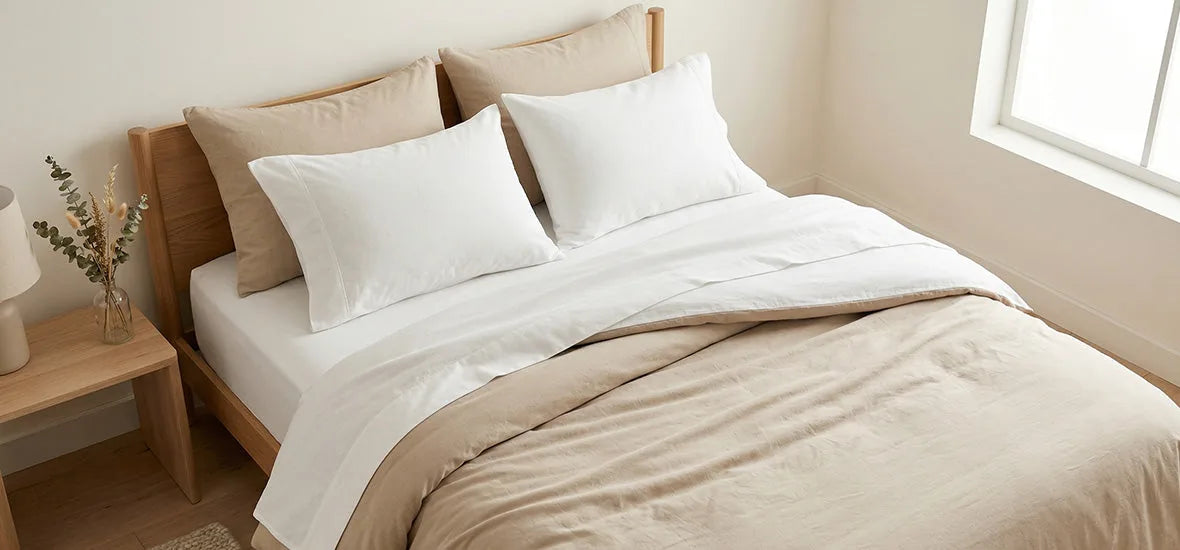
Yes, you can use a duvet cover without an insert. On its own, a duvet cover works like a lightweight blanket or top layer and is often used in minimal bedding setups, warm climates, or as a temporary alternative to a full duvet.
However, without an insert, the duvet cover will feel flatter and lighter since it does not have the structure, fullness, or weight that a duvet insert provides.
- Yes, you can use a duvet cover by itself
- It works best as a lightweight bedding layer
- Ideal for warm weather or minimal bedding setups
- A duvet insert adds fullness, structure, and weight
- Without an insert, the cover feels flatter and less substantial
What Is a Duvet Cover?
A duvet cover is a removable fabric layer designed to go over a duvet insert.
It acts as the outer layer of your bedding and is meant to be washed more frequently than the insert inside.
Purpose of a Duvet Cover
A duvet cover serves three key functions:
- Protection → keeps the insert clean
- Maintenance → easy to remove and wash
- Appearance → defines how your bed looks
Because it’s the outer layer, the fabric you choose directly affects how it feels in everyday use.
Materials and Fabric Types
Duvet covers are commonly made from:
- 100% natural cotton
- Linen
- Other natural fabrics
Cotton is the most widely used because it offers a smooth, consistent surface and holds up well with regular washing.
California Design Den duvet covers are made from 100% natural cotton - no synthetic microfiber, no plastic fibers. This keeps the fabric consistent over time.
Why Duvet Covers Are Popular
Duvet covers are widely used because they:
- Simplify cleaning
- Extend the life of the insert
- Allow easy style changes
A well-made cotton option, like a 400 thread count duvet cover set ivory, offers a smooth, durable surface that works well for everyday use.
What Is a Duvet Insert & Why It Matters
What Is a Duvet Insert?
A duvet insert is the inner layer that goes inside a duvet cover.
It provides:
- Weight
- Shape
- Structure
Without it, the duvet cover remains flat and unfilled.
Types of Duvet Fillings
Common duvet insert fillings include:
- Down
- Feather
- Synthetic fibers
- Wool
- Silk
Each filling changes how the duvet feels and how much maintenance it requires.
Duvet Insert vs Comforter
A duvet insert is designed to be used with a cover.
A comforter is a single-piece bedding item with filling stitched inside.
The key difference:
- Duvet system → insert + cover (two parts)
- Comforter → one complete piece
Why Inserts Add Structure and Warmth
A duvet insert gives the cover:
- Even shape across the bed
- Fuller appearance
- Consistent weight
Without an insert, the cover functions more like a thin layer rather than a structured duvet.
Best Alternatives to Using a Duvet Cover by Itself
If a duvet cover alone feels too light or unstructured, there are a few better options that still keep things simple.
Using a Comforter Inside a Duvet Cover
This is the closest alternative to a duvet insert.
When it works:
- The comforter matches the cover size
- You want a fuller look without buying a separate insert
Things to keep in mind:
- Comforters don’t usually have corner loops
- They may shift inside the cover over time
It’s a workable solution, but not as stable as a proper duvet insert.
Using a Duvet Cover Without a Top Sheet
Some people skip the top sheet and use a duvet cover directly.
- Easier to maintain
- Fewer layers on the bed
- Simple to remove and wash
This works well if you prefer a more minimal setup.
Blankets and Quilts as Alternatives
A blanket or quilt can be used instead of a duvet insert.
- Lighter than a full duvet
- Easier to layer
- Simple to store
However, they don’t fill the cover evenly and may shift during use.
Layered Sheets for Minimal Bedding
Instead of using a duvet insert, you can layer:
- A fitted sheet
- A flat sheet
- A lightweight blanket
This approach keeps things simple while still offering flexibility.
Weighted Blankets for Comfort
Weighted blankets are used for a more substantial feel.
- Heavier than standard blankets
- Provide a grounded, steady weight
They are typically used on their own rather than inside a duvet cover.
Tips for Choosing the Right Duvet Cover
Even if you plan to use it without an insert, choosing the right duvet cover matters.
Choose the Right Fabric
- Cotton is the most practical option for everyday use
- Linen offers a more textured feel
California Design Den duvet covers are made from 100% natural cotton - no synthetic microfiber, no plastic fibers.
Check Thread Count
Thread count affects how the fabric feels.
- 400 thread count → smooth, balanced feel
- Higher counts → denser and more substantial
Different thread counts offer different experiences - choose based on preference.
Pick the Correct Size
Match the duvet cover to your bed size:
- Twin, Queen, King
Even without an insert, proper sizing helps the cover sit neatly on the bed.
Look for Secure Closures
Choose a cover with:
- Buttons or zippers
- Strong stitching
This keeps the cover easy to handle and maintain.
Consider Seasonal Use
- Lighter fabrics for warmer conditions
- Heavier fabrics for a more substantial feel
This helps you adjust your bedding throughout the year.
How to Care for Your Duvet Cover
Washing Frequency
- Wash every 1–2 weeks
- More often if used without a top sheet
Drying Tips
- Use low to medium heat
- Remove promptly to reduce wrinkles
- Air dry when possible
Storage Best Practices
- Store in a dry, breathable space
- Fold neatly to avoid creasing
- Avoid sealing in airtight plastic for long periods
The Role of Duvet Covers in Bedroom Aesthetics
Enhancing Bedroom Style
A duvet cover defines how your bed looks.
- Clean and structured
- Easy to change
Adding Texture and Color
Different fabrics and finishes create different looks:
- Smooth cotton → clean finish
- Linen → textured appearance
Easy Seasonal Updates
Switching duvet covers is one of the simplest ways to refresh your bedding.
- Change colors
- Adjust fabric weight
- Update the overall look
Why California Design Den Duvet Covers Work Well for Flexible Bedding Setups
California Design Den duvet covers are made from 100% natural cotton with no synthetic microfiber or plastic-based blends, making them suitable for both traditional duvet setups and lightweight bedding arrangements.
Because the fabric focuses on smooth cotton construction and balanced weave quality, CDD duvet covers work well:
- With a duvet insert for a fuller bedding setup
- By themselves as a lightweight top layer
- In minimal bedding arrangements with fewer layers
Options like the 400 Thread Count Cotton Duvet Cover Set Ivory offer a smooth and balanced surface feel that stays comfortable even with regular washing and everyday use.
CDD also offers different cotton fabric styles depending on how you want your bedding to feel:
- Cotton percale for a crisp and lightweight finish
- Cotton sateen for a smoother and softer surface feel
Many California Design Den cotton bedding products are also OEKO-TEX tested and backed by the Good Housekeeping Seal, helping reinforce fabric quality, consistency, and everyday comfort.
Final Verdict – Should You Use a Duvet Cover Without an Insert?
Yes - you can use a duvet cover without an insert, but it works best in specific situations.
- If you want a lightweight layer, it works well
- If you prefer a minimal setup, it keeps things simple
- If you want structure and fullness, an insert is still the better choice
A duvet cover on its own feels flat and light. Paired with an insert, it becomes a complete bedding layer with shape and balance.
A well-made cotton cover - like a 400 thread count cotton duvet cover grey - also makes a difference. It holds up well with regular washing and keeps the surface smooth over time.
Frequently Asked Questions About Using a Duvet Cover Without an Insert
Can you use just a duvet cover as a blanket?
Yes. A duvet cover can work as a lightweight blanket, but it will feel thinner than a filled duvet.
What is the duvet cover trick?
The most common method is the “roll technique,” where you roll the insert and cover together to easily place the insert inside without bunching.
Can you use a duvet cover as a comforter?
Not exactly. A comforter includes filling, while a duvet cover does not. Without an insert, it functions more like a light layer.
What duvets are best for allergies?
Instead of focusing on medical claims, it’s better to choose natural cotton covers and OEKO-TEX tested materials, which are gentle on skin and free from harmful substances.
Does a duvet cover go over a comforter?
Yes, you can place a comforter inside a duvet cover, but it may not fit as securely as a duvet insert.


