

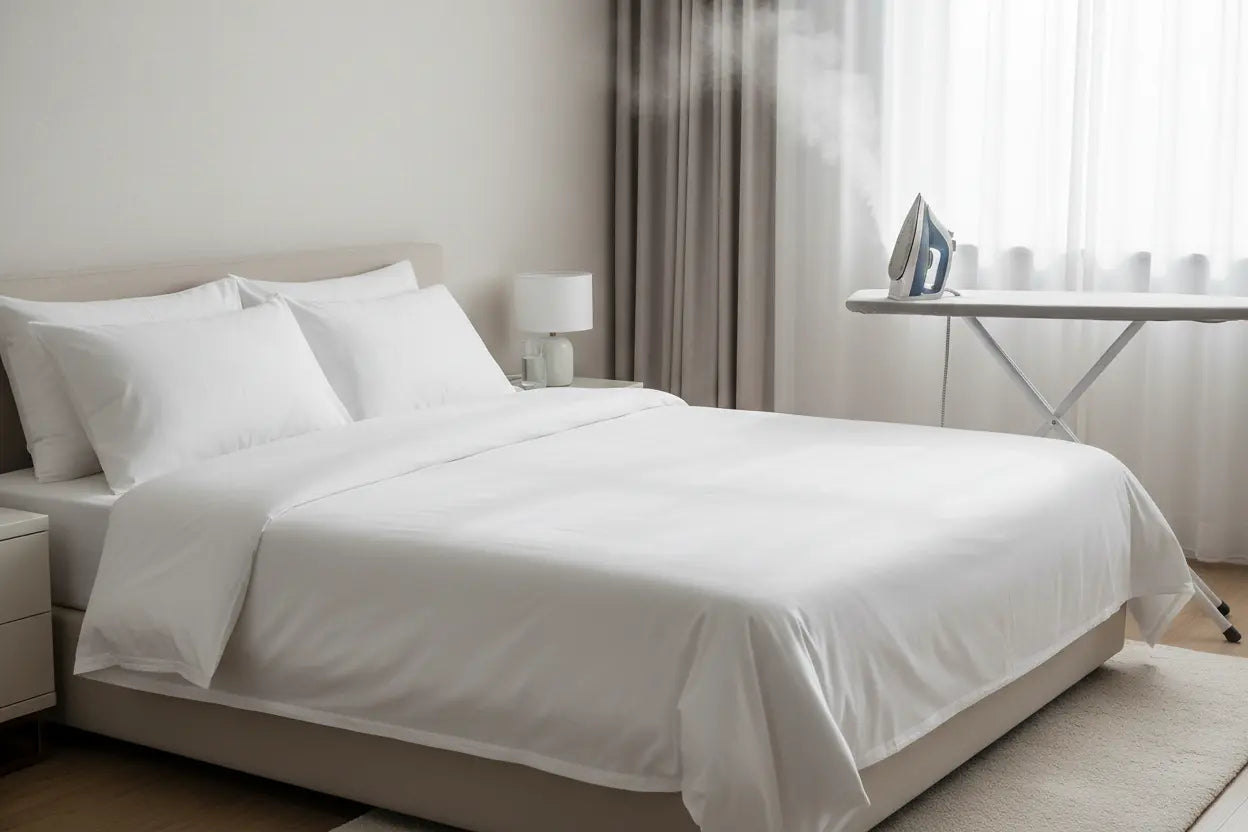
Ironing bed sheets is one of the simplest ways to make your bed look and feel noticeably better. Freshly ironed sheets lie flat, feel smooth against the skin, and give your bed a polished, put-together look that unironed sheets just can't match. If you've been wondering whether there's a best way to iron sheets without spending an hour on each set, the answer is yes - and the process is more manageable than most people expect. For a closer look at how different fabrics handle creasing, Do Percale Sheets Wrinkle is worth reading before you start.
This guide covers everything: when ironing makes sense, how to iron bed sheets step by step, and the safest ironing methods for cotton, linen, and percale. By the end, you'll know exactly what temperature to use, whether to iron wet or dry, and how to get through a full sheet set without the process feeling like a chore.
Here's what this blog covers:
- Whether you actually need to iron sheets
- The best way to iron sheets for a smooth, wrinkle-free result
- Step-by-step instructions for ironing sheets
- Fabric-specific guidance for cotton, linen, percale, and more
- Other practical tips for keeping sheets looking their best

How to iron bed sheets: Quick answer
Iron sheets while they're still slightly damp - either straight from the dryer or misted with water. Set the iron to the correct heat for your fabric, work in sections from the edges inward, and use steam on stubborn creases. For most cotton sheets, the full process takes under 15 minutes once you know the method.
Do you have to iron bed sheets?
No - ironing bed sheets is not something you have to do. Sheets function perfectly well straight out of the dryer, and most people never iron them at all. But if you've noticed your bed looking rumpled and uneven even after making it properly, ironing is what makes the difference.
The choice often comes down to the fabric. Some materials wrinkle significantly more than others, and some hold a crease so stubbornly that no amount of smoothing by hand will remove it. Linen is a good example - it wrinkles heavily and pretty much demands ironing if you want it to look neat. Percale cotton is another fabric that creases easily due to its tight, plain weave.
There's also a personal comfort element. Many people who sleep on freshly ironed sheets say the feel is noticeably different - smoother and more even against the skin. That said, if low-maintenance bedding is important to you, cotton sateen is woven to have a naturally smooth, lustrous surface that resists creasing far better than percale. Ironing becomes optional rather than necessary.
So the honest answer is: you don't have to iron bed sheets, but if you want a crisp, smooth, wrinkle-free bed, knowing how to iron sheets properly makes the job easier and faster.
How to iron sheets easily and effectively
The best way to iron sheets comes down to three things: the right iron temperature, slightly damp fabric, and working in sections rather than trying to manage the whole sheet at once. Get those three right, and ironing bed sheets becomes far faster and less frustrating than most people expect.
What you'll need before you start
Before you begin ironing sheets, get these ready:
- A steam iron (steam is more effective than dry ironing for most sheet fabrics)
- A large ironing board or flat surface - a clean table covered with a folded towel works well for large sheets
- A spray bottle with clean water (for dry sheets that need dampening)
- The care label on your sheets - temperature settings matter per fabric, and using the wrong heat can damage fibers
Check the care label every time you iron a new set of sheets, especially if they're unfamiliar. This one step prevents most ironing mistakes.
Ironing sheets step by step
Getting the technique right for ironing bed sheets is what separates a smooth result from a wrinkled one. Here's the best way to iron sheets from start to finish:
-
Iron sheets while slightly damp. The easiest method is to remove sheets from the dryer while they're still 10–15% damp, then iron straight away. If sheets have already dried fully, use a spray bottle to lightly mist the fabric before ironing. Dry fabric requires much more heat and effort to smooth out.
-
Set the iron to the correct temperature for the fabric. Cotton tolerates high heat; linen can also handle heat well; percale and blended fabrics need medium heat. Always start lower and test on an inconspicuous area if you're unsure.
-
Fold the sheet into a manageable section. A full flat sheet is large. Fold it in half lengthwise first, iron that half, then fold and iron the other. Work in smooth, overlapping strokes - don't press and drag, just guide the iron forward.
-
Iron the edges and corners first. The corners and hemmed edges set the structure of the sheet. Start there, then work inward toward the center of each section.
-
Use steam generously on stubborn creases. Hold the iron just above a deep crease and release a burst of steam before pressing. This relaxes the fibers and makes the crease easier to remove.
-
Fold as you go. Once a section is ironed, fold it neatly before moving to the next. This prevents the ironed fabric from creasing again while you work on the rest of the sheet.
-
Iron pillowcases inside out. This protects the visible outer surface and any decorative stitching. Open the hem and iron inside the case for the smoothest result.
This step-by-step approach is the best way to iron sheets without creating new creases while removing old ones. The key is always working on a flat surface large enough to hold a folded section fully open.
How to safely iron cotton sheets
Cotton is the most commonly ironed sheet fabric, and it handles heat well. When ironing bed sheets made from 100% natural cotton, a medium-high to high setting is appropriate - cotton fibers are durable and respond well to heat and steam.
Temperature and technique for cotton
Set your iron to the cotton setting, which is typically marked on the dial. If your iron doesn't have a fabric-specific setting, use 200°C as a starting point for plain cotton. Slightly damp cotton irons fastest and smoothest - bone-dry cotton takes significantly longer and requires more steam to release wrinkles.
For cotton sateen sheets, the weave is naturally smoother and more tightly finished than percale, which means it requires less ironing effort to begin with. The satin weave floats more fibres on the surface, creating a naturally lustrous look that irons out beautifully.
Common mistakes when ironing cotton sheets
Ironing sheets made from cotton becomes easier once you know what to avoid:
- Ironing in circles. Always iron in straight, forward strokes. Circular motions can distort the weave pattern, especially in fine-count cotton.
- Pressing too hard. The weight of the iron does the work - you don't need to press down. Light, even pressure produces better results.
- Skipping the damp step. Ironing dry cotton takes twice the effort. Dampen the fabric slightly and the wrinkles release much faster.
- Leaving the iron stationary. A hot iron left in place on any cotton fabric can scorch or leave a shiny iron mark. Keep it moving.
For woven cotton sheets with a higher thread count - such as the 500 Thread Count Cotton Sateen Sheet Set - Bright White - the denser weave means a naturally smoother surface that takes far less ironing to look polished. The fabric does a lot of the work for you.
How to safely iron linen sheets
Linen is one of the fabrics that benefits most from ironing. It wrinkles easily and deeply, and while many people choose to embrace the relaxed, lived-in texture of unironed linen, ironing linen sheets does produce a noticeably cleaner result.
Temperature and method for linen
Linen can handle higher heat than most people expect. Set your iron to the linen setting or to around 230°C. Always iron linen sheets while they're damp - linen that has dried fully is one of the harder fabrics to iron smoothly. Either remove from the dryer before fully dry, or mist generously with a spray bottle.
Iron on the reverse side (the side that won't be visible) to avoid creating a sheen on the surface. Use steam freely, and use long, straight strokes. Linen responds well to steam and tends to smooth out more fully than percale under the same conditions.
What to expect with linen
Even after careful ironing, linen will wrinkle again quickly - that's simply in the nature of the fiber. The weave structure of linen is loose and open, which is what makes it breathable and comfortable but also means it creases easily. Ironing linen sheets right before you make the bed, rather than ironing and storing, gives you the best results.
If you want the feel of natural cotton without the ironing commitment that linen demands, cotton sateen - especially at a higher thread count - gives you a smooth, even surface right out of the dryer.

How to safely iron percale sheets
Percale is a plain weave fabric - one thread over, one thread under - which gives it its characteristic crisp, cool texture. It's also one of the fabrics most prone to wrinkling. If you've ever pulled percale sheets out of the dryer and found them creased throughout, that's the weave doing what it naturally does.
Temperature for percale sheets
Use a medium to medium-high heat setting for percale. Most percale sheets are made from cotton, so they can tolerate reasonable heat, but the tight weave means there's less tolerance for scorching than a looser weave. Start at medium and increase only if needed.
Steam works well with percale. Iron in straight strokes along the grain of the fabric - diagonal or circular strokes can pull the weave off-square over time.
Percale and ironing frequency
Because percale wrinkles so readily, ironing sheets made from percale is something you'll likely do every time you change the bed - unless you use them straight from the dryer and make the bed immediately, before the creases have time to set. Some people find that removing percale sheets from the dryer a few minutes before the cycle ends, shaking them out and hanging briefly, reduces the depth of the wrinkles and makes ironing faster.
For a deeper look at how percale handles everyday wear and washing, Do Percale Sheets Wrinkle covers the fabric in detail.
Ironing other sheet materials
Not every sheet set is made from pure cotton, linen, or percale. Here's how to approach ironing bed sheets made from other common materials.
Cotton sateen
Cotton sateen is a weave rather than a separate material - it's still cotton, but woven in a way that produces a smooth, slightly lustrous surface. Because more fibers sit on the surface, sateen is naturally less prone to deep wrinkling than percale. Iron at a medium-high heat setting, on the reverse side if you want to preserve the sheen, and use moderate steam. Ironing sateen sheets is generally faster and easier than percale.
Blended fabrics (cotton/polyester)
Some sheets are blended with polyester to reduce wrinkling and improve durability. Iron these at a lower temperature - polyester is heat-sensitive and can melt or develop a permanent sheen under a hot iron. Use a medium setting and avoid steam directly on the fabric surface if the polyester content is high.
Bamboo viscose (Viscose from Bamboo)
Sheets made from Viscose from Bamboo have a soft, slightly silky texture that can be damaged by high heat. Use a low to medium iron setting, keep steam use moderate, and iron on the reverse side. These fabrics wrinkle moderately but tend to respond well to even light ironing.
Silk sheets
Silk requires a low iron setting - use the silk setting on your iron if it has one, or set to around 110–120°C. Turn silk sheets inside out and use a pressing cloth between the iron and the fabric. Never use steam directly on silk. Ironing sheets made from silk is more delicate and time-consuming than cotton, and is best done carefully and slowly.
Other considerations when ironing sheets
Getting the best results from ironing bed sheets isn't just about technique - a few practical details make a real difference to how long the process takes and how good the results are.
Iron right before making the bed
Ironing sheets and then folding them for storage gives wrinkles time to reset. If a crisp, smooth finish is the goal, iron the sheets and put them straight onto the bed. This is especially true for linen and percale, which crease quickly.
Use a large ironing surface
A standard-sized ironing board works for pillowcases and smaller items but is noticeably awkward for full flat sheets or fitted sheets. A large table covered with a clean folded blanket or an ironing board cover gives you far more control. The bigger the working surface, the fewer times you'll need to reposition the sheet - and the fewer new creases you'll create while working.
The quality of your iron matters
A steam iron with a consistent, powerful steam output makes a noticeable difference. Look for an iron with a large water reservoir and a good steam burst function for working through stubborn creases. Cheap irons with weak steam make the job take much longer.
Fitted sheets are harder - here's the trick
Fitted sheets are the most difficult to iron because of the elasticated corners. The best approach is to iron the flat center panels first, then work toward the corners, stretching the elastic gently to keep the fabric taut as you press. Many people simply skip ironing fitted sheets and focus on flat sheets and pillowcases instead - the flat sheet and pillowcases are what you see and feel most against the skin, so those make the biggest difference.
Store ironed sheets correctly
If you do fold and store ironed sheets rather than putting them straight on the bed, fold along the existing seams and creases. Folding against the grain creates new lines. Store sheets flat or loosely rolled in a dry cupboard - not crushed under a stack of other bedding.
Why California Design Den cotton sheets iron beautifully
Getting into a bed made with freshly ironed sheets is a noticeably different experience - the fabric lies flat and even, feels smooth against the skin from the first moment, and the bed looks as well put-together as it feels. That result is much easier to achieve with the right fabric underneath the iron.
California Design Den sheets are made from 100% natural cotton - no synthetic fibers, no microfiber, no plastic. Natural cotton fibers respond to heat and steam the way the fabric is meant to: wrinkles release cleanly, the weave returns to its natural lay, and the finished result is a smooth, even surface that feels clean and even against the skin
The difference becomes clear when you iron a high thread count cotton sateen set. The 500 Thread Count Cotton Sateen Sheet Set in Bright White has a dense, smooth weave that irons out quickly and lies flat beautifully. For those who want a richer, weightier feel, the 1000 Thread Count Cotton Sateen Sheet Set in Beige produces a remarkably polished finish when ironed - the kind of smooth, even surface that feels like a step up from everyday bedding.
California Design Den has earned the Good Housekeeping Seal across its cotton sheet collections, backed by over 8 million sleepers and a 4.5-star average. Most of our cotton sheets are made in our family-owned facility - and that's what keeps the quality consistent and the price honest.
When you're putting in the time to iron bed sheets properly, the fabric underneath makes a real difference. Cotton responds to ironing differently than synthetic blends - the natural fibers hold the press longer, feel smoother against the skin, and look cleaner on the bed.
How to choose sheets that are easier to iron bed sheets
Not all sheets take the same amount of effort to iron, and if you'd rather spend less time at the ironing board, the fabric and weave you choose makes a bigger difference than most people realize. Here's what to look for.
Weave type is the biggest factor. Percale is a plain, one-over-one-under weave. It's crisp, cool, and lightweight - but it also wrinkles more easily than almost any other cotton weave. If you iron bed sheets regularly and want a low-maintenance option, percale is the hardest fabric to keep looking smooth. Sateen, by contrast, uses a float weave that puts more fiber on the surface. That surface sits flatter naturally, meaning sateen sheets come out of the dryer with noticeably fewer deep creases, and ironing sheets made from sateen is faster and easier.
Thread count changes how the fabric behaves. A higher thread count means more threads woven into each square inch, which produces a denser, smoother surface. Denser fabric holds its lay better after washing, resists deep creasing, and responds to ironing more readily - wrinkles release with less heat and fewer passes. A 500TC or 1000TC sateen sheet will iron out in a fraction of the time a lower-count percale requires.
Fiber matters too. 100% natural cotton is the easiest material to iron across all weaves. Cotton fibers respond cleanly to heat and steam, hold a press well, and don't scorch or distort under a correctly set iron. Blended fabrics and synthetics require lower temperatures, more care, and generally produce a less crisp result. If the best way to iron sheets and get a polished finish is the goal, natural cotton is the material that delivers it consistently.
A quick guide to ironing effort by fabric:
- Cotton sateen (500TC–1000TC) - Low effort. Irons quickly, holds press well, minimal creasing after washing.
- Cotton percale - Moderate to high effort. Creases deeply; needs ironing almost every time.
- Linen - High effort. Wrinkles heavily; best ironed while damp and made up immediately.
- Cotton/polyester blends - Low to moderate effort. Resists wrinkling but requires careful heat management.
- Viscose from Bamboo - Moderate effort. Wrinkles moderately; responds well to light ironing on low heat.
If ironing bed sheets is something you want to do less of - not more - the choice is clear. A 100% natural cotton sateen set at a higher thread count is the fabric combination that requires the least ironing to look its best.
Final thoughts on ironing bed sheets
Ironing bed sheets takes practice more than skill. Once you know the right temperature for your fabric, how damp the sheet should be, and how to work through a large piece of fabric in sections, the process becomes faster and easier to repeat.
The short version: iron sheets slightly damp, use the right heat for the fabric, work in sections from the edges inward, and use steam for stubborn creases. That approach works for cotton, linen, percale, and most other sheet materials.
If you want to reduce how often you need to iron, the fabric you choose matters. Cotton sateen - particularly at a higher thread count - comes out of the dryer with a naturally smooth surface that needs far less work to look polished. Ironing bed sheets made from quality natural cotton is also noticeably easier: the fibers respond to heat cleanly, wrinkles release without force, and the finished result holds longer between washes.
Whatever sheets you're working with, getting the ironing technique right is worth the small amount of time it takes to learn.

Frequently asked questions about How to iron bed sheets
What's the best way to iron sheets?
The best way to iron sheets is while they're slightly damp. Use the correct heat setting for cotton and iron in long, smooth strokes for a crisp finish.
Is it worth ironing bed sheets?
Yes. Ironing bed sheets helps reduce wrinkles, creates a neater look, and leaves cotton sheets feeling smooth and well cared for.
How do I get wrinkles out of my bed sheets?
To remove wrinkles, shake sheets after washing, dry them properly, and follow how to iron bed sheets using the right heat setting for the fabric.
How to iron bed sheets with a steamer?
For how to iron bed sheets with a steamer, hang the sheet or lay it flat and move the steamer slowly over wrinkles until the fabric looks smooth.
What is the fastest way to iron sheets?
The fastest way for ironing sheets is to iron them while slightly damp, fold them neatly, and work on one section at a time with steady strokes.


