

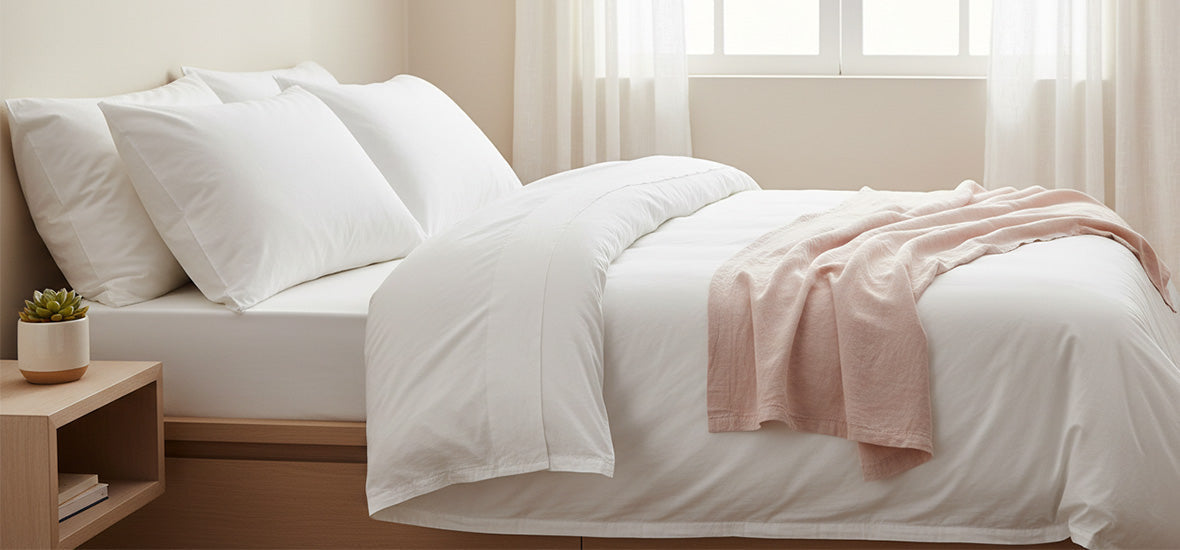
The main difference between a comforter vs duvet is how the bedding is structured.
- A comforter is a single stitched bedding piece with fill sealed inside
- A duvet is a two-part system made of a duvet insert and a removable duvet cover
A duvet system offers more flexibility and easier cover washing, while a comforter offers a simpler ready-to-use bedding setup.
Duvet vs Comforter: What’s the Difference?
When you’re choosing between comforter vs duvet, the confusion usually comes from how similar they look on the bed. But the way they are built, used, and maintained is quite different.
A comforter is a single stitched bedding piece filled and quilted together. A duvet, on the other hand, works as a two-part system - a duvet insert inside a removable duvet cover. That simple structural difference changes everything from care to flexibility.
At California Design Den, our cotton bedding is made to keep sleep simple, with 100% natural cotton and no synthetic microfiber - so what touches your skin always feels soft and natural.

Duvet vs Comforter Overview
|
Feature |
Duvet |
Comforter |
|
Structure |
Two-part system (insert + cover) |
Single stitched bedding piece |
|
Flexibility |
Easy to change covers |
Fixed design |
|
Maintenance |
Cover can be washed often |
Entire piece must be washed |
|
Style Options |
Multiple cover styles possible |
One design only |
|
Feel |
Adjustable based on insert + cover |
Consistent fill and weight |
|
Storage |
Insert + cover stored separately |
Stored as one bulky piece |
Duvet vs Comforter: Which One Should You Choose?
Choosing between duvet cover vs comforter depends on how you like your bedding to feel, how often you like to refresh your bed, and how much simplicity you prefer in care.
There is no single “better” option - only what fits your routine and sleep preference.
Choose a Duvet If You Want Flexible Bedding
- A flexible bedding system you can refresh with different covers
- Easier day-to-day hygiene since the cover is washable
- The option to change your bedroom look without replacing the insert
- A layered feel where softness depends on your cover and insert combination
A duvet insert vs comforter comparison often comes down to flexibility. If you like switching styles or washing your bedding frequently, a duvet setup works well.
Example: The Down Alternative Duvet Insert pairs easily with different cotton covers for a smooth, everyday feel.
Choose a Comforter If You Want Simple Bedding
- A simple, ready-to-use bedding piece
- No need for layering or extra covers
- A consistent feel every night without adjustments
- A quicker setup without managing multiple pieces
- A comforter keeps things straightforward. It’s one piece, one look, one setup.
Best Choice Between Duvet vs Comforter for Most People
For many people, the decision between duvet vs comforter comes down to convenience vs flexibility.
If you prefer simplicity and minimal effort, a comforter works well. If you prefer variety, easier washing, and long-term adaptability, a duvet system is more practical.
Many people today lean toward a duvet setup because it allows easy maintenance and design flexibility without replacing the core bedding piece.
A 400 Thread Count Duvet Cover Set white from California Design Den is designed for everyday comfort with soft, natural cotton that feels smooth against the skin and gets softer with every wash.

What Is a Comforter?
A comforter is a single-piece bedding layer designed to be used as-is. When comparing comforter vs duvet, this is the simplest format - no separate cover, no layering system, just one stitched piece that goes directly on the bed.
California Design Den bedding is made from 100% natural cotton, with no synthetic microfiber. .
Comforter Structure and Materials
A comforter is built with three main layers:
- A soft outer fabric on both sides
- An inner filling stitched in place
- Quilting or stitching patterns that keep the fill evenly distributed
The filling is usually polyester or down-alternative materials, sealed inside the fabric so it stays in place permanently. Unlike a duvet insert vs comforter setup, there is no removable outer layer.
Comforter Feel and Layered Bedding Experience
A comforter delivers a consistent feel across the entire surface. The warmth depends on the thickness of the internal fill and how it is stitched.
It offers a uniform, ready-to-use layer on the bed, making it a straightforward option for everyday bedding. The feel remains the same throughout the piece since the fill is fixed inside.
Pros and Limitations of Comforter
Pros of Comforter
- Simple, single-piece bedding solution
- Easy to set up - no extra layers needed
- Consistent look and feel on the bed
- Good for quick bed-making routines
Limitations of Comforter
- Harder to clean fully since the entire piece must be washed
- Less flexibility in changing the look of your bedding
- Fixed fill - cannot adjust thickness or layering
- Can feel bulky when stored
What Is a Duvet?
A duvet is a two-part bedding system designed for flexibility. In a duvet vs comforter comparison, this is the more adaptable option because it separates the inner fill from the outer fabric layer.
It consists of a duvet insert and a removable duvet cover, which work together to create the final bedding feel.
What Is a Duvet Insert?
A duvet insert is the inner layer that provides structure and softness. It is similar to a comforter in function but is not used directly on the bed surface.
It is designed to sit inside a cover, which protects it and defines its final look and texture. A good example is the Down Alternative Duvet Insert, which works as a soft, fill-based core layer inside a cotton cover.
How a Duvet Works
A duvet system works in two parts:
- The insert provides softness and structure
- The duvet cover acts as the outer layer that touches the skin
The cover is removable, which means you can wash it separately and change it whenever you want a different look or feel.
A 400 Thread Count Duvet Cover Set white pairs with an insert to create a smooth, natural cotton surface that feels light and comfortable for everyday use.
Why Duvet vs Comforter Flexibility Matters
Compared to a comforter, a duvet system offers more flexibility in daily use:
- You can wash the cover regularly without touching the insert
- You can change covers to refresh bedroom style
- You can adjust the insert thickness based on preference
- Easier long-term maintenance compared to a single-piece comforter
In the duvet insert vs comforter comparison, flexibility is the biggest advantage of a duvet system.
What Is a Duvet Cover?
A duvet cover is the outer fabric layer that encloses a duvet insert. It functions like a protective and decorative shell that defines how the bedding looks and feels on the outside.
In a duvet cover vs comforter comparison, the duvet cover is what makes the duvet system more adaptable and easier to maintain.
At California Design Den, our duvet covers are made from 100% natural cotton, designed for everyday comfort and easy care without synthetic fibers.
Duvet Cover vs Comforter Differences
The main difference between a duvet cover and a comforter is structure and usage:
- A duvet cover is not used alone - it needs an insert inside
- A comforter is a complete, single-piece bedding layer
- A duvet cover can be removed and washed frequently
- A comforter must be washed as a whole unit
A duvet cover gives you more flexibility, while a comforter gives you simplicity.
Comforter vs Duvet Cover
When comparing comforter vs duvet cover, it’s important to understand they are not direct equivalents:
- A comforter replaces both insert and cover in one piece
- A duvet cover only works as the outer layer of a duvet system
A comforter is ready to use immediately. A duvet cover requires pairing with an insert but offers more control over maintenance and style changes.
For a better understanding of What Is a Duvet Cover? And Duvet Cover vs Insert Guide from California Design Den’s bedding resources.
Duvet Insert vs Comforter
When comparing duvet insert vs comforter, the key difference comes down to how they are built and how they are used in everyday bedding.
A comforter is a single, stitched bedding piece with filling locked inside. A duvet insert is an inner layer designed to be used inside a removable duvet cover, making it part of a two-piece system.
At California Design Den, our cotton bedding is designed around natural comfort - 100% cotton, no synthetic microfiber, and a feel that becomes softer with every wash.
A comforter is ready to use right out of the package, while a duvet insert is built for flexibility and layering.
How to Put on a Duvet Cover (Step-by-Step)
Putting on a duvet cover can feel tricky at first, but once you follow a simple method, it becomes quick and manageable. This process helps you pair your duvet insert vs comforter setup properly when using a duvet system.
Step 1: Turn the Duvet Cover Inside Out
Start by turning your duvet cover completely inside out. Lay it flat on the bed with the opening at the bottom.
Step 2: Place Your Hands Inside Duvet Cover
Reach inside the cover and locate the top two corners. Hold them firmly from the inside.
Step 3: Hold the Duvet Insert Corners
With your hands still inside the cover, grab the top corners of your duvet insert. Make sure both layers are aligned.
Step 4: Flip and Pull Down Duvet Cover
Flip the cover over the insert while keeping hold of the corners. Pull downward so the cover starts wrapping around the insert evenly.
Step 5: Secure the Duvet Bottom
Once fully covered, fasten the bottom using buttons, ties, or zipper (depending on design). This keeps the insert in place.
Step 6: Shake the Duvet Cover
Give the duvet a gentle shake to even out the fill and smooth out any uneven sections. This helps it settle neatly inside the cover.
Duvet vs Comforter: Pros & Cons Explained
Understanding duvet vs comforter becomes easier when you break it down into structure, feel, and everyday use. While both serve the same purpose - covering the bed - they function very differently.
Duvet Pros and Cons
Pros
- Flexible system with insert and removable cover
- Easier to refresh the look of your bedding
- Cover can be washed more frequently than the insert
- Works well with natural cotton covers for a soft, smooth feel
Cons
- Slightly more effort to set up compared to a comforter
- Requires two components (insert + cover)
- Can take time to learn the cover-changing process
Comforter Pros and Cons
Pros
- Simple, one-piece bedding solution
- Easy to use - just place it on the bed
- Consistent feel throughout the surface
- No need to manage multiple layers
Cons
- Entire piece must be washed when cleaning is needed
- Limited flexibility in changing the look of the bed
- Can feel bulky when stored or cleaned
Duvet vs Comforter: Which Is Better for You?
There is no single winner in the duvet vs comforter decision. The better choice depends on how you like your bedding to feel, maintain, and function in daily life.
Preferred feel for warmer nights
A duvet system can feel lighter when paired with a breathable cotton cover. The ability to choose different inserts allows more control over how the bedding feels on the bed.
Best for Cold Sleepers
A comforter provides a consistent, fully enclosed fill that feels steady throughout the night. Some duvet inserts can also be layered for a more substantial feel depending on preference.
Best for All-Season Use
A duvet system works well based on how you like your bedding to feel because you can switch inserts or covers based on how you want the bedding to feel. This flexibility is the key difference in duvet insert vs comforter usage.
Best for Easy Maintenance
A comforter is simpler to maintain since it is a single piece. A duvet system requires washing the cover separately, but that also makes regular cleaning more manageable.
Best for Style & Aesthetics
A duvet system offers more design flexibility. You can change duvet covers without replacing the insert, making it easier to refresh bedroom style. A comforter has a fixed design, so the look remains consistent.
A 400 Thread Count Duvet Cover Set white from California Design Den adds a smooth, natural cotton surface that feels soft and easy against the skin, making it a strong everyday choice for flexible styling.
Duvet vs Comforter: Size, Cost & Maintenance
When evaluating comforter vs duvet, practical factors like size, cost, and care often influence the final decision more than appearance or feel alone.
Duvet vs Comforter Size Differences
Comforters are usually designed to drape evenly over the bed with a single-piece structure. Duvets are sized to fit inside a cover, so the final look depends on both insert and cover alignment.
Both options come in standard bed sizes like Twin, Queen, and King, but a duvet system may feel slightly more adjustable due to layering.
Duvet vs Comforter Cost Comparison
A comforter typically involves one purchase. A duvet system involves two parts - insert and cover - which may be bought together or separately.
While the upfront structure differs, both options vary widely depending on material and thread count. In duvet vs comforter comparison, value depends more on usage preference than just price.
Duvet Cover vs Comforter Cleaning and Care
A comforter requires washing as a full unit, which can take more effort due to size and fill.
A duvet system allows easier routine care since the cover can be removed and washed more frequently, while the insert is cleaned less often.
California Design Den cotton covers are designed to be easy to maintain and feel softer with every wash, without synthetic microfiber.
Why California Design Den Cotton Duvet Covers and Comforters Stand Out
California Design Den bedding is designed to keep everyday sleep comfort simple. Whether you prefer a comforter vs duvet setup, the focus stays the same: soft, natural cotton that feels smooth against the skin and becomes softer with regular washing.
All California Design Den bedding is made from 100% natural cotton with no synthetic microfiber or plastic fibers. That means the bedding feels natural, clean, and comfortable for everyday use while avoiding synthetic materials commonly found in many bedding products.
For people comparing duvet cover vs comforter options, California Design Den offers both flexible duvet cover systems and ready-to-use comforter styles designed around long-term comfort and easy everyday living.
CDD focuses on balanced fabric feel instead of unnecessary complexity:
- 400 thread count duvet covers for a soft, balanced everyday feel
- Smooth cotton comforters designed for simple bedding setups
- Natural cotton fabrics designed to feel soft and comfortable over time
Select California Design Den cotton bedding collections are backed by the Good Housekeeping Seal and have been evaluated by the GH Institute for quality and performance.
California Design Den also focuses on honest value through its family-owned manufacturing approach. The goal is simple: crafted for calm, priced with honesty — well-made cotton bedding without unnecessary luxury markups.
Common Mistakes When Choosing a Duvet or Comforter
When deciding between duvet vs comforter, people often focus only on appearance or thickness and overlook how they will actually use the bedding.
Some common mistakes include:
- Choosing based only on initial softness instead of long-term care needs
- Assuming both systems feel the same once in use
- Not considering how often bedding will be washed
- Ignoring the difference between a single-piece and layered system
- Overlooking how fabric choice affects everyday comfort on the skin
A better approach is to think about daily routine - how often you like to refresh your bed, how much maintenance you prefer, and whether you value flexibility or simplicity more.
Final Verdict: Duvet vs Comforter
Choosing between duvet vs comforter comes down to how you want your bedding to fit into your daily life.
A comforter is simple, direct, and easy to use. You place it on the bed, and it’s done. It works well for people who prefer minimal setup and consistent bedding without changes.
A duvet system offers more flexibility. You can change the cover, refresh the look of your bed, and manage washing more easily since the cover and insert are separate. It suits people who like adaptability and easier long-term care.
California Design Den cotton bedding is designed around natural comfort - 100% cotton, no synthetic microfiber, and a soft, smooth feel that gets better with every wash. Whether used as a duvet cover system or layered bedding, the focus stays on everyday comfort that feels natural on the skin.
In the end, the best choice is not about which is better overall, but which fits your routine, comfort preference, and how you like your bed to feel every day.
Frequently Asked Questions About Duvet vs Comforter
What is the main difference between a duvet and a comforter?
The main difference in comforter vs duvet is structure. A comforter is a single stitched bedding piece, while a duvet is a two-part system made of an insert and a removable cover. This changes how you use, wash, and style the bedding.
Is a duvet better than a comforter?
In the duvet vs comforter comparison, neither is universally better. A duvet offers more flexibility with covers and easier maintenance, while a comforter is simpler and ready to use. The better choice depends on your routine and preference.
Can you use a duvet without a cover?
Technically, a duvet insert can be used without a cover, but it is not recommended. A cover protects the insert, keeps it cleaner, and makes maintenance easier. It also defines the final look and feel of the bedding.
What is a duvet insert vs comforter?
A duvet insert is the inner filling layer designed to go inside a duvet cover. A comforter is a single-piece bedding item where the filling is permanently stitched inside. This is a key distinction in the duvet insert vs comforter comparison.
Is a comforter warmer than a duvet?
Warmth depends on the thickness and material of the fill rather than the system itself. A comforter provides a consistent level of warmth, while a duvet system allows more flexibility depending on the insert used.
Which is easier to maintain?
A comforter is easier in terms of setup since it is one piece, but it requires full washing. A duvet system is easier for ongoing maintenance because the cover can be washed separately, making regular care more manageable.
Do duvets or comforters get used in hospitality settings?
Both duvets and comforters are used depending on the bedding setup. Many modern setups prefer duvet-style systems because the cover can be changed easily between uses, while comforters are often used for their simple, single-piece design.


