

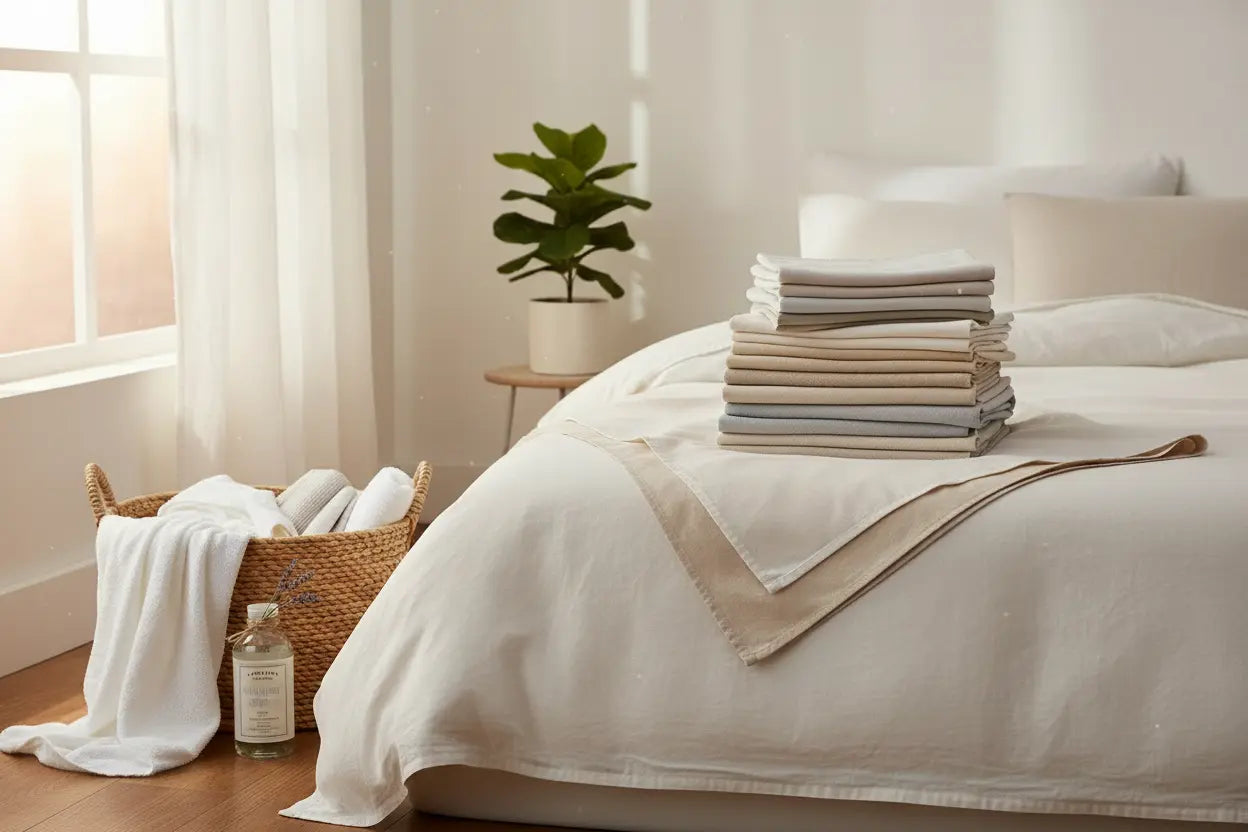
For most sheets, no - you should not use fabric softener on bed sheets. Fabric softener coats fibers with a thin chemical layer that feels soft immediately but breaks down fabric quality over repeated washes. For natural fibers like cotton, linen, and bamboo, that coating reduces absorbency and works against what makes those sheets comfortable in the first place. If you've been looking for the right washing routine, the How to Wash Sateen Sheets the Right Way Without Ruining Their Soft Feel guide is a good place to start.
This guide covers what fabric softener actually does, which sheet types it damages most, and what to use instead. Here's what you'll find:
- What fabric softener is and how it works on sheet fibers
- The differences between liquid softener, dryer sheets, and dryer balls
- How fabric softener on sheets affects cotton, linen, bamboo, silk, flannel, and other materials
- Proven alternatives that keep sheets soft without chemical buildup
- Answers to the most common questions about using fabric softener on sheets

Quick Answer: Should You Use Fabric Softener on Sheets?
No. For the vast majority of sheet materials, you should not use fabric softener on bed sheets. The coating fabric softener leaves behind builds up over time, clogs natural fibers, and steadily reduces a fabric's absorbency and texture. That slick feeling sheets develop after a few months of fabric softener use comes from exactly this coating.
Here's the quick breakdown by material:
- Cotton sheets - skip fabric softener on sheets; cotton softens naturally without it
- Egyptian cotton - avoid; softener dulls the fiber surface and thread count feel
- Linen sheets - skip; linen texture improves with washing, softener flattens it
- Bamboo (Viscose from Bamboo) - avoid; fine fibers lose their natural quality
- Silk sheets - never; protein fibers break down under chemical exposure
- Flannel sheets - skip; softener mats down the brushed finish
For those who've asked can you use fabric softener on linen or other natural fibers without consequences - the fabric-by-fabric section below gives the full answer. For everything else - especially natural fiber sheets - fabric softener on sheets does more harm than good.
What Is Fabric Softener and When to Use It?
Fabric softener is a laundry additive designed to coat textile fibers with a lubricating chemical layer - most commonly quaternary ammonium compounds (quats). That coating reduces friction between fibers, which creates a temporarily soft, smooth sensation and cuts static cling. Most formulas also leave behind synthetic fragrance.
The important word is "coat." Fabric softener does not change the fiber itself - it covers it. That distinction matters when deciding whether you should use fabric softener on bed sheets.
Here is what happens during the wash cycle:
- Softener enters the rinse water and binds to the fabric surface
- A chemical film settles over every fiber it contacts
- That film creates a soft sensation after the first dry
- With each subsequent wash using fabric softener on sheets, the film accumulates
- Over time, the buildup closes the natural gaps in the fiber weave, reducing breathability and absorbency
For bedding, this matters most because your sheets need to breathe. Natural cotton sheets work because their fiber structure allows air and moisture to move freely. A chemical film - built up wash after wash - slowly closes that structure. The sheets feel temporarily soft but become less comfortable over months of consistent use.
So when does fabric softener make sense? It has a reasonable use case for towels, heavy synthetic workwear, or polyester activewear where there are no natural fiber qualities to protect. For bed sheets - particularly natural fiber sheets - it delivers short-term comfort at the cost of long-term fabric health. Many people use it out of habit, without checking whether their sheets actually need it. That's a habit worth reconsidering.
Can you use fabric softener on linen, cotton, or bamboo sheets without any consequence? Not over time. The coating is invisible at first. The damage accumulates slowly. Most people only notice something is wrong when sheets that once felt comfortable start feeling slightly off - slicker, less breathable, or less soft than they remember.
Fabric Softener vs Dryer Sheets vs Dryer Balls
Fabric softener and dryer sheets are often treated as interchangeable, but they work through different delivery methods and leave different amounts of residue. Here's how the three main softening options compare and what each one does to your bedding. Understanding the difference helps you make a more informed choice about whether any of them belong in your laundry routine at all.
Liquid Fabric Softener
Added during the washing machine's rinse cycle, liquid fabric softener saturates your sheets fully and evenly. Because it's applied in the wash itself, the chemical coating is thorough and consistent across every fiber. Of all the formats, liquid softener causes the most rapid buildup on sheets. If you're committed to stopping fabric softener on bed sheets, liquid softener is the first format to cut - it deposits the heaviest coating per wash and accelerates fiber degradation the fastest.
Dryer Sheets (Softener Sheets)
Dryer sheets work through heat. You add them to the dryer, and as the drum spins, they release softening agents and synthetic fragrance directly onto your laundry. Because heat transfer is less uniform than a full rinse-cycle soak, dryer sheets leave slightly less residue per wash than liquid softener - but the difference is small. Dryer sheets are sometimes assumed to be the safer choice. The coating still accumulates, just through a different delivery method. For cotton sateen, linen, silk, or Viscose from Bamboo sheets, dryer sheets still interfere with the fabric's natural qualities over time.
Dryer Balls
Dryer balls are not fabric softener - they are a mechanical softening tool. Wool or bamboo dryer balls tumble against your sheets in the dryer, physically separating and aerating the fibers as they dry. This action reduces fiber clumping that causes post-wash stiffness, giving you softer sheets with no chemical coating at all. They also reduce drying time by improving air circulation. For any natural fiber sheet - cotton, linen, Viscose from Bamboo - dryer balls are the most effective alternative to fabric softener on sheets.

Can You Use Fabric Softener on Sheets? A Fabric-by-Fabric Guide
Whether to use fabric softener on sheets depends entirely on what your sheets are made from. Here's a full breakdown of how fabric softener on sheets affects each common material.
Cotton Sheets
Cotton is the most common sheet material, and the question of whether you should use fabric softener on bed sheets comes up most often in this context. The answer is no. 100% natural cotton has an open fiber structure that lets the fabric breathe and absorb naturally. Coating those fibers with fabric softener - wash after wash - gradually blocks that structure.
Cotton softens on its own. Every wash loosens and relaxes the fibers further, giving you noticeably softer sheets after ten washes than after one, with no chemical help needed. If cotton sheets feel stiff after washing, the cause is almost always detergent residue or hard water minerals - both fixed by white vinegar in the rinse cycle. The Stop Shrinkage: Your Definitive Guide to Washing Cotton Sheets covers the full care process from water temperature to drying technique.
A well-made cotton sateen sheet is a useful example here. The 600 Thread Count Cotton Sateen Sheets Set in Sage Green arrives feeling smooth and polished from the first wash - and the feel only develops further over time without any fabric softener on sheets involved. That's what well-constructed natural cotton does on its own.
Egyptian Cotton Sheets
Egyptian cotton uses longer staple fibers - typically 38mm or more - that produce a denser, smoother weave than standard cotton. That fiber length is the source of its distinctive surface feel. Using fabric softener on sheets made from Egyptian cotton is particularly counterproductive: the coating flattens the natural luster and dulls the smooth surface of high thread count sateen weaves over time. Adding fabric softener to Egyptian cotton sheets does the opposite of improving quality - it interrupts the natural softening process instead. Egyptian cotton gets better with every wash, naturally. Softener interrupts that progression.
Linen Sheets
Can You Use Fabric Softener on Linen Sheets? Most linen owners say no - and the reason is clear. Linen is woven from flax fibers, naturally firm when new and softening progressively through use and washing. That gradual break-in is part of what makes linen ownership satisfying. Fabric softener on linen interrupts that process by coating the fibers and reducing the fabric's natural ability to handle moisture.
Technically, yes - linen can tolerate fabric softener in the short term without visible damage. But the slight crispness that defines linen's texture gets flattened over time, and absorbency starts to diminish with each treated wash. A few plain washes are all new linen needs to begin softening naturally. Can you use fabric softener on linen without visible effects in the short term? Sometimes - but over months of use, the change in texture and performance becomes clear. Linen is a fabric that rewards patience. Its natural break-in process produces a softer, more comfortable sheet than any chemical shortcut delivers.
Remember, this is normal - linen feels firm when new, and that's simply how the fiber behaves before it's broken in. It's not a sign that something is wrong with the sheets or that they need a softening product.
Bamboo (Viscose from Bamboo)
Bamboo sheets - correctly labeled as Viscose from Bamboo or Rayon from Bamboo - have a fine, silky fiber structure that doesn't benefit from an added coating. Using fabric softener on bamboo sheets makes them temporarily slicker but reduces their natural absorbent properties over time. Bamboo behaves similarly to linen here - neither material benefits from the added coating. Cold water, gentle detergent, and low-heat or air drying is all Viscose from Bamboo sheets need. Adding fabric softener accelerates surface wear rather than improving the feel.
Silk and Satin Sheets
Silk fibers are protein-based - structurally close to human hair. The chemicals in fabric softener can break down that protein structure gradually, causing silk to lose its sheen, become prone to snagging, and wear out faster than it should. Fabric softener on silk is a firm no. Use a dedicated silk detergent on delicate, and air dry.
Satin is often polyester or a blend. Either way, fabric softener adds unnecessary chemical exposure to a fabric that already has a naturally smooth surface. Skip it entirely.
Flannel Sheets
Flannel is brushed cotton - the brushing process raises the fibers to create a warm, textured surface. Fabric softener is particularly damaging here. The chemicals mat down those raised fibers, flattening the loft that makes flannel cozy. Repeated use of fabric softener on sheets made from flannel leaves them feeling thinner and less textured - the opposite of what you're trying to achieve.
Flannel is already soft by design. A warm wash with a quality detergent is all it needs to stay that way. If flannel sheets are losing their texture over time, fabric softener is the likely cause, not the solution.
Why California Design Den Cotton Sheets Don't Need Fabric Softener
If you're reaching for fabric softener on sheets because your bedding feels rough or stiff, the sheets themselves may be the actual problem - not the wash routine.
California Design Den sheets are made from 100% natural cotton - no synthetic microfiber, no plastic fibers. Natural cotton has a quality synthetic materials can't replicate: it gets softer with every single wash. You don't need fabric softener on bed sheets to get a comfortable feel. A proper wash routine with the right water temperature and a quality detergent is all it takes.
CDD's cotton sateen sheets show this clearly. The sateen weave - four threads over one before going under - creates a naturally smooth, polished surface from the first wash. It doesn't need a chemical coating to feel good. The 1000 Thread Count Cotton Sateen Sheets Set in Navy Blue is a strong example: a dense, tightly woven construction that gets richer with every wash. Fabric softener on sheets with this level of construction only interrupts that natural break-in.
CDD's cotton sateen sheet sets have earned the Good Housekeeping Seal, evaluated by the GH Institute - a recognition that reflects material quality and construction integrity. More than 8 million sleepers have chosen California Design Den, and a consistent theme in their feedback is that the sheets soften naturally over time without adding anything to the wash.
For those who prefer a lighter hand feel, the 600 Thread Count Cotton Sateen Sheets Set in Sage Green arrives feeling smooth and polished and continues to develop with regular washing - no fabric softener on sheets required. Most CDD cotton sheets are made in a family-owned facility, which is how they keep construction quality consistent without unnecessary cost passed to the customer.
Fabric Softener Alternatives That Actually Work on Sheets
Stiffness after washing usually comes down to detergent residue or hard water - not a lack of softener. These alternatives solve that actual problem - detergent residue and hard water - without depositing any coating on the fiber.
Baking Soda
Add half a cup of baking soda to the wash drum alongside your detergent. Baking soda neutralizes detergent residue and hard water minerals - two of the most common reasons sheets feel stiff after washing. It doesn't coat the fibers; it removes what's building up on them. Sheets come out softer because less residue remains, not because a chemical layer was added. Safe for cotton, linen, and Viscose from Bamboo sheets.
White Vinegar
Half a cup of white distilled vinegar in the rinse cycle is one of the most effective fabric softener alternatives available. Vinegar dissolves detergent buildup and mineral deposits from hard water. It deodorizes naturally without synthetic fragrance, and the smell fully dissipates in the dryer. For cotton sheets in particular, white vinegar in the rinse cycle is the single best low-cost alternative to using fabric softener on sheets. It solves the stiffness problem without touching the fiber structure.
One rule: don't combine baking soda and vinegar in the same wash - they neutralize each other.
Wool or Bamboo Dryer Balls
Two to four dryer balls in the dryer with your sheets physically separate and aerate the fabric as the drum spins, breaking up fiber clumping that causes post-wash stiffness. Sheets come out noticeably softer with no coating involved. Wool dryer balls can absorb a few drops of essential oil if you want a light scent - a clean alternative to synthetic fragrance from dryer sheets. If you're already washing high thread count cotton sateen like the 1000 Thread Count Cotton Sateen Sheets Set in Navy Blue, pairing that with dryer balls is the best way to maintain softness without any fabric softener on sheets involved.
Tennis Balls
Two or three clean tennis balls in the dryer work on the same mechanical principle as dryer balls. Slightly louder, but a practical zero-cost alternative to fabric softener on sheets when dryer balls aren't available.
Soap Nuts
Soap nuts come from the soapberry tree and contain saponin - a natural surfactant that cleans fabric without synthetic residue. Sheets washed with soap nuts often feel noticeably softer than those washed with conventional detergent and significantly softer than those treated repeatedly with fabric softener on sheets. A strong option for anyone moving away from synthetic laundry products entirely.
Conclusion: The Bottom Line on Using Fabric Softener on Sheets
Should you use fabric softener on bed sheets? For most sheet materials - and especially any natural fiber - the answer is no. Fabric softener on sheets delivers a short-term soft feeling in exchange for gradual, cumulative fiber damage. It reduces absorbency, flattens natural texture, and makes sheets less comfortable over months of use.
The alternatives - white vinegar, baking soda, and wool dryer balls - are more effective for lasting softness without leaving any coating behind.
If your sheets feel stiff or uncomfortable, the real question is whether your washing routine and your sheets are the right match for each other. Linen, cotton, and bamboo sheets all perform better without the coating fabric softener leaves behind. Well-made 100% natural cotton sheets, washed correctly without fabric softener on sheets, stay soft, smooth, and comfortable for years. That is the standard worth aiming for.

Frequently Asked Questions About Using Fabric softener on sheets
Should you use fabric softener for bedsheets?
No. Fabric softener on sheets coats fibers and reduces absorbency with every wash. Cotton and linen soften naturally - no chemical help needed. Skip it.
Why do people say not to use fabric softener?
Fabric softener coats fibers and cuts breathability over time. Regular use makes sheets feel slicker and less comfortable as the coating builds up across washes.
Why should you stop using dryer sheets immediately?
Dryer sheets coat fabric with chemicals plus synthetic fragrance. On cotton, linen, or Viscose from Bamboo sheets, this coating builds up each wash and degrades natural texture and absorbency.
What is Fabric Softener & When to Use It
Fabric softener coats fibers to cut friction and static. Can you use fabric softener on linen or cotton sheets? It degrades natural fibers over time - best kept for synthetics, not bedding.


