

How to Soften Cotton Sheets: 7 Methods for a Softer, Smoother Feel
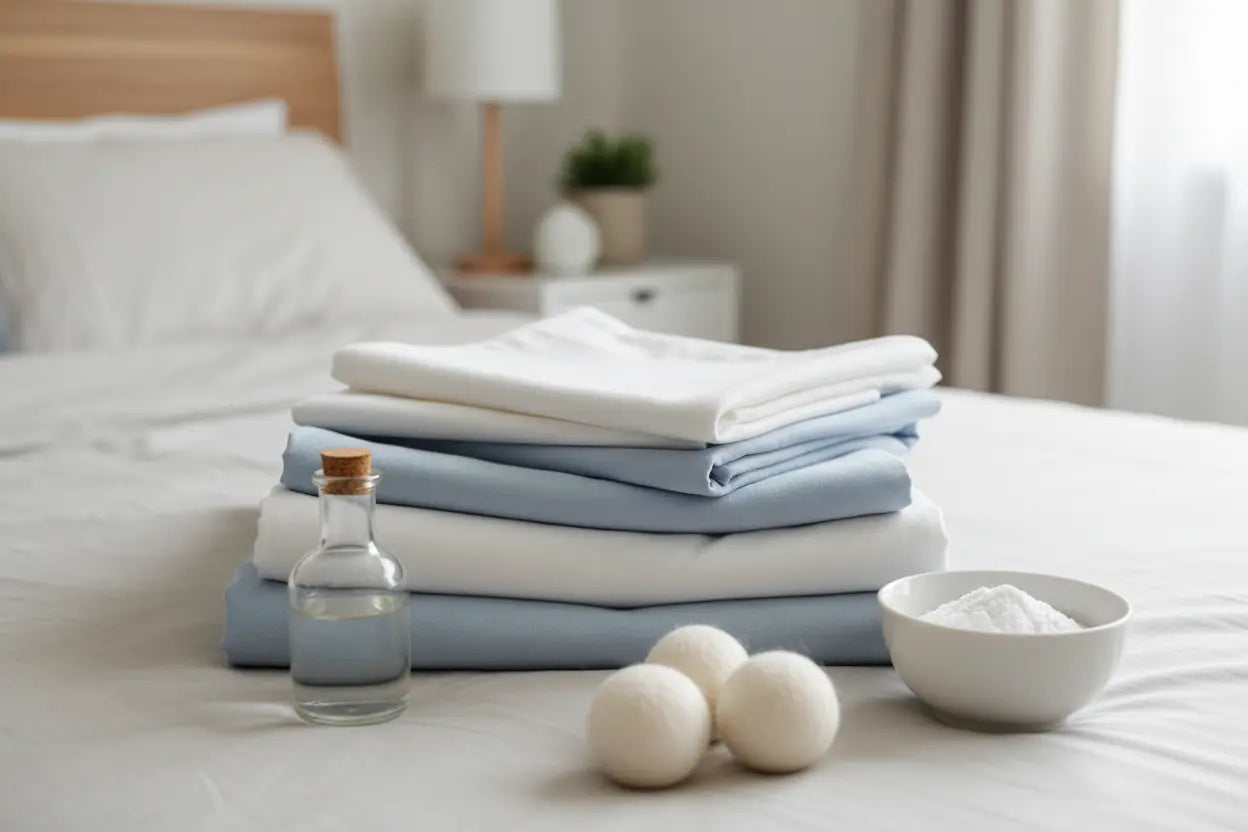
Knowing how to soften cotton sheets is easier than most people think. Wash new sheets with white vinegar or baking soda on a warm cycle, dry on low heat with wool dryer balls, and repeat. Cotton is a natural fiber that gets softer with every wash - the right technique speeds things up from the very first laundry day. If you want to know which thread counts feel softest before you even start washing, the What Thread Count Is the Softest for Sheets? guide covers that in full.
Cotton sheets can feel stiff right out of the packaging - that is normal. Manufacturers apply a finishing treatment called sizing to keep sheets pressed and neat during transport and retail display. It washes out. The softness you are looking for is already built into the fiber - you just need the right wash routine to unlock it.
This guide covers everything you need:
- Why cotton sheets feel stiff (material, weave, thread count)
- 7 proven methods to soften cotton sheets at home
- How to handle stiff, scratchy, and older sheets specifically
- What comfortable cotton sheets feel like across different seasons
- Why some cotton sheets start softer than others

Quick Answer: How to Soften Cotton Sheets Fast
If you need softer sheets tonight, here is the fastest method to soften cotton sheets:
- Step 1: Wash sheets on a warm cycle with 1 cup of white vinegar - no detergent.
- Step 2: Run a second wash immediately with ½ cup of baking soda.
- Step 3: Dry on low heat with 2–4 wool dryer balls.
- Step 4: Remove sheets slightly before fully dry and air-finish flat.
Two back-to-back cycles in one evening strips sizing and mineral buildup and physically relaxes the fibers. Most cotton sheets feel noticeably softer after just this first pass. For sheets that are scratchy or have been washed many times, repeat the process across two or three wash days for the best result.
What Makes Cotton Sheets Soft or Stiff?
Before getting into how to soften cotton sheets, it helps to understand why stiffness happens in the first place. The two biggest factors are material and thread count - and both determine how quickly your sheets respond to softening techniques.
Material and Fiber Quality
Not all cotton is the same. Standard cotton uses shorter fibers, which can produce a slightly coarser surface texture right out of the package. Long-staple cotton - grown for extra-fine, extra-long fibers - produces a smoother, more refined weave that feels noticeably different against the skin. The weave also plays a big role. Sateen weave puts more thread surface area facing outward, giving the sheet a smooth, almost silky hand feel. Percale is crisp and cool, and it softens well over time, but it starts with more structure.
New sheets often feel stiff because of the manufacturing sizing coating. This is a starch-like treatment applied to hold fabric in shape during transport - and it is the main reason why learning how to soften new sheets matters so much in that first wash. Once it is gone, the natural softness of the cotton takes over.
Thread Count and How It Affects Softness
Thread count is the number of threads woven per square inch of fabric. It is a meaningful selection tool that describes how a sheet will feel and behave - not just a marketing number. Different thread counts offer different sleep experiences. Choose based on how you like your sheets to feel, rather than simply picking the highest number.
Here is how thread count maps to feel:
|
Thread Count |
Feel |
Weight |
Best For |
|
400TC |
Soft, smooth, airy |
Balanced |
Warm weather, everyday use |
|
600TC |
Soft, smooth, slightly dense |
Structurally balanced |
Most sleepers year-round |
|
800TC |
Substantial, smooth, dense |
Sumptuous weight |
Those who love a heavier feel |
|
1000TC |
Soft, smooth, rich |
Sumptuous thick and heavy |
Maximum density and drape |
If your sheets feel thin or stiff, thread count is often a factor. Moving from a standard 400TC to an 800TC or 1000TC cotton sateen produces a sheet that arrives softer and responds more quickly to washing. For a deeper look at softness and fabric choice, the What Are the Softest Bed Sheets? - guide covers everything you need before you shop.
How to Soften Cotton Sheets: 7 Methods That Work
These are the most reliable methods to soften cotton sheets at home - whether you are dealing with stiff new sheets straight from the packaging, or older sheets that have lost their original softness.
1. Baking Soda
Baking soda is one of the most effective ways to soften cotton sheets without chemicals. Add half a cup to a full cup directly into the washing machine drum before loading the sheets. Run a full warm-water wash cycle. Baking soda breaks down the mineral deposits and detergent residue that accumulate inside fabric fibers over time - both of which cause stiffness. It also neutralizes odors without leaving a chemical scent behind.
This is one of the best approaches for how to soften new sheets specifically, because it strips the manufacturing sizing in the very first wash. No fabric softener needed in the same load - baking soda handles the conditioning work on its own, and this is one of the simplest answers to how to soften sheets without adding chemicals.
2. White Vinegar
White distilled vinegar works differently from baking soda, but produces similarly strong results when learning how to soften cotton sheets. Add one cup to the fabric softener dispenser or directly into the drum at the start of the rinse cycle. The mild acidity in vinegar dissolves hard water mineral buildup and detergent residue that sit inside the fiber weave and create stiffness.
The smell disappears completely once sheets are dry - there is no lingering vinegar scent. Many people alternate between vinegar and baking soda washes across several cycles, and this cycling approach is one of the most effective methods for how to soften sheets that have built up mineral and detergent residue over time. This is also one of the most practical methods for how to soften new sheets before their very first use, since it cuts through the sizing in a single pass.
3. Epsom Salts or Borax
Epsom salts added to a normal wash cycle help relax cotton fibers and reduce stiffness, particularly in sheets that have been washed many times. Add half a cup directly to the drum. Borax is another option - it conditions the wash water and helps detergents rinse more completely, which reduces residue buildup in fabric. Both are gentle enough for regular use and work particularly well for how to soften cotton sheets in areas with hard water, where mineral content is a persistent cause of stiffness.
4. Wash Multiple Times
One of the most consistent and cost-free approaches to softening cotton sheets is to wash them more than once before giving up. Cotton softens with every wash and dry cycle - the fibers relax and settle progressively. This is not a vague claim - it is the nature of natural cotton fiber.
If new sheets feel stiff after the first wash, run them through again. By the third or fourth cycle, most cotton sheets are noticeably softer. Understanding how to soften cotton sheets through repeated washing sets realistic expectations: some sheets need a few passes to reach their best feel. Higher thread count sateen tends to reach full softness faster because the denser weave responds more quickly to heat and water.
5. High-Quality Detergent
The detergent you use directly affects how soft your cotton sheets feel after washing. Low-quality or heavily fragranced detergents leave residue inside the fabric that accumulates over time and causes stiffness. Using a high-quality, residue-free liquid detergent - in the correct amount - keeps cotton fibers clear of buildup.
A common mistake when trying to soften cotton sheets is using too much detergent, assuming more product means cleaner sheets. The opposite tends to happen. Excess detergent does not fully rinse out, coating fibers and making them feel stiff and heavy. Use the measured recommended dose, and add an extra rinse cycle every few washes to clear any accumulation. This step alone makes a clear difference in how sheets feel between washes.
6. Wool Dryer Balls
Wool dryer balls are one of the most practical tools for how to soften cotton sheets without any chemical additives. Place two to four into the dryer with the sheets and run on low or medium heat. The dryer balls bounce against the cotton throughout the cycle, physically separating the fibers and preventing them from clumping as they dry. The result is fluffier, softer fabric - with no chemicals involved.
Dryer balls also shorten drying time, which matters because over-drying on high heat is one of the most common causes of stiff cotton sheets. When fibers stay in high heat too long, they tighten and lose their pliability. Wool dryer balls promote more even, faster drying at lower temperatures - protecting the fiber while answering how to soften sheets with nothing but heat management and physical agitation.
7. Line Drying
Air drying cotton sheets on a clothesline or drying rack produces a natural, relaxed softness. Gentle airflow allows fibers to settle into position without the mechanical heat of a dryer. Line drying is a simple, chemical-free way of how to soften sheets that have stiffened from repeated high-heat tumble drying. The absence of heat prevents fiber tightening, and sheets dried in a breeze often feel comfortable and lived-in from the moment you put them on the bed.
Alternate between low-heat machine drying with dryer balls and air drying across wash cycles for the best combined result: softness, structure, and extended fabric life.

How to Soften Stiff Cotton Sheets
Stiff sheets are most common straight after purchase, but they also develop after periods of infrequent use or repeated washing in hard water. If you are looking for a reliable answer to how to soften sheets that feel rigid and rough, a combined two-cycle approach works fastest.
Wash once on warm with one cup of white vinegar - no detergent. Follow immediately with a second wash using half a cup of baking soda. Dry on low heat with wool dryer balls. This sequence strips manufacturing sizing, breaks down mineral buildup, and relaxes the fibers - all within a single evening. Most cotton sheets respond noticeably after this process.
Additional steps that help with stiff cotton sheets:
- Avoid high heat in the dryer - heat tightens cotton fibers and worsens stiffness.
- Do not skip the rinse cycle - detergent residue is a primary stiffness cause.
- Use warm water rather than cold - cotton fibers open up and rinse more thoroughly at warm temperatures.
- Remove sheets from the dryer slightly before they are fully dry and finish air-flat - this prevents the over-dried texture that settles in at the end of a hot cycle.
How to Soften Scratchy Cotton Sheets
Scratchy sheets go a step beyond stiff - the surface texture actively irritates the skin, making it hard to relax. The usual causes are short-staple cotton fiber, a plain weave that sits roughly against the skin, or a finishing treatment that did not fully wash out.
Washing methods help significantly, but they have limits. No amount of vinegar will transform a coarse short-staple cotton into a smooth sateen feel. That said, these steps produce real improvement:
- Wash with vinegar first to strip any sizing or chemical finishes that amplify roughness.
- Follow with a baking soda cycle to relax the fiber structure further.
- Dry on the lowest heat setting with dryer balls - heat is counterproductive for scratchy sheets.
- Try a brief soak in warm water with a small amount of hair conditioner (a tablespoon) before washing. Conditioner treats fabric fibers the same way it treats hair. Rinse thoroughly, then wash normally.
If sheets remain scratchy after three or four wash cycles, fiber quality is likely the root cause. A higher thread count cotton sateen sheet is the practical long-term solution - the sateen weave creates a smooth surface that sits flat and even against the skin, eliminating the rough texture of a plain-weave cotton at the source.
How to Soften Old Cotton Sheets
Old cotton sheets face a different challenge from new ones. Years of washing, high-heat drying, and use gradually strip moisture from fibers and leave them dry and rough. The progressive softening that makes cotton sheets rewarding to own over time can plateau - and even reverse - if care routines have been inconsistent.
These methods work best for how to soften sheets that have aged and lost their original feel through years of use:
- Deep vinegar soak: Fill the washing machine with warm water and add two cups of white vinegar. Let the sheets soak for one hour before running the full wash cycle. The longer contact time allows vinegar to penetrate and break down years of accumulated mineral buildup.
- Baking soda follow-up: After the vinegar wash, run a second cycle with half a cup of baking soda to condition and neutralize.
- Avoid hot water: Hot water accelerates fiber breakdown in older cotton. Warm is the right temperature for how to soften cotton sheets that have already had significant use.
- Air dry where possible: Gentle drying preserves the remaining fiber integrity far better than high heat.
- Cut the detergent dose: Older fibers are more susceptible to residue buildup. A smaller dose and an extra rinse cycle protects them going forward.
Old sheets may not fully return to their original softness, but consistent care using these methods can meaningfully extend their comfort and usable life.
How Cotton Sheets Feel Across Different Seasons
Softened cotton also behaves differently in feel depending on the season - and that is a natural advantage of the material.
Softened 100% natural cotton has an open, breathable texture that feels lighter and more comfortable on skin during warmer months. In cooler months, the same sheets feel cozy and settled against the skin - a natural quality of softened cotton fibers. This is the nature of cotton as a plant-based fiber - it feels comfortable season to season without being treated with synthetic finishes or coatings.
This is another reason why learning how to soften cotton sheets properly matters beyond comfort in the moment. Well-cared-for cotton that has been softened correctly - fibers relaxed, no residue buildup, no over drying - performs consistently across the year. Sheets that are stiff or coated with detergent residue feel clammy and uncomfortable, regardless of the season. Softness and clean fibers are not just about touch - well-cared-for cotton simply feels better against the skin, season to season.
Why California Design Den Cotton Sheets Soften Better
Understanding how to soften cotton sheets is useful - but starting with sheets built for softness from the first wash makes the entire process more rewarding.
California Design Den makes 100% natural cotton sheets - no synthetic fibers, no plastic coatings of any kind. The sateen weave used across CDD's higher thread count collections puts the maximum number of threads on the surface in a smooth, even pattern - which is why these sheets respond to softening techniques faster and feel noticeably different after the first few washes compared to standard plain-weave cotton.
For anyone who wants to skip the extended break-in period that some sheets require, the 1000 Thread Count Cotton Sateen Sheets Set in Beige is one of the most refined options in the CDD range. The 1000TC sateen weave produces a dense, smooth fabric that responds immediately to a warm wash and low-heat dry - a single vinegar wash cycle is enough to unlock the full softness of these sheets. No aggressive techniques needed. If you prefer a slightly lighter, more breathable feel while still getting the sateen smoothness, the 800 Thread Count Cotton Sateen Sheets Set in Blue is the right choice - smooth and well-made, with a softer, more settled feel after just two or three washes.
California Design Den's cotton sheet collections have earned the Good Housekeeping Seal - a credential backed by rigorous evaluation from the Good Housekeeping Institute. Over 8 million sleepers have chosen CDD sheets, and the collections hold a consistent 4.5 to 4.6 star average across thousands of verified reviews. Customers consistently highlight softness - not just when the sheets are new, but months and years into regular use. That is what 100% natural cotton does when it is made well: how to soften cotton sheets becomes a simple maintenance routine rather than an ongoing problem.
Conclusion: The Simplest Routine for Softer Cotton Sheets
How to soften cotton sheets is not complicated - it is mostly about washing with the right additives, drying at the right temperature, and letting natural cotton do what it is designed to do. Vinegar and baking soda are the most effective tools. Wool dryer balls protect fibers in the dryer. Low heat and occasional air drying extend the softness and life of your sheets over time.
The best part of working with 100% natural cotton is that each wash makes the sheets better, not worse. When you start with quality fiber - long-staple cotton, a sateen weave, and the right thread count - how to soften cotton sheets becomes a quick routine rather than a problem you keep trying to solve. Good cotton rewards consistent, simple care. Give it that, and the softness takes care of itself.

Frequently Asked Questions About How to Soften Cotton Sheets
How do you soften 100% cotton sheets?
Wash cotton sheets with 1 cup of white vinegar or ½ cup baking soda on a warm cycle. Dry on low heat with wool dryer balls. Cotton sheets soften with every wash.
Does white vinegar make sheets softer?
Yes. White vinegar dissolves mineral buildup and detergent residue that stiffen cotton sheets. Add 1 cup to the rinse cycle to soften sheets without chemicals.
How many washes does it take to soften sheets?
Most cotton sheets soften noticeably after 2–3 washes. Using vinegar or baking soda each time helps soften sheets faster than plain detergent alone.
Is there a way to soften cotton sheets?
Yes - wash cotton sheets with vinegar or baking soda, dry on low heat with dryer balls, or air dry. All three methods soften cotton sheets effectively.
How to soften bed sheets without fabric softener?
To soften sheets without fabric softener, use white vinegar or baking soda in the wash cycle, then tumble dry on low heat with wool dryer balls.


