

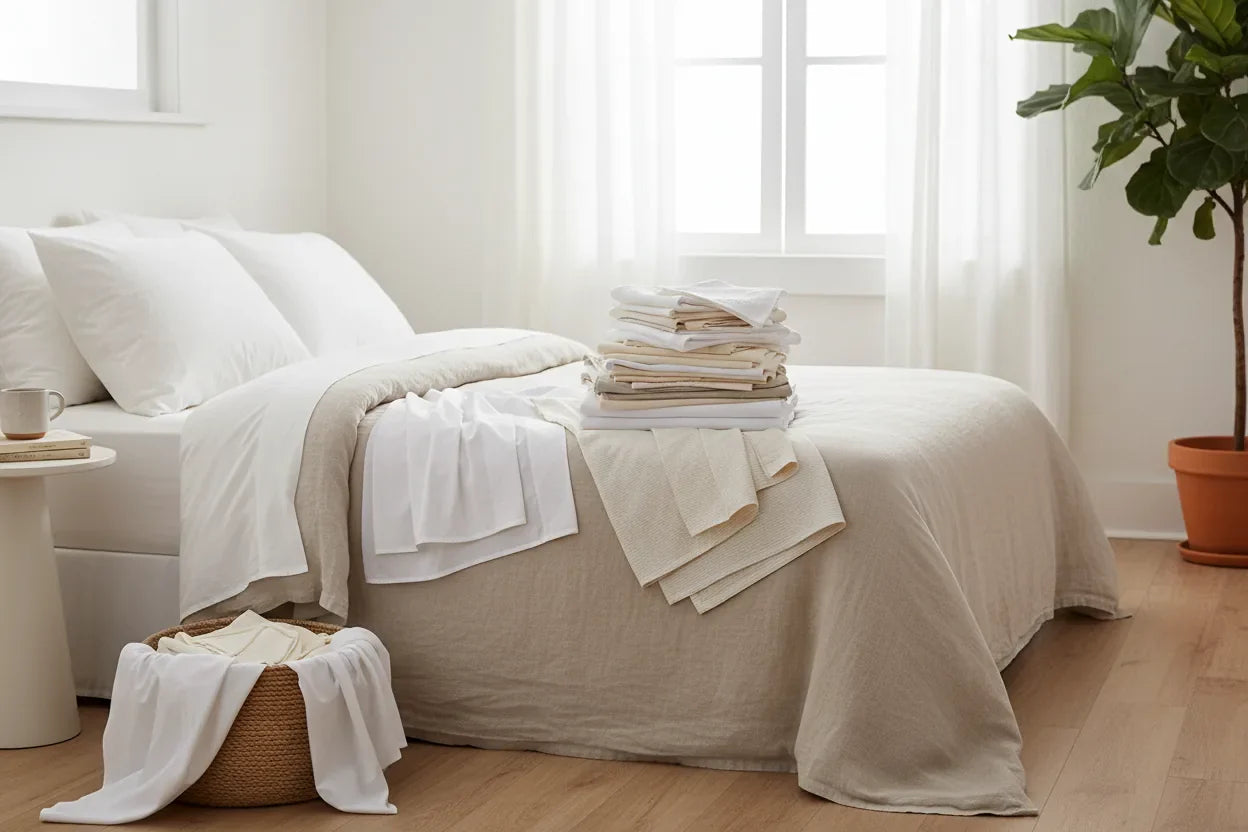
Most people replace their sheets every few years, but there’s no fixed rule for how often you should buy new sheets. It depends on how often they are used, how they are washed, and the fabric quality.
If you’re wondering how often should you buy new sheets, the simple answer is this: sheets don’t come with an expiry date. They don’t “go bad” at a set time. Instead, they slowly wear down with real-life use - washing cycles, body friction, and everyday handling all play a role.
In practical terms:
- Light use + good care → sheets can last several years
- Heavy use + frequent washing → replacement comes sooner
- Higher-quality cotton → naturally extends usable life
This is why there’s also no single answer to how often to change sheets versus when to replace them completely. Washing is frequent. Replacement is occasional.
The goal isn’t to follow a strict calendar. It’s to understand when sheets stop feeling smooth, structured, and comfortable in everyday use. That’s the real signal.

How Often Should You Buy New Sheets in Real Life?
Understanding how often should you buy new sheets in real life is less about a strict timeline and more about recognizing how everyday use changes fabric over time. Sheets are part of daily life, so they go through constant friction, washing cycles, and body contact. That’s why replacement is based on condition, not a fixed calendar.
How often should you change sheets vs replace them
A common confusion is between washing and replacing.
When people ask how often to change sheets, they are usually talking about washing frequency. That is very different from buying new ones.
Changing sheets (washing cycle):
- Typically every 1–2 weeks for hygiene and freshness
- This is a regular maintenance habit
- Does not affect long-term durability much if done correctly
Replacing sheets (buying new sets):
- Happens only when fabric starts breaking down
- Depends on wear, not schedule
- Can range from a few years to longer depending on quality and care
So, washing is routine. Replacement is situational.
Typical timeline for replacing bed sheets
There is no universal expiry date for sheets, but there is a general real-world range based on usage patterns:
- Light use (guest rooms or occasional use): longer lifespan
- Regular home use: moderate lifespan depending on care
- Heavy daily use: shorter replacement cycle
Instead of focusing on a strict number, it helps to think in terms of condition:
- Fabric still smooth and structured → continue using
- Fabric thinning or roughness → nearing replacement stage
This is why the question how often should you buy new bed sheet never has one fixed answer. It changes from home to home.
Why there is no fixed rule for everyone
Sheets behave differently depending on real-life conditions:
- Washing frequency and method
- Type of detergent used
- Drying style (sun-dried vs machine dried)
- Body usage (single sleeper vs family use)
- Fabric quality and weave structure
Two people can buy the same sheets and end up replacing them at completely different times.
That’s why it’s more accurate to think of sheets as a “use-based product” rather than a time-based product.
How Long Do Bed Sheets Last in Everyday Use?
The question of how long do sheets last in everyday use doesn’t have a single fixed answer because sheets don’t wear out based on time alone. They wear based on how they are used, washed, and the kind of fabric they are made from.
In most homes, sheets go through a repeating cycle of use and washing. Over time, this slowly affects the fabric surface, structure, and overall feel. But the speed of that change depends on a few core factors.
What really determines how long sheets last
The lifespan of sheets is mostly shaped by:
- Cotton quality: Higher-quality natural cotton fibers tend to stay stable for longer use cycles
- Weave type: Sateen and percale behave differently in how they hold structure and surface smoothness
- Usage frequency: Everyday-use sheets naturally wear faster than occasional-use sets
- Care habits: Gentle washing and proper drying help preserve fabric strength
Even with the same material, two households can see very different results depending on how the sheets are handled.
Context matters more than a fixed number
Instead of asking for a strict timeline, it helps to think in terms of gradual change. Sheets usually move through stages:
- Fresh and smooth feel
- Softened but still structured
- Noticeable texture change or thinning
Replacement usually becomes relevant only in the last stage.
For a deeper breakdown of how fabric type influences lifespan and behavior over time, this guide explains it in detail - how long do bed sheets last
Why some sheets naturally last longer than others
Not all sheets age the same way. Natural cotton sheets tend to age more evenly because the fibers are plant-based and designed for repeated use. They don’t rely on synthetic blends that can break down unevenly over time.
The weave also plays a role. A tighter, well-constructed sateen weave, for example, often maintains its drape and structure longer when cared for properly.
When To Replace Bed Sheets
Knowing how often should you change your sheets becomes much easier when you stop focusing on time and start focusing on condition. Sheets usually give clear signals when they are past their best usable stage. These signs show up gradually through everyday use, washing, and drying cycles.
Instead of guessing, you can rely on what you see and feel.
Visible fabric wear and texture changes
One of the first signs that sheets are nearing replacement is a change in surface feel.
Look for:
- Fabric starting to feel rough or uneven
- Noticeable thinning in frequently used areas
- Fading in color after repeated washes
- Loss of the original smooth finish
These changes don’t happen suddenly. They build up slowly over time, especially in sheets that are used and washed often.
When the fabric no longer feels consistent across the surface, it’s usually a sign that the material structure is weakening.
Fit and structure changes over time
Another clear indicator is how the sheets behave on the bed itself.
You may notice:
- Elastic losing its grip on fitted sheets
- Sheets slipping off corners more easily
- A looser or sagging fit compared to when new
- Reduced crispness when the bed is made
These are structural changes, not just surface-level wear. Even if the fabric still looks fine, poor fit can affect everyday comfort and usability.
How condition decides replacement timing
Instead of asking how often should you change your sheets based on months or years, it’s more practical to look at condition-based timing.
Sheets are usually ready for replacement when:
- They no longer feel smooth to the touch
- They lose consistent structure after washing
- They no longer fit the bed properly
At that stage, continuing to use them often feels like forcing them beyond their natural life cycle.
Factors That Affect How Long Your Sheets Last
The answer to how long do sheets last is never the same for everyone because sheet lifespan is shaped by a combination of material quality, usage habits, and everyday care. Some sheets stay smooth and structured for years, while others show wear much sooner. Understanding these factors helps you make better long-term choices.
Cotton quality and construction matter most
The foundation of sheet longevity starts with the fabric itself.
Key factors include:
- Strength of the cotton fibers
- How tightly the fabric is woven
- Consistency in finishing and stitching
100% natural cotton tends to perform more consistently over time because it’s built from plant-based fibers that respond well to repeated washing. When the weave is well-constructed, the sheet maintains its structure longer instead of breaking down unevenly.
A well-made sheet doesn’t just feel better at the start - it stays stable through everyday use cycles.
Thread count and how it changes feel over time
Thread count plays a role in how sheets feel and age. It’s not about “better or worse,” but about different sleep experiences and fabric density.
- 400 TC: Soft, smooth, and lighter in feel
- 600 TC: Balanced structure with steady everyday comfort
- 800 TC: More substantial feel with added weight and drape
- 1000 TC: Dense, rich texture with a heavier hand feel
Higher or lower thread count doesn’t automatically decide durability - it changes how the fabric behaves over time. The way fibers are packed influences softness retention, surface smoothness, and overall wear pattern.
Washing habits and long-term wear
Even high-quality sheets can wear faster if not cared for properly. Everyday maintenance plays a major role in extending usability.
What impacts lifespan:
- Frequent harsh washing cycles
- High heat drying
- Strong chemical detergents
- Not rotating between multiple sheet sets
Gentler washing and proper rotation reduce stress on fibers, helping sheets maintain their original structure for longer periods.

How To Make Your Bed Sheets Last Longer
Extending the life of your sheets is less about effort and more about consistent habits. Once you understand what causes wear, it becomes easier to slow it down and keep your bedding in good condition for longer.
Simple care habits that extend sheet life
Small changes in washing and drying routines can make a noticeable difference over time.
- Wash in cold or lukewarm water instead of high heat
- Use a mild detergent to reduce fabric stress
- Avoid overloading the washing machine so sheets can move freely
- Dry on low heat or line dry when possible
- Remove sheets promptly after drying to reduce stiffness
These habits help maintain the natural structure of cotton fibers and reduce unnecessary wear from harsh cycles.
It’s also helpful to avoid frequent deep cleaning unless needed. Regular, gentle washes are enough for everyday freshness without stressing the fabric.
Rotation strategy for longer usability
One of the simplest ways to extend sheet life is rotation. Using more than one set of sheets allows each set to rest between washes.
Benefits of rotation:
- Reduces constant wear on a single set
- Gives fibers time to recover between washes
- Helps maintain consistent texture over time
- Extends overall lifespan of all sheet sets in use
Many households naturally follow this approach without realizing it. It spreads usage evenly, which slows down visible wear.
For example, rotating everyday essentials like a Restful Retreat 600 Sateen Cotton Fitted Sheet Blue with other sets helps reduce constant elastic stress on a single sheet, especially since fitted sheets tend to experience the most tension during regular use and washing cycles.
What Bedding Materials Last the Longest?
When people ask how long do sheets last, the answer depends heavily on the material. Fabric choice is one of the biggest factors that decides whether sheets stay smooth and usable for years or start wearing out quickly with regular use.
Why natural cotton performs consistently over time
Among all common bedding materials, 100% natural cotton is widely preferred for long-term everyday use because of how it naturally behaves over time.
If you are trying to understand how long sheets last, cotton stands out for a few simple reasons:
- It softens gradually instead of breaking down suddenly
- It handles repeated washing cycles without losing overall structure quickly
- It maintains a balanced, steady feel through everyday use
- It adapts well to regular home care routines
This is why cotton often becomes the baseline when comparing how long do sheets last across different fabric types. Instead of sharp wear and tear, cotton tends to age slowly and predictably when cared for properly.
Choosing the right weave for durability and feel
Weave construction also plays a key role in how long sheets last in real-life use. The same cotton can feel and perform differently depending on how it is woven.
- Sateen weave: Smooth, slightly heavier feel that maintains a steady drape and soft surface over time
- Percale weave: Crisp and lighter texture that gradually softens while staying structured
- Tighter woven cotton: Often helps sheets hold their shape better through frequent washing cycles
So, when people ask how long do sheets last, it’s not just about the fabric itself, but also how the weave supports long-term use.
Different combinations of cotton quality, weave, and thread count influence how sheets age, which is why there is no single answer to how long sheets last for everyone.
Why California Design Den Sheets Hold Up Better Over Time
When people ask how often should you buy new sheets, the real difference often comes down to how the sheets are made in the first place. Not all cotton sheets age the same way. Some lose structure quickly, while others stay steady through repeated washing cycles and everyday use.
Crafted from 100% natural cotton for long-term use
The foundation of durability starts with fabric. California Design Den sheets are made from 100% natural cotton, which is known for its steady behavior over time.
From a sleep perspective, cotton offers a familiar, consistent feel that works well for daily use. It doesn’t rely on synthetic fibers, which means the fabric naturally softens gradually instead of breaking down unevenly.
This matters when thinking about how long do sheets last, because natural cotton tends to age in a more predictable way. Instead of sudden changes in texture, the feel shifts slowly over time with regular washing and use.
Designed for everyday durability, not short-term replacement cycles
One of the key differences is how the sheets are built for real-life routines.
- Balanced fabric construction designed for repeated washing
- Stable weave structure that helps maintain shape over time
- Smooth finish that stays consistent with regular care
- Designed for everyday use, not occasional replacement
This approach directly influences how often should you buy new sheets, because better construction naturally extends usable life.
Instead of feeling worn out quickly, well-made cotton sheets continue to perform steadily through normal household cycles. That means fewer replacements and a more consistent experience over time.
Trusted recognition and quality standards
California Design Den sheets have also earned the Good Housekeeping Seal, evaluated by the GH Institute for quality and performance standards.
This kind of third-party evaluation adds confidence when considering how long sheets last, because it reflects consistent testing and review.
Combined with natural cotton construction and thoughtful design, the result is bedding that supports long-term everyday use while maintaining a steady, comfortable feel through repeated washing cycles.
Where Long-Lasting Sheets Usually Come From (What to Look For)
When people try to understand how often should you buy new sheets, it often comes down to choosing the right quality from the beginning. Long-lasting sheets are less about branding and more about how they are made, woven, and finished.
What matters more than marketing claims
If you want sheets that last longer, focus on the fundamentals:
- Cotton quality: 100% natural cotton generally holds up better over repeated washing cycles
- Weave construction: A well-structured weave helps maintain shape and surface feel over time
- Finishing process: Good finishing reduces early roughness and uneven wear
- Consistent stitching: Helps prevent early loosening at edges and corners
These factors directly influence how long do sheets last, especially in everyday home use where sheets are washed frequently.
Why better-made cotton reduces frequent replacement cycles
Higher-quality cotton sheets don’t just feel better at the start - they stay more stable over time. Instead of quickly becoming rough or losing structure, they age gradually.
This naturally reduces how often you need to think about how often should you buy new sheets, because the fabric remains usable for longer with normal care.
California Design Den sheets are built with this kind of long-term everyday use in mind, focusing on steady performance rather than short replacement cycles.
Subtle Real-World Example of Long-Lasting Cotton Sheets
In everyday homes, people often notice that sheet longevity comes down to small differences in fabric structure and how it’s used over time. For example, those who prefer a more structured cotton feel often lean toward heavier sateen weaves, which tend to hold their shape and surface consistency even after repeated washing cycles.
A good example is a 800-thread count beige sateen cotton sheet set, which is often chosen for its balanced weight and steady drape. Over time, this kind of construction typically maintains a more consistent feel compared to lighter, loosely woven options.
These real-use patterns show why how long do sheets last is less about time and more about fabric quality, weave strength, and everyday care habits.
Conclusion
There is no fixed answer to how often should you buy new sheets because sheets don’t expire on a schedule. They change slowly based on how they are used, washed, and cared for over time. For most homes, replacement happens only when fabric no longer feels smooth, structured, or reliable in daily use.
Understanding how long do sheets last is really about noticing real-life signs instead of following strict timelines. Washing frequency, cotton quality, weave type, and care habits all play a bigger role than months or years.
If you’ve been wondering how often should you change your sheets, the practical approach is simple: wash regularly for freshness, and replace only when wear becomes noticeable.
California Design Den uses 100% natural cotton designed for steady, everyday use, helping sheets maintain a consistent feel through repeated wash cycles without quick breakdown.
The right sheets don’t just last longer - they age in a more even, predictable way.

Frequently Asked Questions About How Often You Should Buy New Sheets
How often are you supposed to replace bed sheets?
There is no fixed rule for how often should you buy new sheets. Most sheets are replaced every few years based on fabric quality, use, washing habits, and how long sheets last in real life.
What happens if you don't change bedsheets for 4 months?
If you don’t change sheets for months, sweat and buildup weaken fabric. It also affects how often to change sheets as hygiene drops and wear increases, shortening how long sheets last.
What are signs you aren't washing sheets enough?
Visible stains, rough texture, and odor show poor care. This affects how often should you change your sheets and reduces how long do sheets last with repeated use.
How long is too long to not wash your sheets?
Not washing sheets for more than 1–2 weeks is generally too long. Regular care is important, but beyond this point, hygiene drops. This also relates to how often you should change your sheets, as buildup affects comfort, freshness, and sleep quality over time.
Do you wash comforter and sheets together?
It’s better to wash separately. Mixing can cause uneven wear, affecting how often to change sheets and reducing how long do sheets last due to heavier load friction during washing cycles.


