

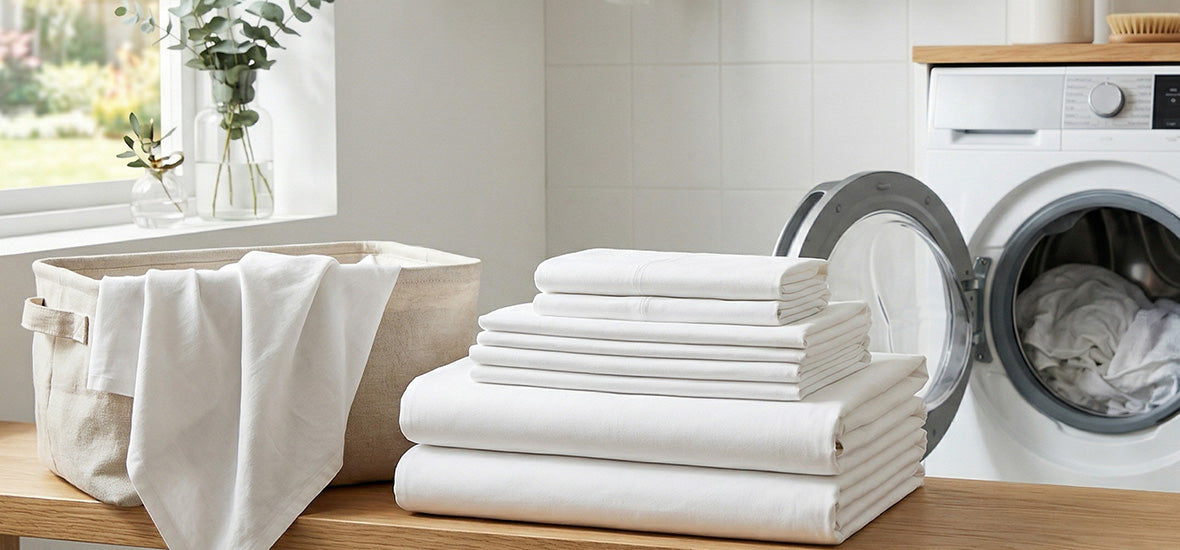
The best way to wash bed sheets is to use a mild detergent, wash with warm or cold water, avoid overloading the washer, and dry on low heat. Most bed sheets should be washed every 1–2 weeks to maintain softness, cleanliness, and fabric quality over time.
How to Wash Bed Sheets Properly
- Wash bed sheets in a washing machine using a gentle or normal cycle
- Use a mild detergent
- Choose the right water temperature based on fabric
- Avoid overloading the washer
- Dry on low heat or air dry when possible
That’s the simple version. The details below will help you get the best results over time.
Best Way to Wash Bed Sheets
The best way to wash bed sheets is to focus on fabric care, not just cleaning.
Start by separating sheets from heavier items like towels. This prevents friction that can wear down the fabric.
Use a detergent that cleans without leaving heavy residue. Too much detergent can make sheets feel stiff over time.
Water temperature matters too:
- Warmer water works well for most cotton sheets
- Cooler water helps preserve delicate fabrics
Drying is just as important as washing. High heat can weaken fibers, especially over time. Lower heat or air drying helps maintain the fabric’s structure.
California Design Den sheets are made from 100% natural cotton designed to stay soft, smooth, and durable with regular washing and everyday use.
How Often to Wash Bed Sheets
Recommended Washing Frequency
Most bed sheets should be washed once every 1 to 2 weeks.
This keeps them clean and maintains the fabric without over-washing, which can wear them down faster.
When to Wash Sheets More Often
You may need to wash sheets more frequently if:
- You prefer a freshly washed feel every few days
- You sweat more during sleep
- You have pets sharing the bed
- You live in a warmer or more humid environment
In these cases, washing once a week is a practical routine.
Should You Wash New Bed Sheets Before Using Them?
Yes, it’s a good idea to wash new bed sheets before using them.
This helps:
- Remove any finishing residues from packaging
- Soften the fabric before first use
- Improve how the sheets feel on the skin
Natural cotton sheets, in particular, tend to feel better after the first wash.
For example, an Egyptian cotton percale sheet set white starts with a clean, structured feel and becomes softer with each wash.
California Design Den sheets are made from 100% natural cotton - no synthetic fibers, no plastic blends. With regular washing, the fabric softens while maintaining its structure over time.
How to Wash Bed Sheets in a Washing Machine
Washing bed sheets in a machine is simple - but small details make a big difference in how your sheets hold up over time.
The goal isn’t just to clean them. It’s to maintain the fabric so it stays soft, smooth, and well-structured after repeated washing.
Read the Care Label
Start with the care label.
Different fabrics have different requirements. The label tells you:
- Recommended water temperature
- Wash cycle type
- Drying instructions
Following these guidelines helps prevent damage like shrinking, fading, or weakening of fibers.
Sort Sheets by Fabric and Color
Always wash sheets with similar fabrics and colors.
- Light colors with light colors
- Dark colors with dark colors
- Cotton separately from heavier fabrics
Avoid mixing sheets with towels or heavy items. Rougher fabrics create friction, which can wear down the surface of your sheets over time.
Pre-Treat Stains on Bed Sheets
If there are visible stains, treat them before washing.
Use a small amount of detergent or a stain remover directly on the spot. Let it sit for a few minutes before placing the sheets in the washer.
This helps remove marks without needing harsher washing conditions.
Choose the Right Detergent
Use a mild detergent that cleans effectively without leaving buildup.
Too much detergent can:
- Make sheets feel stiff
- Leave residue in the fabric
- Reduce softness over time
A smaller amount is usually enough, especially for cotton sheets.
Select the Right Water Temperature
Water temperature affects both cleaning and fabric care.
- Warm water → works well for most cotton sheets
- Cold water → helps preserve color and delicate fabrics
For everyday washing, warm or cold settings are usually sufficient.
Choose the Best Wash Cycle
A normal or gentle cycle is ideal for bed sheets.
- Normal cycle → suitable for most cotton sheets
- Gentle cycle → better for delicate fabrics
Avoid heavy-duty cycles unless necessary. They can be too rough for regular sheet care.
Avoid Overloading the Washer
Give your sheets enough space to move freely.
Overloading the washer:
- Reduces cleaning effectiveness
- Causes uneven washing
- Increases wear due to friction
A loosely filled drum allows water and detergent to circulate properly.
Step-by-Step: How to Wash Bed Sheets Properly
Step 1: Prepare Your Sheets
Remove sheets from the bed and shake them out.
This helps loosen dust and allows for a more even wash.
Step 2: Treat Stains
Apply detergent or stain remover to any visible marks.
Let it sit briefly before washing.
Step 3: Wash Bed Sheets Correctly
Place sheets in the washer:
- Use a mild detergent
- Select warm or cold water
- Choose a normal or gentle cycle
Make sure the washer is not overloaded.
Step 4: Dry Your Sheets Properly
Dry sheets on low heat or air dry when possible.
Lower heat helps:
- Maintain fabric strength
- Reduce shrinkage
- Keep the surface smooth
Remove sheets promptly once dry to avoid wrinkles.
How to Wash Bed Sheets by Material
Not all bed sheets should be washed the same way. The fabric determines how much heat, movement, and detergent it can handle.
Washing based on material helps maintain softness, structure, and long-term durability.
How to Wash Cotton Bed Sheets
Cotton sheets are the most durable and easiest to maintain when washed correctly.
How to wash:
- Use warm or cold water
- Choose a normal or gentle cycle
- Use a mild detergent
- Avoid overloading the washer
Cotton responds well to regular washing and becomes softer over time.
You can explore more options here:
Egyptian Cotton Sheets
California Design Den sheets are made from 100% natural cotton - no synthetic fibers, no plastic blends. This helps maintain a consistent feel with regular care.
How to Wash Linen Bed Sheets
Linen sheets need a bit more care but are still easy to manage.
How to wash:
- Use cold or lukewarm water
- Select a gentle cycle
- Avoid strong detergents
- Do not overload the machine
Linen may feel slightly textured at first, but it softens gradually with washing.
Air drying or low heat drying works best to maintain the fabric’s structure.
How to Wash Satin Bed Sheets
Satin sheets require gentle handling.
How to wash:
- Use cold water
- Select a delicate cycle
- Use a mild detergent
- Avoid heavy spinning or twisting
Satin has a smooth surface that can be affected by rough washing, so a gentle approach helps preserve its finish.
How to Wash Bamboo Bed Sheets
Bamboo-based sheets (viscose or rayon from bamboo) are softer but more delicate.
How to wash:
- Use cold water
- Choose a gentle cycle
- Use a mild detergent
- Avoid high heat during washing and drying
Proper care helps maintain their smooth feel and prevents early wear.
How to Wash White Bed Sheets Without Yellowing
White bed sheets can lose their brightness over time if they’re not washed properly. The goal is to clean them thoroughly while protecting the fabric so it stays fresh-looking.
Remove Stains and Yellowing
Start by treating any visible stains before washing.
- Apply a small amount of detergent directly to the stained area
- Let it sit for a few minutes
- Wash using warm water (if the fabric allows)
Avoid using too much detergent. Excess residue can build up in the fabric and contribute to dullness over time.
For deeper yellowing, occasional use of a gentle oxygen-based cleaner can help lift discoloration without being too harsh on the fabric.
Keep White Sheets Bright and Fresh
A few simple habits can help maintain brightness:
- Wash white sheets separately from colored fabrics
- Use the right amount of detergent - not too much
- Avoid overcrowding the washer
- Dry on low heat or air dry when possible
Cotton sheets respond well to consistent care. With regular washing and proper drying, they maintain a clean, well-kept look over time.
For example, an Egyptian cotton percale sheet set white holds its structure and appearance well with routine washing, especially when handled gently.
How to Wash Bed Sheets and Blankets Together
Washing sheets and blankets together can work - but only if done carefully.
When It’s Safe to Wash Together
You can wash them together if:
- They are made from similar fabrics
- They are similar in weight
- The washing machine has enough space
If one item is significantly heavier, it can affect how evenly everything gets cleaned.
Best Practices for Washing Bedding
- Use a large-capacity washer when possible
- Avoid tightly packing the drum
- Choose a gentle or normal cycle
- Use a mild detergent
If in doubt, washing sheets separately is the safest option to reduce wear and maintain fabric quality.
How to Dry Bed Sheets Properly
Drying plays a big role in how your sheets feel after washing.
Machine Drying Tips
- Use low to medium heat
- Remove sheets promptly after drying
- Shake them out before folding
Lower heat helps maintain fabric strength and reduces the risk of shrinkage.
Air Drying Benefits
Air drying is one of the best ways to maintain sheet quality.
- Helps preserve fiber structure
- Reduces wear from heat
- Keeps the fabric feeling smooth
It may take longer, but it’s gentler on the material.
How to Avoid Wrinkles and Shrinkage
- Don’t over-dry sheets
- Remove them while slightly warm
- Fold or spread them out soon after drying
Overheating is one of the main causes of shrinkage and stiffness, especially for cotton sheets.
How to Store Clean Bed Sheets
Proper storage keeps your sheets fresh, smooth, and ready to use. It also helps maintain the fabric so it doesn’t lose its shape or feel between washes.
Folding Tips for Bed Sheets
Folding sheets neatly helps prevent deep creases and makes storage easier.
Simple method:
- Fold the sheet into a rectangle
- Smooth out wrinkles as you go
- Stack matching pieces together (flat sheet, fitted sheet, pillowcases)
Keeping sets together saves time when making the bed.
Best Storage Practices
- Store sheets in a cool, dry place
- Avoid tightly packed shelves
- Keep them away from direct sunlight
- Use breathable storage (like cotton bags or open shelves)
Avoid plastic containers for long-term storage, as they can trap moisture and affect fabric freshness.
Common Mistakes When Washing Bed Sheets
Even small mistakes can affect how your sheets feel and how long they last.
1. Using too much detergent
Leaves residue that makes sheets feel stiff over time.
2. Overloading the washing machine
Prevents proper cleaning and increases fabric wear.
3. Washing with heavy items like towels
Creates friction that can damage the surface of the fabric.
4. Using high heat too often
Weakens fibers and can cause shrinkage.
5. Not checking care labels
Different materials need different handling.
Avoiding these helps maintain softness and structure.
How to Make Bed Sheets Last Longer
Good care habits can extend the life of your sheets and keep them feeling consistent over time.
How to Prevent Pilling
- Wash sheets separately from rough fabrics
- Use gentle or normal cycles instead of heavy-duty cycles
- Avoid overloading the washer
Less friction means a smoother surface for longer.
How to Maintain Softness
- Use mild detergent
- Avoid excessive fabric softeners
- Dry on low heat or air dry
Cotton sheets, in particular, become softer with regular washing when handled gently.
For example, an Organic Cotton Percale Sheet warm taupe starts with a clean, structured feel and gradually softens with use.
How to Extend Sheet Lifespan
- Rotate between multiple sheet sets
- Follow proper washing and drying steps
- Store sheets correctly between uses
California Design Den sheets are made from 100% natural cotton - no synthetic fibers, no plastic blends. With proper care, they maintain their feel and structure over time.
Why Choose California Design Den Sheets?
California Design Den sheets are crafted from 100% natural cotton designed for long-term everyday comfort. With proper washing and care, the fabric maintains its smooth feel, structure, and softness over time without synthetic microfiber or plastic blends.
- 100% natural cotton bedding
- No synthetic fibers or microfiber
- OEKO-TEX tested for harmful substances
- Backed by the Good Housekeeping Seal
- Designed to get softer with every wash
California Design Den focuses on natural cotton comfort, trusted quality, and honest value designed for everyday sleep routines.
Final Thoughts
Washing bed sheets properly is about more than just cleaning. It’s about maintaining the fabric so it stays soft, smooth, and reliable over time.
With the right care - gentle washing, proper drying, and smart storage - your sheets can hold their feel and structure for years.
Choosing well-made cotton sheets also makes a difference. Natural cotton responds well to regular washing and continues to soften with use, making it a dependable option for everyday bedding.
FAQs: Washing Bed Sheets
How often should you wash bed sheets?
Most sheets should be washed every 1 to 2 weeks, depending on usage.
What is the best way to wash bed sheets?
Use a mild detergent, wash in warm or cold water, and avoid overloading the washer. Dry on low heat or air dry when possible.
Can you wash bed sheets in hot water?
Hot water can be used occasionally, but frequent high heat may weaken fibers over time. Warm or cold water is usually a safer choice for regular washing.
How do you wash linen bed sheets?
Use cold or lukewarm water, a gentle cycle, and mild detergent. Avoid high heat during drying.
How do you wash satin bed sheets?
Wash in cold water on a delicate cycle using a mild detergent. Avoid rough washing and high heat.


