

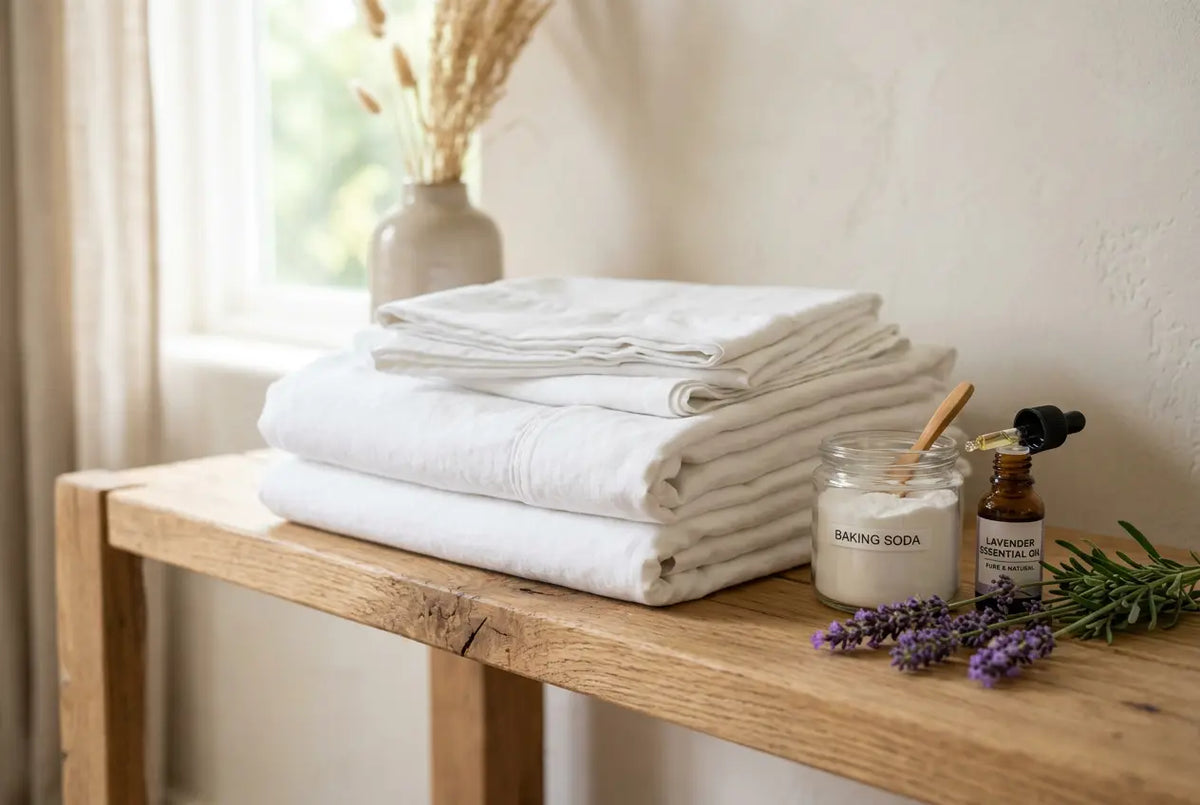
How to make your bed sheets smell good: a step-by-step guide
How to make your bed sheets smell good comes down to three habits: wash them clean, dry them completely and store them where air can move. Stale or musty odors tend to build when body oils, extra detergent or trapped moisture stay in the fabric. A steady wash rhythm helps too, and How Often Should You Wash Your Sheets covers the timing in detail.
If you want to learn how to make your bed sheets smell good without hiding odors under heavy perfume, the steps below start in the laundry room and finish in your linen closet. At California Design Den, we make cotton bedding, and most of our cotton sheets are made in our family-owned facility. The care basics in this guide match the care line on our 400 TC Everyday Ease and 600 TC Restful Retreat sheet sets: machine wash warm, tumble dry low, do not bleach.
Here is what this guide covers:
- Washing and drying steps that remove odor rather than mask it
- Storage habits that keep folded sheets smelling clean on the shelf
- Easy ways to keep the whole bed fresh between laundry days
- Natural scent ideas, plus the common mistakes that bring smells back
Quick answer: how to make your bed sheets smell good
The short version for fresh-smelling bed sheets
Clean sheets smell good when nothing is left behind in the fibers. That means no leftover detergent, no body oils and no dampness.
Follow these five habits to clear stale smells at the source:
- Clean the washing machine and the dryer lint trap so old residue does not transfer to your sheets.
- Use the detergent amount on the label, not more.
- Dry sheets completely before they go back on the bed or into storage.
- Store spare sets in a dry, breathable spot with a little room around them.
- Pull back the covers each morning so the bed can air out.
Why bed sheets lose their fresh smell
Sheets sit against skin every night, so they collect sweat, body oils, hair product and skin care traces. Detergent that does not rinse out can hold onto those traces.
Moisture is the other source. A damp load left in the drum, or a folded set that was still slightly wet, can develop a musty note that a quick spray will not fix.

Bed sheet odors and fixes at a glance
|
What you notice |
Likely cause |
Quick fix |
|
Musty, damp smell |
Sheets sat wet in the washer or were folded before fully dry |
Rewash, then dry completely right away |
|
Stale smell soon after washing |
Detergent residue or an overloaded drum |
Use less detergent and wash a smaller load |
|
Sour smell on pillowcases |
Body oils, hair products and skin care buildup |
Wash pillowcases with every sheet change |
|
Closet smell on stored sets |
Little airflow on the shelf |
Store sets in a cotton bag with a cedar block |
|
Perfume that fades fast |
Scent sitting on residue instead of clean fabric |
Clean first, then add a light linen spray |
|
Washer smell on clean laundry |
Buildup inside the washing machine |
Run an empty cleaning cycle and wipe the door seal |
Washing steps to make your bed sheets smell good
A good smell starts in the wash. These eight steps suit most cotton sheets, but always check your care label first.
Step 1: Clean your washing machine first
A washer with buildup in the drum, the dispenser or the rubber door seal can pass a stale smell to everything in the load. Clean the machine before you blame the sheets.
- Run an empty cleaning cycle with a washer cleaner or the cleaning setting on your machine.
- Wipe the rubber seal and the detergent drawer with a damp cloth.
- Leave the door open after each load so the drum can dry.
- If your washer has a drain filter, clean it the way your machine's manual describes.
Step 2: Clear the dryer lint trap every load
Lint traps fill fast with sheets and towels. A full trap slows drying, and slow drying keeps moisture in the fabric longer.
Empty the trap before every load. Now and then, rinse the screen with warm water and let it dry fully before you slide it back in.
Step 3: Wash your sheets on a steady schedule
Our wash-frequency guide covers how often to wash your sheets, with a little flexibility for pets, kids or warm weather. For the full breakdown by lifestyle, read How Often Should You Wash Your Sheets.
A steady rhythm stops body oils from settling deep into the fibers, which is what turns a light odor into a stubborn one.
Step 4: Choose the right detergent and measure it
More detergent does not mean cleaner sheets. Extra soap can stay trapped in the fabric, and that residue can hold onto odor.
- Measure with the cap or scoop and follow the label for your load size.
- Pick a gentle, liquid or powder detergent that rinses out cleanly.
- If scent matters to you, choose a lightly scented detergent rather than adding perfume later.
- Add an extra rinse if your sheets ever feel slick or stiff after washing.
Step 5: Act fast on sweat, spills and stains
The longer a spill sits, the harder it is to wash out, and a faint stain can carry a faint smell.
Rinse fresh spills with cold water from the back of the fabric. Dab, do not rub. Treat with a little detergent, then wash the sheets on their normal cycle. For sweat-heavy nights, wash the set sooner rather than waiting for laundry day.
Step 6: Add white vinegar or baking soda for a deeper refresh
White vinegar is a natural alternative to fabric conditioner. Pour a splash into the softener dispenser so it releases during the rinse. It can help lift detergent residue, and the vinegar smell should fade as the sheets dry.
Baking soda works in the wash itself. Add a small scoop to the drum with your usual detergent to help neutralize stale odors. Use one or the other in a single cycle, not both at once. Both are simple household options for cotton sheets, as long as your care label allows them.
Step 7: Line dry your sheets when you can
Drying sheets outside on a breezy day gives them a light, outdoor smell that no product can copy. Moving air also dries every fold completely.
- Hang sheets so they are not bunched, with space between each piece.
- Dry darker colors in the shade or inside out, since direct sun can fade deep shades.
- If you use a dryer, dry on low until the sheets are fully dry, then take them out right away.
Step 8: Skip dryer sheets and try wool dryer balls or tennis balls
Dryer sheets add fragrance by coating fabric, and that coating can build up on cotton over time. Our guide Should I Use Fabric Softener on Bed Sheets explains why we suggest skipping softeners on cotton sheets.
Wool dryer balls are an easy swap. They tumble between the sheets, keep them from balling up and help air move through the load. Clean tennis balls do the same job in a pinch.
For a light scent, add a few drops of essential oil to a wool ball and let it soak in fully before you use it, so no oil touches damp fabric directly. Essential oils can be flammable, so use only a few drops, let the ball dry fully and follow the oil maker’s safety guidance.

Storage habits that keep bed sheets smelling good
Where you keep spare sets matters as much as how you wash them. A clean set stored badly can still pick up a closet smell. The California Design Den care guide keeps it simple: store linens in a dry place and avoid plastic containers that can trap moisture.
Wash and dry sheets before you store them
Never put away a set that has been on the bed, even for one night. Wash it, dry it fully and only then fold it.
This matters most at the change of season, when sheets go into storage for months at a time.
Store sheets fully dry
Fold sheets only once they are back at room temperature and feel dry all the way through, including the elastic edges of the fitted sheet and the hems.
Even slight dampness inside a folded stack can turn into a musty smell on the shelf.
Let stored sheets breathe
Air should be able to move around your linens. Pack shelves loosely rather than squeezing sets into every gap.
- Skip sealed bins and vacuum bags for everyday linen storage.
- Use breathable cotton storage bags or a clean pillowcase instead.
- Keep linens away from damp spots such as bathrooms or exterior walls.
Fold or stuff: keep each set together
Fold the flat sheet, fitted sheet and spare pillowcases, then tuck them inside one matching pillowcase. The set stays together and the outer case keeps dust off.
Stuffing a set loosely into its pillowcase works too, as long as everything inside is fully dry.
Rotate two or more sheet sets
Keeping at least two sets lets each one rest and air out between uses, and rotating between sheet sets is part of the California Design Den care guide too. It also means you are never tempted to put a half-dry set back on the bed.
A pair of sets in different shades, such as the Restful Retreat 600 Sateen Cotton Sheet Set Sage Green, makes the rotation easy to see at a glance.
Add baking soda or dried aromatics to the shelf
An open box of baking soda on the shelf helps absorb stale closet odors. Swap in a fresh box from time to time.
For a gentle scent, tuck in a cedar block, a lavender sachet or a small cloth bag of dried rosemary. Keep loose petals and herbs in a bag so they do not mark the fabric.
How to keep bed smelling fresh between washes
Fresh sheets are only part of the picture. Pillows, covers and the bedroom air all add to how your bed smells at night.
Air out the bed every morning
Pull the covers back when you get up and leave the bed open for a while. Moisture from the night escapes before it settles into the sheets.
Open a window for a few minutes too. Fresh airflow clears the room and keeps the bed from smelling closed in. Make the bed once you have showered and dressed, not the moment you wake up.
Let the sunshine in
Open the curtains during the day. A bright, airy room feels fresher, and the sheets dry out faster when warm light reaches the bed.
Turn back the top layers on sunny days so the light reaches the fitted sheet as well.
Refresh the layer under your fitted sheet
Whatever sits under your fitted sheet can hold odors too. When you strip the bed, sprinkle a thin layer of baking soda over the mattress, leave it for a few hours, then vacuum it up.
A washable protector between the fitted sheet and the mattress adds an extra layer you can launder with your sheets.
Wash pillows, pillowcases and duvet covers
Pillowcases sit against your face and hair, so they pick up oils faster than the rest of the bed. Wash them at least as often as your sheets.
Duvet covers and pillow protectors belong in the regular rotation as well. Wash pillows and duvet inserts by their own care labels, and dry them completely before they go back on the bed.
Make your own linen spray
A homemade linen spray adds a light scent to clean sheets without heavy residue.
- Fill a clean spray bottle with distilled water.
- Add a splash of witch hazel or unscented vodka to help the oil mix in.
- Add a few drops of essential oil, then shake before each use.
- Spray lightly from arm's length and let the sheets dry before you get into bed.
Test the spray on a hidden corner first, as some oils can mark light-colored fabric.
Best scented oils for fresh-smelling sheets
Pick a scent you enjoy and use it sparingly. A little goes a long way on clean cotton.
- Lavender for a soft floral note
- Eucalyptus for a clean, green note
- Lemon or sweet orange for a bright citrus note
- Cedarwood for a warm, woody note
- Peppermint for a sharp, clean note
Always follow the oil maker's guidance, and never apply oil straight onto the fabric.

Common mistakes that stop bed sheets from smelling good
A few everyday laundry habits can undo good washing. Fix these and the steps above work much better.
Using too much detergent or fabric softener
Extra detergent and softener can leave residue that holds onto odor. Measure carefully, and see Should I Use Fabric Softener on Bed Sheets for why softener can be skipped on cotton sheets.
Overloading the washing machine
Sheets need room to move. A packed drum cannot rinse every fold, so soap and odor stay behind.
Wash one sheet set per load where you can, and keep towels and heavy items in a separate load.
Leaving clean sheets in the drum
Wet sheets left sitting in the washer can start to smell musty. Move them to the line or the dryer as soon as the cycle ends.
If a load does sit too long, rewash it before drying rather than drying the smell in.
Covering odors with perfume
Spraying scent onto sheets that are not fully clean only layers fragrance over the problem. Wash first, then add a light scent if you like one.
California Design Den sheets for a fresh-smelling bed
The right sheets make every habit above easier. Natural cotton washes and dries cleanly, so a simple routine is all it needs.
Everyday Ease 400 TC: soft, smooth and breathable
The 400 TC Everyday Ease sheet set feels soft, smooth and airy, with a gentle sheen and a balanced everyday weight. Everyday Ease has a smooth, breathable texture for everyday comfort, and it gets softer with every wash. A calm, muted blue like the Everyday Ease 400 Sateen Cotton Sheet Set Indigo Dusty Blue adds a soft touch of color to the bed.
Everyday Ease is 100% long-staple cotton, sateen weave, with no petroleum-based synthetic fibers, no polyester, no microfiber. The Everyday Ease sheet set is tested for harmful substances to OEKO-TEX STANDARD 100.
The 400 TC Everyday Ease Sheet Set is backed by the Good Housekeeping Seal. Separately, the Everyday Ease sheet set was named a winner of the Good Housekeeping Best Bedding Award 2026 and the Good Housekeeping Best Bedding Award 2023. You can see every shade in the 400 Thread Count Sateen Sheets collection.
Restful Retreat 600 TC: smooth with a polished finish
The 600 TC Restful Retreat sheet set is a substantial, smooth fabric with a refined handfeel and a polished finish. Restful Retreat is structurally balanced, with a bit more body on the bed. Take a look at the Restful Retreat 600 Sateen Cotton Sheet Set Sage Green for a soft, natural color.
Restful Retreat is 100% long-staple cotton, sateen weave, tested for harmful substances to OEKO-TEX STANDARD 100. Restful Retreat was named a winner of the Oprah Daily Sleep O-Wards 2026.
Choose Everyday Ease if you like a balanced everyday weight. Choose Restful Retreat if you prefer a bit more body. Both follow the same care line: machine wash warm, tumble dry low, do not bleach. We make our own sheets. That's why the price makes sense.
Get the right bedding: what to look for
If you are shopping for sheets that are easy to keep smelling clean, look at fiber, weave and care. Browsing cotton sateen sheets is a good place to compare feel and color.
- 100% cotton: a natural fiber that washes and dries well on a regular routine.
- A weave you enjoy: percale weave is a one-over-one-under weave with a matte, open feel, while sateen weave uses a four-over-one-under float for a smoother surface with more drape and sheen.
- A care label you can follow at home, without special products.
- Enough sets to rotate, so each one has time to air out.
Frequently asked questions about making bed sheets smell good
How do I keep my bedding smelling fresh?
Learning how to keep bed smelling fresh is about routine: wash sheets on a steady schedule, dry them fully, air the bed daily and store spares dry.
Why do my sheets still smell bad even after I wash them?
Detergent residue, an overloaded drum or a washer with buildup can leave odor behind. Use less detergent, wash smaller loads, clean the washer.
How to remove bad smell from bed sheets?
Rewash with baking soda, add white vinegar to the rinse, then dry completely, outdoors if you can, to make bed sheets smell good again.
How to get old musty smell out of sheets?
Musty smells come from moisture. Rewash the sheets, add white vinegar to the rinse, dry them fully and store them only once dry.
Why don't my sheets smell fresh after washing?
Sheets left damp in the drum or folded while warm can turn stale. Move them to the dryer quickly and dry them all the way through.

Final thoughts on how to make your bed sheets smell good
Fresh-smelling sheets come from clean washing, complete drying and smart storage, not from heavy perfume. Get those three right and a light scent becomes a finishing touch rather than a cover-up.
Your fresh-bed checklist
- Clean the washer and lint trap, and measure detergent.
- Wash sheets on a steady schedule and act fast on spills.
- Dry every set completely, outdoors when you can.
- Store spares dry, loose and in breathable bags.
- Air the bed each morning and rotate your sets.
When it is time to add a set to your rotation, start with sheets that are simple to wash. The cotton sateen sheets collection covers a range of feels and colors.
Start with sheets that are easy to care for
Cotton that washes clean and dries fully is the easiest base for a fresh bed. The Everyday Ease 400 Sateen Cotton Sheet Set Indigo Dusty Blue is a soft, smooth place to start.
For more shades in the same feel, browse the 400 Thread Count Sateen Sheets collection and pick the colors that suit your room.


