

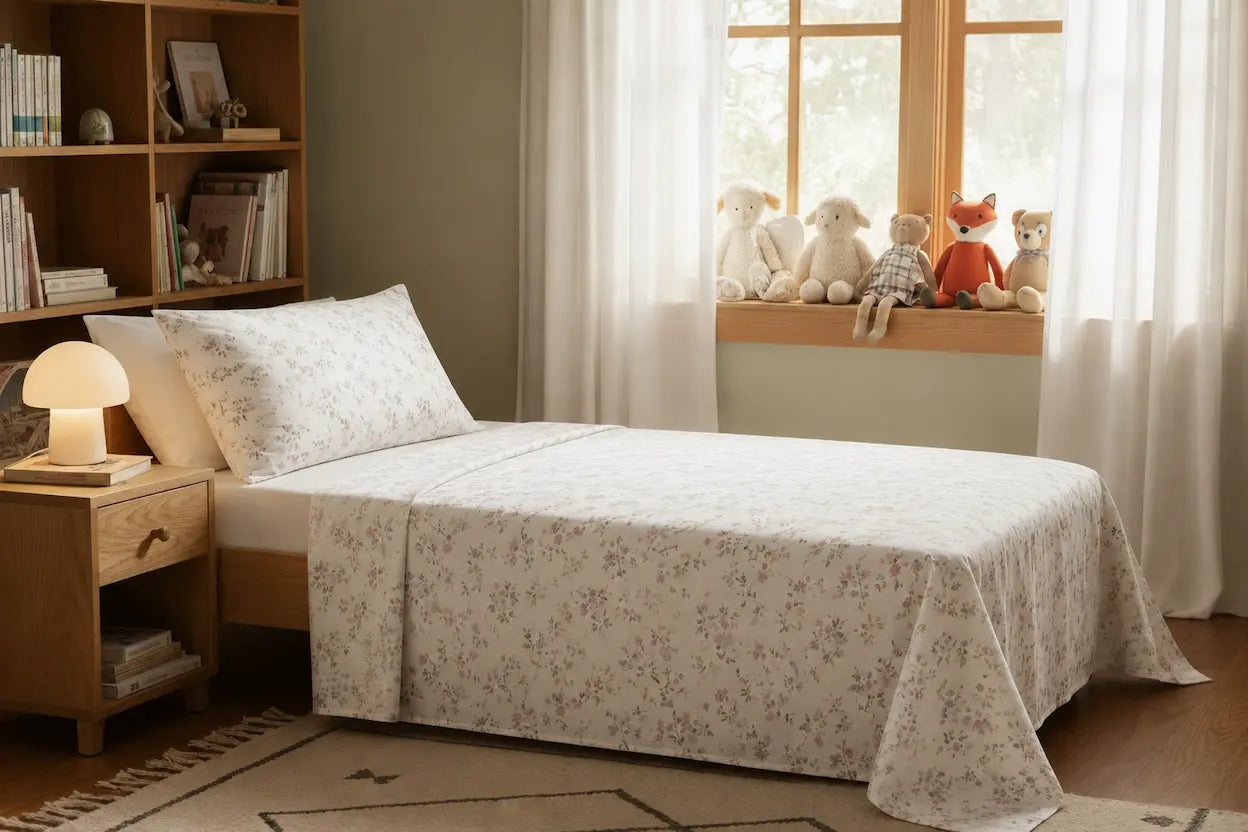
Organic Cotton Sheets for Kids: A Parent's Buying Guide
Organic cotton sheets for kids are grown and processed without the synthetic pesticides, chemical bleaches, and harsh dyes used in conventional cotton farming, which is why so many parents choose them for a child's room. That matters most for a kid's skin, since children's skin is thinner and more reactive than an adult's. If you're also weighing fabric feel for sensitive skin, the best sheets for sensitive skin guide breaks down what to look for beyond the "organic" label.
Not every sheet marketed as organic actually is. Certifications exist for a reason, and this guide walks through what they mean, how organic cotton feels different from regular cotton, and how to choose organic kids bedding that holds up to years of sleepovers, spills, and nightly washing. You'll also find a practical buying checklist and answers to the questions parents ask most.
Quick Answer: Are Organic Cotton Sheets for Kids Worth It?
Yes - if your priority is fewer chemical residues against your child's skin and a lighter environmental footprint, an organic cotton sheet set is worth the investment for a kid's room. These sheets are grown without synthetic pesticides, processed with fewer chemical treatments, and tend to soften more with each wash rather than breaking down.
Here's what to look for, in short:
- A GOTS (Global Organic Textile Standard) certification, not just a "natural" or "eco-friendly" label
- OEKO-TEX Standard 100 testing, which confirms the finished fabric passed safety testing for harmful substances
- A thread count and weave that suits how your child sleeps - not just the highest number on the shelf
- Sizing that actually fits your child's mattress, including bunk beds and trundle setups
The sections below cover each of these in detail, plus how to care for organic kids sheets so they last.

Why Consider Organic Bedding for Kids?
Kids spend eight to eleven hours a night with their skin against the same fabric. Conventional cotton farming uses more pesticide per acre than almost any other crop, and traces of those chemicals can remain in the finished yarn. Organic cotton skips that step entirely, from field to fabric.
That's not the only reason parents move toward organic kids bedding. It's also a practical decision about durability and daily comfort:
- Organic cotton fibers are typically processed with fewer chemical treatments, which preserves more of the fiber's natural strength
- The lack of synthetic bleach means the fabric's texture tends to soften gradually instead of thinning out
- Kids' rooms see more frequent washing than adult bedrooms - spills, accidents, and sweat from active play - so a fabric that holds up to repeated laundering matters more here than almost anywhere else in the house
How Organic Cotton Differs from Regular Cotton for Children's Sheets
Regular cotton and organic cotton come from the same plant, but the farming and processing diverge early. Regular cotton crops are typically treated with synthetic fertilizers and pesticides, and the raw fiber is often bleached and dyed using conventional chemical processes. Organic cotton is grown from non-genetically modified seeds, without those synthetic inputs, and processed under stricter chemical limits.
The end result feels similar at first touch - both are natural cotton. The difference shows up over time. Organic cotton kids sheets that are properly certified tend to arrive with less chemical residue baked into the weave, which is one reason many parents choose natural fiber bedding for young children over synthetic blends.
Common Concerns Parents Have About Kids' Bedding
Most questions we hear from parents fall into a few buckets:
- Will it irritate my child's skin? Natural, untreated cotton is generally gentle on skin, especially compared to synthetic blends that trap heat and moisture against the body.
- Will it survive nightly washing? Cotton, organic or not, holds up well to frequent laundering when you follow the right wash cycle - more on that in the care section below.
- Is "organic" just a marketing word? Sometimes, yes. That's exactly why certifications matter, which is the next section.
- Is it worth paying more? For a fabric that's against your child's skin every night, most parents find the price difference reasonable once they understand what the certification actually verifies.
None of these concerns have a one-size-fits-all answer, but each one gets easier to weigh once you know what to check on the label instead of relying on the word "organic" alone.

What Certifications Ensure Organic Kids Bedding Is Nontoxic?
Two certifications do almost all the real work here, and neither is optional if you actually want genuine organic kids bedding rather than a sheet set that simply says "organic" on the tag.
GOTS Certification Explained
The Global Organic Textile Standard covers the entire supply chain - the cotton has to be grown organically, and every processing step afterward (spinning, dyeing, finishing) has to meet strict environmental and toxicological criteria. A GOTS label is the closest thing to a guarantee that "organic" on the tag reflects the actual product, not just the raw fiber. If a sheet set claims to be organic but can't point to a GOTS certificate, treat that claim with some skepticism.
OEKO-TEX Standard 100 and Why It Matters
OEKO-TEX Standard 100 is a different kind of certification - it doesn't confirm organic farming, but it does confirm that every component of the finished product, from the thread to the dye, has been tested and passed safety limits for harmful substances. For parents who can't find a GOTS-certified option in the size, color, or thread count they need, an OEKO-TEX certified natural cotton sheet is a reasonable middle ground: it's still 100% natural cotton, tested for chemical safety, even without the organic farming certification specifically.
Reading Labels on Organic Kids Sheets
A few label-reading habits will save you from paying an organic premium for a sheet that isn't:
- Look for the specific certifying body's logo (GOTS, OEKO-TEX) - not just the word "organic" or "eco" in the product name
- Check whether the certification covers the whole product or just the raw cotton fiber
- Be skeptical of "natural," "green," or "eco-conscious" language with no certification attached - these are marketing terms, not standards
- When shopping online, look for the certification listed in the product's material or certification section, not just the marketing copy at the top of the page
Why Some "Organic" Labels Aren't What They Seem
Marketing language moves faster than regulation, and bedding is no exception. A tag that reads "made with organic cotton" can legally describe a blend that's mostly conventional cotton with a small organic percentage mixed in - the wording doesn't require full-fiber organic content the way a GOTS certificate does. Price is a useful early signal too: authentic GOTS-certified organic cotton kids sheets typically cost more than conventional sets, since organic farming yields less cotton per acre and the certification process itself adds cost through the supply chain. A sheet set priced identically to non-organic cotton but labeled "organic" is worth a second look at the certification section of the listing before you buy.
How Organic Cotton Sheets Feel for Kids Across the Seasons
Fabric feel matters as much as certification once you're actually making a bed. Kids run warm during play and cool down fast once they're asleep, so the fabric against their skin needs to feel comfortable through both.
Softness and Breathability for Organic Cotton Sheets for Kids in Every Season
Cotton's natural fiber structure gives it an open, breathable texture that feels lighter against skin than tightly woven synthetic fabric. That's true of organic and conventional cotton alike, though organic fibers - free of the chemical treatments that can stiffen a weave - often feel softer straight out of the package. This is one of the clearest, most immediate differences you'll notice with organic kids sheets versus a standard cotton set. If you want to compare weave and feel across options before buying, the Cotton Sheet sets collection is a good place to browse thread counts and weaves side by side.
Percale weaves feel crisp and cool to the touch. Sateen weaves feel smoother and slightly heavier, with a subtle sheen. Neither is objectively better for kids - it depends on whether your child prefers a crisp, fresh feel or a smoother, denser one.
Durability Through Wash After Wash
This is where organic cotton kids sheets tend to separate from cheaper alternatives. Fiber quality determines how many wash cycles a sheet can survive before it thins, pills, or loses shape. Long-staple cotton fibers, spun into single-ply yarns, resist pilling better than short-staple blends. A kid's sheet set is going into the wash far more often than an adult's - plan for that when you're comparing options, not just for the first-touch feel in the store.
Short-staple, lower-quality cotton tends to shed lint and thin out visibly within a few dozen washes, especially around the fitted sheet's elastic edge, which takes the most repeated stress in a kid's bed. A tighter weave and a longer fiber both push that timeline out considerably, which is worth the extra look on a product listing even if the price difference feels small at checkout.

Caring for Organic Cotton Kids Sheets
Proper care extends the life of any cotton sheet, but it matters more for kids' bedding because of how often it gets washed. A little extra care up front keeps organic cotton kids sheets performing the way they should for years, not just for the first few months.
Washing and Drying Tips
- Wash in warm (not hot) water - hot water breaks down natural fibers faster over time
- Use a mild, dye-free detergent, especially for kids with sensitive or easily irritated skin - the best sheets for sensitive skin guide has more detail on detergent choices
- Skip fabric softener on organic cotton - it coats the fiber and reduces breathability over time
- Tumble dry on low or line dry when possible; high heat is the single biggest cause of premature wear
- Wash new sheets before first use - this softens the weave and removes any manufacturing residue
How Often Should Kids' Bedding Be Washed?
Once a week is the general rule for kids' sheets, more often during illness, potty training, or hot weather. Pillowcases can be swapped even more frequently since they're in direct, constant contact with the face. If your child has a stuffed animal or comfort object that shares the bed, wash that on the same schedule - it collects the same skin oils and dust the sheets do.
A second set of organic kids bedding on hand makes the weekly wash routine far less disruptive. Rotating two sets means one is always clean and ready while the other is in the laundry, which matters more in a kid's room than almost anywhere else in the house - nighttime accidents and sudden illness rarely wait for laundry day. Storing the spare set folded in a labeled bin near the bed, rather than in a linen closet down the hall, also makes it easier for a child to help with their own bed-making as they get older.
Why California Design Den Works for Organic Cotton Sheets for Kids
California Design Den is a family-owned cotton bedding brand, and natural fiber is the only thing it works with - no synthetic fibers, in any collection.
Natural Cotton Craftsmanship You Can Trust
A note on certification: CDD's core sheet sets are 100% natural cotton and OEKO-TEX Standard 100 tested - not GOTS-certified organic. They're built on the same principle that makes organic cotton sheets for kids worth choosing in the first place : no synthetic fiber content, and every finished set tested under OEKO-TEX Standard 100 for harmful substances. The Grand Indulgence 1000 Sateen Cotton Sheet Set in Fresh Clay uses single-ply yarns spun from extra-long staple cotton fibers, which is what gives it a smooth, substantial feel that holds up wash after wash - a real consideration for a kid's sheet set. For a lighter, crisper option, the Signature Egyptian Cotton Sateen Sheet Set in Beige offers the same long-fiber durability in a smoother, everyday weight.
Both sets have earned the Good Housekeeping Seal, and California Design Den has built its reputation over more than 20 years on the idea that natural cotton shouldn't come with a steep markup. That's the same value proposition that makes organic kids bedding worth the search in the first place - quality fiber, honestly priced.
Shop California Design Den Cotton Sheet Sets for Kids' Rooms
If a mid-tone color and stain resistance matter for your child's room, start with the best color for bed sheets guide, then compare weights using the best thread count for sheets breakdown. Both sets below are natural cotton, OEKO-TEX tested rather than GOTS-certified organic - a safety-tested alternative if a certified-organic pick isn't available in your size or budget.
- The Grand Indulgence 1000 Sateen Cotton Sheet Set in Fresh Clay suits a child who likes a heavier, denser feel and a room that runs cooler
- The Signature Egyptian Cotton Sateen Sheet Set in Beige suits a lighter, everyday feel for a room that stays on the warmer side
- Both are stocked in the full Sheet Set collection alongside sizing options for twin and twin XL beds
How to Choose the Right Organic Bedding for Your Child
Once certifications and care are sorted, the actual buying decision comes down to three practical factors: thread count, color, and size. Shoppers hunting for organic kids sheets often start with thread count and get stuck there, but color and sizing matter just as much for how the sheets actually get used night after night. Browsing the Sheet Set collection with these three factors in mind will narrow your options fast.
Thread Count and Weave for Kids Sheets
Thread count describes how tightly the yarns are woven, and it changes how a sheet feels and drapes - not how "good" the sheet is. This is one area where organic kids bedding gets compared unfairly to conventional sets, since thread count has nothing to do with whether a sheet is organic. For a deeper breakdown of what different thread count ranges feel like in practice, the best thread count for sheets guide covers the full range.
For kids' rooms specifically:
- 400–600TC sits on the lighter, more airy end of the range - a common pick for younger children and warmer bedrooms
- 800–1000TC feels denser and more substantial, closer to what you might choose for a guest room or a teen's room
- There's no wrong choice here. It's a matter of how your child likes their sheets to feel, not a quality ranking
Choosing Colors and Prints for a Kid's Room
Color matters more in a kid's room than almost anywhere else in the house - partly for the child's own preference, and partly because lighter colors show stains less forgivingly than mid-tones do. This applies just as much to organic kids bedding as it does to any other cotton set. The best color for bed sheets guide has a full breakdown of which shades hide everyday wear best, which is worth a look before you commit to all-white sheets for an active seven-year-old.
A few practical points:
- Mid-tone colors (clay, sage, warm gray) hide spills and marker mishaps better than pure white
- Solid colors are easier to match with a rotating wardrobe of character bedding and blankets on top
- If your child has strong preferences, let that drive the decision - a sheet they're excited about is one they'll actually want to sleep under
Sheet Sizes and Fit for Bunk Beds and Twin Mattresses
Standard twin and twin XL are the most common kids' bed sizes, but bunk beds and trundle setups often use shallower mattresses that need a fitted sheet with a shorter pocket depth. Measure your child's actual mattress - thickness varies more than people expect between brands - before ordering. A fitted sheet with too deep a pocket will bunch and slide off a thin bunk mattress by morning, while one with too shallow a pocket won't stay anchored at all. Browsing the full Cotton Sheet sets range by size filter will save you a return.
If your child is transitioning from a crib to their first twin bed, it's worth sizing up early rather than buying a set they'll outgrow within a year - most kids stay on a twin or twin XL mattress for close to a decade.

Frequently Asked Questions About Organic Cotton Sheets for Kids
What are the best organic cotton sheets for kids?
Look for GOTS-certified organic cotton, or OEKO-TEX tested natural cotton, in a thread count your child finds comfortable.
Do I need to buy organic bed sheets for kids?
No. OEKO-TEX tested natural cotton is a safe alternative to organic kids sheets if organic isn't available in your size or budget.
What type of sheets are best for kids?
100% natural cotton in percale or sateen. Avoid synthetic microfiber, which traps heat and sheds plastic fibers when washed.
How often should kids' bedding be washed?
Once a week, more often during illness or hot weather. Wash pillowcases more often since they touch the face directly.
What thread count is best for kids sheets?
No single best count. 400–600TC feels lighter; 800TC+ feels denser. Choose by feel, not the highest number.
The Bottom Line on Organic Cotton Sheets for Kids
Organic cotton sheets for kids are worth the search when you can find a genuine GOTS-certified option in the size, color, and weight your child actually wants to sleep under. When that's not available, OEKO-TEX Standard 100 tested natural cotton is a solid, safety-tested alternative - not a compromise.
Either way, the fabric fundamentals matter more than the word on the label: long-staple cotton fibers, a weave that suits how your child sleeps, and a wash routine that protects the fiber instead of breaking it down. Get those three right, and organic kids sheets - or a well-made natural cotton alternative - will hold up for years, not months.
Start with the certification section on any listing before you look at color or price. That one habit will filter out most of the mislabeled "organic" sets on the market and leave you comparing options that are actually worth the extra cost - whether that ends up being a fully GOTS-certified set or a well-made, OEKO-TEX tested natural cotton alternative.


