

The Sleep Journal
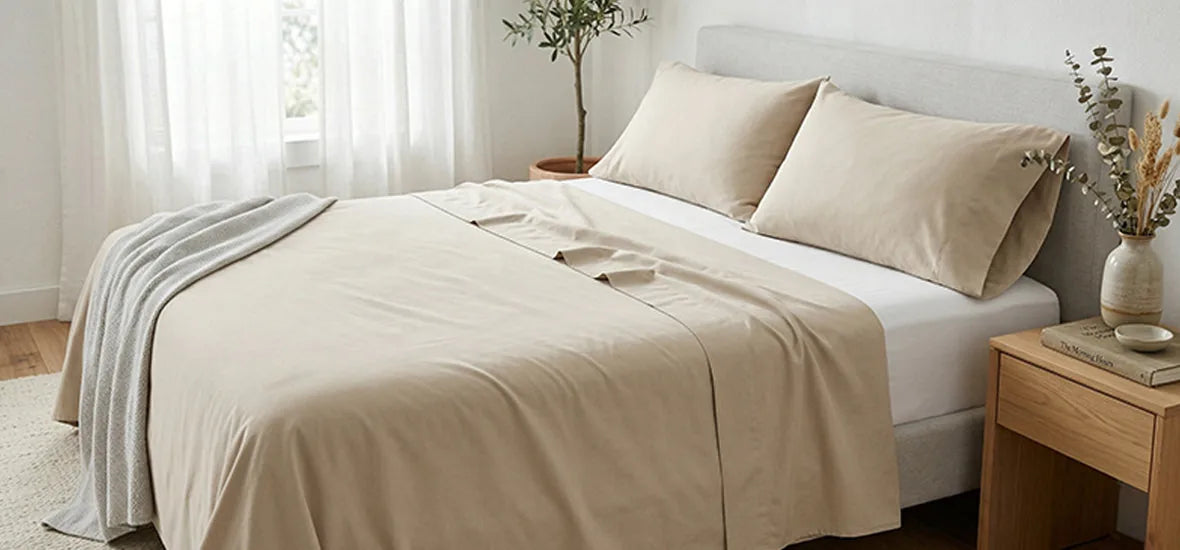

Can You Use a Duvet Cover Without an Insert? 5 Easy Bedding Hacks
Can you use a duvet cover without an insert? Yes, it can be used alone as a lightweight layer, but it will feel flat and less structured. Learn when it works, what a duvet insert is, and how it compares to a comforter for everyday bedding.
Learn more
Best Sheets for Sensitive Skin: Soft & Gentle Natural Cotton
Best sheets for sensitive skin are 100% natural cotton with a smooth, breathable weave like percale or sateen. They reduce friction, feel gentle on skin, and stay comfortable with daily use and repeated washing.
Learn more
How Big Is a King Size Sheet? Dimensions Guide
A king size sheet typically measures about 108” x 102” for a flat sheet and 76” x 80” for a fitted sheet. It’s designed to fully cover a king mattress with extra fabric for tucking and overhang, ensuring proper fit and comfort.
Learn more
Best Color for Bed Sheets: Choose the Right Shade
Not sure which bed sheet color to choose? Explore the best colors for bed sheets, from calming neutrals to bold tones, and find the perfect match for your bedroom style.
Learn more
Best Material for Duvet Cover: What You Should Choose
Choosing the best material for a duvet cover comes down to how you want your bedding to feel every day - light and breathable, smooth and soft, or textured and natural. The right fabric affects comfort, durability, and overall sleep experience more than any other factor. Cotton remains the most widely used option because it balances softness, breathability, and easy care. Within cotton, different weaves like percale and sateen create distinct feels - crisp vs smooth - allowing you to fine-tune comfort based on preference. Other materials like linen, bamboo, and silk offer unique textures and benefits, but each comes with trade-offs in maintenance, durability, or feel. Understanding these differences helps you choose a duvet cover that matches your climate, sleep style, and everyday use without overcomplicating the decision. What Is the Best Material for a Duvet Cover? If you want a simple answer, the best material for a duvet cover depends on everyday comfort, breathability, and ease of care - but one option consistently stands out. Best Material for Duvet Cover Overall 100% natural cotton is the most reliable choice overall. It offers: Balanced breathability for year-round use Soft, natural feel on skin Easy washing and maintenance Long-term durability with proper care Cotton works well across climates and sleep styles, making it the most practical everyday option. Best Material Based on Sleep Preference Different materials suit different comfort needs: Hot sleepers → Percale cotton (light, airy feel) Soft, smooth feel → Sateen cotton (silky surface with gentle drape) Natural texture → Linen (relaxed, breathable structure) Light luxury feel → Silk or bamboo (smooth, fluid comfort) Most people still prefer cotton because it balances comfort and practicality without being high maintenance. Best Duvet Cover Materials Choosing the right material is easier when you compare how each one feels and performs in everyday use. Below is a simple breakdown based on comfort, durability, and usability. Breathability (Hot vs Cool Feel) Percale cotton → most breathable, airy feel Sateen cotton → balanced breathability with smoother surface Linen → highly breathable with a textured, relaxed feel Bamboo → light and fluid feel with good airflow Silk → smooth but less breathable than cotton or linen Microfiber → less breathable, more heat-retaining feel Softness and Next-to-Skin Comfort Silk → ultra-smooth, premium soft feel Sateen cotton → soft and slightly silky surface Bamboo → smooth and fluid texture Percale cotton → crisp rather than soft Linen → textured, relaxed softness Microfiber → soft initially but can feel less natural over time Durability and Long-Term Use Cotton (all types) → strong and reliable over time Linen → highly durable, improves with use Microfiber → resistant to wrinkles but less natural longevity feel Silk → delicate, requires careful handling Bamboo → moderate durability depending on weave Maintenance and Ease of Care Cotton → easiest to wash and maintain Microfiber → low maintenance but synthetic feel Bamboo → moderate care required Linen → needs gentle handling but improves over time Silk → highest care requirement Value for Money Cotton → best long-term value Microfiber → lowest cost option Bamboo → mid to premium range Linen → higher investment Silk → premium luxury pricing Key Insight Across all categories, cotton consistently delivers the best balance of comfort, breathability, and practicality, which is why it remains the most widely used bedding material. How to Choose a Best Duvet Cover Materials Here’s a simple way to choose based on how you want your bedding to feel in everyday use - light, smooth, textured, or easy to maintain. Best for Everyday Comfort (Balanced Choice) The 400 Thread Count Duvet Cover Dusty Blue in the 300–400 TC cotton range is one of the most balanced options for everyday use. Natural breathability Comfortable in most climates Easy to wash and maintain Works across seasons This is the most practical “all-rounder” choice for most homes. Best for Cool and Airy Feel Cotton percale is ideal if you prefer a lighter, crisper bedding feel. More open weave for airflow Light, fresh texture Works well in warmer conditions It feels less dense compared to smoother weaves. Best for Soft and Smooth Feel Cotton sateen offers a smoother surface with a subtle sheen. Soft, fluid drape Gentle feel on skin Slightly warmer than percale but still breathable Good for those who prefer a more polished finish. Best for Lightweight Natural Texture Linen provides a relaxed, textured feel. Highly breathable structure Naturally airy and loose weave Softens over time with use Best for a natural, relaxed bedding style. Best Budget-Friendly Option Microfiber alternatives are often positioned as low-cost bedding options. A better budget-friendly choice is the 400 Thread Count Duvet Cover grey However, for CDD’s positioning, a better budget option is: Entry-level cotton duvet covers (300–400 TC) Still natural, breathable, and durable Better long-term feel than synthetic options Best Premium Feel Option High-quality sateen cotton or bamboo blends Smooth, refined surface More elevated feel on the bed Balanced comfort with a soft finish These work well for a more premium bedding experience without sacrificing usability. Choosing Best Duvet Cover Based on Material Choosing the right duvet cover material depends on how it feels in daily use - breathability, softness, maintenance, and long-term comfort all matter more than labels. Cotton Duvet Covers (Overall Best Choice) Cotton is the most widely used duvet cover material because it balances comfort and practicality. Naturally breathable Comfortable for year-round use Easy to wash and maintain Works well for most sleep preferences It remains the most reliable everyday bedding material. Percale Cotton (Crisp and Airy Feel) Percale is a cotton weave known for its lighter, crisper texture. More open weave for airflow Feels fresh and structured Ideal for warmer sleeping conditions It’s preferred by those who like a clean, matte bedding feel. Sateen Cotton (Smooth and Soft Feel) Sateen has a smoother surface and slightly more fluid drape. Soft, silky-like finish Slightly heavier feel than percale Comfortable for year-round use It’s a good choice for a more refined, polished bedding look. Linen (Natural Textured Feel) Linen offers a more relaxed, natural texture. Highly breathable structure Slightly textured, lived-in feel Softens over time with use It works well for a casual, natural aesthetic. Bamboo (Light and Fluid Feel) Bamboo fabrics feel lightweight and smooth. Soft and fluid texture Good breathability Comfortable against skin Often chosen for its light, modern feel. Silk (Luxury-Grade Smoothness) Silk provides a very smooth and premium surface feel. Extremely soft texture Lightweight and delicate Requires careful maintenance Best suited for occasional luxury use. Microfiber (Affordable Synthetic Option) Microfiber is a synthetic option often used in budget bedding. Soft initial feel Easy care and wrinkle resistance Less breathable compared to natural fabrics While affordable, it does not match the natural comfort of cotton-based options. Why Cotton Is the Best Material for Duvet Covers Cotton consistently stands out because it balances comfort, practicality, and long-term usability without needing special care or handling. Breathable and Airy Cotton has a naturally open fiber structure that allows air to move more freely through the fabric. This helps the duvet cover feel lighter and less dense during everyday use. Soft and Comfortable for Daily Use With regular use and washing, cotton develops a naturally softer hand feel. It stays comfortable without feeling artificial or overly processed. Durable and Easy to Maintain Cotton duvet covers are: Easy to wash in regular cycles Resistant to everyday wear Long-lasting when cared for properly This makes them suitable for consistent, long-term use in most homes. Best Duvet Cover Material for Hot Sleepers For warm sleepers, the goal is to choose materials that feel light, open, and less dense in structure. Best Cooling Material Choice Cotton percale is often preferred because it has a lighter, more breathable weave that feels less heavy on the body. Lightweight and Breathable Fabrics Good options for warm conditions include: Percale cotton Lightweight linen Thin cotton weaves (300–400 TC range) These materials feel less restrictive and more open in structure. Percale vs Sateen for Warm Sleep Percale cotton → lighter, crisper, more airy feel Sateen cotton → smoother, slightly denser feel For hotter conditions, percale is generally the more breathable-feeling option. Best Material for a Duvet Cover to Stay Cool Choosing a cooling duvet cover material is less about “cooling technology” and more about how open, light, and breathable the fabric feels in everyday use. Fabric Structure and Airflow Materials with a more open weave allow better airflow between the fabric and your body. Percale cotton → more open weave, airy feel Linen → naturally loose structure, relaxed airflow Sateen cotton → smoother surface, slightly more closed weave The more open the structure, the lighter the bedding tends to feel. Moisture Management Feel Some fabrics feel more comfortable because they don’t cling or feel heavy over time. Cotton → absorbs and releases moisture naturally Linen → feels dry and airy due to texture Bamboo → smooth and fluid in feel This helps the bedding stay comfortable across changing room conditions. Summer-Friendly Material Choices For warmer seasons, lighter constructions work best: Cotton percale (best all-round summer choice) Lightweight linen (very airy, relaxed feel) Thin cotton sateen (smooth but still usable in mild heat) These options prioritize a less dense, more breathable sleep environment. Best Duvet Cover Material for Winter In colder months, the goal is to choose materials that feel slightly more substantial while still staying comfortable and breathable enough for layered bedding. Warmer, Heavier Fabric Feel Some fabrics naturally feel more insulating because of their tighter or smoother weave. Cotton sateen → smoother, slightly warmer feel Flannel cotton → soft, brushed texture with more warmth Linen (layered) → can feel warmer when paired with heavier inserts These materials help create a cozier bedding environment without feeling overly restrictive. Layering with Inserts for Comfort Winter comfort often depends more on the insert than just the cover. Pair duvet covers with medium to heavier inserts Use layering (sheets + duvet) for added warmth Choose fabrics that hold structure well with thicker fills This helps maintain a consistent, comfortable sleep setup. Balancing Warmth and Breathability Even in winter, bedding shouldn’t feel overly heavy. Cotton sateen offers warmth with softness Avoid overly dense synthetic fabrics that trap excess heat Natural cotton helps maintain a balanced feel across the night The best winter setup still allows some airflow while keeping warmth inside. Best Duvet Cover Materials for Different Use Cases Different lifestyles and budgets call for different fabric choices. Here’s how to match material to everyday needs. Best for Everyday Use 100% cotton duvet covers are the most practical option for daily use. Comfortable across seasons Easy to wash and maintain Reliable long-term durability Works for most sleep preferences This is the most balanced, all-purpose choice. Best for Luxury Feel For a more elevated feel, smoother and finer weaves are preferred. High-quality sateen cotton → soft, polished surface Bamboo blends → fluid, silky drape Fine cotton finishes → refined texture without being heavy These options focus more on feel and finish. Best for Budget Buyers A budget-friendly duvet cover should still prioritize natural comfort, and the 400 thread count duvet set bright white is a good example of this balance. Entry-level cotton (300–400 TC) Simple weaves with fewer finishes Durable, easy-care construction Even at lower price points, cotton performs better over time than synthetic alternatives. Sateen vs Percale: Which Is Better for Duvet Covers? Both sateen and percale are cotton weaves, but they feel very different in daily use. The choice comes down to texture preference and how you like your bedding to feel. Key Differences in Feel and Texture Percale cotton → crisp, matte finish with a lighter, airy feel Sateen cotton → smoother, softer surface with a slightly more fluid drape Percale feels more structured, while sateen feels more polished and soft. Which One Should You Choose Choose percale if you prefer a fresh, light, and breathable feel Choose sateen if you prefer a smoother, softer, more refined surface Both work well, but percale is often preferred for a more airy everyday feel, while sateen is chosen for a softer touch experience. What to Look for When Choosing a Duvet Cover A good duvet cover is not just about fabric type - it’s about how well the material is constructed and how it performs in daily use. Fabric Quality and Fiber Type Always check what the fabric is actually made of. 100% natural cotton is the most reliable choice Long-staple cotton generally feels smoother and lasts longer Avoid unclear blends that don’t specify fiber content Thread Count (What Actually Matters) Thread count affects feel, but it’s not the only factor. 300–400 TC → lighter, more breathable feel 400–600 TC → smoother, more refined surface Very high TC → not always better for everyday comfort Balanced cotton tends to perform best long term. Weave and Surface Finish The weave determines how the fabric feels: Percale → crisp, airy texture Sateen → smooth, soft finish Linen → relaxed, textured surface Choose based on whether you prefer crispness or softness. Ease of Maintenance A practical duvet cover should be easy to care for: Machine washable Resistant to everyday wear Maintains shape after multiple washes Cotton performs well here because it is simple to maintain. What Material Should You Avoid for Duvet Covers Not all fabrics are equally suitable for everyday bedding use. Some materials may look fine initially but don’t perform as well over time in comfort or breathability. Low-Quality Synthetic Fabrics Synthetic materials like low-grade polyester blends can feel less natural on the skin. Often feel less breathable Can retain a more “plastic-like” texture over time May not offer the same long-term comfort as natural fibers Non-Breathable Materials Fabrics with tight construction and limited airflow can feel heavier in everyday use. Reduce overall airflow in bedding May feel less comfortable for extended sleep Not ideal for year-round use Natural cotton-based fabrics generally provide a more balanced and comfortable experience. Common Mistakes When Choosing Duvet Cover Material Many people focus only on appearance or thread count and overlook practical comfort factors. Choosing fabric based only on price or look Ignoring weave type (percale vs sateen) Overlooking breathability for everyday use Assuming higher thread count always means better comfort Not considering seasonal use (summer vs winter needs) A balanced approach - focusing on feel, breathability, and usability - usually leads to better long-term satisfaction. Why California Design Den Cotton Duvet Covers Stand Out California Design Den focuses on 100% natural cotton duvet covers designed around fabric quality, weave construction, and long-term comfort instead of synthetic finishes or heavily processed blends. CDD offers different cotton duvet cover styles depending on how you want your bedding to feel: Percale cotton duvet covers for a crisp, lightweight, airy finish Sateen cotton duvet covers for a smoother and softer everyday feel Balanced 300–400 thread count options that work comfortably across seasons Options like the 400 Thread Count Duvet Cover Dusty Blue create a breathable everyday setup, while sateen cotton duvet covers offer a softer and slightly more refined surface feel for year-round comfort. Unlike microfiber-based bedding, California Design Den duvet covers are made without synthetic plastic fibers, helping maintain a more natural fabric feel over time. Many California Design Den cotton bedding products are also OEKO-TEX tested and backed by the Good Housekeeping Seal, reinforcing fabric quality, consistency, and everyday usability. Final Verdict: Best Material for Duvet Cover The best material for a duvet cover depends on comfort preference, but cotton consistently stands out as the most practical and balanced option. It offers: Reliable breathability for year-round use Soft, natural feel on the skin Easy maintenance and long-term durability Within cotton, percale provides a crisp, airy feel, while sateen offers a smoother, softer finish - making both strong choices depending on your preference. For most people, a well-made cotton duvet cover delivers the best combination of comfort, usability, and everyday performance. Frequently Asked Questions About Duvet Cover Materials What is the best material for a duvet cover? 100% natural cotton is widely considered the best overall choice because it balances breathability, softness, durability, and easy care for everyday use. What is the best duvet cover material for hot sleepers? For warmer conditions, cotton percale is often preferred because it feels lighter, crisper, and more breathable compared to denser weaves. What material keeps a duvet cover cool? Lightweight, open-weave fabrics like cotton percale and linen tend to feel more airy and less dense, making them suitable for warm sleeping environments. Is cotton or linen better for duvet covers? Both work well. Cotton is more versatile and easier to maintain, while linen has a more textured, relaxed feel and becomes softer over time. What is the most breathable duvet cover material? Cotton percale and linen are generally considered the most breathable due to their lighter, more open weave structure.
Learn more
Egyptian Cotton vs Regular Cotton Sheets: Is the Upgrade Worth It?
You've seen "Egyptian cotton" on bedding labels your whole life. But what does it actually mean - and is it genuinely better than regular cotton sheets, or is it mostly marketing? The honest answer is that the difference is real, it starts at the fiber level, and it shows up in ways you can actually feel. Here's what you need to know before you decide. What is the difference between Egyptian cotton and regular cotton sheets? The core difference between Egyptian cotton and regular cotton sheets comes down to fiber length. Egyptian cotton is an extra-long staple cotton, meaning its fibers are longer than standard cotton varieties. Longer fibers spin into finer, smoother yarns - which produces sheets that feel softer, look cleaner, and tend to hold up better over time. Regular cotton uses shorter fibers, which still makes a perfectly serviceable sheet but generally results in a coarser texture and faster wear compared to Egyptian cotton. The Difference Between Egyptian Cotton and Regular Cotton The most important thing to understand about cotton sheet quality is that not all cotton fiber is the same length - and fiber length drives almost everything else. Regular cotton is a broad category covering sheets made from standard or short-staple cotton fibers. These fibers typically measure under 1⅛ inches in length. They produce functional, affordable sheets that get the job done - but the shorter fibers mean more exposed ends in the yarn, which can lead to a slightly rougher texture and faster pilling over time. Egyptian cotton is extra-long staple cotton grown in Egypt, primarily in the Nile River Delta region. Extra-long staple fibers measure over 1⅜ inches in length. Because the fibers are longer, they spin into finer, stronger yarns with fewer exposed ends - which translates directly into a smoother feel, a cleaner surface, and better durability through repeated washing. Genuine Egyptian cotton carries certification from the Cotton Egypt Association. Since the term "Egyptian cotton" has historically been misused on product labels, this certification is worth looking for when you're making a purchase decision. Long-Staple Cotton vs Regular Cotton: Where Does the Difference Show Up? The gap between long-staple cotton and regular cotton isn't just about softness on day one. It shows up over time. Sheets made from longer fibers tend to resist pilling more effectively because there are fewer loose fiber ends to snag and tangle during washing. They also tend to maintain their surface smoothness longer - meaning the sheet you buy in month one still feels close to the sheet you're sleeping on in year two. Regular cotton sheets aren't poor quality by default - they're simply working with a shorter fiber that has natural limitations in terms of surface feel and wear resistance. Egyptian Cotton Thread Count Explained Thread count is the number of threads woven into one square inch of fabric. It's a common quality signal, but with Egyptian cotton it's easy to misread. Because Egyptian cotton fibers are finer, they can be woven at higher thread counts without resorting to multi-ply yarns - two threads twisted together and counted as one. A 400 or 600 thread count Egyptian cotton sheet made from single-ply yarn will almost always feel better and wear longer than a 1000 thread count sheet made from inferior fiber spun with multi-ply techniques. Egyptian Cotton vs Regular Cotton: Side-by-Side Comparison Feature Egyptian Cotton Regular Cotton Fiber type Extra-long staple Standard/short staple Surface feel Smoother, silkier Functional, slightly coarser Durability High - resists pilling and wear Moderate - more prone to wear over time Thread count range 200–400 (single-ply) 200–800 Certification Cotton Egypt Association None required Price point Premium Budget to mid-range Best for Softness, longevity, everyday luxury Everyday use, budget-conscious shoppers Are Egyptian Cotton Sheets Worth the Price? For most shoppers, yes - with one condition: the Egyptian cotton has to be genuine. If you're buying sheets you plan to use regularly for years, the investment in extra-long staple fiber pays off in how the sheets feel night after night and how well they hold up through washing cycles. Premium cotton sheets made from certified Egyptian cotton deliver a noticeably smoother feel, a cleaner surface finish, and better long-term durability than standard cotton alternatives. The caveat is certification. Because "Egyptian cotton" has been used loosely across the bedding industry, look for the Cotton Egypt Association accreditation on any product you're considering. At California Design Den, our Egyptian cotton sheets carry that verification - so you're getting the real fiber, not a label. If budget is the primary concern, long-staple cotton is a strong middle ground - genuinely better than standard cotton, at a more accessible price point than certified ELS Egyptian cotton. Frequently Asked Questions Is Egyptian cotton actually better than regular cotton? Yes, in measurable ways. Egyptian cotton is an extra-long staple fiber, which means longer, finer yarns with fewer exposed ends. The result is a softer surface feel, better resistance to pilling, and improved durability compared to standard short-staple cotton sheets. How do I know if Egyptian cotton sheets are genuine?Look for certification from the Cotton Egypt Association on the product listing or packaging. This is the accrediting body for authentic Egyptian cotton. License numbers and factory names should be traceable - not just a label claim. What thread count should I look for in Egyptian cotton sheets? A thread count between 400 and 800 is a reliable range for Egyptian cotton sheets. Focus on single-ply construction within that range rather than chasing the highest thread count number - multi-ply yarns are often used to inflate thread counts without improving quality. About California Design Den California Design Den is a family-owned bedding company with over 20 years of manufacturing experience. Our Egyptian cotton sheets are made from 100% certified extra-long staple Egyptian cotton and carry the Accredited Gold Seal from the Cotton Egypt Association. Every item bearing the OEKO-TEX® STANDARD 100 label is certified as having passed safety tests for harmful substances. Shop our full range of cotton sheets at californiadesignden.com.
Learn more
How to Fold a Bed Sheet: Easy Step-by-Step Guide
Folding bed sheets can be easy once you know the right method. This guide shows simple step-by-step ways to fold flat and fitted sheets neatly, save storage space, and keep your bedding organized without wrinkles or mess.
Learn more
Do Cooling Sheets Actually Work?
Cooling sheets are becoming increasingly popular and many claims that the technology behind the fabrics used helps cool down the body. Night sweats and overheating are common among humans so it’s best we find a way to treat them while we sleep. Do cooling sheets actually work? To adequately answer that, let’s take a closer look at their fundamentals. What this article covers: How Do Cooling Sheets Work? What to Look for in Cooling Sheets Cooling Sheets Fabrics How Do Cooling Sheets Work? A thin piece of cotton bedding that’s been infused with a cooling chemical is known as a cooling sheet. As you put the sheet on top of your bed, the cooling ingredient, which is typically water or gel, evaporates. Hot flashes and nocturnal sweats are relieved as a result of this process, which also cools the sheets underneath. What to Look for in Cooling Sheets Finding the perfect cooling sheet is more than choosing a cooling sheet from the best bed sheet for the summer catalog. Certain difficulties make finding a cooling sheet a challenging task. For starters, everyone has a unique body. Typically, the body sweats to reduce heat when it becomes heated, but occasionally you might be warm without perspiration. You could also experience cold sweats without feeling warm. This could be because of hormonal fluctuations, stress, or sickness. Types of sheets The first type of cooling sheet is called a breathable sheet. They promote airflow, which stops sweat from condensing. If you’re a frequent night sweater, absorbent sheets will catch the sweat. Finally, moisture-wicking sheets draw moisture away from your skin and channel it outside the sheets. The perspiration then dissipates into the air from there. Construction and Material The next thing to look out for when deciding what are the best cooling sheets is seeing what the sheet is made from as well as the thread count and weave after construction. Natural sheets A natural sheet is a safe option for mild perspiration. Cotton and other natural fabrics have long been used to make cooling sheets. They have stood the test of time, making them a reliable option. Natural cooling bedsheets are made from materials that are naturally breathable, which allows air to circulate better and prevents the buildup of heat and moisture. They can also absorb moisture from the body, which helps to regulate body temperature and prevent night sweats. They’re highly breathable, absorb moisture better, and are environmentally sustainable. Synthetic Sheets Polyester, microfiber, or high-tech performance blends are typically used to make synthetic sheets. However, synthetic sheets are less breathable than natural sheets, and they can trap heat and moisture, making them less comfortable. Superior Cotton Sheets In general, cooling sheets are made of one of three types of superior cotton. These are Pima, Pima, and Egyptian. Pima Some of the coolest bedding can be made with Pima cotton. Compared to conventional cotton fibers, its fabric is finer, smoother, and stronger. It was woven in Portugal entirely from Pima cotton. Also, it’s the thinnest sheet we’ve ever tried. Due to the extremely fine yarn used, pima is incredibly light. The manufacturers have to work with small batches to produce this exquisite cotton. To produce that level of fineness, the yarn must be spun and wove considerably more slowly. Pima The ideal cotton for cooling sheets is Pima. It’s farmed in America and boasts the longest staple fabric seen in sheets. There are fewer loose ends in Pima fiber and they’re far less prone to produce pills or rough little balls on the surface of the sheet. Pima's dependability is its best quality. From the cotton field to the final sheet, it’s strictly regulated. Pima isn’t combined with other fibers and it isn’t woven on the same machines as textiles made with fibers other than Pima. DNA markers are added to Pima cotton to avoid adulteration. The only drawbacks to Pima are its price and somewhat limited availability. Egyptian Cotton The term Egyptian cotton is often misused. Egyptian cotton was the benchmark for cotton bedding. Despite it being prone to wrinkles, it was sturdy and comfortable. Nonetheless, the phrase Egyptian cotton is now frequently misused. Many producers claim that their sheets are made entirely of Egyptian cotton, but there’s no oversight structure in place to verify the validity of their assertions. Thread Count The ideal cooling sheets often have a medium thread count. Compared to low thread count sheets, high thread count sheets seem cozier and more durable. They’re frequently stronger, but high thread count sheets have two drawbacks. The first is that real high thread count sheets are challenging to come by. The number of threads used in a square inch of cloth is known as the thread count. A finer yarn must often be used by producers to raise a sheet's thread count. The sheet is often of superior quality as a result. Customers then started looking for sheets with a high thread count. Several manufacturers started enhancing the thread counts of their sheets artificially. The second drawback is that sheets with a high thread count retain heat. To fit in all those fine yarns, sheets with a high thread count have a tighter weave. Due to this, there are fewer and smaller spaces between the threads due to the tighter weave, heat is contained rather than allowed to escape. You should choose sheets with a medium thread count, typically between 200 and 300 if you want cooling sheets. Weaves The optimum weave for cooling sheets is typically percale. Percale and sateen are the two most popular weaves for cotton bedding. Percale is thin, crisp, and long-lasting. Sateen has a beautiful sheen on its surface and is soft and silky. Since Percale is lighter than Satin, it features a looser weave that allows heat to escape and produces cleaner sheets with better ventilation. Sateen, however, is more drapey than percale and is dryer. Since it’s much closer to your body, it will soak up any extra sweat that may be on your skin. Cooling Sheets Fabrics Cotton Cotton fabrics have long been a popular option for a variety of uses, including apparel and bed linen. Cotton is naturally breathable, and the way it is woven helps to further increase its cooling properties, producing some of the best sheets and comforters for hot sleepers. The fabric is also crease- and noise-resistant due to the silkier texture as compared to the other fabrics. These sheets are a great choice if you want to stay cool. The two best qualities of cotton cooling sheets are their ability to absorb moisture and transmit heat. Chances are that when you’re looking for the best soft sheets that do a great job at cooling your body, it will most likely be a cotton cooling sheet. Bamboo Bamboo fibers have advantageous characteristics when it comes to cooling sheet fabrics. Many believe that this fabric is supple, breathable, and more flexible when compared to the others. Bamboo fibers also have the added benefit of being naturally antibacterial and antifungal. This fabric is effective at releasing the heat that is stored in your body. Bamboo has the incredible capacity to control your body's temperature and keep you cool all night long, allowing you to get the rest you deserve. It’s the perfect sheet for summer. TENCEL TENCEL sheets are made from eucalyptus lyocell and stand as one of the more premium cooling sheet fabrics. These fibers are the most breathable when compared to bamboo and cotton They also offer temperature-regulating qualities, significantly increasing their appropriateness for use in cooling bed twin fitted sheet. Since they are so great at controlling moisture, they can successfully manage the temperature. This is because the structure of natural fibers makes it simple to absorb and release extra moisture, which lowers your body temperature and prevents sweating for hot sleepers. These cooling sheets are more resilient to tearing than cotton and bamboo fabrics. The fibers' smooth surface area makes them feel silky smooth and soft, making them particularly soothing and perfect for delicate skin. The rate of bacterial growth is due to the bamboo's superior moisture management abilities making it impossible for bacteria to flourish. These cooling sheets are normally more expensive than cotton and bamboo sheets, but they’re well worth the investment for a comfortable, cool night's sleep. Conclusion Cooling sheets have been proven time and time again to effectively cool the body. Many of us suffer from night sweats and general overheating, so being able to cool down your body without using a fan or taking a cold shower works wonders. These cooling sheets come in a variety of colors and fabrics, so be sure to choose the one that makes your body feel its best. So before you purchase your new queen-fitted sheet, ensure that it has cooling capabilities if you know that you’re a hot sleeper. Did you find the blog beneficial? If so, consider exploring our other guides. What Are the Warmest Sheets? The Thickest Bed Sheets for Winter What Bed Sheets Do Hotels Use Best Hotel Sheets Why Are Hotel Sheets So Comfortable? Why Are Hotel Sheets So Crisp? Types of Sheets What Does GSM Mean for Sheets What Makes a Good Bed Sheet When to Replace Bed Sheets What Color Sheets Don’t Show Stains Best Color for Bed Sheets in Feng Shui Best Color Sheets for Guys
Learn more
The Best Sheets and Comforters for Hot Sleepers
Are you a hot sleeper? Do you toss and turn all night, struggling to fall asleep because you feel hot and uncomfortable? We know how frustrating that is, and we understand the need for a good night’s sleep. After all, we made it our business to create comfortable and luxurious bed linens that everyone can afford. This means we also have the expertise to recommend the best sheets and comforters for hot sleepers. That’s why we created this helpful guide, to get you back on track to a good night’s rest. So, join us as we look at what you can do to enjoy soft, cool comfort, every night. What this article covers: Do Cooling Sheets and Comforters Work? What Makes a Fabric Cooling? The Pros and Cons of Cooling Materials The Best Bed Sheets for Hot Sleepers Can You Use a Cooling Comforter Year-Round? Do Cooling Sheets and Comforters Work? You’ve probably heard about cooling sheets, but do you know what they are, or how they work? They’re sheets that keep you cool, even on a warm night, and even during the grip of a dreaded night sweat. The softest cotton sheets and comforters are usually the best for keeping cool, no matter the heat. But before we get to what makes them work so well, let’s look at why you’re so hot in the first place. Hot weather is often to blame for getting too hot during sleep. But that’s not always the cause of hot sleepers’ troubles. There can be other factors that could be causing your sleepless nights so let’s look at the most common causes, next. Why Do We Get Hot During Sleep? When you can’t stay cool enough at night to get to sleep, it makes you want to lose your cool. But it’s not only bad for your mood. Overheating at night is also bad for your health if it continues long-term. It’s been linked to heart attacks, strokes, and seizures. The lack of sleep that being a hot sleeper causes can lead to cognitive decline. This will affect your performance at work and play. There are various reasons for this phenomenon. Weight Of Bedlinen Sometimes, the bed linens are too thick, or the weave pattern traps and insulates the existing heat. And some people are more sensitive to the effects of this trapped heat. That is why you kick the blankets off in winter, only to feel cold later. The weight or even the weave is wrong for your needs. Type Of Fabric The type of fabric can also be the culprit. Synthetic materials are not breathable like natural ones. They tend to make a person feel sweaty, even in moderate heat. It’s not only your bed sheets, comforters, and blankets to watch out for. Pajamas and nightgowns made of synthetic materials will worsen the situation. Medical Reasons Another cause, especially in women leading up to the menopause years, is night sweats. These can come on suddenly and without warning and make sleep nigh impossible. Many medications and medical conditions can trigger night sweats, too. Anyone of any age can have this problem. When this is a regular occurrence, you’ll start to suffer the effects of sleep deprivation. And that can cause a whole host of other issues, including a lack of focus and concentration at work the next day. Fortunately, this can be averted, with cooling sheets and a comforter. Let’s examine how they work. What Makes a Fabric Cooling? Breathability Of Fabric To qualify as a cooling fabric, the material needs to be breathable. Natural fibers are the best for this, and cotton is right at the top of the list. Cotton is breathable, meaning it allows air to reach your skin, instead of blocking it as many synthetic materials do. Moisture-Wicking Properties Moisture-wicking properties are essential for cooling down. That’s why the best sheets and comforters for hot sleepers always meet this requirement. Hot sleepers usually get very sweaty, and that causes great discomfort when trying to sleep. Moisture-wicking fabric draws moisture from sweat, away from your skin. Weight Of Material The weight of the material also plays a role. This makes sense as the heavier the fabric, the more likely you’ll feel warm. The weight is not always discernible to the untrained eye. Thread count is an important factor in fabric weight. A small difference in weight can make a big difference to your comfort. The Pros and Cons of Cooling Materials Of course, there are pros and cons for every product. That includes sheets and comforters made from cooling materials. The Pros Great for summer and hot weather Suitable for hot sleepers Make night sweats more bearable The Cons Not ideal for winter weather or colder nights Unsuitable for people who feel the cold easily If cotton can provoke allergies in sensitive people The Best Bed Sheets for Hot Sleepers Perhaps the rest of your family doesn’t suffer as you do. Being the only hot sleeper in the house isn’t fun. If you need the coolest bed sheets in summer and warm bed sheets for winter, what can you do? We’ve got you covered, with our cotton sateen sheets in various thread counts. Simply choose the lightweight 400 and 500-count queen-size fitted sheets and flat sheets for yourself. Select the higher thread-count twin cotton bed sheets for your kids. Our cotton sateen sheets are available in a range of sizes, colors, and prints to suit every member of your household. Cotton Sateen Not only are our cotton bed sheets the best eco-friendly bed sheets, but they’re also the most luxurious as well. Why? They have the silky texture and sheen of expensive silk sheets without the high-end price. We’re talking about our cotton sateen bed sheets. They’re designed to keep you cool and comfortable in the summer, and warm and cozy in the winter. And always with that lustrous look and feel that you deserve. They’re available in various thread counts, from 400 up to 1000. Choose the fabric weight that suits your needs. 400 and 500-count sheets are the most lightweight and therefore the coolest. If you need heavy-duty bed sheets to stay snug against the winter chill, 1000-count is the way to go. Cotton Percale Think about how you felt after spending the night in a top hotel. If you slept well, chances are the bedsheets are to thank for it. Here’s why you slept so soundly. Most top hotels use cotton percale sheets for their beds. Percale is crisp and cool and allows you to wake feeling refreshed. It’s also ideal for both warm and cool weather. That makes percale sheets the best cotton sheets for hot sleepers and also everyone else. But what exactly is cotton percale and what makes it a good choice for hot sleepers? Percale is a closely woven fabric. It can be created from various materials, including cotton like our percale bed sheet sets. The name percale refers not to the fibers, but to the weave pattern. Cotton percale is known for its crisp texture. Favored by guesthouses and hotels, percale weaves have a lightweight feel and offer high breathability. Bamboo So, how do cooling sheets work? Let’s do a quick recap. They work in three ways - they’re lightweight, moisture-wicking, and breathable. Is there another material that offers these distinct advantages besides cotton? Yes, there is! It’s called bamboo. Bamboo has all the properties that make cotton ideal for hot sleepers. Bamboo is a highly breathable fabric that allows for air circulation, which enhances its cooling effect. Best of all, it’s hypoallergenic. You can safely use it if you’re sensitive to natural fibers like cotton. But, isn’t bamboo a natural fiber, you ask? If you’re a little perplexed, let’s explain. Bamboo itself is a natural fiber, but due to the manufacturing processes used to create our bamboo sateen bed sheets, they’re considered semi-synthetic. That said, it still offers all the benefits of natural bamboo. It has moisture-wicking and breathable properties just like cotton. It’s also hypoallergenic, which is great news for allergy sufferers. Can You Use a Cooling Comforter Year-Round? So, now you know that the best sheets and comforters for hot sleepers are usually made of cotton, particularly cotton percale. Lighter thread-count cotton sheets are the best, although bamboo may be better for allergy sufferers. But, can you use a cooling comforter and cooling sheets year-round? Of course, you can, but this depends on two factors. Firstly, do you suffer from night sweats regularly, or are you just a hot sleeper in general? If your answer’s yes, you need to use cooling sheets year-round. Secondly, do you live in a hot and humid climate? If your winters aren’t that cold, and your summers are long or unbearable, you’ll want to use cooling bed linens year-round! Even Our Blankets Can Keep You Cool Of course, sometimes you need extra coziness in winter, but traditional blankets make you too warm. A lightweight, breathable cooling blanket is the perfect solution. You’ll stay snug without overheating, and they’re available in beautiful neutral shades to complement any bed cover. Conclusion Nighttime can be a nightmare when you’re a hot sleeper. Additionally, the lack of sleep it causes can affect your health, mood, and work schedule if you don’t nip it in the bud. There may not be much you can do about being a hot sleeper, but there is something you can do to feel more comfortable. Invest in the best cooling sheets and comforters for hot sleepers. Get your cool, comfortable sheets from California Design Den today. Did you find the blog beneficial? If so, consider exploring our other guides. What Bed Sheets Do Hotels Use Best Hotel Sheets Why Are Hotel Sheets So Comfortable? Why Are Hotel Sheets So Crisp? Types of Sheets What Does GSM Mean for Sheets What Makes a Good Bed Sheet When to Replace Bed Sheets What Color Sheets Go with a Gray Bed? What Color Sheets Go with Beige Comforters? What Color Sheets Go Best with a Cream Comforter? What Color Sheets Go with a Green Comforter? What Color Sheets Don’t Show Stains Best Color for Bed Sheets in Feng Shui Best Color Sheets for Guys
Learn more
How to Wash a Duvet: Easy Step-by-Step Guide
Learn how to wash a duvet properly at home with simple step-by-step care tips. This guide covers how to wash a duvet insert, duvet cover, down duvet, and how often to wash them without damaging shape or filling.
Learn more
The Thickest Bed Sheets for Winter
Looking for the thickest bed sheets to keep you warm during the cold season? Whether you enjoy cold weather or not, we all need to prepare our beds for the drop in temperatures that the winter season brings. Regardless of your location, winter is the perfect time to swap out your sheets for the summer season in favor of something thicker. As a bonus, these thick sheets are more durable. But how do you choose the best bed sheets for the winter season? Luckily, we have got you covered. Because in this article, we will break down everything you need to know before shopping for your winter sheets. We’ll also include some tips on how to layer your bed for warmth. What this article covers: How to Choose Winter Sheets Which Sheet Materials Are Best for Winter? How to Layer Your Bed for Winter Warmth How to Choose Winter Sheets Thread Count When finding the most comfortable sheets for the winter months, thread count is probably the most important thing to consider. The thread count varies depending on the type of sheets you buy, but the general range is set between 400 and 1000, with an increased thread count indicating increased softness and a more luxurious feel. Since winter is all about being cosy and warm, we highly recommend a higher thread count when buying winter sheets (somewhere in the 600-1000 range). A higher thread count allows warmth to be retained better. As a bonus, if you opt for an 800 or 1000 thread count, you’ll also be rewarded with a more heavyweight sheet that will keep you warm and snug. Color Winter is associated with moody and ambient colors, so most prefer darker tones and warm reds when buying winter sheets. Cost When it comes to winter bedding, you don’t need to break the bank. We recommend finding a sheet that’s under $50. Quantity You will also need to consider how many sheets you need depending on how often you will change your sheets. And where you wash it. If you have a washer and dryer at home, you can make do with one pair of sheets. But, if you share a washing machine with others or pay to have it done, you might need an extra pair when your sheets are being washed. Size The size of your sheet depends on the size of your bed, so ensure that you buy the correct size. For example, if you have a queen-sized bed, you need to look for queen-fitted sheets and queen-sized sheets to ensure optimal comfort. Material Material is one of the most important aspects to consider when shopping for your winter sheets. We discuss the most common materials for the best winter sheets below. Which Sheet Materials Are Best for Winter? Cotton Cotton is the most versatile material for all bed sheets and is widely considered the best type of sheet to sleep on. During the winter months, its lack of synthetic materials will also ensure that you don’t sweat all over your bed. For winter, we highly recommend Sateen (a type of cotton sheet with a tight four-over-one-under weave pattern) because it has a warmer and softer feel. Cotton is also considered some of the best eco-friendly bed sheets if manufactured sustainably. Bamboo Bamboo is one of the best sheet fabrics for hot sleepers because it’s lightweight and durable. It’s also used in cooling sheets and plays an important role in how cooling sheets work. But even the best sheets and comforters for hot sleepers can double as awesome sheets for the winter months, especially if you run hot or live somewhere with a warmer winter climate. Even in cooler temperatures, bamboo can retain warmth, making it an excellent choice if you don’t want to sleep under a heavy sheet or prefer more lightweight materials. Flannel Some winter shoppers also opt for flannel sheets during the winter. Flannel is a soft woven fabric traditionally made from yarn, but today it’s usually made from synthetic fibres. Many people like flannel for its soft feel, giving the impression of additional warmth. However, for many people, this type of material can be too warm. They also tend to deteriorate over time, and colored flannel sheets can bleed color over time when being washed. We only recommend opting for flannel in extremely cold temperatures or if you prefer this rougher texture to cotton sheets. How to Layer Your Bed for Winter Warmth Now that you know what you are looking for in a winter sheet, you may wonder how to layer the rest of your bed to ensure an extra comfy and warm bed for the winter. Add a featherbed or wool mattress pad under the sheets for additional insulation or warmth. You must also ensure you have a fitted sheet to sleep on and a regular sheet to sleep under for maximum comfort. Another good option is placing a blanket between the top sheet and your comforter for an additional layer of warmth. You will want to use something light like a gray throw blanket here. And as an additional measure, you can place a blanket over the comforter to ensure extra warmth on chilly nights. Something like a knitted weighted blanket or a 12lb weighted blanket will work well for this purpose. Conclusion By now, it should be clear that shopping for winter sheets is easy if you know what to look for. Here at California Design Den, we have everything you want in a winter sheet and more. We have everything from purple sheet sets to queen-sized deep pockets sheets to match your personal preference and taste. Not only will you be well prepared for the colder season, but you’ll also be investing in your sleep hygiene and health. So, why not purchase your first winter sheet set today? Our bedding experts are ready to help you create the comfiest winter bed. Did you find the blog beneficial? If so, consider exploring our other guides. What Color Bed Sheets Should You Get? Types of Sheets What Is the Area of a Bedsheet? What Fabric is Best for Bed Sheets? What Comes in a Bed Sheet Set? What Bed Sheets Do Hotels Use Best Hotel Sheets Why Are Hotel Sheets So Comfortable? Why Are Hotel Sheets So Crisp? Best Travel Sheets for Hotels What Color Sheets Don’t Show Stains Best Color for Bed Sheets in Feng Shui Best Color Sheets for Guys What Color Sheets Go with a White Comforter? What Color Sheets Go with a Gray Bed?
Learn more
What Are the Best Sheets for Summer?
Regarding summer bedding, finding the right sheets can make all the difference in ensuring a cool and comfortable night's sleep. Both hotels and homes have various options, but there are a few key factors to consider when selecting the best sheets for summer. So, if you're wondering what is the best sheet for summer to beat the heat, read on! What this article covers: Who Should Buy Cooling Sheets? Benefits of Cooling Sheets for Bed for summer What to Consider In the Most Comfortable Sheets in the World Bed Sheet Materials for the Summer Other Ways to Keep Cool on Summer Nights Who Should Buy Cooling Sheets? Sheets that keep you cool are great for anyone who experiences night sweats. These sheets can regulate body temperature and wick away moisture, keeping you cool and comfortable throughout the night. You should consider buying bed sheets to keep cool if you: Live in a Warm Climate Living in a warmer climate can mean higher temperatures all year round. This can make it harder to get a good night's sleep. The best sheets for summer can help you stay cool and comfortable at night. Sweat at Night Athletes, especially marathon runners, often suffer from night sweats. If you’re a runner or have a similar condition, consider investing in a cooling bed sheet. Cooling sheets typically comprise breathable and light fabrics, allowing air to circulate and keep you from getting too hot and sweaty. These sheets can help wick away moisture to keep you dry on warmer nights. Experience Hot Flashes If you feel hot at night due to menopause, pregnancy, or certain medications, cooling bed sheets may be a good option for you. Cooling twin fitted sheets don't trap too much heat but provide enough warmth to keep partners cozy at night. Have No Air Conditioning in the Room While an AC unit may help lower temperatures in most rooms, not everyone has one. If the room doesn't have air conditioning, using a pair of cooling sheets can help keep them cool and comfortable all night. Benefits of Cooling Sheets for Bed for summer Do cooling sheets work? The answer is yes. When you choose the best cooling bed sheets for summer, you can enjoy several benefits. These sheets can absorb your body heat and release it into the air. Here’s what to expect when you switch to cooling sheets in the warmer months. Improved Sleep Quality Cooling sheets keep your bed at a comfortable temperature, so you don't toss and turn throughout the night. You can sleep more restfully and wake up feeling refreshed! Reduced Sweating Cooling sheets wick away moisture, helping to reduce sweat and the feeling of sticky skin. This can help you stay cool and comfortable during the night. Reduced Allergies Cooling queen-fitted sheets are hypoallergenic and dust-mite resistant, which can help reduce allergies and asthma symptoms. Sustainable Materials The best sheets and comforters for hot sleepers often use sustainable materials such as cotton or organic wool. This helps reduce the environmental impact of production and can lessen your carbon footprint. Energy Efficiency The right bed sheets, and accessories like a light summer blanket, can help reduce energy consumption by eliminating the need for air conditioning or fans. This can help reduce your utility bills and your environmental impact. What to Consider In the Most Comfortable Sheets in the World When choosing the best eco-friendly sheets for summer, there are several factors to consider including: The Fabric Natural fabrics like cotton and linen are great for hot summer nights because they’re breathable and cooling. Synthetic fabrics like microfiber and polyester are good options for the best bed sheets for hot weather. California Design Den purple sheet sets are crafted from 100% quality, long-staple cotton. You can expect plush and breathable material to keep you cozy all night. Thread Count The thread count is one of the most important factors when buying the best soft sheets for summer. Thread count refers to the number of threads woven together in a square inch of fabric. Bed sheets with a high thread count of over 600 are breathable and strong, giving you a luxurious experience every night. The higher thread count makes the sheets robust and durable. You can get even more value for money if you pair these sheets with a quality gray throw blanket. Get a 12 lb Chunky weighted blanket for breathable and comfortable summer nights. Weave It's also important to consider the fabric's weave when shopping for top-rated cooling sheets. Tightly woven fabrics like sateen are dense and less breathable, while looser weaves like percale or jersey are lighter and more breathable. Jersey: This is one of the best weaves for cooling sheets, and it's a lightweight, breathable fabric. It comprises knitted polyester or cotton blend, making it very soft and light. Percale: This is a crisp, lightweight fabric made from cotton and polyester. It's breathable and incredible at wicking away moisture, perfect for hot summer nights. It's also wrinkle-resistant, so there's no need to iron it. Sateen: Sateen is another famous weave often used for cooling sheets. It's made from a blend of cotton and polyester and is very soft and silky. It has a slight sheen to it, so it looks very luxurious. It's also breathable and wrinkle-resistant, making it an excellent choice for anyone who wants to stay cool and comfortable. Cost and Return Policy When it comes to cost, try to balance quality and price. You don't want to skimp on quality, but you don't want to break the bank. Also, be sure to purchase from a reputable retailer with a good refund policy. Breathability Finally, you'll want to consider the sheets' breathability, longevity, and maintenance ease. Look for light and breathable bed sheets that guarantee a sweat-free experience for your hotel guests. The thickest bed sheets aren’t ideal for warm summer nights. Bed Sheet Materials for the Summer Cotton is one of the most popular materials for bed sheets as it’s breathable, soft, and affordable. It’s also known for being a great insulator that keeps you cool during hot summer nights. Other well-known materials for summer bed sheets include: Silk: Silk is a natural fiber made from silkworms. It drapes beautifully, so it looks great on your bed. Silk is lightweight, which makes it perfect for hot summer nights when you don't want to overheat while sleeping. Linen: This material, made from flax plants, is hypoallergenic, making the bed sheets great for people with sensitive skin or allergies. This material is soft, breathable, durable, and cool in summer. However, linen wrinkles easily, so it may not be ideal for those who don't like ironing their bedding. Lyocell: Lyocell is a synthetic fabric made from wood pulp that absorbs moisture like cotton but dries more quickly. It's eco-friendly — it's produced using less water than other fabrics and is biodegradable when it reaches the end of the life cycle. Lyocell sheets are wrinkle-resistant. Flannel: It's made from cotton fibers that have been brushed to create a fuzzy surface. These sheets are soft and cozy but can keep you cool at night. Flannel is a very breathable fabric. Bamboo: Bamboo fabric comprises bamboo grasses spun into yarns and woven into fabrics using natural dyes. Bamboo sheets are similar to linen sheets in their look and feel. This is an eco-friendly bed sheet material and is also incredibly soft. Other Ways to Keep Cool on Summer Nights In addition to choosing the right bedsheets for summer, there are other ways to keep cool during the hot summer months. Drink Lots of Water Drinking plenty of water can help you stay hydrated and cool. It also helps keep your body temperature regulated — if you're sweating, drinking water will replenish those lost fluids. Don't wait until you're thirsty to drink something; aim for eight glasses a day. Invest in Alternative Cooling Consider investing in cooling technologies to make your sleeping space more comfortable. Fans, for instance, can help to circulate air and bring a refreshing breeze, while cooling mattresses can help to regulate body temperature. Cool Down Before Sleep Drinking plenty of water can help you stay hydrated and cool. It also helps keep your body temperature regulated — if you're sweating, drinking water will replenish those lost fluids. Don't wait until you're thirsty to drink something; aim for eight glasses a day. Open the Windows On warm nights, open windows in your bedroom and other rooms where you spend time. But ensure screens are secure so mosquitoes don't enter your home. Don't leave them open when no one is home or if pets are in the house — they can get out. Conclusion Cooling sheets for summer are a great way to stay comfortable and beat the heat. When choosing your sheets, consider factors such as fabric, thread count, weave, cost, and return policy. Cotton, linen, and bamboo are some of the most popular choices for cooling sheets. You can also consider investing in cooling techniques like fans, mattresses, and lightweight nightwear. Did you find the blog beneficial? If so, consider exploring our other guides. The Thickest Bed Sheets for Winter What Color Bed Sheets Should You Get? What Color Bed Sheets Go with Blue Walls? What Color Bed Sheets Go with Gray Walls? Best Color for Bed Sheets in Feng Shui Best Color Sheets for Guys What Is the Area of a Bedsheet? What Fabric is Best for Bed Sheets? What Comes in a Bed Sheet Set? Best Travel Sheets for Hotels Best Bed Sheets for College What Bed Sheets Do Hotels Use Best Hotel Sheets
Learn more