

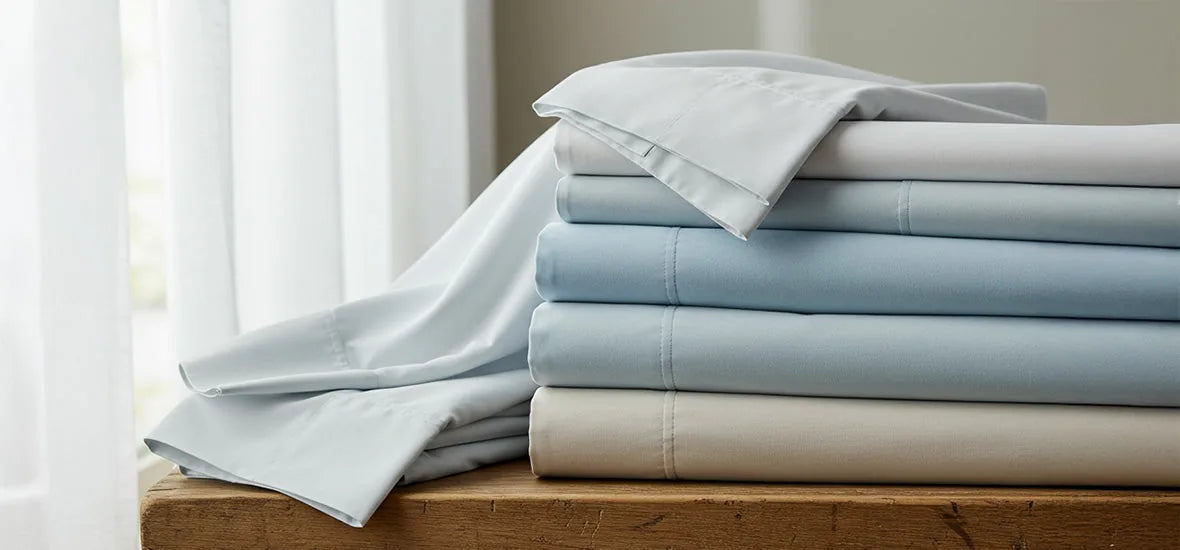
Sateen and percale are the two most popular cotton weaves for bed sheets, and the real difference between sateen and percale comes down to weave structure: sateen is woven with more threads passing over than under, giving it a smooth, silky, lightly glossy surface, while percale uses a simple one-over-one-under weave that produces a crisp, matte finish. Neither weave is automatically "better" - sateen vs percale sheets is really a question of which feel and finish suits how you sleep. If you tend to run warm at night, our guide on Is Percale Good for Hot Sleepers? What to Know Before You Buy digs deeper into that specific question.
Below, we'll break down exactly how each weave is constructed, how they feel and hold up over time, and what else - thread count, staple, ply, and care - actually matters when you're choosing between percale vs sateen for your bed. By the end, you should have a clear answer to whether percale is good for sheets in your climate, and whether sateen sheets are good for the way you sleep.
Quick Answer: Sateen vs Percale Sheets at a Glance
Sateen sheets have a smooth, subtly glossy surface with more drape and softness from the first wash. Percale sheets have a crisp, matte finish that feels light and breathable, and they tend to soften gradually over time. Both are typically made from 100% natural cotton, so the real decision in sateen vs percale sheets isn't about quality - it's about texture preference, seasonal feel, and how the fabric ages with regular washing.
- Choose sateen if you want a smoother, glossier surface and don't mind gentler washing.
- Choose percale if you want a crisp, matte texture that's easy to care for.
- Either weave can be a good pick - the difference between sateen and percale is about feel, not overall quality.
What Is a Sateen Weave?
A sateen weave is a variation of the classic satin weave technique, adapted for cotton yarns. Instead of the simple in-and-out pattern used in most cotton fabrics, a sateen weave floats the weft thread over four or more warp threads before going under one. That extended float is what gives sateen its signature sheen - more thread surface faces up, so the fabric looks subtly lustrous rather than flat. This is the main reason sateen sheets are good at hiding wrinkles and catching light the way they do.
How a Sateen Weave Is Made
Weavers typically build sateen using a four-over, one-under (or higher) pattern. The higher the float count, the smoother and shinier the finished fabric tends to be. This is different from percale, which we'll get to shortly, and it's the reason the difference between sateen and percale is visible the moment you touch either fabric. The looser structure also means a sateen weave needs a slightly tighter thread density to hold together well over years of washing.
Our Cotton Sateen Sheets collection uses this weave with long-staple cotton yarns, which helps the finished sheets drape well and resist pilling better than shorter, coarser fibers would. That combination of long fibers and a floated weave is a big part of why so many shoppers land on sateen when comparing sateen vs percale sheets for a bedroom refresh.
What Sateen Feels Like on Your Skin
Sateen has a noticeably smoother hand-feel right out of the package. It's often described as silky or buttery, with a bit more weight and drape than a crisp weave. Sateen sheets also tend to wrinkle less visibly than crisp weaves, since the longer floats hide creases more effectively. If you like sheets that feel plush and a little indulgent, sateen vs percale sheets usually resolves in sateen's favor for that specific texture. Sateen sheets are a good match, too, for anyone who wants their bed to look neatly made without much effort, since the weave naturally smooths out overnight creasing.
What Is a Percale Weave?
Percale is the plain weave - over-one, under-one, in a tight, balanced grid. There's no float, so light doesn't reflect off the surface the way it does with sateen. The result is a matte, uniform finish that reads as clean and structured rather than glossy. This structural simplicity is exactly why percale is good for sheets that need to hold their shape wash after wash.
How a Percale Weave Is Made
Because the weave alternates every single thread, percale needs a tightly spun, high-quality cotton yarn to avoid feeling stiff. Good percale is woven at a high thread density, which is why whether percale is good for sheets in a given household almost always comes down to the specific cotton and thread count used, not the weave category itself. Our Cotton Percale Sheets collection uses combed, long-staple cotton to keep that plain weave feeling crisp instead of scratchy - one more reason percale is a good choice for shoppers who've had a rough experience with lower-quality plain-weave sheets in the past.
Why Percale Feels Crisp and Light
Percale has a light, papery crispness when new, and it gets softer with every wash without losing its structure. It has a more open, airy texture than sateen, which is why so many people ask whether percale is good for sheets in warmer climates or during summer months. There's no shine, no drape - just a clean, tailored crispness that feels fresh against the skin. For anyone who has struggled with sheets that feel clingy or overly soft, this is usually the moment where percale is good for sheets becomes an easy "yes." It's also worth remembering that is percale good for sheets isn't a one-size-fits-all answer - it depends on how much structure and airiness you personally like against your skin.
Percale vs Sateen: The Difference Between Sateen and Percale in Look, Shine, and Feel
Once you've felt both fabrics side by side, the difference between sateen and percale is easy to spot - and easy to remember. This is usually the point where the sateen vs percale sheets decision starts to feel obvious rather than confusing.
Percale vs Sateen: Shine and Surface Texture
|
Feature |
Sateen |
Percale |
|
Weave type |
Four-over, one-under (or higher float) |
One-over, one-under (plain weave) |
|
Surface |
Smooth, subtly glossy |
Matte, crisp |
|
Drape |
Fluid, soft drape |
Structured, holds shape |
|
Wrinkling |
Hides wrinkles well |
Shows creases, presses out easily |
|
Weight (at same TC) |
Slightly heavier feel |
Lighter, airier feel |
Sateen's extended floats create more surface area facing up, which is what produces that soft sheen. Percale's tight, even crossing pattern is what keeps it matte and structured. Neither construction is more "correct" - they're built for two different textures, and that's really the whole difference between sateen and percale in a single sentence.
Difference Between Sateen and Percale in Everyday Use
The difference between sateen and percale shows up most clearly in daily habits, not just in how the fabric looks on day one.
- Making the bed: Sateen hides overnight wrinkles; percale shows them, then releases them quickly with a light pull or press.
- Layering: Sateen pairs well with heavier duvets thanks to its drape; percale pairs well with lighter blankets thanks to its crispness.
- Longevity: Both weaves last for years in long-staple cotton, but the difference between sateen and percale in aging is that percale tends to soften more noticeably over time, while sateen's sheen stays fairly consistent with gentle care.
- First impression: Sateen feels smoother immediately; percale feels crisp immediately and softens gradually.
Percale vs Sateen in Different Seasons
Weave affects how a fabric feels against your skin in different weather. Percale's plain weave has a more open structure, so it tends to feel lighter and more breathable - a common reason people search for percale vs sateen sheets ahead of summer. Sateen's tighter floats give it a bit more density, so it can feel cozier and more substantial on cooler nights. Our guide, Is Percale Good for Hot Sleepers? What to Know Before You Buy, walks through how to match weave to your typical sleep preference in more detail, including exactly why percale is good for sheets in a warm bedroom.
Are Sateen Sheets Good for Year-Round Use?
Yes - are sateen sheets good for every season is one of the most common questions we hear, and the honest answer is that sateen works well year-round for most sleepers. It has enough structure to feel substantial in winter and enough breathability in a good long-staple cotton to avoid feeling heavy in summer. The exception is sleepers who specifically prefer a crisp, no-cling texture in warm weather - for them, percale is usually the better starting point. In short, are sateen sheets good in every climate? For the vast majority of bedrooms, yes, especially with the right thread count. When people ask us directly, "are sateen sheets good enough for daily use," the honest answer is that long-staple cotton sateen holds up well under regular washing and everyday wear.
4 Additional Considerations for Sateen vs Percale Sheets Shoppers
Weave is the headline decision, but a few other specs shape how your sheets will actually perform once they're on the bed. Getting these right matters just as much as choosing between percale vs sateen in the first place, and these four factors often decide whether sateen vs percale sheets last two years or ten.
1. Thread Count
Thread count measures how many threads are woven into one square inch of fabric, lengthwise and widthwise combined. Higher isn't automatically better - it's a feel and weight indicator. For percale, 200–400TC tends to keep that crisp texture intact, since too high a count can start to feel dense rather than airy. For sateen, 400–600TC is a common sweet spot for balancing softness with durability, though 800TC and 1000TC options exist for shoppers who want a heavier, richer drape. Whichever thread count you land on, pair it with the weave that matches your texture goals - that pairing matters more to comfort than either spec alone, and getting the thread count right is just as important to the sateen vs percale sheets decision as the weave itself.
2. Staple
Staple refers to the length of the individual cotton fiber before it's spun into yarn. Long-staple cotton, like Egyptian cotton with fibers typically 34mm or longer, spins into finer, stronger yarn with fewer loose fiber ends. That means less pilling and a smoother finish in both weaves. Short-staple cotton is more prone to fraying and pilling over time, regardless of whether it's woven into percale or sateen. If you've ever wondered why two sheet sets at the same thread count feel completely different, staple length is usually the answer.
3. Ply
Ply is how many strands of yarn are twisted together before weaving. Single-ply yarns tend to feel finer and drape better. Some multi-ply constructions inflate thread count numbers without actually improving feel, which is worth watching for when you compare listings. For most sateen vs percale sheets shoppers, single-ply, long-staple cotton at a moderate thread count delivers the best balance of softness and longevity. This is one area where sateen vs percale sheets can look identical on a spec sheet but feel completely different in person.
4. Care
How you wash your sheets matters as much as the weave itself. Sateen in particular needs a gentler hand - high heat and harsh detergents dull its sheen faster than a percale weave, which is naturally more forgiving. Our guide, How to Wash Sateen Sheets the Right Way Without Ruining Their Soft Feel, covers wash temperature, detergent choice, and drying tips that keep sateen's signature softness intact for years. Percale, by contrast, tolerates warmer washes and tumble drying with far less risk to its texture.
Bonus Tip: Shop Certified Organic Percale and Sateen Sheets
If sustainability matters to your buying decision, look for GOTS-certified organic cotton in either weave. Organic cotton is grown without synthetic pesticides, and certification confirms the entire supply chain, from farm to finished sheet, meets that standard. Our Natural Organic Cotton Percale Sheet Set is a good example of the crisp percale feel built on a certified organic cotton base - proof that percale is good for sheets even when you're shopping with sustainability as a top priority.
Why California Design Den Gets Sateen vs Percale Sheets Right
Whichever side of sateen vs percale sheets you land on, comfort should come from natural materials, not synthetic shortcuts.
100% Natural Cotton in Every Weave
California Design Den sheets are made from 100% natural cotton - no synthetic microfiber, no plastic fibers, in either the sateen or percale weave. That matters for the sateen vs percale sheets decision because the weave only determines shine and drape; the fiber determines how the fabric breathes, softens, and holds up over hundreds of washes. Our Cotton Sateen Sheets are woven from long-staple cotton specifically to support that soft, glossy finish without sacrificing breathability, and the Signature Egyptian Cotton Sateen Sheet Set uses DNA-verified Nile Delta cotton for an even finer, smoother hand-feel. It's proof that these sheets are good enough to earn independent recognition, not just marketing claims.
Backed by the Good Housekeeping Seal
Our cotton sateen sheet sets, along with our Egyptian and organic cotton percale sheet sets, have earned the Good Housekeeping Seal, backed by a 2-year limited warranty - an independent evaluation that gives you confidence beyond our own claims. Most of our cotton sheets are made in our family-owned facility, which is part of why we can offer this quality without the markup other bedding brands add for the same cotton. If you already own a set and want it to keep performing the way it did on day one, our guide on How to Wash Sateen Sheets the Right Way Without Ruining Their Soft Feel is worth bookmarking. Crafted for calm, priced with honesty - that's the standard we hold both weaves to, regardless of where you land in the sateen vs percale sheets debate.
Buying Guide: Is Percale Good for Sheets, or Should You Choose Sateen?
Choosing between percale vs sateen doesn't have to be complicated once you know what you're prioritizing. Ask yourself a few questions before you shop, and the sateen vs percale sheets decision usually sorts itself out - especially once you know are sateen sheets good for the way you personally sleep.
What to Look for Before You Buy
- Texture preference: Want smooth and lightly glossy? Sateen. Want crisp and matte? Percale.
- Cotton quality: Long-staple, combed, or Egyptian cotton in either weave will outperform short-staple cotton at the same thread count.
- Thread count range: Percale in the 200–400TC range; sateen in the 400–600TC range, unless you specifically want a heavier drape.
- Certifications: OEKO-TEX Standard 100 confirms the fabric was tested for harmful substances; GOTS confirms organic status.
- Care requirements: If you don't want to think about wash temperature, percale is more forgiving. If you're willing to follow gentler care steps, sateen rewards you with a longer-lasting sheen.
- Budget and durability: Both weaves hold up well in long-staple cotton, so the difference between sateen and percale on longevity usually comes down to care, not the weave itself.
If you're drawn to sateen's smoother finish, our Signature Egyptian Cotton Sateen Sheet Set uses long-staple Egyptian cotton woven for drape and softness. If percale's crisp, matte texture is more your style, the Cotton Percale Sheets collection is worth a closer look - a simple way to confirm for yourself that percale is good for sheets in your specific bedroom.
Matching the Weave to Your Sleep Style
- Warm sleepers who like a crisp, no-cling feel → Percale
- Sleepers who want a smoother, cozier surface → Sateen
- Anyone who hates ironing sheets → Sateen, since it hides wrinkles better
- Anyone who wants sheets to feel fresh and structured after every wash → Percale
- Shoppers deciding based on both texture and sustainability → the Natural Organic Cotton Percale Sheet Set or an organic sateen option in the same thread count range
There's no wrong answer in sateen vs percale sheets - only the one that matches how you actually sleep. If you're still unsure, that's normal; most shoppers land on their preference only after trying both at least once.
Frequently Asked Questions About Sateen vs Percale Sheets
Is Egyptian cotton percale or sateen?
Egyptian cotton can be woven either way. It's the fiber quality, not the weave, so you'll find Egyptian cotton in both percale and sateen sheet sets.
Which is smoother, percale or sateen?
Sateen is smoother. Its longer weave floats create a soft, silky surface, while percale stays crisp and matte even after many washes.
What is the best thread count for 100% cotton percale sheets?
Most cotton percale sheets feel best at 200–400 thread count - durable enough to last, light enough to stay crisp and airy.
What sheets wrinkle the least?
Sateen wrinkles the least. Its longer floats hide creases better than percale's tight plain weave, which shows wrinkles more visibly.
What type of sheet feels coolest at night?
Percale feels lightest and most breathable thanks to its open, plain weave - a common pick for anyone who prefers an airy, crisp texture.
Final Verdict: Sateen vs Percale Sheets
There's no universal winner in sateen vs percale sheets - just two well-made cotton weaves built for different textures. Sateen gives you a smoother, subtly glossy surface with excellent wrinkle resistance and a cozy, substantial feel. Percale gives you a crisp, matte finish that stays structured and breathable through the years.
If you're still torn, think about how your current sheets feel and what you wish were different. Wanting more softness and less ironing points toward sateen - a clear sign that sateen sheets are good for your habits. Wanting a lighter, fresher, no-fuss texture points toward percale, and confirms that percale is good for sheets in your household. Either way, look for long-staple 100% natural cotton, a thread count that matches the weave, and proper care - that combination, more than the sateen vs percale sheets debate itself, is what determines how your sheets will feel and hold up over time. Once you understand the difference between sateen and percale, choosing between them comes down to nothing more complicated than personal preference.


