

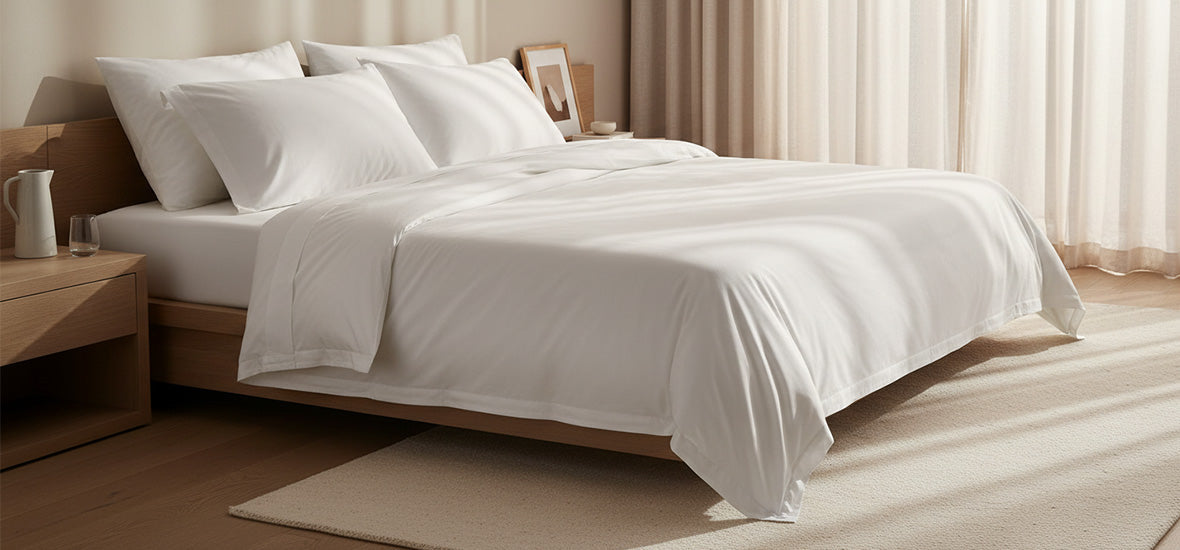
Sateen vs satin sheets comes down to fiber type, weave structure, and how the fabric feels during everyday sleep. Satin is usually made from synthetic fibers like polyester and has a glossy, slippery surface. Sateen is typically made from 100% natural cotton with a smooth, soft finish that feels more balanced on the bed.
Satin sheets
- Smooth, shiny, slippery surface
- Often made from polyester or silk
- More decorative feel
- Lightweight drape
Sateen sheets
- Made from natural cotton
- Soft, smooth, slightly weighted feel
- Less slippery and more stable
- Designed for everyday bedding comfort
Key difference
- Satin focuses more on shine and slickness
- Sateen focuses more on cotton comfort and long-term usability
California Design Den sateen sheets are crafted from 100% natural cotton with a smooth, calm finish designed for everyday comfort without synthetic microfiber.
What Is Satin Fabric?
Satin is not a fiber. It is a weaving style that creates a smooth, glossy surface on one side of the fabric. In satin vs sateen sheets, satin is often associated with a sleek, shiny appearance and a lightweight feel.
Satin fabrics are commonly used in clothing and decorative bedding, but their structure and fiber choices make them different from cotton-based sheet fabrics like sateen.
What Is Satin Made Of?
Satin can be made from several types of fibers, including:
- Polyester (most common in modern satin)
- Nylon
- Silk (traditional, higher-cost version)
Because satin is defined by its weave, not its material, the final feel can vary widely depending on what it is made from. Polyester satin tends to feel smoother and more synthetic, while silk satin is softer and more natural but less commonly used for everyday bedding.
Satin Weave Explained
The satin weave is designed to create a floating surface effect. In this structure:
- Yarn floats over several threads before interlacing
- This reduces friction on one side of the fabric
- It creates a glossy, reflective surface
This is what gives satin its signature shine in satin vs sateen sheets comparisons. However, this same structure can also make satin feel more slippery compared to cotton-based fabrics.
Key Characteristics of Satin Fabric
Satin fabric is known for:
- A shiny, reflective surface on one side
- A smooth, slippery texture
- Lightweight drape
- Less structured feel compared to cotton weaves
- A more decorative or fashion-oriented use
In bedding, satin is often chosen for its visual appeal rather than long-term everyday durability. For daily sleep use, many people compare it with sateen sheets, which are cotton-based and feel more grounded and stable on the bed.
What Is Sateen Fabric?
Sateen is a cotton-based fabric known for its smooth surface and soft, subtle sheen. In the sateen vs satin comparison, sateen is often chosen for bedding because it combines the comfort of natural cotton with a refined, polished feel on the surface.
Unlike satin, which is defined by its weave and often uses synthetic fibers, sateen is rooted in 100% natural cotton, making it a more common choice for everyday sheets.
Sateen Meaning and Definition
Sateen refers to a specific weaving technique used on cotton yarns. The result is a fabric that feels smooth on one side and slightly matte on the other.
In simple terms, sateen means:
- Cotton fabric with a special weave
- A soft, lightly lustrous surface
- A balance between smoothness and structure
This is why sateen sheets vs satin sheets often come down to natural comfort versus glossy appearance.
What Is Sateen Made Of?
Sateen is typically made from:
- 100% natural cotton fibers
Some variations may use cotton blends, but quality sateen bedding is usually pure cotton. This makes it different from satin, which is defined by weave rather than fiber.
Natural cotton sateen bedding examples like the 400 thread count sateen sheets white show how sateen feels in everyday use.
Sateen Weave Explained
The sateen weave uses a pattern where yarns float over multiple threads before interlacing again. In sateen:
- The weave highlights more weft yarns
- Fewer interlacings create a smoother surface
- The result is a soft, slightly lustrous finish
This structure gives sateen its signature feel in sateen vs satin sheets comparisons - smooth, but not slippery.
The weave structure is best understood when you experience real fabric, such as the 600 thread count sateen sheets white which reflect a balanced sateen finish.
Key Characteristics of Sateen Fabric
Sateen fabric is known for:
- Smooth, soft surface with a gentle sheen
- Made from natural cotton fibers
- Slightly heavier drape compared to crisp weaves
- Comfortable, grounded feel on the skin
- A balanced texture that works well for daily bedding
Satin vs Sateen Fabric: Key Differences
When looking at satin vs sateen fabric, the differences are not just visual - they come from how the fabric is built, what it’s made of, and how it behaves over time. Both can look smooth and slightly shiny, but they serve very different purposes, especially in bedding.
Fiber Type and Yarn Length
- Satin: Can be made from polyester, nylon, or silk. The fiber choice varies widely depending on cost and use.
- Sateen: Made from 100% natural cotton in most quality bedding applications.
In satin vs sateen sheets, this is one of the biggest distinctions - synthetic vs natural cotton.
Satin vs Sateen Weave Structure
- Satin weave: Uses a warp-heavy structure (yarns float over others on the surface).
- Sateen weave: Uses more weft yarns, giving cotton a smoother finish.
This structural difference is what creates the glossy look in satin and the soft, balanced sheen in sateen sheets.
Sateen vs Satin Texture Comparison
- Satin feels very smooth, often slippery.
- Sateen feels soft, smooth, and more grounded on the skin.
In everyday sateen vs satin sheets use, sateen tends to feel more stable on the bed.
Satin vs Sateen Shine and Appearance
- Satin has a high-gloss, reflective surface.
- Sateen has a soft, low sheen with a more natural finish.
Satin is more visually dramatic, while sateen looks understated and calm.
Sateen vs Satin Durability Comparison
- Satin (especially synthetic satin) can snag or wear faster depending on fiber quality.
- Sateen cotton is generally more durable for regular bedding use and improves in softness over time.
- Higher thread count sateen tends to feel more substantial, like the 800 thread count sateen sheets white which offer a denser cotton structure.
Satin vs Sateen Breathability
- Satin depends on fiber type - synthetic satin can feel less natural on skin.
- Sateen, being cotton-based, feels more airy and comfortable for everyday sleep.
Satin vs Sateen Wrinkle Resistance
- Satin resists wrinkles due to its slick surface.
- Sateen is moderately resistant but still behaves like cotton, so light wrinkling is natural.
Sateen vs Satin Cost Comparison
- Satin ranges widely in cost depending on whether it is polyester or silk.
- Sateen cotton sheets offer a balanced price-to-value ratio, especially in quality bedding collections.
Sateen vs Satin Sheets: Which Is Better for Sleep?
When comparing sateen vs satin sheets, the real difference shows up in everyday sleep comfort, how the fabric feels through the night, and how well it holds up with regular use. Both can feel smooth, but they deliver very different sleep experiences.
Satin vs Sateen Sheets Feel
- Satin sheets: Feel very smooth and slippery. They tend to glide against the skin and the bed surface.
- Sateen sheets: Feel soft, smooth, and slightly more grounded because they are made from 100% natural cotton.
In most sateen sheets vs satin sheets comparisons, sateen is preferred for a more stable, natural feel during sleep.
Sateen vs Satin Sheets for Comfort
- Satin’s feel depends on its fiber - synthetic satin may feel less natural against the skin.
- Sateen cotton allows air to move through the fabric more naturally, giving a lighter, more comfortable surface feel for year-round use.
Sateen is often chosen by people who prefer sheets that feel less clingy and more relaxed on the body.
Satin vs Sateen Sheets Durability
- Satin sheets, especially synthetic ones, can show wear or snagging over time.
- Sateen cotton sheets are designed for regular washing and tend to become softer with use.
This is why sateen vs satin sheets often leans toward sateen for long-term bedding.
Best Use Cases for Sateen vs Satin Sheets
- Satin sheets: Often used for decorative bedding or short-term aesthetic use due to their glossy look.
- Sateen sheets: Better suited for everyday sleeping because they combine softness, comfort, and cotton durability.
Satin vs Sateen Pillowcase: Which Is Better for Hair?
When comparing satin vs sateen pillowcase, the choice usually comes down to how the fabric interacts with hair and skin during sleep. Both feel smooth, but they behave differently because of their fiber and weave.
Sateen vs Satin for Hair Health
- Satin pillowcases: Often feel very slick, which reduces surface drag.
- Sateen pillowcases: Made from 100% natural cotton, they feel smooth but more balanced and less slippery.
In satin vs sateen for hair, satin is sometimes chosen for its glide, while sateen is preferred by those who want cotton comfort with a soft surface feel.
Satin vs Sateen for Hair and Skin
- Satin can reduce friction due to its slick surface, which may help minimize tangling for some hair types.
- Sateen cotton has a smoother weave compared to regular cotton, helping reduce roughness while still maintaining a natural fabric grip.
In real use, many people prefer sateen because it doesn’t feel overly slippery but still feels gentle against hair.
Best Pillowcase Choice for Hair and Skin
- Satin pillowcases: More decorative feel, very smooth surface.
- Sateen pillowcases: Everyday cotton comfort with a soft finish that feels consistent night after night.
For daily use, sateen pillowcases are often chosen because they combine natural cotton comfort with a refined surface feel, without relying on synthetic fibers.
Cotton Sateen vs Satin: What’s the Difference?
When comparing cotton sateen vs satin, the key difference is simple: one is made from natural cotton, the other is defined by its weave and often uses synthetic fibers. This changes how each fabric feels, ages, and fits into everyday bedding.
Natural vs Synthetic Fibers
- Cotton sateen: Made from 100% natural cotton fibers, giving it a familiar, breathable, and grounded feel.
- Satin: A weave that can be made from polyester, nylon, or silk. Many modern satin fabrics are synthetic.
In cotton sateen vs satin, fiber choice is the biggest divider - natural plant-based cotton vs mixed or synthetic fibers.
Comfort and Skin Feel
- Cotton sateen feels soft, smooth, and slightly weighted in a comforting way.
- Satin feels very slick and glossy, which can feel more slippery on the skin.
Sateen sheets are often preferred for everyday bedding because they feel consistent and natural across all seasons of use.
Which Fabric Is Better for Everyday Use
- Satin: Often chosen for its visual appeal and smooth surface feel.
- Cotton sateen: Better suited for daily sleep because it combines cotton comfort with a smooth, refined finish.
In most sateen vs satin sheets comparisons, cotton sateen is selected for long-term bedding because it feels more stable and natural over time.
Pros and Cons of Sateen Sheets
When looking at sateen vs satin sheets, sateen is often chosen for everyday bedding because it blends softness with the comfort of 100% natural cotton. Like any fabric, it has both advantages and limitations depending on what you expect from your sheets.
Advantages of Sateen Sheets
- Made from natural cotton, giving a soft, familiar feel
- Smooth surface with a gentle, refined sheen
- Feels slightly heavier and more grounded on the bed
- Becomes softer with regular washing over time
- Works well for everyday use across different sleep preferences
In sateen sheets vs satin sheets, sateen is often preferred for its balance of comfort and durability in daily routines.
Disadvantages of Sateen Sheets
- Can feel slightly heavier compared to crisp cotton weaves
- May show light wrinkling since it is still natural cotton
- Not as glossy or visually reflective as satin fabrics
Sateen is not designed for a slick, shiny look - it is designed for comfort that feels consistent night after night.
Pros and Cons of Satin Sheets
When comparing satin vs sateen sheets, satin is usually chosen for its smooth, glossy appearance and very sleek surface feel. However, its performance in everyday bedding depends heavily on the type of fiber used and how you prefer your sheets to feel at night.
Advantages of Satin Sheets
- Very smooth, glossy surface with a reflective finish
- Feels lightweight and slippery on the skin
- Often used for decorative bedding or occasional use setups
- Can feel very soft depending on the fiber used (especially silk satin)
In satin sheets vs sateen sheets, satin is often selected for its visual appeal and ultra-smooth surface texture.
Disadvantages of Satin Sheets
- Synthetic satin (commonly polyester-based) may feel less natural on skin
- Can shift easily on the bed due to slippery texture
- Less structured feel compared to cotton-based fabrics
- May not feel as stable or grounded for everyday sleep use
- Durability varies widely depending on fiber quality
Satin is more about surface shine and glide, while everyday bedding often requires a more balanced fabric feel.
Sateen vs Satin: Similarities
Even though sateen vs satin are often compared for their differences, they do share a few important similarities. Both fabrics are known for their smooth surface feel and their visually refined finish, which is why they are commonly discussed in bedding and textile choices.
Weave Technique and Construction
- Both satin and sateen are created using a special weaving method, not just fiber type.
- Each uses a floating yarn structure that reduces surface friction.
- This weaving style is what gives both fabrics their smooth finish in satin vs sateen sheets comparisons.
The difference lies in direction and material, but the core idea of a floating weave is shared.
Softness and Smooth Texture
- Both fabrics feel smoother than standard plain cotton weaves.
- Satin feels more slick and gliding.
- Sateen feels soft, smooth, and more grounded due to its cotton base.
In sateen sheets vs satin sheets, both aim for comfort, but they deliver it in different ways.
Luxury Look and Feel
- Satin has a glossy, reflective surface.
- Sateen has a soft, subtle sheen that looks more understated.
Both are considered visually refined fabrics, often chosen when people want a smoother, more elevated bedding appearance compared to basic weaves.
Where Each Fabric Is Used
When comparing sateen vs satin, the way each fabric is used is very different. Even though both have a smooth finish, their structure and fiber choices make them suitable for different purposes in bedding, clothing, and home textiles.
Sateen Fabric Uses in Bedding
Sateen is widely used in bedding because it is made from 100% natural cotton and offers a smooth, stable feel for everyday use.
Common uses include:
- Bed sheets and sheet sets
- Pillowcases
- Duvet covers
In sateen sheets vs satin sheets, sateen is more common in daily bedding because it feels consistent, soft, and grounded on the bed over time. Satin Fabric Uses in Clothing and Bedding
Satin is more versatile in appearance and is often used where shine and drape matter more than long-term bedding performance.
Common uses include:
- Evening wear and dresses
- Linings for garments
- Decorative pillow covers and bedding accents
In satin vs sateen sheets, satin is often chosen for visual appeal and smooth surface effect rather than everyday sleep comfort.
Other Common Uses of Satin and Sateen
- Satin: costumes, fashion accessories, and decorative textiles
- Sateen: household bedding, especially cotton sheet collections designed for regular use
Sateen remains more closely tied to everyday sleep environments, while satin is often used where appearance and styling take priority.
How to Choose Between Sateen vs Satin
Choosing between sateen vs satin comes down to how you want your bedding to feel every day, not just how it looks on the bed. Both fabrics feel smooth, but they serve different sleep preferences and lifestyles.
Based on Comfort Preference
- Satin: Feels very smooth, slick, and lightweight against the skin.
- Sateen: Feels soft, smooth, and slightly more grounded because it is made from 100% natural cotton.
In satin vs sateen sheets, sateen is often preferred for a more stable and familiar cotton feel during sleep.
Based on Climate and Temperature
- Satin can feel very light and slippery depending on fiber type.
- Sateen cotton has a more balanced fabric feel that works comfortably across different room conditions.
For sateen sheets vs satin sheets, sateen is usually chosen for everyday use because it feels consistent on the skin.
Based on Budget
- Satin pricing varies widely depending on whether it is polyester or silk.
- Sateen cotton sheets offer a more predictable value range for daily bedding use.
Many people choose sateen when they want a long-term bedding option made from natural fibers.
Based on Maintenance Needs
- Satin may require more careful handling depending on fiber type.
- Sateen cotton is easier to maintain in regular home washing routines and tends to become softer over time.
Care Instructions for Sateen and Satin Fabrics
When comparing sateen vs satin, care is an important factor because both fabrics behave differently after washing. One is cotton-based and built for regular use, while the other depends on its fiber type and weave structure.
Washing and Drying Tips
Sateen (cotton-based):
- Wash in cold or lukewarm water
- Use a gentle cycle for longer fabric life
- Tumble dry on low or line dry when possible
Satin:
- Always check the fiber type first (polyester, silk, or blends)
- Use a delicate wash cycle or hand wash for sensitive fabrics
- Avoid high heat drying to protect surface finish
In satin vs sateen sheets, sateen is generally easier for routine home washing due to its natural cotton structure.
Maintaining Shine and Softness
- Sateen naturally becomes softer with every wash when made from 100% natural cotton
- Satin’s smooth finish depends on fiber quality and needs gentler handling to maintain its surface appearance
- Avoid harsh detergents and strong fabric softeners for both fabrics to preserve texture
Common Myths About Satin and Sateen
When people compare satin vs sateen, a lot of confusion comes from assumptions rather than how the fabrics are actually made and used. Clearing these myths helps make the choice much simpler, especially for bedding.
Is Sateen Just Fake Satin?
No, sateen is not a version of satin.
- Satin is defined by a weave and can use synthetic fibers like polyester or natural fibers like silk.
- Sateen is a cotton-based fabric made using a specific weaving technique.
In satin vs sateen sheets, sateen is not an imitation - it is a completely different cotton fabric designed for everyday bedding comfort.
Is Satin Always Better Than Sateen?
Not necessarily.
Satin is often chosen for its glossy look and very slick surface.
Sateen is preferred for its 100% natural cotton structure and balanced, everyday feel.
In sateen sheets vs satin sheets, “better” depends on use - satin is more visual, while sateen is more practical for daily sleep setups.
Is Sateen as Slippery as Satin?
No.
- Satin has a more slippery surface due to its weave and fiber types.
- Sateen feels smooth but more grounded because it is cotton-based.
This difference is why sateen sheets tend to stay in place better and feel more stable on the bed compared to satin.
California Design Den cotton sateen sheets are made from 100% natural cotton, designed to feel smooth, calm, and consistent without the overly slick surface associated with satin fabrics.
Why Choose California Design Den Sateen?
California Design Den sateen sheets are crafted from 100% natural cotton for a smooth, calm feel designed for everyday comfort. Unlike synthetic satin fabrics, CDD sateen sheets focus on breathable natural cotton, long-term softness, and consistent comfort that gets softer with every wash.
- 100% natural cotton — no synthetic microfiber
- Smooth sateen weave with a soft, balanced finish
- OEKO-TEX tested for harmful substances
- Backed by the Good Housekeeping Seal
- Designed for everyday comfort and long-term durability
California Design Den follows a simple approach: natural cotton first, trusted quality second, and honest value without unnecessary markups.
Final Verdict: Sateen vs Satin Sheets
When it comes to sateen vs satin sheets, the right choice depends on what you want from your bedding every night - surface feel, material, and long-term comfort all matter.
Satin is defined by its weave and is often made using synthetic fibers or silk. It has a very smooth, glossy surface that feels light and slippery. It is often chosen for its visual finish and sleek texture.
Sateen, on the other hand, is made from 100% natural cotton and uses a special weave that gives it a soft, smooth surface with a subtle sheen. It feels more grounded on the bed and is commonly used for everyday bedding because it balances comfort with durability.
In most satin vs sateen sheets comparisons, sateen is the more practical choice for regular sleep use. It feels consistent, becomes softer over time, and fits naturally into daily routines without the overly slippery feel of satin.
California Design Den cotton sateen sheets are crafted from 100% natural cotton, designed for calm, everyday comfort with a smooth finish that feels steady and reliable night after night.
Frequently Asked Questions About Sateen vs Satin
What is the difference between satin and sateen?
The main difference in satin vs sateen is structure and material. Satin is a weave that can use synthetic or silk fibers, while sateen is a cotton-based fabric made using a specific weave that gives a smooth, soft finish.
Is sateen better than satin for sheets?
In sateen sheets vs satin sheets, sateen is often preferred for everyday bedding because it is made from 100% natural cotton and feels more stable and consistent during sleep, while satin is more slippery and decorative in use.
Is satin or sateen better for hair?
Satin feels more slippery, which may reduce surface friction. Sateen feels smooth but more grounded due to its cotton structure, making it a balanced everyday option depending on personal preference.
Is sateen good for bedding?
Yes. Sateen is commonly used in bedding because it is made from natural cotton and offers a smooth, soft surface that feels consistent and comfortable for daily use.
Is satin breathable for sleep?
Satin’s feel depends on its fiber type. Synthetic satin may feel less natural compared to cotton fabrics. Sateen, being cotton-based, offers a more naturally balanced fabric feel for sleep environments.
Which is better: satin vs sateen sheets?
It depends on preference. Satin is chosen for its glossy, sleek surface, while sateen sheets are preferred for their natural cotton comfort, soft finish, and everyday usability in bedding.


