

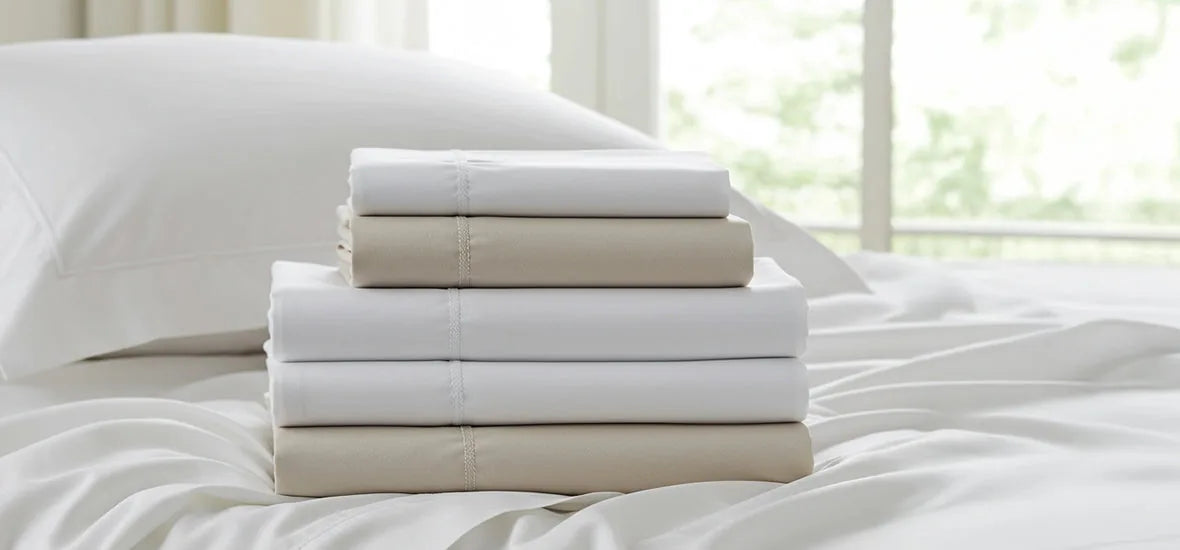
Cotton sheets are breathable, natural, and become softer with regular washing, making them a strong choice for everyday comfort and warm sleepers. Microfiber sheets are synthetic, smoother, wrinkle-resistant, and more budget-friendly, but they tend to feel denser and less breathable than natural cotton.
Microfiber vs Cotton Sheets: Quick Comparison
- Cotton sheets → breathable, natural, softens over time
- Microfiber sheets → synthetic, smooth, lower maintenance
- Cotton percale → crisp and airy feel
- Cotton sateen → smoother, balanced feel
- Microfiber → more heat retention and denser texture
Best Choice Based on Preference
- Choose cotton sheets for breathable everyday comfort
- Choose microfiber sheets for lower-cost bedding
- Choose cotton for natural fibers and long-term use
- Choose microfiber for wrinkle resistance and easy care
For most people, cotton vs microfiber sheets comes down to natural comfort versus synthetic convenience. Cotton remains the preferred option for balanced everyday bedding feel.
Microfiber vs Cotton Sheets: What You Need to Know First
Quick Answer
- Microfiber sheets are made from synthetic plastic fibers. They can feel soft at first but don’t age the same way over time.
- Cotton sheets are made from 100% natural fibers. They feel more consistent, last longer, and become softer with use.
For most people, cotton is the better long-term choice because of its natural feel, durability, and everyday comfort.
Key Differences in Cotton vs Microfiber Sheets
|
Feature |
Microfiber Sheets |
Cotton Sheets |
|
Material |
Synthetic (plastic-based fibers) |
100% natural plant fibers |
|
Feel |
Smooth at first, can change over time |
Soft, consistent, improves with use |
|
Durability |
Can wear out or pill faster |
Long-lasting with proper care |
|
Maintenance |
Easy to wash, quick drying |
Easy care, gets softer over time |
|
Breathability |
Less airy structure |
More open, breathable texture |
|
Environmental Impact |
Sheds microplastics |
No plastic fibers |
Important difference:
Microfiber releases microplastic particles with every wash - into the water and onto your skin. Cotton doesn’t shed plastic. That’s a meaningful difference for both your home and the environment.
Microfiber vs Cotton Sheets: Which Should You Choose?
This choice isn’t just about price or softness at first touch. It’s about how the sheets perform over time.
Choose Microfiber Sheets If
- You’re looking for a low upfront cost
- You prefer a very smooth feel right out of the package
- You want something that dries quickly after washing
That said, it’s important to understand how microfiber behaves with regular use before choosing it.
Choose Cotton Sheets If
- You want a natural fabric with no synthetic fibers
- You prefer a soft feel that improves over time
- You want sheets that hold their quality with repeated washing
- You care about long-term comfort and consistency
For example, 300 thread count Egyptian cotton sheets blue striped offer a clean, structured feel for everyday use, while 400 thread count Egyptian cotton sheets sky blue feel slightly denser and smoother.
Best Choice in Microfiber vs Cotton Sheets
For most people, cotton sheets are the better choice.
They offer:
- A more natural feel
- Better long-term durability
- A fabric that gets softer, not weaker, with use
California Design Den sheets are made from 100% natural cotton - no synthetic microfiber, no plastic fibers. It’s a simple difference that shows up in how the fabric feels over time.

What Are Microfiber Sheets Made Of?
Microfiber sheets are made from synthetic fibers, typically polyester or a blend of polyester and nylon. These fibers are extremely fine - much thinner than a human hair - which is what gives microfiber its smooth, lightweight feel.
Unlike natural fabrics, microfiber is not plant-based. It’s produced from plastic polymers that are processed into fine threads and woven into fabric.
Understanding Microfiber Material
Microfiber is designed to be tightly woven. This creates a surface that feels soft at first touch and resists wrinkling.
Because of this structure, microfiber sheets:
- Feel smooth right out of the package
- Dry quickly after washing
- Require minimal ironing or upkeep
However, this same tight weave also means the fabric has a more closed structure compared to natural cotton. Over time, that can affect how the sheets feel with regular use.
There’s also an important factor to consider:
Microfiber is made from plastic fibers. Every wash cycle releases microplastic particles into the water - and onto your skin. Natural cotton doesn’t shed plastic. That’s a meaningful difference for your bedroom and the environment.
Pros of Microfiber Sheets
- Smooth surface feel initially
- Lightweight and easy to handle
- Dries quickly after washing
- Typically lower upfront cost
These qualities make microfiber appealing at first, especially for short-term use.
Cons of Microfiber Sheets
- Made from synthetic plastic fibers
- Can feel less consistent over time
- More prone to pilling with repeated washing
- Doesn’t offer the same natural feel as cotton
- Releases microplastics during washing
While microfiber can seem convenient, it doesn’t offer the same long-term experience as natural fabrics.
What Are Cotton Sheets and Why Are They Popular?
Cotton sheets are made from 100% natural plant fibers, which is why they’re widely preferred for everyday bedding.
They offer a balance of softness, durability, and consistency that holds up over time. Unlike synthetic fabrics, cotton becomes softer with each wash rather than wearing down quickly.
Types of Cotton Used in Sheets
Not all cotton sheets feel the same. The difference comes from both the fiber quality and the weave.
Common types include:
- Egyptian cotton – known for longer fibers and a smoother finish
- Percale weave – crisp, clean texture
- Sateen weave – smoother, slightly denser feel
For example:
- An Egyptian cotton percale sheet set offers a structured, clean feel
- A 400 thread count Egyptian cotton sheet set sky blue feels smoother and more substantial
Pros of Cotton Sheets
- Made from natural fibers (no plastic)
- Soft feel that improves over time
- Durable with regular use
- Available in different weaves for different preferences
- Consistent performance over time
Cotton is also easier to rely on long-term because it doesn’t lose its core feel with repeated washing.
Cons of Cotton Sheets
- May wrinkle more than synthetic fabrics
- Can take slightly longer to dry
- Higher-quality cotton can cost more upfront
These trade-offs are often balanced by how the fabric performs over time.
Difference Between Microfiber and Cotton Sheets Explained
At a surface level, microfiber and cotton sheets can both feel soft. But the difference becomes clear once you look at how they’re made, how they age, and how they feel after repeated use.
One is synthetic. The other is natural.
That difference affects everything - from durability to everyday comfort.
Difference Between Microfiber and Cotton Sheets
|
Feature |
Microfiber Sheets |
Cotton Sheets |
|
Material |
Synthetic plastic fibers (polyester/nylon) |
100% natural cotton fibers |
|
Feel (Initial) |
Smooth right away |
Soft, slightly structured |
|
Feel Over Time |
Can change, may pill |
Becomes softer with use |
|
Fabric Structure |
Tightly woven, closed feel |
More open, airy texture |
|
Durability |
Can wear out faster |
Long-lasting with proper care |
|
Maintenance |
Quick to wash and dry |
Easy care, improves with washing |
|
Environmental Impact |
Releases microplastics |
No plastic fibers |
The most important distinction comes down to what the fabric is made of.
Microfiber is created from plastic-based fibers. With regular washing, it releases microplastic particles into water and onto your skin.
Cotton is plant-based. It doesn’t shed plastic and maintains a more consistent feel over time.
When you compare the two over months of use - not just the first few nights - the difference becomes more noticeable.
Cotton holds its structure, softens gradually, and stays consistent.
Microfiber may feel smooth at first, but that feel can change with repeated washing.
Microfiber vs Cotton Sheets: Comfort, Feel and Breathability
Comfort is where the difference between microfiber and cotton becomes more noticeable.
At first touch, both can feel soft. But over time, how they sit on your skin, how they move, and how they hold their texture can feel very different.
Softness and Skin Feel Comparison
Microfiber sheets are designed to feel smooth right away. The fibers are extremely fine, which creates a slick, uniform surface.
However, that softness is mostly surface-level. With repeated washing, microfiber can lose some of that initial feel and may start to pill or feel less consistent.
Cotton feels different.
It may start slightly more structured, especially in percale weaves, but it softens naturally with use. Instead of wearing down, it becomes more comfortable over time.
That’s why many people prefer cotton for everyday bedding - it feels more natural against the skin and stays consistent.
For example, an Egyptian cotton percale sheet set offers a clean, crisp texture that gradually becomes softer with each wash, while a 400 thread count Egyptian cotton sheet set sky blue feels smoother and slightly more substantial from the start.
California Design Den sheets are made from 100% natural cotton - no synthetic microfiber, no plastic fibers. It’s a difference you can feel over time.
Are Microfiber Sheets Good for Temperature?
Microfiber has a tightly woven structure, which gives it a smooth finish. But that also means it has a more closed fabric surface.
This can make the sheets feel less airy compared to natural fibers.
Cotton, on the other hand, has a more open weave structure. This creates a lighter, more breathable feel on the skin, especially with percale weaves.
Instead of focusing on performance claims, the key difference is how the fabric feels:
- Microfiber → smoother, more closed feel
- Cotton → lighter, more open texture
Cotton vs Microfiber Sheets for Hot Sleepers
If you prefer sheets that feel lighter and less dense, cotton is usually the better choice.
Its natural fiber structure allows for a more open, airy feel, which many people find more comfortable in warmer conditions.
Microfiber, with its tighter weave, can feel more enclosed by comparison.
They offer a balanced feel without becoming too heavy, making them a reliable option across different conditions.
Durability of Cotton vs Microfiber Sheets
When choosing between microfiber and cotton sheets, long-term performance matters just as much as how they feel at first.
Some fabrics hold their structure over time. Others change with repeated washing. Understanding this difference helps you choose sheets that last.
Which Sheets Last Longer?
Cotton sheets are known for their durability - especially when made from high-quality fibers.
They:
- Maintain their structure over time
- Become softer with regular use
- Hold up well through repeated washing
Microfiber sheets, on the other hand, are made from synthetic fibers. While they may feel smooth initially, they can start to show wear sooner.
Common signs include:
- Pilling (small fiber balls on the surface)
- Loss of smooth texture
- Thinning in high-use areas
Over time, cotton tends to feel more consistent, while microfiber may lose its original finish.
Washing and Care Requirements
Both microfiber and cotton sheets are relatively easy to care for, but they behave differently in the wash.
Microfiber
- Dries quickly
- Lightweight and easy to handle
- Requires less drying time
Cotton
- Slightly longer drying time
- Gets softer with each wash
- Maintains quality with regular care
Cotton sheets may take a bit more time to dry, but they reward regular use by improving in feel rather than wearing down.
Resistance to Shrinking, Fading and Pilling
Microfiber resists shrinking due to its synthetic structure. However, it is more prone to pilling over time.
Cotton may shrink slightly if not cared for properly, especially in high heat. But with proper washing, it maintains its quality well.
In terms of long-term performance:
- Cotton → better resistance to wear and surface damage
- Microfiber → more likely to pill with repeated use
For everyday bedding, cotton offers a more reliable long-term experience. It doesn’t just maintain its quality - it improves with use.
Price Comparison of Microfiber vs Cotton Sheets
Price is often the first thing people look at - but it doesn’t tell the full story. The real difference shows up when you compare upfront cost vs long-term value.
Budget vs Premium Bedding Options
At the entry level, microfiber sheets are usually cheaper.
That’s because they’re made from synthetic fibers, which are less expensive to produce. You’ll often find them at the lowest price points in the market.
Cotton sheets, especially 100% natural cotton, come in a wider range:
- Entry-level cotton (300–400 thread count) → affordable and reliable
- Mid-range cotton (400–600 thread count) → smoother, more structured feel
- Higher thread count cotton → denser and more substantial

Long-Term Value and Investment
This is where the difference becomes clear.
Microfiber may cost less upfront, but:
- It can lose its texture over time
- It’s more prone to pilling
- It doesn’t improve with washing
Cotton, on the other hand:
- Gets softer with use
- Holds its structure longer
- Offers more consistent performance over time
Experts also note that fiber quality matters more than just thread count, especially with natural materials like cotton .
That’s why many people move toward cotton after trying synthetic options - it simply holds up better in daily use.
Bottom Line on Price
- Microfiber → lower upfront cost, shorter-term use
- Cotton → slightly higher upfront cost, better long-term value
If you’re choosing based only on price, microfiber may seem appealing.
But if you’re choosing based on how the sheets feel and perform over time, cotton is the more reliable investment.
Microfiber vs Cotton Sheets: Which Is Better for You?
By this point, the difference is clear: microfiber and cotton don’t just feel different - they behave differently over time.
This section helps you choose based on your actual needs, not just first impressions.
Best Sheets for Hot Sleepers
If you prefer sheets that feel lighter and more open, cotton is the better choice.
Natural cotton fibers create a more airy structure, which many people find more comfortable in warmer conditions. Experts also highlight that cotton’s fiber structure plays a key role in comfort and durability, not just thread count .
Microfiber, with its tighter weave, tends to feel more closed and less airy by comparison.
Best Sheets for Budget Buyers
If your focus is only upfront cost, microfiber is usually cheaper.
But there’s a better alternative within cotton itself:
- Entry-level cotton sheets (300–400 thread count) offer a reliable, natural option without a high price
- They maintain their feel better over time compared to synthetic fabrics

Best Sheets for Long-Term Comfort
Cotton clearly stands out here.
- It gets softer with use
- It maintains consistency over time
- It doesn’t rely on surface softness that fades
Experts consistently point out that fiber quality matters more than just thread count, especially with natural cotton .
Microfiber may feel smooth at first, but it doesn’t improve with washing the way cotton does.
Best Sheets for Low Maintenance
Microfiber is easier in the short term:
- Dries quickly
- Resists wrinkles
But cotton is still practical for everyday use:
- Easy to wash
- Becomes softer over time
- Holds its structure better
If you want something that improves with regular use, cotton is the more reliable choice.
Why California Design Den Cotton Sheets Stand Out
California Design Den sheets are made from 100% natural cotton with no synthetic microfiber or plastic fibers. Unlike microfiber bedding, natural cotton feels lighter, smoother, and more balanced for everyday comfort.
CDD cotton sheets are designed for:
- Breathable everyday comfort
- Softness that improves with washing
- Percale and sateen weave options
- Multiple thread counts from 400–1000 TC
- OEKO-TEX tested fabrics
Eligible California Design Den cotton collections are also backed by the Good Housekeeping Seal and evaluated by the GH Institute.
Instead of synthetic microfiber, CDD focuses on natural cotton bedding designed to feel comfortable, clean, and consistent over long-term use.
Crafted for calm. Priced with honesty.
Final Verdict on Microfiber vs Cotton Sheets
If you’re choosing based on short-term cost, microfiber may seem appealing.
But if you’re choosing based on:
- How the sheets feel over time
- How they hold up with regular use
- What they’re made of
Cotton is the better long-term choice.
A well-made cotton sheet - like a 300 thread count Egyptian cotton sheet set blue striped for a lighter feel or a 400 thread count Egyptian cotton sheet set sky blue for a smoother finish - offers a more balanced and reliable experience.
California Design Den sheets are made from 100% natural cotton - no synthetic microfiber, no plastic fibers. It’s a simple difference that shows up every time you use them.
FAQs on Microfiber vs Cotton Sheets
What are the disadvantages of microfiber sheets?
- Made from synthetic plastic fibers
- More prone to pilling over time
- Can lose their original feel with repeated washing
- Release microplastic particles during washing
Which one is better, cotton or microfiber?
For most people, cotton is the better choice.
It offers:
- A natural feel
- Better durability
- Consistent comfort over time
Is it better to sleep on cotton or microfiber?
Cotton is generally preferred for everyday use because it feels more natural and holds up better with regular washing.
Are microfiber sheets hotter than cotton sheets?
Microfiber has a tighter weave, which creates a more closed fabric feel.
Cotton has a more open structure, which feels lighter and more airy on the skin.
What is the healthiest material for bed sheets?
Natural materials like 100% cotton are widely preferred because they don’t contain synthetic plastic fibers and offer a more consistent feel with long-term use.


