

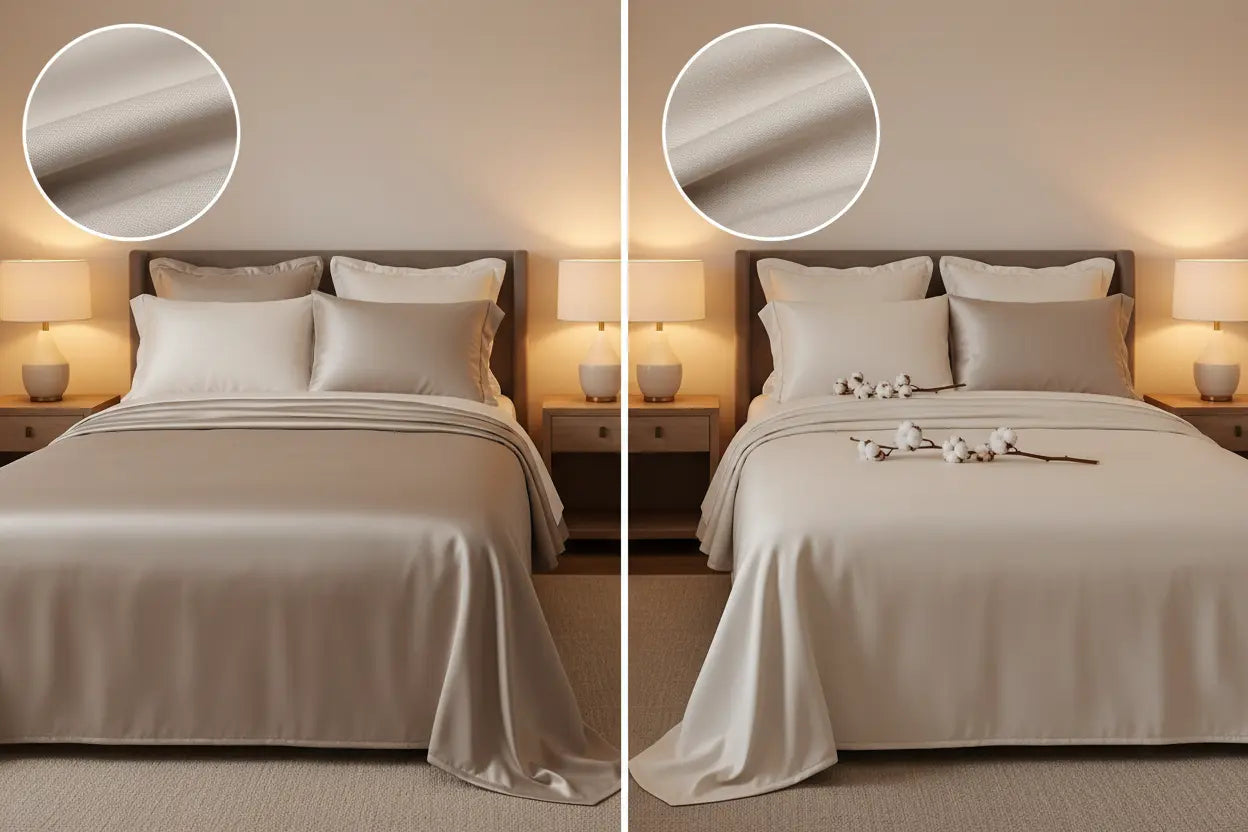
Is Polyester or Cotton Better for Sheets? Here's the Answer
Cotton sheets are better than polyester sheets for most sleepers, mainly because cotton feels softer against skin, breathes better, and holds up over years of washing. Polyester bed sheets cost less upfront and resist wrinkles, but they trap heat and tend to feel warmer against the skin over time. If you're still deciding between Sheet Sets made from cotton or polyester, the short version is this: cotton wins on comfort and longevity, polyester wins on price.
That said, the right answer depends on your budget, how you sleep, and how much upkeep you're willing to put into your bedding. This guide walks through what each fabric actually is, how they perform side by side, and how to pick the right cotton sheets for your bedroom without overpaying or settling for a fabric that won't last.
Quick Answer: Is Polyester or Cotton Better for Sheets?
- For comfort and skin feel: Cotton wins. Natural fibers breathe and soften with every wash.
- For budget: Polyester bed sheets are usually cheaper, at least at first.
- For durability: Cotton bedding, especially at higher thread counts, tends to outlast polyester over years of regular washing.
- For low-maintenance wrinkle resistance: Polyester sheets have the edge, though cotton sateen comes close.
- For overall value: Cotton costs more per set but needs replacing less often, which usually makes it the better long-term buy.

Understanding Polyester Bed Sheets: What They're Made Of
Polyester is a synthetic fiber made from petroleum-based plastic, spun into thread and woven into fabric. It's one of the most common materials in budget bedding because it's cheap to produce and easy to dye in bright, consistent colors. Polyester bed sheets showed up on the market decades ago as a low-cost alternative to cotton, and they've stuck around because they're durable in a specific way - they resist wrinkling and shrinking better than most natural fibers.
What Is Polyester Fabric?
Polyester fabric is made from polyethylene terephthalate (PET), the same plastic used in many bottles and packaging. Manufacturers melt the plastic, extrude it into fine filaments, and weave or knit those filaments into sheet fabric. Because it's a manufactured fiber, mills can control its thickness, sheen, and texture with more precision than they can with cotton, which grows naturally and varies by crop and region.
Types of Polyester Bed Sheets
Not all polyester sheets feel the same. A few common types show up in stores and online:
- Microfiber polyester sheets - extremely fine polyester fibers woven tightly for a smooth, brushed feel. This is the most common budget polyester bed sheets type, and it's usually the least expensive set on a shelf.
- Polyester-cotton blends - a mix, often 50/50 or 60/40, meant to combine cotton's softness with polyester's wrinkle resistance. These blended polyester bed sheets split the difference on both feel and price, without fully matching either fabric on its own.
- Brushed polyester (flannel-style) - napped for extra warmth, popular in colder climates. It traps heat well, which suits a cold bedroom but works against anyone who tends to sleep warm.
- Satin-finish polyester - treated to mimic the sheen of silk or cotton sateen at a lower price point. The shine looks similar in photos, but the hand feel is noticeably different once you touch it.
Retailers rarely spell out which type of polyester bed sheets they're selling, so it helps to check the product description or fabric tag before assuming a set is 100% polyester.
Pros and Cons of Polyester Sheets
Polyester sheets have real advantages, and it's fair to lay them out honestly:
Pros:
- Lower upfront cost than most cotton bedding
- Resists wrinkles without ironing
- Dries quickly after washing
- Holds color well and resists fading
Cons:
- Feels warmer and less breathable against skin, especially through the night
- Doesn't soften meaningfully with age the way cotton does
- Made from synthetic plastic fibers, which shed microplastic particles into wash water with every laundry cycle
- Can feel slick or synthetic to the touch rather than soft
That microplastics point matters more than it might seem. Every wash cycle of a polyester sheet releases tiny plastic fragments into the water supply. Natural cotton doesn't shed plastic the same way, which is one reason many households are shifting back toward natural cotton for bedding.

Understanding Cotton Sheets: Why They're the Bedding Standard
Cotton has been the default bedding fabric for centuries, and it still is for a simple reason: no synthetic material has replicated how it feels against skin. Cotton fibers are hollow and breathable by nature, which is why cotton sheets feel lighter and more breathable than most alternatives, particularly in warm weather.
What Is Cotton, and How Is It Used in Bedding?
Cotton is a natural plant fiber harvested from the cotton boll, then spun into thread and woven into fabric. The quality of cotton fabric depends heavily on fiber length - longer fibers, sometimes called long-staple or extra-long-staple cotton, produce smoother, stronger thread with fewer loose ends that pill or fray. In bedding, cotton shows up as percale (a crisp, matte weave), sateen (a smoother, slightly glossy weave), flannel (brushed for warmth), and jersey (knit, T-shirt-like softness).
Types of Cotton Sheets
Cotton bedding comes in more variety than most shoppers expect:
- Percale weave - tightly woven, crisp, and cool to the touch. A clean, crisp texture that stays sharp wash after wash.
- Sateen-weave cotton - woven with more threads on the surface for a smooth, subtly lustrous finish. Softens quickly.
- Organic cotton bedding - grown without synthetic pesticides, often GOTS certified from field to finished fabric.
- Egyptian cotton bedding - long-staple cotton associated with extra softness and durability.
- Flannel cotton bedding - brushed for a warmer feel, popular for winter bedding.
If you're shopping by size, collections like Twin XL Cotton Sheets make it easier to find cotton bedding sized correctly for dorm beds and taller mattresses, rather than settling for a generic fit. And if a clean, classic look matters to you, a collection like White Cotton Sheet covers the most versatile color choice for almost any bedroom.
Pros and Cons of Cotton Sheets
Cotton isn't perfect either, and a fair comparison means naming both sides:
Pros:
- Feels lighter and more breathable against skin
- Gets softer with every wash instead of breaking down
- No synthetic fibers, no microplastic shedding
- Wide range of weaves and thread counts to match personal preference
- Generally more durable over years of regular washing
Cons:
- Costs more upfront than polyester
- Can wrinkle more easily unless it's a sateen weave or a wrinkle-treated finish
- Requires slightly more care during washing to preserve the weave
- Higher thread count cotton, like a set from the Luxe 800 Cotton Sheet Set collection, carries a higher price point than entry-level options
Difference Between Cotton and Polyester Sheets
The difference between cotton and polyester sheets comes down to fiber origin, and that one distinction shapes almost everything else - feel, breathability, durability, and price.
|
Feature |
Cotton Sheets |
Polyester Bed Sheets |
|
Fiber source |
Natural plant fiber |
Synthetic (petroleum-based plastic) |
|
Feel |
Soft, breathable, improves with washing |
Smooth at first, less breathable over time |
|
Durability |
Strong over years with proper care |
Resists wrinkling but pills and thins faster |
|
Price |
Higher upfront cost |
Lower upfront cost |
|
Environmental impact |
No microplastic shedding |
Sheds microplastic fibers with each wash |
|
Maintenance |
Some wrinkling, softens with wash |
Wrinkle-resistant, dries fast |
Cotton or Polyester Sheets: Which Feels Better on Skin?
This is where most people notice the difference first. Cotton fibers are breathable, so cotton tends to feel lighter and more open against skin - especially useful if you run warm at night. Polyester, being a tightly woven plastic filament, traps more heat close to the body and can feel warmer and slightly stickier, particularly in humid conditions. It isn't about which fabric performs better technically - it's simply a matter of how each fiber feels against skin through the night.
Polyester vs Cotton Sheets: Durability and Price
Polyester vs cotton sheets is really a trade-off between short-term savings and long-term value. Polyester sheets usually cost 30–50% less at the register. But cotton bedding, particularly at higher thread counts, tends to outlast polyester by several wash cycles because natural fiber softens and strengthens with laundering rather than breaking down. Over a two- to three-year ownership period, many shoppers find cotton bedding costs less per year of use, even with the higher sticker price.
Which Sleepers Should Choose Cotton or Polyester Sheets?
Not every household needs the same answer to this question, so it helps to match the fabric to how the bed actually gets used:
- Hot sleepers: Cotton is the better fit, since the fiber stays lighter and more breathable through the night.
- Budget-conscious shoppers furnishing multiple rooms at once: Polyester bed sheets keep upfront costs down, especially for guest rooms used only occasionally.
- Anyone with delicate or easily irritated skin: Natural cotton fiber tends to feel gentler against skin than a synthetic weave - a smoother, more breathable surface night after night.
- Frequent travelers or renters who move often: Polyester sheets pack smaller, dry faster after washing, and shrug off wrinkles from being stuffed in a bag.
- Anyone planning to keep the same sheets for years: Cotton bedding, especially at a higher thread count, tends to reward that kind of long-term ownership.
Common Myths About Polyester and Cotton Sheets
A few misconceptions about polyester vs cotton sheets come up often enough that they're worth addressing directly:
- "All polyester sheets feel cheap." Not always true. Higher-end polyester and polyester-cotton blends can feel smooth and drape well, though they still won't match the breathability of pure cotton.
- "Higher thread count always means better sheets." Thread count is one factor among several - weave type, fiber length, and finishing all shape how a sheet actually feels. A well-made 400TC set can outperform a poorly finished 800TC set.
- "Cotton wrinkles too much to be practical." A sateen weave or a light wrinkle-resistant finish narrows that gap considerably, without giving up the breathability that makes cotton the more comfortable choice for most sleepers.
- "Polyester and microfiber are the same thing." Microfiber is simply an extremely fine polyester fiber - a subtype, not a separate material. Both come from the same petroleum-based source.
So, is polyester or cotton better for sheets once these myths are cleared up? For most sleepers who wash their bedding weekly and keep a set for a few years, cotton still comes out ahead - the myths mostly work in polyester's favor on paper, not in day-to-day use.

Caring for Cotton Sheets and Polyester Sheets: Washing Tips
Care routines differ enough between the two fabrics that mixing up the instructions can shorten the life of either one. A little attention at wash time pays off over years of regular use, no matter which fabric ends up on the bed.
Washing and Drying Dos and Don'ts
- Wash cotton sheets in cool to warm water - hot water speeds up fiber breakdown over time.
- Skip fabric softener on cotton; it coats the fiber and reduces breathability over repeated washes.
- Polyester sheets can handle warm water fine but shouldn't go in high heat dryers, since polyester can hold heat and warp its weave.
- Wash new sheets separately the first few times to catch loose dye or lint.
- Line-dry or use low heat for both fabrics when possible - it extends the life of the weave either way.
How Often You Should Wash Your Sheets
Most bedding guidance points to washing sheets once a week, cotton or polyester. Skin cells, sweat, and household dust build up on the surface regardless of fabric, and neither material is immune to that buildup. Cotton tends to hold up better to frequent washing since the fiber strengthens rather than degrades; polyester sheets can start to pill sooner under weekly wash cycles.
Handling Stains and Odor Between Washes
- Spot-treat stains on cotton fabric quickly - natural fiber absorbs liquid rather than letting it sit on the surface, which can set a stain if it's ignored too long.
- Polyester sheets resist absorbing stains at first, but oils from skin and hair products can build a dull film on the surface over months of use.
- Sun-drying either fabric outdoors for a short stretch helps with lingering odor, though cotton fabric tolerates more direct sun exposure without weakening the weave.
- Avoid storing damp sheets of either fabric in a closed drawer - trapped moisture causes mildew smell regardless of fiber type.
Why California Design Den Cotton Sheets Are the Right Choice
Comfort is the reason most people switch from polyester to cotton sheets in the first place, and that switch is easier when the cotton itself is verified rather than assumed. California Design Den works exclusively in 100% natural cotton - no synthetic fibers, no microfiber, no plastic-based blends anywhere in the sheet sets.
100% Natural Cotton, No Synthetic Fibers
The Natural Organic Cotton Sateen Sheet Set in Cream is a clear example of what separates verified cotton sheets from a generic listing. It's made from certified organic cotton in a sateen weave, GOTS certified from the field through the finished textile, with a smooth, flowing hand that softens with regular washing rather than pilling or breaking down the way polyester eventually does. Most of our cotton sheets are made in our family-owned facility, and the brand has built its reputation on that direct oversight rather than outsourcing quality control.
A Set for Every Bedroom
Beyond the Cream option, the collection includes the Luxe 800 Cotton Sheet Set for anyone who wants a heavier, more substantial cotton sheet feel, and the Natural Organic Cotton Sateen Sheet Set in Grey for a softer, muted neutral in the same organic weave. Over 8 million sleepers have chosen California Design Den for their cotton bedding, and every set ships in plastic-free, reusable packaging - a small detail, but one that lines up with choosing cotton over polyester in the first place.

Choosing the Right Cotton Sheets for Your Needs
Once you've settled on cotton over polyester, the next decision is which cotton sheets actually fit your bedroom, your sleep habits, and your budget.
Questions to Ask Before You Buy
Work through these before adding anything to your cart:
- What thread count fits how you like sheets to feel - lighter and crisper, or denser and more substantial?
- Do you prefer a percale or sateen weave?
- What mattress size and depth do you need? A deep pocket mattress needs sheets rated for that depth, which is why checking a Sheet Sets listing's pocket depth matters before you buy.
- Is the cotton certified - organic, OEKO-TEX tested, or otherwise verified?
- How much wrinkle tolerance do you have day to day?
- Are you comparing a true cotton set against a polyester-cotton blend labeled loosely as "cotton"? Fabric tags settle this faster than marketing copy does.
- Does the retailer list the exact fiber percentage, or does the listing just say "cotton feel" without confirming it?
Skipping these questions is usually how shoppers end up disappointed a few months in - a set that looked identical to cotton bedding in photos turns out to be a polyester blend once it arrives. A quick fabric-tag check at the time of purchase saves a return shipment later.
Picking the Right Size and Color
Size and color feel like small decisions, but they affect satisfaction more than most buyers expect. A Twin XL Cotton Sheets set is built specifically for longer mattresses, so it fits better than a standard twin stretched to cover the extra length. For color, lighter shades like a White Cotton Sheet set show less lint and read cleaner in most bedrooms, though they do show stains more visibly than darker tones - something worth weighing based on how the bed gets used. If a softer, muted tone appeals to you more, an option like the Natural Organic Cotton Sateen Sheet Set in Grey offers that without giving up organic cotton credentials. And if you want a warmer neutral instead, the Natural Organic Cotton Sateen Sheet Set in Cream covers that tone in the same organic cotton sateen weave.
Frequently Asked Questions About Cotton Sheets and Polyester Sheets
Is it better to have cotton or polyester sheets?
Cotton feels softer and more breathable; polyester costs less and resists wrinkles. Cotton wins for comfort and long-term value.
Should I avoid polyester bedding?
Not entirely, but cotton breathes better and doesn't shed microplastics. If comfort and lower environmental impact matter to you, cotton is worth the extra cost.
What to avoid when buying bed sheets?
Avoid vague fiber labels, unusually low prices for high thread counts, and blends that hide the real cotton percentage in fine print.
What color sheets should I avoid?
Avoid very light colors if stains are a concern, since they show marks faster than darker or patterned cotton fabric does.
What happens if you don't wash your bed sheets every week?
Sweat, oil, and dust build up on both fabrics without weekly washing, shortening the comfortable lifespan either way.
Final Verdict: Is Polyester or Cotton Better for Sheets?
Is polyester or cotton better for sheets, once you weigh comfort, durability, and cost together? Cotton comes out ahead for most sleepers - it breathes better, softens instead of breaking down, and avoids the microplastic shedding that comes with any polyester or polyester-blend fabric. Polyester bed sheets aren't a bad choice if budget is the only factor - they're wrinkle-resistant and dry fast - but they don't hold up the same way over years of regular use.
If you're ready to make the switch, start with a verified cotton sheet set rather than a generic listing. Check the fiber content, the weave, and the certification before you buy, and expect the better set to earn its higher price back in comfort and lifespan. Between the two fabrics, cotton sheets remain the more dependable long-term investment for a bedroom that gets used every single night.


