

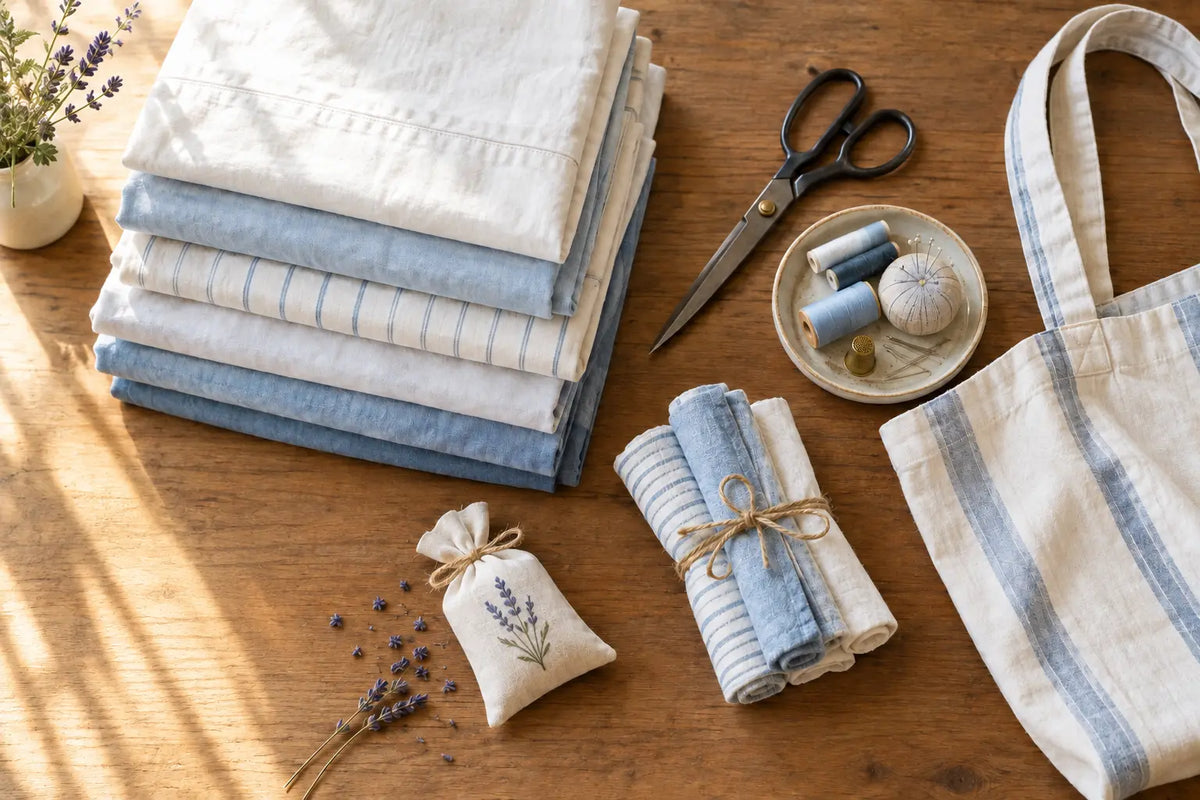
What to do with old sheets: 15 practical ideas to reuse them
What to do with old sheets comes down to three choices: reuse them, recycle them, or replace them. If you're ready to swap in a new set, our full range of Sheet sets makes it easy to match your next choice to how you actually sleep. A worn set of sheets still has plenty of life left as rags, pet bedding, craft fabric, or a donation - it just isn't fit for your bed anymore.
Most cotton sheets stay comfortable for a good while with regular washing before the fabric starts thinning, pilling, or tearing at the seams. Once that happens, patching them up rarely helps, but sending them straight to the trash wastes fabric that still works well for dozens of household jobs. Cotton, in particular, holds up as rags, padding, and craft material long after it's too thin for a comfortable night's sleep.
It helps to think of an old sheet less as trash and more as a piece of fabric that's simply retired from bedroom duty. The same qualities that made it comfortable to sleep on - a soft hand, a tight weave, absorbency - are exactly what make it useful for cleaning, crafting, and covering things around the house. A little sorting up front saves you from tossing fabric that still has plenty left to give.
This guide walks through why replacing old sheets matters, how to tell when a set is actually done, fifteen practical ways to reuse the ones you're retiring, and what to look for in your next set once you're ready to buy.

Quick answer: what to do with old sheets
If you only have a minute, here's the short version: check the fabric first, then match the condition to the right next step.
A quick preview of the reuse ideas ahead
- Cut them into cleaning rags or reusable produce bags
- Turn them into cloth napkins, drop cloths, or plant covers
- Sew them into pet bedding, dog toys, or a pillow fort
- Repurpose the fabric for curtains, quilts, or a fabric headboard
- Donate wearable sets to a shelter, thrift store, or textile bank
The full list of all 15 ideas, numbered, is in the "What to do with old sheets: 15 practical ideas" section below.
When old sheets are ready to be replaced, not reused
- The fabric feels thin enough to see light through it
- There are holes, rips, or permanent stains that won't lift
- The fitted sheet elastic has gone slack and won't hold the corners
- The set has started to smell musty even after washing
Old sheets: reuse, recycle, or replace at a glance
Not every old sheet needs the same treatment. Some are perfect for a craft project, others belong in a donation bin, and a few are only fit for the recycling bin or the trash. Use this table to figure out where your set lands before you choose the next step.
|
Condition |
Best option |
Where it goes |
Effort |
|
Lightly worn, still soft |
Reuse at home |
Cleaning rags, pet bedding, craft fabric |
Low |
|
Stained but intact |
Donate or upcycle |
Local donation bin, animal shelter, craft swap |
Low to medium |
|
Thin, torn, or pilled |
Recycle as textile waste |
Textile recycling drop-off or curbside program, if offered |
Low |
|
Moldy or torn beyond repair |
Replace |
A new sheet set for your bed |
N/A |
How to read this comparison
The table above sorts old sheets by condition, not by how old the set is. A five-year-old sheet that's still soft and intact can be reused for years as a rag or craft fabric. A one-year-old set that's already pilling from a hot dryer might be closer to done than you'd expect, since heat and rough tumbling wear down fibers faster than time on its own does.
- Soft and intact - reuse it
- Stained but sturdy - donate or upcycle it
- Thin or torn - recycle the fabric
- Falling apart - it's time to replace it
Which option fits your old sheets
Run a hand over the fabric and hold it up to the light. If you can see through it easily or it tears when you tug gently, reuse and donation are off the table and recycling or replacement are the better fit.
A quick way to sort a full closet of retired sheets is to make three piles as you go: one for anything soft and intact, one for anything stained but still sturdy, and one for anything thin, torn, or musty.
The first pile becomes rags, craft fabric, or pet bedding. The second goes to a donation bin or a shelter that accepts bedding.
The third is best sent to a textile recycler rather than reused, since worn-out elastic and thinning fabric won't hold up to another round of washing or sewing.
Sorting this way up front takes a few extra minutes, but it saves a second trip back through the pile once you're halfway into a project and realize the fabric you grabbed is too far gone.

Why and when to replace old sheets
Fresh sheets do more than look nice on a made bed. The fabric still needs to hold up to nightly wear, regular washing, and the weight of a body moving around all night, and there's a point where even careful laundering can't undo that wear.
Why it's important to replace old sheets
Cotton fibers wear down with every wash and every night of use. As the fibers thin, the fabric loses its smooth hand feel and starts to pill, sag, or tear at the seams. A worn set can't hold its shape the way it did when it was new, and no amount of careful washing brings that back.
Sticking with the right wash routine in the first place, covered in our guide on how to wash bed sheets, helps sheets last as long as the fabric allows, but even the best care routine can't stop cotton fibers from eventually breaking down.
A fresh set also does a better job of holding its shape on the mattress. New elastic keeps a fitted sheet snug at the corners, and a tighter weave resists the kind of sagging and bunching that makes a bed look unmade five minutes after you've made it. Once the elastic loosens or the weave loosens up, no amount of tucking fixes it for long.
None of this means a sheet has to be perfect to stay in rotation. A set with a small stain tucked under the mattress or a slightly faded color from the sun can still make it through plenty more nights.
The real turning point is when the fabric itself starts to give out - thinning, tearing, or losing its shape - rather than when it simply stops looking brand new.
Signs it's time to replace old sheets
- The fabric has gone noticeably thinner or see-through
- Pilling covers most of the surface, even after washing
- The seams or hems have started to fray or separate
- The fitted sheet no longer stays put on the mattress corners
- The set has permanent stains, holes, or a persistent odor
- The sheets came out of the dryer smaller than they used to be
That last sign is worth a second look before you retire a set. Shrinkage sometimes points to a hot dryer rather than worn-out fabric, so rule that out before you decide the set is truly done.
What to do with old sheets: 15 practical ideas
Once you've decided a set is done for the bed, there are still plenty of practical ways to give it a second life before it hits the trash. Here are all 15 ideas, numbered so they're easy to scan and count.
Household and cleaning uses
Old cotton sheets make some of the best cleaning rags in the house, since the fabric is soft, absorbent, and won't scratch surfaces the way paper towels can. A single flat sheet, cut into pieces, covers most of these everyday jobs at once.
1. Reusable bags: sew simple bags for produce, laundry, or general storage
2. Drop cloth for painting: use a large piece to protect floors and furniture during messy DIY projects
3. Plant protection: fold and layer strips as frost protection over garden plants on a cold night
4. Homemade heating pad: fill a fabric pouch with rice and sew it shut for a simple heating pad
Sewing and craft projects
If you're comfortable with a needle and thread, old sheets are a low-cost source of fabric for a range of home projects. A queen or king flat sheet holds enough yardage for several smaller projects at once, so one retired set can stretch across a handful of weekends.
5. Cloth napkins: stitch cloth napkins to replace paper ones at the table
6. Quilts or pillow covers: piece scraps together into a simple quilt or throw pillow covers
7. Curtains or a shower curtain: sew one from a large, still-soft sheet
8. Fabric headboard: cover a plain headboard frame in fabric for a quick refresh
9. Upcycled fashion pieces: turn the material into tote bags, aprons, or other small accessories
Percale sheets tend to work best for napkins and curtains, since the tighter, matte weave holds a crease well and doesn't sag over time. A softer, more worn sateen sheet drapes nicely for a headboard cover or a quilt backing, where a little extra give actually helps the fabric mold to the shape underneath.
Either way, wash and dry the fabric fully before cutting into it, since most cotton finishes a little more shrinking after the first few years of washes.
Fun for kids and pets
Worn sheets are perfect for projects that don't need to look polished, which makes them a good fit for kids and pets.
10. Blanket fort: drape sheets over furniture or chairs to build an easy fort
11. DIY dog toys: sew or knot scraps into simple tug toys for the dog
12. Pet bed or car seat liner: layer a folded sheet inside a pet bed or crate for extra padding, or use one to line a car seat for muddy paws
Furniture, moving, and giving back
Fabric that's too worn for a bed still has plenty of protective and charitable uses left in it.
13. Reupholster small furniture: use a soft, intact sheet to cover a small stool, ottoman, or chair seat
14. Moving and storage padding: wrap furniture, cushions, or fragile items in a spare sheet during a move or in storage to keep dust and scratches off
15. Donate them: give sets that are still in good shape to a shelter, thrift store, or local textile donation bin, since many organizations accept clean bedding even if it's no longer new

New sheets to replace old ones: California Design Den options
Once a set has reached the end of the line, choosing a replacement comes down to how you like your sheets to feel. Two options worth a look are a warm cotton flannel for cold sleepers and a crisp organic cotton percale for anyone who prefers a lighter hand. Neither one is a step up from the other - they're built for different rooms, different seasons, and different preferences.
Warm, brushed comfort: cotton flannel
The Premium Portuguese Cotton Flannel Sheet Set in woodland motifs is made from thick, heavyweight 100% cotton flannel that's triple-brushed for a soft, velvety hand feel. It has a warm feel without added bulk, so it works well for cold sleepers who still want a set that's easy to move around in at night. It's 100% natural cotton - no petroleum-based synthetic fibers, no polyester, no microfiber - and it's crafted in Portugal, with a centuries-long tradition of European textile craftsmanship.
On a cold night, this is the kind of fabric that feels warm the moment you slide under it, without the extra bulk of a heavy blanket stacked on top.
Tested for harmful substances to OEKO-TEX STANDARD 100.
Backed by the Good Housekeeping Seal.
- Triple-brushed cotton flannel with a plush, tailored finish
- Warm without bulk, suited to cold-weather bedrooms
- 100% natural cotton - no petroleum-based synthetic fibers, no polyester, no microfiber
- Envelope-closure pillowcases that keep pillows neatly tucked in
Crisp, breathable comfort: organic cotton percale
For a lighter feel, the Natural Organic Cotton Percale Sheet Set in navy blue is made from certified organic cotton in a percale weave, which gives it a crisp, matte finish and an airy, breathable hand. It's lightweight - and not thick - so it suits anyone who runs warm at night or simply prefers sheets with less weight on the bed.
It's part of our Organic Cotton Sheets, and the set itself is a Global Organic Textile Standard (GOTS) Certified Organic Cotton Percale Sheet Set.
Backed by the Good Housekeeping Seal.
- Certified organic cotton, percale weave, with a crisp, matte finish
- Lightweight and airy - not thick - with a breathable hand
- 100% natural cotton - no petroleum-based synthetic fibers, no polyester, no microfiber
- Envelope-closure pillowcases and all-around elastic on the fitted sheet for a secure fit
Most of our cotton sheets are made in our family-owned facility, which is part of why the price makes sense without cutting into the quality of the cotton itself.

How to choose new sheets once you replace the old ones
Picking a replacement is less about finding a single best option and more about matching the fabric to how you actually sleep and what you're willing to care for. A few honest questions about your own habits go a lot further than chasing a trend.
Match the fabric to how you sleep
If you run warm or like a matte, airy feel, organic cotton percale is worth a look from our Organic Cotton Sheets. If you sleep cold or want a plusher, cozier hand, the Premium Portuguese Cotton Flannel Sheet Set in woodland motifs fits that need instead. Neither is a step up from the other - they're built for different sleepers, and the right pick depends on your room and your own preference.
- Warm sleeper or prefer a crisp feel - organic cotton percale
- Cold sleeper or prefer a plush feel - cotton flannel
Check the certifications and care instructions
Look for a certification that actually says something about the fabric. The Natural Organic Cotton Percale Sheet Set in navy blue is a GOTS Certified Organic Cotton Percale Sheet Set, while the flannel set above is tested for harmful substances to OEKO-TEX STANDARD 100. Both point to a set that's been checked before it reaches your bed, rather than a label that's just there for show.
Read the care label the same way you'd check a certification. A tag that calls for a warm wash, a low tumble dry and no bleach is telling you exactly what the fabric needs to last, and skipping that advice in the name of convenience is usually what shortens a set's life in the first place.
Once your new set arrives, start with the care label. Water temperature, detergent amount, and dryer heat all shape how the fabric feels over time, and getting them right from the first wash sets the routine for every wash after.
If a set ever comes out of the dryer tighter than expected somewhere down the line, our guide on how to unshrink cotton sheets walks through what to try before assuming the damage is permanent.
- Confirm the certification matches the fabric type, organic or standard cotton
- Follow the care label from the first wash to protect the fabric long term
- Keep the new set out of high heat in the dryer to slow down wear
- Wash new sheets before the first use to soften the fabric and set the color
Treating a new set well from day one is the easiest way to make sure you're not shopping for another one in just a year or two.
Frequently Asked Questions about what to do with old sheets
How to dispose of old bedsheets?
Reuse soft sets at home, donate ones still in good shape, or drop worn cotton at a textile recycling bin instead of sending it to the trash.
Can I throw old sheets in the garbage?
You can, but many cotton sheets can be reused, donated, or recycled first, which keeps usable fabric out of the landfill.
Are old sheets good for anything?
Yes. Worn cotton sheets work well as cleaning rags, pet bedding, craft fabric, drop cloths, and donation items for local shelters.
What is the best thing to do with old sheets?
What to do with old sheets depends on condition: reuse soft ones at home, donate wearable sets, and recycle whatever's left.
How often should you throw away your bedsheets?
Replace sheets once the fabric thins, tears, or pills heavily, which for many cotton sets happens after a few years of regular use.
Reuse, recycle, replace: the bottom line on old sheets
The takeaway
There's rarely a single right answer here. A soft, intact set still has plenty of use left as a rag, a craft project, or a donation. A thin, torn, or pilled set is better off in a textile recycling bin. And a set that's stained, moldy, or falling apart at the seams is simply done, no matter how it started out.
Ready to replace your old sheets
Reuse what you can, recycle what you can't, and when it's finally time to replace what's left, our Sheet sets collection has a fit for cold sleepers, warm sleepers, and everyone in between.
- Soft and intact - reuse it around the house
- Stained but sturdy - donate it or upcycle it
- Thin, torn, or falling apart - recycle it or replace it


