

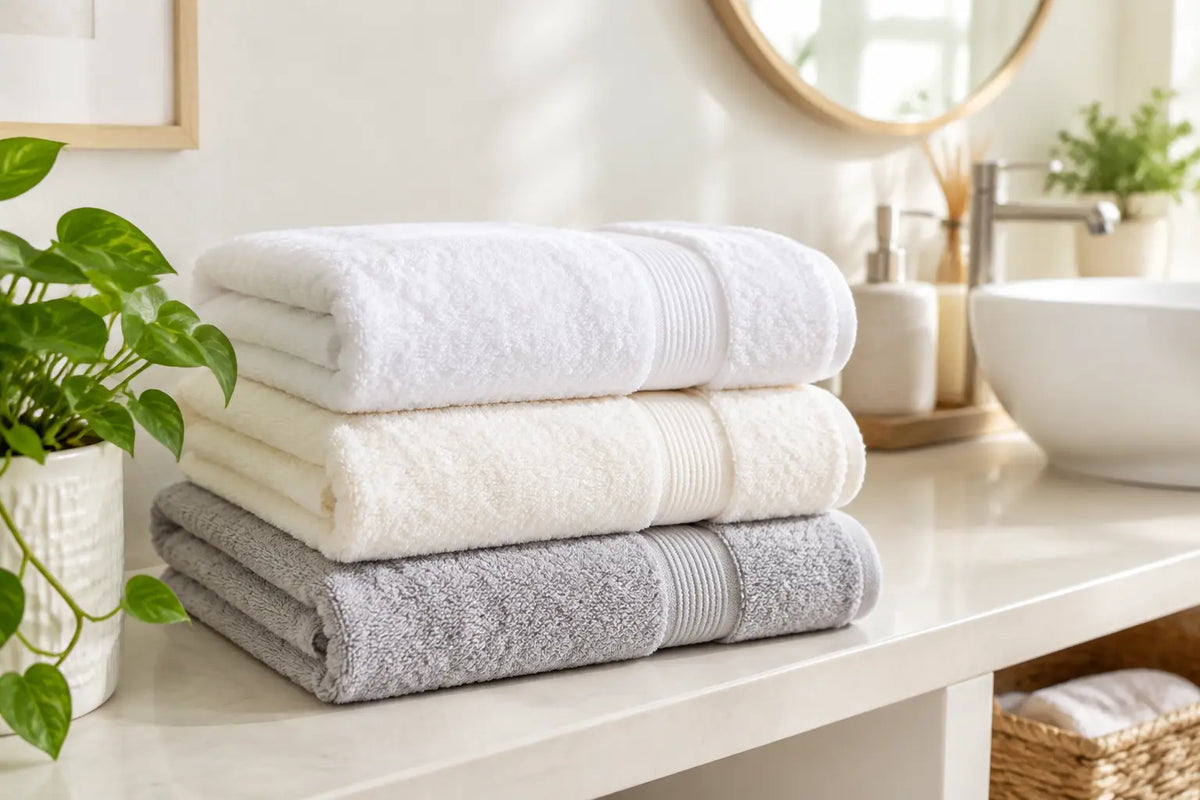
How often should you change your bath towel? Signs to watch
How often should you change your bath towel? As a general rule, replace it every 1 to 2 years with regular use, and wash it every 3 to 4 uses in between. A towel breaks down gradually - the loops flatten, absorbency drops, and the fabric starts to smell faster even right after washing. Once those changes show up, its lifespan is winding down and it's time to move on.
This guide covers a full laundry schedule, the clearest replacement signs, how household size and climate shift that timeline, and how to make a new set last longer. If you're also unsure about the day-to-day rhythm, the how often to wash bath towels guide breaks down the exact cycle by fabric weight and household size.
We've gone through more worn-out towel drawers than we can count, and it's always the same story: most people either overthink this - washing after every single use - or ignore it completely, holding onto the same towel for weeks at a stretch. Neither habit does the fabric any favors, and both make the eventual replacement call harder to judge, since a towel that's over washed and one that's under washed can end up looking and feeling the same by the time it wears out. Knowing what to look for, rather than guessing by feel alone, is what makes the decision easier.

|
Situation |
Wash every |
Replace every |
|
Standard household use |
3–4 uses |
1–2 years |
|
Shared or high-traffic bathroom |
2–3 uses |
1–2 years, often sooner |
|
Humid climate |
2–3 uses |
1–2 years, often sooner |
|
Dry climate with good airflow |
Up to 4 uses |
1–2 years |
What is a good laundry schedule?
A good laundry schedule tracks actual use, not a fixed calendar date. Most households get the most out of a towel by washing it every three to four uses and replacing the full set every one to two years. That rhythm keeps the fabric clean without overwashing it, since frequent hot washes and high heat drying wear down fibers faster than everyday use on its own would.
How often to wash bath towels
How often to replace bath towels comes down to three things: how often the towel is used, how it's dried between uses, and the quality of the cotton it's made from. A towel that's hung to dry fully and washed on a normal cycle holds up far longer than one left balled up on a hook or damp on the floor.
Rotation matters too. Two or three towels per person, used in turn, spreads out wear and stretches the replacement timeline noticeably compared with relying on one towel day after day. Some people change towels the moment they feel less fluffy, while others wait until the fabric visibly wears out - either approach works as long as it's consistent.
How household size and climate change the timeline
A humid bathroom slows drying time, which means towels sit wet longer between uses - that extra dampness speeds up odor and fiber breakdown. Households in humid climates often need to wash every two to three uses instead of three to four, while good airflow - a cracked door or window, towels spaced apart on the bar instead of stacked - helps stretch that timeline back out. In winter or a drier climate, the same towel can often stretch closer to four uses before it needs a wash, since it dries fully between each one.
How often to replace bath towels also changes with household size. A single person with two or three towels in rotation puts far less wear on any one towel than a family of four sharing the same two. A few practical adjustments help stretch the timeline in busier households:
- Assign each person their own towel, or color-code by person, so wear is distributed and it's obvious whose towel needs replacing first.
- Keep a few spare hand towels and washcloths in circulation so bath towels aren't doing double duty for quick hand-drying.
- In shared bathrooms, wash more frequently - every 2–3 uses rather than 3–4 - since more hands and more moisture speed up wear.
- For guest rooms or rental properties, rotate in a fresh set between stays rather than reusing the same towels back-to-back.
Larger households and rental properties also tend to replace full sets sooner simply because more towels are in circulation at once. Bigger households naturally shorten a towel's lifespan, which is exactly why the change schedule should flex with headcount rather than sticking to a fixed date. Planning replacement by household size, not just by calendar date, keeps the whole rotation in better shape - and saves both money and the hassle of replacing an entire set all at once when everything wears out on the same timeline.

The washing rules
Getting the wash routine right matters as much as the replacement timeline itself.
Getting the wash cycle right
- Wash in warm water, not hot, to protect the fibers over time.
- Skip fabric softener - it coats the fibers and reduces absorbency over time.
- Use a moderate amount of detergent; too much leaves residue that traps odor.
- Wash towels separately from heavily soiled loads to avoid transferring lint and debris.
None of this requires a special routine or extra products - it's mostly about not overdoing the parts of the wash cycle that feel like they should help but actually work against the fabric over time. Doing this consistently is one of the simplest ways to extend a towel's lifespan without changing anything else about your routine.
Drying habits that extend towel life
Tumble dry on low-to-medium heat, or line dry when possible, and avoid packing the dryer too full. Give towels a full shake before hanging or folding - this helps the loops stay lofted instead of matting down.
Drying method plays into lifespan more than the wash cycle itself. A towel that's shaken out and hung with airflow around it will outlast one that's folded damp and left in a pile, since trapped moisture - not the number of days between washes - is what actually speeds up odor and fiber breakdown.
The right fabric matters
How long do towels last really comes down to what they're made of. Understanding a towel's expected lifespan up front makes it easier to plan when a change is actually due, instead of guessing based on how tired the towel looks on any given day.
How long do towels last?
A thin, low-density towel made from blended fibers flattens and thins out within a year of regular use. A dense, tightly looped 100% cotton towel, washed and dried properly, can comfortably last two to three years before it needs replacing.
Fiber quality affects more than softness. Denser terry loops hold their shape wash after wash, while thinner weaves lose loft quickly and start to feel more like a rag than a towel. That's the difference between a towel that still performs well at year two and one that's already thin and scratchy by month eight. Longer-staple cotton fibers, spun tightly and looped densely, resist pilling and stay absorbent longer than shorter, loosely spun fibers.
Organic cotton that's grown and processed without harsh chemical treatments tends to hold its structure a little longer too, since the fiber itself isn't weakened during processing the way heavily treated fibers can be.
This is also why bulk buyers - vacation rental hosts, gyms, and larger households - plan replacement cycles around fabric weight rather than guessing. The Best Towels for Vacation Rentals: Complete Bulk Buying Guide covers how to plan those larger replacement cycles without overspending or underbuying.
What GSM tells you about weight
Some brands list towel weight in GSM, or grams per square meter, while others describe it by feel - lightweight or plush. Either way, weight is a trade-off, not a ranking. A plusher towel feels thicker in the hand but takes longer to dry, so it spends more time sitting damp between uses. A lighter towel dries faster day to day, which helps keep odor from building up between wash days. The right weight depends on your bathroom's airflow and whether you'd rather have quick drying or extra heft.
Towel replacement signs: when is it time to let go?
Every towel gives warning signs before it stops working well, essentially announcing that its lifespan is close to done. Catching them early means you're not stuck drying off with something that barely absorbs water anymore, and it means you're replacing towels on your own schedule instead of waiting for one to fall apart.
Signs you should replace your bath towel now
- It doesn't absorb like it used to. If you're still damp after drying off, the fibers have flattened past the point of no return, and no amount of washing brings that loft back.
- It smells musty right out of the wash. A towel that smells sour even after a full wash cycle has residue and buildup worked into the fibers that a normal cycle can no longer clear.
- The edges are fraying or the hem is unraveling. This usually starts at the corners first, since that's where a towel takes the most handling.
- It feels thin, stiff, or scratchy. Cotton loops flatten with age and heavy use, losing the texture that made the towel feel good in the first place.
- It's visibly faded, stained, or discolored in a way that washing no longer fixes, even with a full cycle and a fresh detergent.
If two or more of these apply, it's a clear sign that it's time to change it rather than keep stretching its use. Waiting past this point mostly means living with a towel that no longer does its job well, no matter how often it goes through the wash.
How many towels you should own
Owning enough towels to rotate through matters just as much as washing on schedule. A single towel used every day, washed and dried in a hurry, wears out far faster than one that gets a break between uses.
Two to three towels per person is a comfortable baseline for daily rotation. One or two spares per household cover guests or an extra load between regular wash days. A dedicated gym or beach towel keeps chlorine, sweat, and sand off the everyday bathroom set. Households in humid climates or with more frequent showers often do better with a towel or two extra in the rotation, and a separate small guest set means the everyday rotation doesn't get thrown off when company stays over.
A rotation that's slightly larger than the bare minimum costs very little upfront and saves money over time, since every towel in the set ages more slowly.
How California Design Den towels support a better routine
Once you know the signs, choosing a replacement is the easier part. A towel touches your skin multiple times a day, so the fabric it's made from matters as much as how often you swap it out.
California Design Den's Soft Turkish Organic Cotton Bath Towel Bundle in White is lightweight with a soft touch - not thick - and highly absorbent, made from 100% organic cotton with a dense, looped terry construction. It's built for daily use and quick drying rather than ultra-plush weight, so each towel dries fully between uses and nothing goes musty between wash days - the same everyday comfort this guide has been pointing toward all along.
No chemical softeners, no optical brighteners, and no formaldehyde-based finishes go into the fabric. The cotton is a Global Organic Textile Standard (GOTS) Certified Organic Cotton Towel Set.
California Design Den is a family-owned cotton bedding brand, and the towel bundles follow the same honest-cotton-at-a-fair-price approach as the rest of the range. Choosing a well-made set now is also what keeps the next change further out on the calendar, which is really the point of this whole guide.
Look and feel
Each set has a clean, structured finish with a refined dobby hem - consistent in color and well-made where it counts. The texture is soft from first use and only improves with washing, with a purposeful weight that feels substantial without ever staying damp too long. It's the kind of everyday detail that's easy to overlook when a set is new and very easy to notice once an older, thinning set is sitting next to it.
What's included in each set
It comes as a complete 6-piece set: 2 bath towels (27"W × 54"L), 2 hand towels (16"W × 30"L), and 2 washcloths (12"W × 12"L), so nothing in the rotation is mismatched. Machine wash warm, tumble dry low - no special detergents or delicate cycle needed.
Fabric care 101: how to make bath towels last longer?
Picking a replacement isn't just about color. A few habits during and after the wash - and a few details during the buying decision - determine how long the next set actually lasts, so changing towels later becomes far less of a guessing game.
Everyday care tips
- Wash before first use to open up the fibers and improve absorbency from day one.
- Hang to dry between uses rather than leaving a damp towel folded or balled up on a hook.
- Rotate your full set so no single towel gets used every single day, which spreads out wear evenly.
- Keep detergent and softener light - buildup on the fibers is one of the fastest ways to shorten a towel's usable life.
- Trim loose threads instead of pulling them - pulling a loose loop can unravel a whole row of terry loops.
- Track the purchase date - knowing roughly how long your towels have been in rotation makes it easier to judge lifespan and plan the next change.
- Learn to store them properly - the how to roll a bath towel guide shows a simple fold that saves shelf space and keeps towels from creasing between uses.
What to check when you replace a set
- Fiber type - 100% cotton, ideally organic, holds up better over repeated washing than blended or synthetic fibers.
- Construction density - a dense, looped terry weave outlasts a thin, flat one and keeps its absorbency longer.
- Set size - a 6-piece set like the Soft Turkish Organic Cotton Bath Towel Bundle in Cashmere covers towels, hand towels, and washcloths in one replacement round, so nothing in the rotation is mismatched.
- Certifications - a GOTS Certified Organic Cotton Towel Set, like California Design Den's, confirms the cotton is independently verified.
- Color practicality - lighter shades show stains sooner, while a deeper tone like the Soft Turkish Organic Cotton Bath Towel Bundle in Dark Gray hides everyday wear a little longer between washes.
- Hem and edge finish - a structured, well-sewn hem holds up to repeated washing better than a raw or lightly finished edge.
- Expected lifespan - check if the brand states an expected lifespan range, since that helps set realistic change expectations.
If you're replacing towels for a larger household, guesthouse, or short-term rental, buying in sets rather than one at a time keeps the whole rotation consistent - the same bulk buying guide referenced earlier walks through that math in more detail.
Frequently asked questions about how often should you change your bath towel?
Is it okay to use the same bath towel for a week?
Not ideally. Wash towels every 3–4 uses instead of a full week to keep them fresh between replacements.
Do towels hold bacteria even after being washed?
Some can if left damp or underwashed. Full drying and a regular wash cycle keep buildup from settling in.
What is the average lifespan of a bath towel?
Most bath towels last 1–2 years with regular use. A dense, well-cared-for cotton towel can stretch closer to 3.
How often should I buy a new bath towel?
Plan to replace bath towels every 1–2 years, sooner once softness and absorbency clearly fade.
Should I throw away old towels?
Not always - a worn towel often still works well as a cleaning rag once you change it out, instead of going straight to landfill.
Conclusion: ready for a fresh start?
The two-habit rule
How often should you change your bath towel comes down to two habits: washing every 3–4 uses and replacing the full set every 1–2 years, sooner if the fabric is already thinning, fraying, or holding onto odor. Fabric quality changes that timeline more than any fixed rule does - a dense, well-made organic cotton towel simply holds up longer than a thin one, and a household's size and climate shift the schedule further in either direction.
Making the switch
If your current set is showing its age, a well-made replacement is a small change that makes every wash day feel new. California Design Den's organic cotton towel bundles are built to hold their softness and absorbency through years of regular use - one more reason a fresh start doesn't have to mean starting over from scratch. Think of it less as a fixed date and more as tracking lifespan and swapping in a fresh change when the signs show up. A good rotation, a reasonable wash schedule, and a set that's actually built to last will always beat guessing month to month. Once you're in the habit, knowing when to change a towel takes no real thought at all.


