

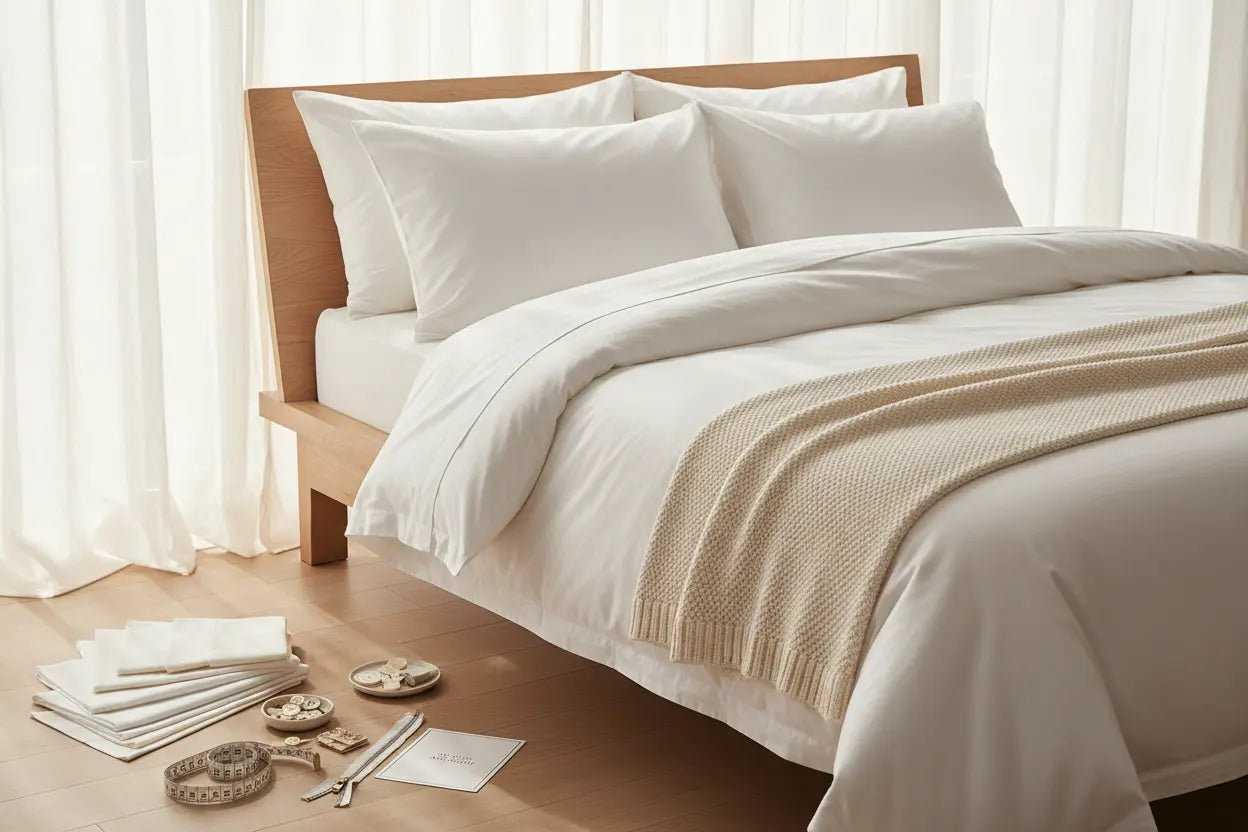
How to Choose a Duvet Cover: A Simple Buying Guide
To choose a duvet cover, start with your duvet's exact size, then pick a fabric based on how you want it to feel - crisp cotton percale, smooth cotton sateen, or textured linen. From there, closure style, color, and care needs narrow the list fast. If you're new to the term, the What Is the Point of a Duvet Cover? guide is a good place to see why so many bedrooms use one instead of a plain comforter.
It isn't just a design choice - it's the layer that protects the insert underneath and makes it washable without hauling the whole thing to the dry cleaner. Getting the fit and fabric right up front means fewer bunched corners, less shifting at night, and a bed that actually looks the way you pictured it when you ordered it.
Below, we'll walk through what one actually is, how it's different from a duvet or comforter, the main fabric and fill types you'll come across, sizing, and a step-by-step way to choose one that fits your bed and your taste. We'll also cover a few things that trip people up the first time they shop for one.

Quick Answer: How to Choose a Duvet Cover
- Match the size to your duvet - Twin, Full/Queen, or King/California King - not your mattress size directly.
- Pick a fabric by feel, not hype - cotton percale for a crisp finish, cotton sateen for a smooth, silky drape, linen for texture that relaxes with each wash.
- Check the closure - buttons, zippers, or ties keep the insert from sliding around inside the shell.
- Confirm the corner ties - most covers include 4 to 8 interior ties that anchor the duvet in place.
- Buy for your care routine - cotton machine-washes easily; linen usually needs a gentler cycle and more patience.
- Look for real credentials - certifications like OEKO-TEX or a recognized seal tell you more than marketing copy does.
We'll go through each of these in more depth below, but if you remember one thing about how to choose a duvet cover, remember this: fit first, feel second, everything else after.
What Is a Duvet Cover?
So, what is a duvet cover? It's a fabric shell that slides over a duvet the way a pillowcase slides over a pillow. It closes at one end with buttons, a zipper, or ties, and it's what you actually see and touch on the bed - the insert itself stays hidden inside, doing its job out of sight.
What Is a Duvet, Exactly?
A duvet is the soft, quilted insert filled with down, a down alternative, or wool. On its own, it's plain - usually white or cream, with no pattern and a plain woven shell. It's designed to sit inside a cover, not be used bare on a bed. If you're wondering what actually goes inside one, the What Goes Inside a Duvet Cover? guide breaks fill types down in more detail.
How Do Duvet Covers Work?
So how do duvet covers work, mechanically? Think of a large, flat pillowcase with a closure across one short edge. You open the closure, reach inside, grab the two top corners of the insert from within the shell, and pull the fabric down and over it - a method sometimes called the "burrito roll" once you get the hang of it. Once the insert is fully inside:
- The closure seals the open end.
- Interior ties, usually at the four corners and sometimes eight, loop through tabs on the duvet so it can't slide or bunch toward one side.
- The whole thing goes on the bed as one finished layer, ready for a top sheet or throw if you use one.
Because the insert stays inside a removable shell, you can machine-wash the outer layer often while the duvet only needs a proper wash occasionally. That's the entire mechanism, and it's also the reason this setup has become the standard way to dress a bed in most households - far more practical than laundering an entire filled comforter every time.
Duvet vs. Comforter: What's the Real Difference?
The core difference is structure. A comforter is one finished piece - filling and fabric sewn together, ready to use straight on the bed. A duvet is just the filled insert, meant to go inside a separate shell. The removable cover, by contrast, is sold on its own, sized to match a specific insert.
People often use "duvet" and "comforter" interchangeably in casual conversation, but on a product page, the distinction matters:
- A comforter is a single unit - you wash the whole thing when it needs cleaning, seams and all.
- A duvet is an insert - you wash its shell regularly and the insert itself only a handful of times a year.
- A removable cover is sold separately from both, sized to match a specific duvet rather than a mattress.
Duvets vs. Comforters: Pros and Cons
|
Duvet + Removable Shell |
Comforter |
|
|
Washing |
Shell machine-washes easily; insert washed occasionally |
Entire piece needs washing, which takes longer and wears fabric faster |
|
Style changes |
Swap the shell for a new look in minutes |
Requires buying a whole new comforter |
|
Bulk for washing |
Lightweight and washes fast |
Full comforter can be bulky for home machines |
|
Upfront cost |
Often two separate purchases |
One purchase, but less flexible long-term |
Neither option is objectively better - it depends on whether you want the flexibility of swapping fabric or the simplicity of one finished piece. If you like changing your bedroom's look by season or mood, a duvet and a rotating set of shells usually wins out over a single comforter.

Types of Duvets: Down, Down Alternative, and Wool
Before you shop for a shell, it helps to know what's going inside it, since fill type affects weight, warmth, and how the finished bed drapes once it's made.
- Down - Clusters from goose or duck, prized for a light, airy loft. Down compresses less over time but needs a tightly woven shell that can contain fine fill without it working through the seams.
- Down alternative - A synthetic-fill insert designed for people who prefer to skip animal-derived materials, or want an easier-care option that machine-washes without special handling. It's typically a bit heavier per unit of warmth than down.
- Wool - A natural fill known for holding its shape well and responding to seasonal changes in the room. Wool duvets are less common on shelves today but are worth a look if you want a fill type with a long history predating the popularity of down.
Whichever fill you land on, the cover you choose should suit that insert's weight and finish. A heavier wool duvet under a lightweight cotton percale shell feels noticeably different from the same wool duvet under a denser sateen one. For a closer look at how fill type interacts with weight and warmth, What Goes Inside a Duvet Cover? covers the specifics.
Cotton vs. Linen: Choosing the Right Fabric
Once the insert is settled, fabric is where most of the actual decision-making happens. Two materials dominate this category: cotton and linen, and each has a distinct feel on the hand and on the bed.
Cotton Options
Cotton is the most common fabric for this category, and for good reason - it's breathable, holds color well, and machine-washes without much fuss. Within cotton, weave matters:
- Percale - A tight, one-over-one-under weave that produces a crisp, matte finish. Feels similar to a fresh page.
- Sateen - A weave with more threads running on the surface, giving it a smooth handfeel and a soft natural sheen.
If you want to compare percale and sateen side by side before deciding, the Duvet Cover Sets collection lists both weaves together with the same sizing options, so you're comparing feel rather than guessing from photos alone.
Thread count is a selection tool here, not a quality ranking - a higher number doesn't automatically mean a better one, just a different one. A 400TC cotton sateen shell has a soft, smooth, and airy feel suited to everyday use, while higher thread counts trade some of that lightness for a denser, more substantial drape. Neither is "better." It comes down to how you like your bedding to feel against your skin.
Linen Options
Linen is woven from flax fibers and has a textured, relaxed look from the very first wash. It wrinkles more visibly than cotton, softens with repeated washing, and tends to feel a bit warmer in the hand than a lightweight cotton percale. Linen is a strong pick if you like a lived-in, textured aesthetic rather than something smooth and crisp.
Everyday Use and Care
Once you've picked a fabric, day-to-day use is simple: wash the shell on the same schedule as your sheets, roughly every one to two weeks, tuck the corner ties before making the bed, and rotate in a second shell if you want a different look without buying an entirely new duvet. This is really the heart of picking something for long-term use - choose a fabric you're comfortable washing often, since the outer layer takes on far more wear than the insert inside it.
Sizing and Measurements for Your Duvet
Sizing follows the duvet's dimensions, not the mattress size directly - a common point of confusion for first-time buyers. Below is a general size guide, though it's worth checking the specific product's measurements before you order:
|
Duvet Size |
Approximate Shell Dimensions |
Fits |
|
Twin/Twin XL |
68" x 90" |
Single beds, dorm rooms |
|
Full/Queen |
88" x 88" to 90" x 92" |
Full and Queen mattresses |
|
King/California King |
104" x 90" to 106" x 92" |
King and Cal King mattresses |
A cover that's too small will fight you every time you make the bed - corners slip out, and the insert bunches toward the center. One that's too large drapes past the mattress edges more than most people want. If you like extra drape over the sides, size up slightly; if you prefer a tailored look, stick to the exact match for your duvet. The Everyday Ease 400 Sateen Cotton Duvet Cover in White, for example, is offered across Twin through King, so you can match it exactly to the insert you already own rather than guessing.

How to Choose a Duvet Cover: A Step-by-Step Buying Guide
With the basics covered, here's a practical sequence for picking one that actually works for your bed and your routine.
Step 1 - Confirm your duvet's size first. Measure the insert you already own, or check its tag. Buying a cover before you know this number is the single most common mistake people make.
Step 2 - Decide how you want it to feel. Crisp and matte (percale), smooth and lustrous (sateen), or textured and relaxed (linen). This one choice shapes nearly everything else about the finished bed.
Step 3 - Check the closure and interior ties. Button closures are easy to open and close by hand; zippers close flatter but can catch fabric if you're not careful. Interior ties matter more than most first-time buyers realize - without them, the insert migrates toward one corner within a few nights of sleep.
Step 4 - Match color and pattern to your room, not just the listing photo. Lighting changes how a shade like silver or white reads in person. If you want to browse a broad range side by side, the Duvet Cover Sets collection groups options by color and size so comparisons are easier before you commit.
Step 5 - Weigh your care routine honestly. If you're not going to hand-wash or dry-clean anything, rule out fabrics that require it. Cotton is generally the most forgiving choice for frequent machine washing on a normal cycle.
Step 6 - Look past marketing language for real credentials. A seal from an independent testing organization, a specific thread count, or a named fiber type tells you more than words like "premium" on their own. Browsing a curated set like Best Duvet Covers can help you compare options that have already been vetted rather than starting from a blank search.
Step 7 - Check the return window before you buy. Fabric feel is hard to judge from a photo alone, and a shade that looks crisp white on screen can read slightly warmer or cooler in your room's actual light. A reasonable return policy takes the risk out of trying a new fabric or color for the first time.
A Few Things to Avoid
A handful of mistakes show up again and again in first-time purchases:
- Buying by mattress size instead of duvet size - the two numbers don't always line up.
- Skipping the interior ties, which is the fastest way to end up with a bunched, lopsided duvet by morning.
- Choosing a color purely from a thumbnail photo. If you're weighing a cooler tone, the Everyday Ease 400 Sateen Cotton Duvet Cover in Silver product page has swatch-accurate photos shot in natural light, which is a more reliable gut check than a listing thumbnail.
- Assuming "premium" or "luxury" in a product description means anything on its own, without a certification, thread count, or fiber type backing it up.
Skipping these four mistakes solves most of the buyer's remorse people report after their first purchase in this category.
Which duvet and cover should you ultimately buy? The honest answer is: whichever combination matches your insert's actual measurements, feels the way you want against your skin, and fits into your laundry routine without becoming a chore. Everything past that point is preference, not a right or wrong answer.
Why California Design Den Gets Cotton Bedding Right
Making your bed shouldn't be the hardest part of your evening. A cover that feels smooth against your skin and slides into place without a fight makes the whole routine easier, which is exactly what we designed for with our cotton sateen collection.
California Design Den's cotton bedding is made from 100% natural cotton - no synthetic microfiber, no plastic fibers woven in. The Everyday Ease 400 Sateen Cotton Duvet Cover in White is woven from single-ply, long-staple cotton yarns at a 400 thread count, giving it a lightweight handfeel with a silky-soft glide that holds up wash after wash. Its natural sheen and clean drape are a big part of why it keeps showing up on independent best-of lists.
Trust Signals Worth Knowing
Our cotton sateen line has earned the Good Housekeeping Seal, and the Everyday Ease collection separately won the Good Housekeeping Best Bedding Award. Those are two different distinctions worth keeping straight - the Seal reflects ongoing product evaluation, while the Award is an editorial pick from GH's own editors. The Everyday Ease 400 Sateen Cotton line has also been named among the year's top picks by The Spruce and Architectural Digest, and it carries the OEKO-TEX Standard 100 label, meaning it's been independently tested for harmful substances.
Choosing Between Our Colorways
For a lighter, brighter room, the bright white colorway keeps things clean and neutral. For a softer, cooler tone that still reads neutral against most wood finishes, the Everyday Ease 400 Sateen Cotton Duvet Cover in Silver works well against both warm and cool tones. Both versions use knife edges, four interior corner ties, and a visible-button closure, so the insert stays put night after night instead of sliding toward one corner.
As a family-owned company, we've kept our pricing tied to owning our own production - which is the whole idea behind our "Luxury Without the Luxury Markup" approach. A Good Housekeeping–backed cotton cover doesn't need an inflated price tag to be well made.
Frequently Asked Questions About How to Choose a Duvet Cover
Is a duvet the same as a comforter cover?
Not quite. A comforter is one finished piece with no separate shell. The removable layer that goes over a duvet insert is sold on its own - comforters generally skip a cover altogether.
What is the point of a duvet cover?
It protects the insert, makes washing far easier, and lets you change your bedroom's look without buying an entirely new duvet.
Can I put my comforter in a duvet cover?
Some comforters fit inside an oversized shell if the dimensions line up, but covers are built for duvet inserts, so check measurements and interior ties carefully before trying it.
Why do people get duvets instead of comforters?
Mainly flexibility - a duvet and cover combo lets you wash the shell often and change styles without replacing the whole piece, unlike a single-unit comforter.
Do I need to wash my comforter if I have a duvet cover?
Comforters don't typically use a cover at all. If you're really asking about a duvet: the shell gets washed regularly, while the insert itself only needs washing every few months.
Final Thoughts: How to Choose a Duvet Cover That Fits Your Bed
Choosing one comes down to four things, roughly in order: the right size for your insert, a fabric that feels the way you want it to, a closure and tie system that actually holds everything in place, and a care routine you'll realistically keep up with. Color, pattern, and brand are personal preference layered on top of those fundamentals - real, but secondary.
If you're ready to shop, start with your duvet's exact measurements, decide whether you want the crisp finish of percale, the smooth drape of sateen, or the textured look of linen, and browse the Best Duvet Covers collection with that shortlist in hand. A little measuring up front saves you from the most common mistake in this category: buying a cover before you actually know what it needs to fit.
There's no single right answer for everyone - a warm-climate bedroom and a drafty one will lead you toward different fabrics, and a minimalist room calls for a different color than a busy, pattern-heavy one. What matters is going in with your duvet's measurements in hand and a clear sense of how you want the fabric to feel, rather than choosing on price or packaging alone.


