

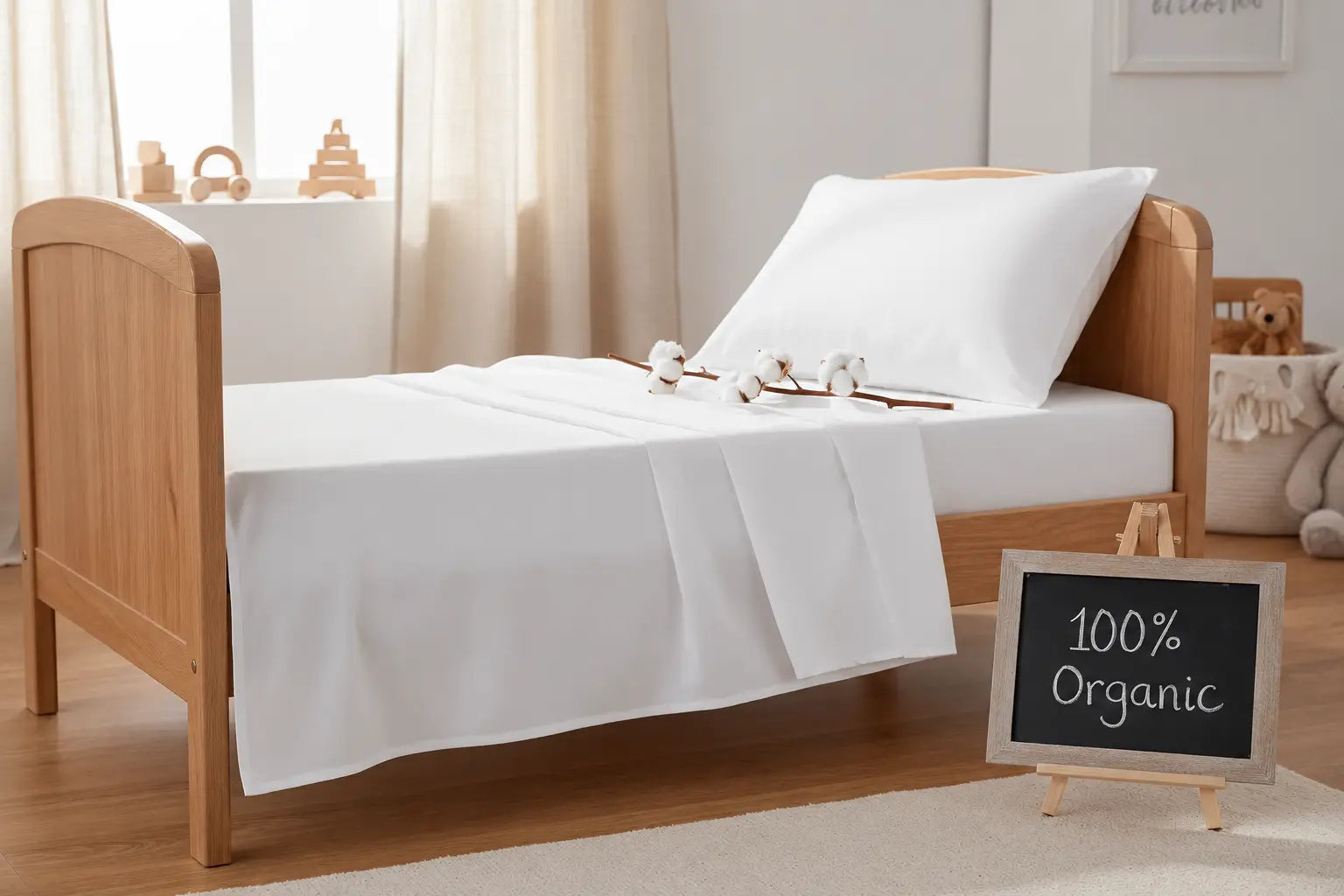
Organic Cotton Sheets for Kids: The Complete Buying Guide
Organic cotton sheets for kids are grown without synthetic pesticides or chemical fertilizers, then woven into soft bedding that's gentle against a child's skin from the first wash. If you're weighing organic against conventional cotton before you buy, our guide on are organic cotton sheets worth it breaks down the cost-versus-value question in more detail. This guide focuses specifically on what matters when you're shopping for a kids' room.
Kids spend more hours in bed than most parents realize once naps and overnight sleep are added up, which makes fabric choice matter more than it might for a guest room or a rarely-used pull-out couch. Organic cotton sheets for kids skip the heavy chemical processing and harsh dyes used in a lot of budget bedding, so there's less residue building up on the fabric with every wash cycle. The result is a sheet set that feels soft out of the package and keeps softening the more it's used - which matters when a set gets washed weekly instead of monthly.
Parents shopping for a kids' room are usually juggling a few different priorities at once: durability for an active sleeper, easy care for frequent washing, a price that doesn't feel like a splurge, and a fabric that's simple to feel good about. Organic cotton sheets for kids tend to check most of those boxes without asking parents to compromise on any single one.
There's also a practical reason organic cotton sheets for kids come up so often in bedding searches: kids' rooms see more spills, more stains, and more laundry cycles than almost any other room in the house. A fabric that can survive weekly washing without breaking down matters as much as how it feels on day one. Organic cotton tends to hold its shape and softness through repeated washing better than fabric loaded with synthetic finishing agents, which can start to feel stiff or thin after a few dozen wash cycles.
- What makes organic cotton different from regular cotton
- What GOTS and OEKO-TEX certifications actually mean
- How thread count affects feel in a kids' room
- What to expect on pricing
- How many sheet sets a kids' room actually needs
- How to care for organic cotton sheets so they last
Quick Answer
Quick answer: Organic cotton sheets for kids are cotton bedding grown without synthetic pesticides, processed without harsh chemical treatments, and usually certified by GOTS (Global Organic Textile Standard). For a kids' room, look for organic cotton sheets in the 300–400TC range - light enough for everyday use and easy to keep in a regular wash rotation. Pricing typically runs 10–20% above comparable conventional cotton, and the fabric only gets softer with wear.
What Makes Organic Cotton Sheets for Kids Different
Organic cotton starts with how the fiber is grown, long before it ever reaches a loom. Regular cotton farming can involve synthetic pesticides and chemical fertilizers; organic cotton farming avoids both, relying on crop rotation and natural pest management instead. From there, the fiber is processed with fewer chemical treatments before it becomes a finished sheet set, which is a meaningfully different starting point even before the weaving begins.
How Organic Cotton Is Grown and Processed
- No synthetic pesticides or fertilizers used at any point during growing
- GOTS certification tracks the fiber from farm through finished product, at every stage
- Low-impact dyes replace the harsher conventional dye processes used on standard cotton
- No synthetic finishing treatments or chemical softeners applied to the woven fabric
- Independent auditing confirms the organic claim rather than relying on self-reporting
Why This Matters for a Child's Room
Kids spend long stretches in direct contact with their sheets - napping, reading before bed, tossing and turning overnight, and occasionally using the bed as a fort during the day. Many parents choose organic cotton sheets for kids specifically because it means less chemical residue sitting against the skin, without needing to give up the softness or durability a growing kid's bed actually needs. It's a fiber choice, not a treatment or a cure for anything - just a cleaner starting point for the fabric a child sleeps on every night.
GOTS vs OEKO-TEX: What the Certifications Actually Mean
Certifications on organic cotton sheets for kids can look interchangeable at a glance, but they check different things. Knowing the difference helps when comparing labels across brands.
- GOTS (Global Organic Textile Standard) - verifies the fiber was grown organically and tracks it through spinning, weaving, dyeing, and finishing, so the "organic" claim is backed by a documented chain of custody
- OEKO-TEX Standard 100 - tests the finished fabric for harmful substances, regardless of whether the fiber was grown organically, and applies to the end product a parent actually receives
- Both together - the strongest combination for a kids' sheet set, since one confirms how the fiber was grown and the other confirms what's actually present in the finished fabric
Sheets carrying both labels give parents two separate, independently verified confirmations rather than a single unverified marketing claim.
Checking for the certification number or license details on the product page is a good habit, since "organic" and "eco-friendly" get used loosely in bedding marketing without any third party actually verifying the claim. GOTS certification numbers can be checked against the public GOTS database, and OEKO-TEX product cards can be verified through OEKO-TEX's own lookup tool. For organic cotton sheets for kids specifically, this extra verification step matters more than it might for adult bedding, simply because parents are making the purchase decision on a child's behalf and want more certainty, not less.
Benefits of Organic Cotton Bedding for Children
Organic cotton bedding for children comes with a handful of practical upsides beyond the farming story. It's not a medical solution, but it is a fabric choice that tends to hold up well to a kid's daily routine and a demanding wash schedule.
- Feels soft from the first wash and continues softening over time with regular use
- Breathable weave that suits a range of room temperatures throughout the year
- Stands up to frequent washing, which kids' sheets need more than almost any other bedding in the house
- Durable enough for active sleepers, pillow forts, and regular bed-making
- Made without the synthetic fibers found in a lot of cheaper cotton-poly blends
- Easier to feel confident about, since GOTS and OEKO-TEX both involve independent testing
Gentle on Delicate Skin
Because organic cotton skips synthetic pesticide residue and heavy chemical finishing, it tends to feel gentle against delicate skin - an appealing quality for a child's bed where the fabric is in near-constant contact with skin for eight or more hours a night. Look for the OEKO-TEX Standard 100 label alongside GOTS certification; that combination means the finished fabric has been tested for harmful substances, not just the raw fiber before processing.
Breathable, Everyday Comfort
Cotton's natural weave allows air to move through the fabric, which is part of why cotton sheets feel comfortable across seasons rather than sticky or heavy in any one season. Organic cotton also gets noticeably softer with every wash cycle - our guide on how to soften cotton sheets walks through the exact wash-and-dry routine to speed that process along, which is especially useful if you want a brand-new set to feel broken-in faster on a kid's bed.
Organic Cotton vs Regular Cotton Sheets for Kids
Regular cotton sheets for kids aren't a bad choice - plenty of well-made conventional cotton sheets hold up fine on a kid's bed for years. The difference with organic cotton sheets for kids comes down to how the fiber was grown and finished, not how the finished sheet performs day to day. Both can be soft, durable, and long-lasting; organic simply starts from a cleaner agricultural process and a shorter list of chemical inputs along the way.
Where the two tend to diverge is in the details: dye process, finishing chemicals, and the paperwork behind the "organic" label itself. A parent comparing two similar-looking sheet sets side by side won't necessarily feel a dramatic difference in hand-feel on day one - the difference shows up in what didn't go into making the fabric in the first place.
Percale vs Sateen for a Kids' Room
Weave matters as much as fiber type once you're comparing organic cotton sheets for kids side by side:
- Percale - a crisp, matte weave with a lighter hand-feel; a common pick for kids' rooms because it layers easily, resists pilling, and shows wrinkles less than a glossier weave
- Sateen - a smoother, slightly glossy weave with a heavier drape; softer to the touch right away but shows body oils and stains a little more over time
If percale is the direction you're leaning, the full Cotton Percale sheets collection has both organic and standard cotton options in the same crisp weave, so you can compare feel and price before deciding.
For most kids' rooms, percale ends up being the more forgiving everyday choice simply because it hides wrinkles and light staining better between wash days, and it tends to dry faster on a shorter laundry cycle. Sateen isn't off the table for a kids' room - it just tends to suit an older child who's less likely to climb into bed straight from outside play.
Thread Count Guide for Organic Cotton Sheets for Kids
Thread count is a selection tool, not a quality ranking - it tells you how a sheet will feel and drape, not whether one number is objectively "better" than another. For organic cotton sheets for kids, lighter thread counts are usually the more practical pick simply because kids' sheets go through the wash more often than almost any other bedding in the house.
|
TC Range |
Feel |
Best for Kids' Rooms |
|
300TC |
Soft, Crisp, Lightweight |
Everyday use, frequent wash rotation |
|
400TC |
Soft, Smooth, Airy |
Most kids' rooms, year-round use |
|
600TC |
Soft, Smooth, Slightly Dense |
Kids who prefer a heavier-feeling sheet |
Different thread counts offer different sleep experiences - choose organic cotton sheets for kids based on how your child likes their bedding to feel against their skin, not just the highest number printed on the packaging.
How Many Organic Cotton Sheet Sets Does a Kid's Room Need?
Most parents find that two to three sheet sets per bed is the practical minimum for a kids' room - one on the bed, one in the wash, and one spare for accidents or sleepovers. Because organic cotton sheets for kids handle frequent washing well, rotating between two or three sets extends the life of each one instead of putting all the wear on a single set.
- Two sets - workable for a low-mess sleeper with a reliable laundry routine
- Three sets - a more comfortable buffer for younger kids, bedwetting-prone ages, or households with less frequent laundry days
- Matching a color or pattern across sets - makes it easier to mix and match as a child's room evolves without buying an entirely new look each time
Buying in twos also makes practical sense from a budget standpoint. Rather than replacing an entire sheet set the moment it starts to show wear, having a rotation means each set gets roughly half the total wash cycles of a single set used every week. For organic cotton sheets for kids specifically, that rotation stretches the value of the higher upfront certification cost across a longer usable lifespan for both sets combined.
How to Care for Organic Cotton Sheets for Kids
Organic cotton holds up well over years of washing, as long as the care routine matches the fiber:
- Wash in cold or warm water, never hot, to protect the fiber and any low-impact dye
- Use a mild, dye-free detergent - heavy fragrance and optical brighteners can build up on natural fiber over time and dull the fabric
- Tumble dry on low or line dry; high heat is the single biggest cause of premature wear on cotton fiber
- Skip fabric softener - organic cotton softens on its own with washing and doesn't need a synthetic coating to feel good
- Wash new sheets before first use to remove any residual finishing left over from processing
- Rotate sheet sets regularly so no single set takes on all the wash-cycle wear
For the fastest way to break in a brand-new set, our how to soften cotton sheets guide has a full wash-and-dry routine built specifically around natural fiber care, and it applies directly to organic cotton sheets for kids.
A few extra habits go a long way for a kids' room specifically. Treating spills and accidents as soon as they happen - rather than letting them sit until laundry day - keeps stains from setting into the fiber permanently. A short pre-soak in cold water before a full wash cycle handles most everyday marks without needing bleach, which can weaken cotton fiber and fade low-impact dyes over time. And zipping any duvet covers or pillowcases before they go in the machine keeps buttons and zippers from catching on the sheet fabric during the spin cycle.
How to Choose the Best Organic Cotton Sheets for Kids
Picking the best organic cotton sheets for kids comes down to a short list of practical factors: size, thread count, weave, and how much you want to spend. Start with the bed size you actually have, then narrow down by feel and budget from there.
Comparing Pricing for Organic Cotton Sheets for Kids
Organic cotton sheets for kids typically cost more than standard budget cotton, but the gap is smaller than most parents expect - usually 10–20% above comparable conventional cotton, not double the price. Most of that difference comes from GOTS certification and organic farming costs, not brand markup. Our Natural Organic Cotton Percale Sheet Set in Warm Taupe and Natural Organic Cotton Percale Sheet Set in Pink sit close to our standard percale line in price, since organic certification - not brand markup - accounts for most of the gap between the two.
Sizing for a Kids' Bed
- Twin - the most common size for a first "big kid" bed
- Twin XL - a good option for taller kids, bunk beds, or shared rooms with limited floor space
- Full - typically the next step up once a child outgrows a twin bed frame
If your child is transitioning from a twin to a full-size bed, browse the full Cotton Percale sheets collection to find the new size in the same weave and feel they're already used to sleeping on.
Why California Design Den Organic Cotton Sheets Are Right for Kids' Rooms
A child's bed should feel comfortable enough that bedtime isn't a nightly negotiation, and that starts with fabric that feels good against the skin from day one and keeps feeling that way after months of washing.
California Design Den sheets are made from 100% natural cotton — no synthetic microfiber, no plastic fibers. Browse the full Organic Cotton sheets collection to see every available colorway sized for a kids' room.
California Design Den's Organic Cotton Percale Sheet Sets have earned the Good Housekeeping Seal, backed by ongoing product evaluation - a third-party check that carries more weight than anything we could claim about our own bedding. That evaluation covers the finished product a family actually receives, not just a marketing claim printed on a hangtag.
Most of our cotton sheets are made in our family-owned facility, which is why we keep pricing honest without cutting corners on the fiber or the certification. Over 8 million sleepers have chosen California Design Den cotton bedding, and the brand maintains a 4.5–4.6 star average across its cotton sheet collections - a track record built one wash cycle and one kids' room at a time, not a one-time marketing push.
Frequently Asked Questions About Organic Cotton Sheets for Kids
Are organic cotton sheets better for kids' skin?
Yes - organic cotton skips synthetic pesticide residue and heavy chemical processing, so the finished fabric stays gentle against delicate skin.
What are the best organic cotton sheets for kids?
Our Organic Cotton Percale Sheet Set in Warm Taupe and Pink are lightweight, GOTS-certified picks made for kids' rooms.
How does pricing compare for organic cotton sheets made for kids?
Organic costs about 10–20% more than standard cotton, mainly from certification and farming costs - not double the price.
What thread count is best for a kids' organic cotton sheet set?
300–400TC organic cotton offers a soft, lightweight feel that's easy to wash often - ideal for most kids' rooms.
Are organic cotton sheets for kids worth the price difference?
For most families, yes - our are organic cotton sheets worth it guide breaks down the full cost comparison.
The Bottom Line on Organic Cotton Sheets for Kids
Organic cotton sheets for kids come down to a cleaner starting point for the fiber - no synthetic pesticides, fewer chemical treatments, and a softer hand-feel that builds with every wash rather than fading. Whether you land on 300TC percale or a slightly heavier 600TC weave, the right choice is the one that matches how your child actually sleeps, sized correctly for the bed they're in right now, and backed by certifications you can actually verify rather than a label that just says "organic" with nothing behind it.


